
Plants that grow on tall trees to access sunlight are called epiphytes, and the broader group also includes climbing plants (lianas) and hemiepiphytes. Epiphytes physically live on tree surfaces without rooting in soil, lianas use tree trunks as a ladder to climb toward the canopy, and hemiepiphytes split their life cycle between the canopy and the ground. Together, these three groups represent one of the most successful light-chasing strategies in the plant world, and they show up across nearly every forested climate on earth. Tall grasses that grow around plants and trees are called ground cover plant world.
Plants That Grow on Tall Trees to Access Sunlight: Types

Dr. Marcus Weatherby
7 Jun 2026
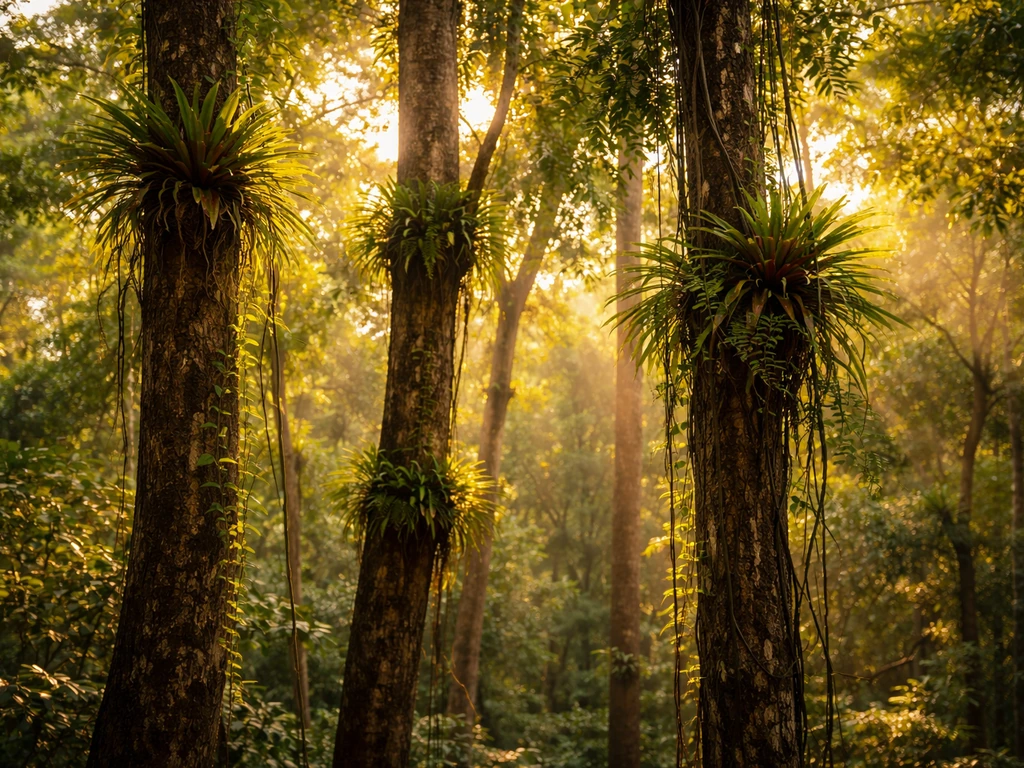
Why some plants grow high on trees in the first place
The forest canopy is a battleground for light. In a closed-canopy forest, less than 2 percent of full sunlight typically reaches the understory floor, and even within natural canopy gaps, at least 36 percent of the gap area may receive less than one hour of direct sunlight per day. That's a brutal environment for any plant trying to photosynthesize from the ground. Growing up on a tall tree bypasses the problem entirely: instead of competing for scraps of filtered light below, a plant anchors itself at height and intercepts sunlight before it gets blocked.
Canopy gaps, created when large trees fall, do create temporary windows of better light in the understory. Some species are specialists at exploiting these gaps from seeds, while others sit suppressed and waiting, then surge upward when a gap opens. But the most committed light-seekers skipped the waiting game millions of years ago and evolved to live in the canopy permanently. That's where epiphytes, lianas, and hemiepiphytes come in. They are ecological solutions to one core problem: not enough light down below.
The three main types: epiphytes, lianas, and hemiepiphytes
Epiphytes: canopy residents with no soil at all
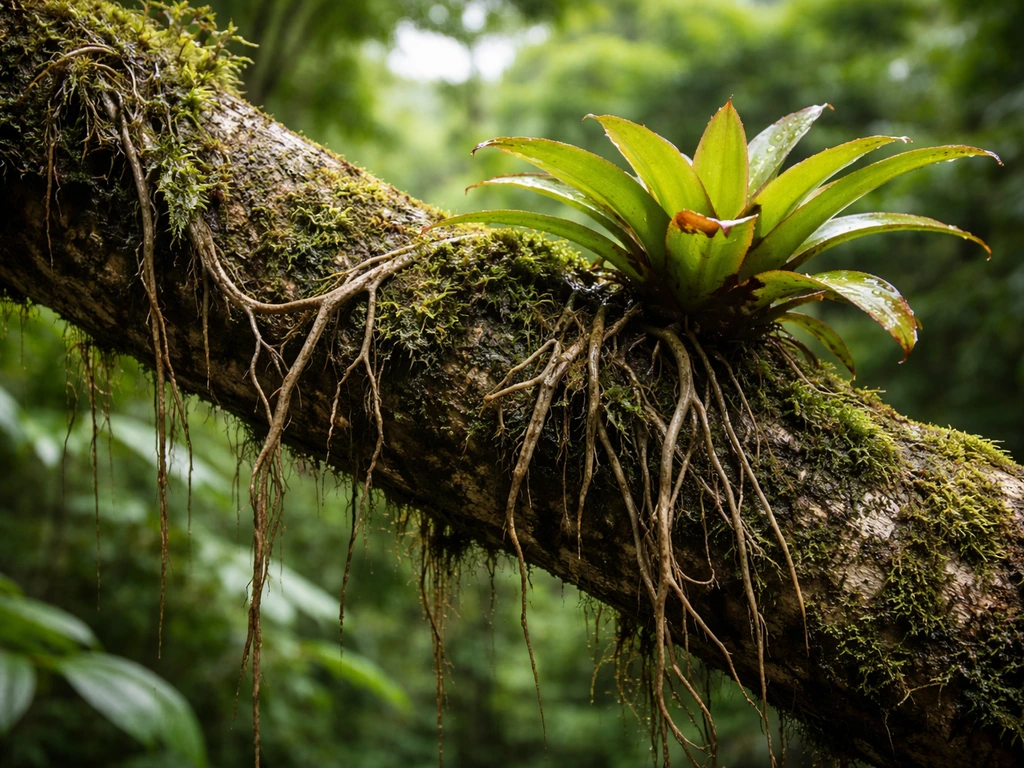
True epiphytes grow directly on tree surfaces: bark, branches, trunk crevices, and even the outer crown periphery. They never root in the ground. More than 30,000 vascular plant species live primarily as epiphytes, which works out to roughly 10 percent of all plant species on earth. The most familiar groups are orchids, bromeliads (including Tillandsia air plants), ferns, and mosses.
Epiphytes can be further divided into obligate epiphytes (which spend their entire life on host trees) and facultative epiphytes (which can also grow in soil but often end up on bark in nature). The key thing they all share: they get water and nutrients from rain, air humidity, dust, and decomposing organic matter that collects in bark crevices, not from soil.
Lianas: climbing plants that use trees as scaffolding
Lianas are woody climbing vines that root in the soil but use tree trunks, branches, and any available vertical structure to haul themselves up into the canopy. They invest almost nothing in building their own support structure and everything into reaching light fast. In tropical forests, lianas can make up 25 percent or more of the woody plant species in a given area. Common examples include Monstera, Philodendron species, and many of the wild grapes and passionflowers you see in subtropical and temperate forests. Lianas are related in strategy to the plants sometimes described as growing parallel to or horizontally along the ground, except their movement is vertical and deliberate, always chasing the canopy.
Hemiepiphytes: the ones that do both
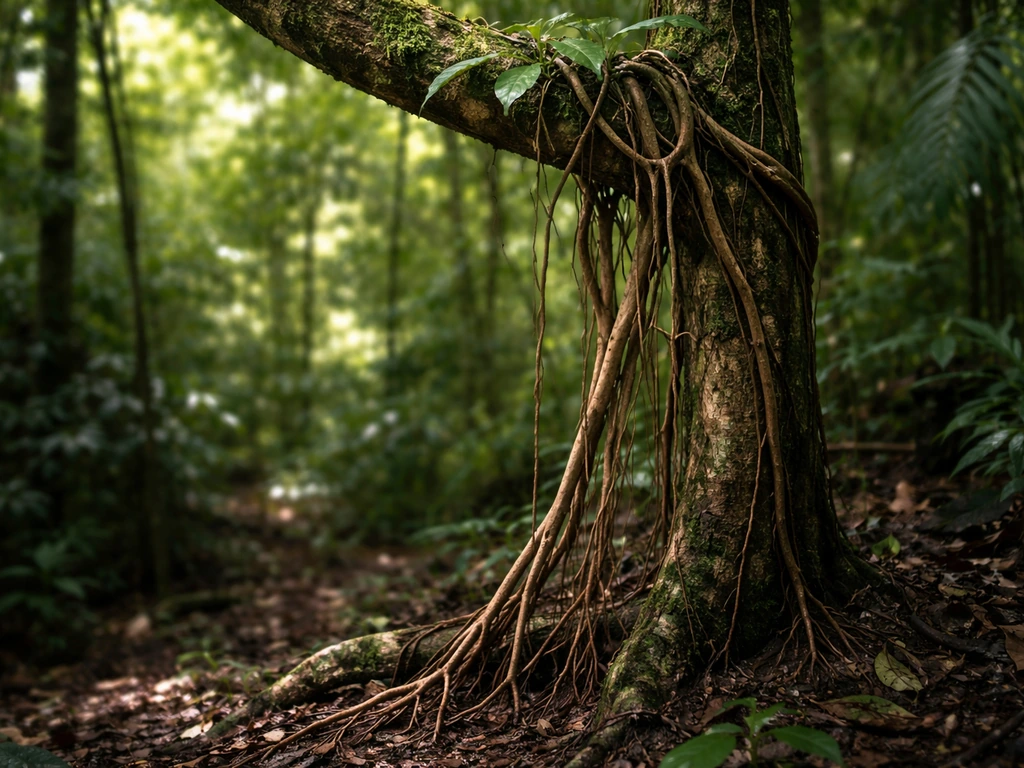
Hemiepiphytes occupy the middle ground. Primary hemiepiphytes germinate in the canopy on a host tree, then send roots downward over time until they reach the soil below. Strangler figs are the classic example: they start as epiphytes, eventually wrap the host tree, and can ultimately kill it as their roots reach the ground and their crown takes over the canopy position.
Secondary hemiepiphytes work in reverse, starting in the soil and climbing up, then sometimes losing their connection with the ground. A 2021 review on hemiepiphytes argues that the term, especially secondary hemiepiphytes, may be inappropriate for many cases because many plants do not sever all connections with the ground [Hemiepiphytes work in reverse, starting in the soil and climbing up, then sometimes losing their connection with the ground. ](https://www. sciencedirect.
com/science/article/pii/S1433831921000329). The category has real ecological importance, though field identification can be tricky since the soil connection isn't always clear at any given point in the plant's life. The practical takeaway: if you see a large fig-like plant with aerial roots descending from branches toward the ground, you're probably looking at a hemiepiphyte.
How to identify which type you're looking at
You don't need a botany degree to tell these groups apart in the field. A few physical clues will get you most of the way there.
- Roots: Epiphytes have aerial roots that grip bark or hang in the air. These roots are often covered in a spongy white or silvery tissue called velamen (especially in orchids), which absorbs moisture from humidity and rainfall. If there are no roots heading toward the ground and no obvious stem climbing up from the soil, it's very likely an epiphyte.
- Attachment style: True epiphytes cling to bark with no visible stem connecting them to anything below. Lianas have a stem that traces all the way down to the ground if you follow it. Hemiepiphytes may show roots heading both up into bark crevices and down toward the soil.
- Leaf shape and texture: Many epiphytic ferns have deeply lobed or strap-like leaves adapted for catching falling debris (which becomes their nutrient source). Bromeliad rosettes often form a central cup or tank to collect rainwater. Orchid leaves are frequently thick or succulent-feeling, storing water against dry spells.
- Growth position: Epiphytes cluster in the outer crown, branch crotches, and rough bark zones where organic matter accumulates. Lianas tend to have a single thick stem running vertically up the trunk. Hemiepiphytes like stranglers often show a network of roots descending from a crown-level attachment point.
- CAM physiology clue: If a plant in a sunny, dry canopy position has thick, waxy, or succulent leaves and closes its pores during the day, it's probably using CAM photosynthesis, a classic adaptation in canopy epiphytes facing intermittent water stress.
What these plants actually need to survive up in the canopy
The canopy is not a gentle environment. It's bright, windy, and intermittently dry. Every plant that succeeds there has evolved specific responses to four main pressures: light intensity, water availability, nutrient scarcity, and wind exposure.
Light
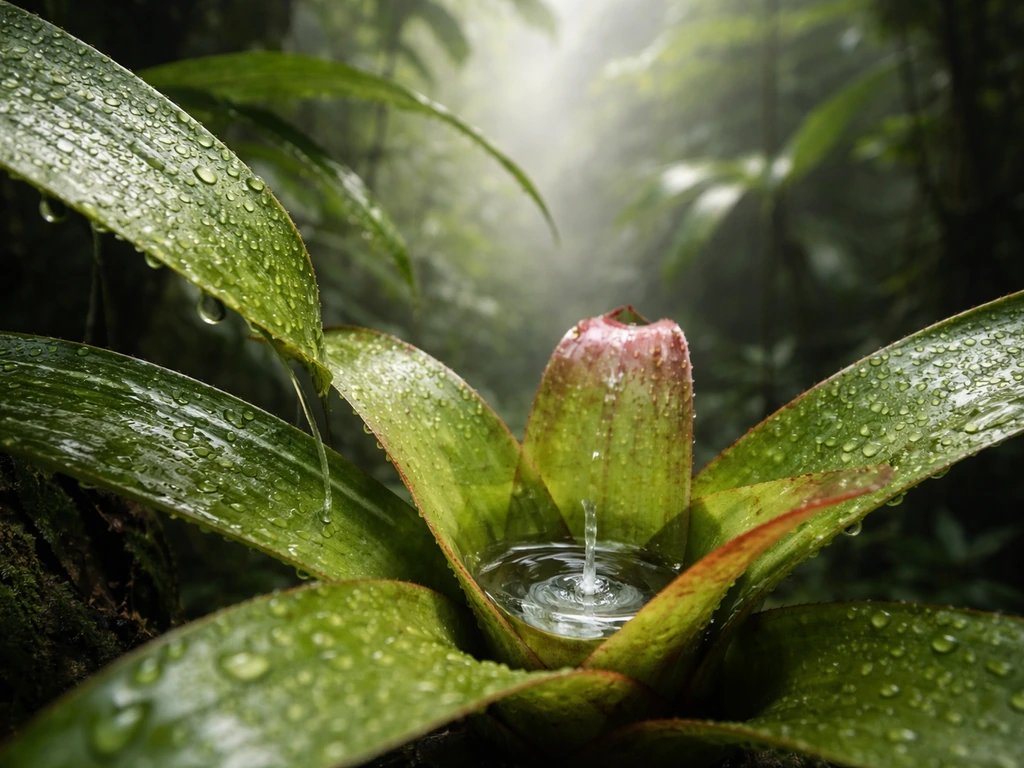
Most epiphytes in the outer crown get intense, direct sunlight and have adapted to handle photostress during peak hours. Orchids and many bromeliads prefer bright filtered light rather than direct midday sun, which is why they often colonize the undersides of branches or shaded aspects of tree crowns. Lianas in the canopy receive direct sun on their upper leaves and tend to have large leaf surfaces to maximize capture. When growing these plants at home, matching the actual light intensity of their natural canopy position matters more than almost any other variable.
Water and humidity
Water is the defining challenge. Epiphytes have no soil reservoir to draw on; they depend entirely on rainfall, mist, dew, and ambient humidity. Tank bromeliads buffer this by collecting rainwater in their central rosette, which can hold water for days or weeks between rain events. Tillandsia air plants, by contrast, absorb moisture almost entirely through leaf scales and need higher ambient humidity than tank bromeliads to avoid dehydration.
Orchids absorb water vapor through velamen root tissue and can desiccate quickly in low-humidity environments. The American Orchid Society notes that indoor humidity is typically low and that balanced humidity and air movement are especially important for preventing mounted orchids from shriveling, with humidity management relating to water-vapor uptake through orchid stomata balanced humidity and air movement to prevent shriveling in mounted orchids.
The general rule: the more exposed the natural habitat, the more drought-adapted the plant, and the better it handles occasional drying out. But none of these plants tolerate prolonged waterlogging, because their roots evolved in fast-draining, airy bark environments rather than soil.
Nutrients
Canopy epiphytes get nutrients from dust, insect frass, decomposing leaf litter that lodges in bark crevices, and dissolved minerals in rainwater. This is a very lean diet by soil-plant standards. Epiphytes have evolved to be highly efficient at capturing and cycling these scarce inputs. At home, this means fertilizing lightly and infrequently rather than heavily, and never using slow-release granular fertilizers designed for soil, which can burn roots built to absorb dilute nutrients from rain.
Wind and substrate
Canopy positions are exposed to regular air movement, which accelerates drying but also prevents fungal disease by keeping roots and crowns from staying wet. This is why mounted epiphytes (on bark or tree fern slabs) outperform pot-grown specimens in most cases: airflow around the roots mimics canopy conditions. Heavy, water-retaining substrates like dense clay are the opposite of what these plants evolved for, and they will rot quickly in such conditions.
What grows where: matching plant type to climate and region
The species you'll encounter on tall trees varies dramatically by biome. In the same way that tall grasses are adapted to the habitats around plants and trees, epiphytic plants also depend on their surrounding conditions tall grasses that grow around plants and trees are called. Here's a practical breakdown by region and climate zone, which is the most useful way to think about what's actually out there and what will work in a home setting.
| Region / Biome | Primary plant types on trees | Key examples | Best season for activity |
|---|---|---|---|
| Tropical rainforest (Amazon, Congo, SE Asia) | True epiphytes, primary hemiepiphytes, lianas | Orchids, tank bromeliads, strangler figs, Monstera, rattan | Year-round, peak growth in wet season |
| Tropical montane / cloud forest (Andes, Central America, Borneo highlands) | Epiphytic mosses, orchids, ferns, Tillandsia | Dracula orchids, Tillandsia usneoides (Spanish moss), filmy ferns | Year-round; mist-dependent, humidity highest in cooler months |
| Subtropical (Florida, coastal SE USA, Queensland) | Epiphytic orchids, bromeliads, resurrection ferns | Epidendrum, Tillandsia utriculata, Pleopeltis polypodioides | Active spring through fall; winter dormancy in some species |
| Warm temperate (Mediterranean, SE Australia, parts of East Asia) | Facultative epiphytes, climbing ferns, some lianas | Asplenium, Wisteria, climbing hydrangea | Spring and summer growth; dormant in cold months |
| Temperate deciduous forest (Eastern USA, Europe, Japan) | Mosses, lichens, occasional ferns on bark | Polypodium ferns, club mosses, Virginia creeper as liana | Spring through early fall; very limited true epiphytes |
| Dry tropical / seasonal (Cerrado, dry forest Mexico) | CAM epiphytes, xeric bromeliads, succulents on bark | Tillandsia xerographica, Rhipsalis cacti, Catasetum orchids | Wet season only; dormant and drought-resistant in dry season |
The richest diversity of tree-dwelling plants is concentrated in tropical and montane cloud forests, where high humidity, warm temperatures, and year-round rainfall create ideal canopy conditions. As you move toward temperate climates, true epiphytes become rarer and lianas become the dominant strategy for reaching canopy light. In the coldest temperate zones, mosses and lichens are essentially the only bark-dwelling plants that persist through winter. If you're in a subtropical or warm temperate zone, you're in the sweet spot for cultivating epiphytes outdoors with minimal infrastructure.
Practical ways to grow them or recreate canopy habitat at home
You don't need a tropical forest in your backyard to grow these plants successfully. What you need is to replicate the core conditions: good airflow, intermittent but thorough wetting and drying, bright indirect or dappled light, and a substrate (or mounting surface) that drains instantly. Here's how to do it.
Mounting epiphytes on bark or slabs
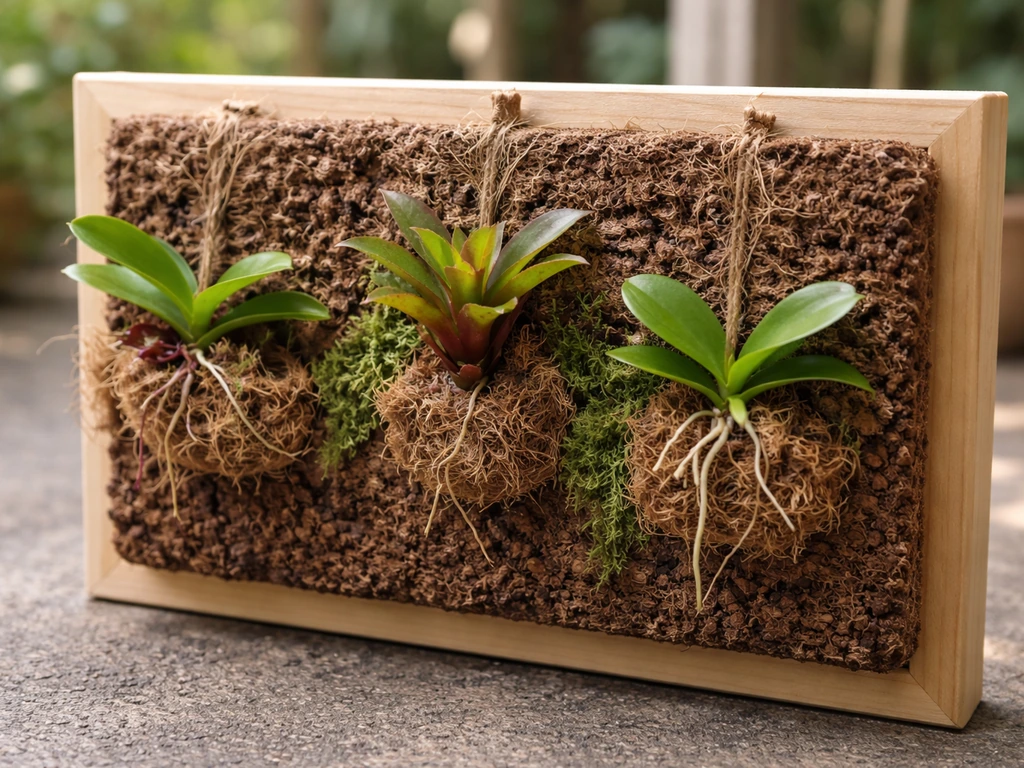
Mounting is the most ecologically accurate way to grow orchids, Tillandsia, and smaller bromeliads. Tree fern slabs are excellent because they are porous, hold a small amount of moisture, and provide organic matter for roots to grip. Cork bark is another good option: it's lightweight, rot-resistant, and replicates the textured bark surface these plants colonize in nature. When mounting, use a small pad of sphagnum moss between the root mass and the mounting surface to buffer moisture during the establishment phase, especially in drier indoor environments. Attach the plant with fishing line or soft wire until roots grip the surface on their own, which usually takes one to two growing seasons.
Using living host trees outdoors
If you live in a subtropical or tropical climate (USDA zones 9b and warmer), you can attach epiphytic orchids and bromeliads directly to outdoor host trees. Rough-barked trees like oaks, palms, or citrus work well. Tie plants to branches using nylon mesh or horticultural tape, tuck a small amount of sphagnum at the root contact point, and let rainfall do most of the work. In Florida and coastal California, Tillandsia and Epidendrum orchids establish on outdoor trees readily and will self-propagate over time. This is the lowest-maintenance approach and produces the most natural result.
Container growing with open, airy mixes
For lianas and hemiepiphytes like Monstera or Philodendron, a container with a moss pole or wooden trellis replicates the climbing structure they use in the wild. Use a very chunky, fast-draining mix: orchid bark, perlite, and a small amount of coarse coco coir works well. Avoid potting soil entirely, it holds too much moisture and compacts around roots that evolved to grip bark in open air. Water thoroughly, then let the mix dry significantly before watering again. The wet/dry cycle is more important than the watering frequency.
Vertical planters and living walls
For indoor or balcony setups, vertical felt-pocket planters or living wall frames allow you to grow small epiphytes at eye level with good airflow. Plant individual Tillandsia or small orchids into pockets stuffed with sphagnum or perlite, and mist the whole wall two to three times per week. A humidifier nearby helps in dry climates or heated interiors. Keep the installation within two to three feet of a bright window or supplement with full-spectrum grow lights on a timer, targeting 12 to 14 hours of light per day for tropical species.
Common mistakes and how to fix them
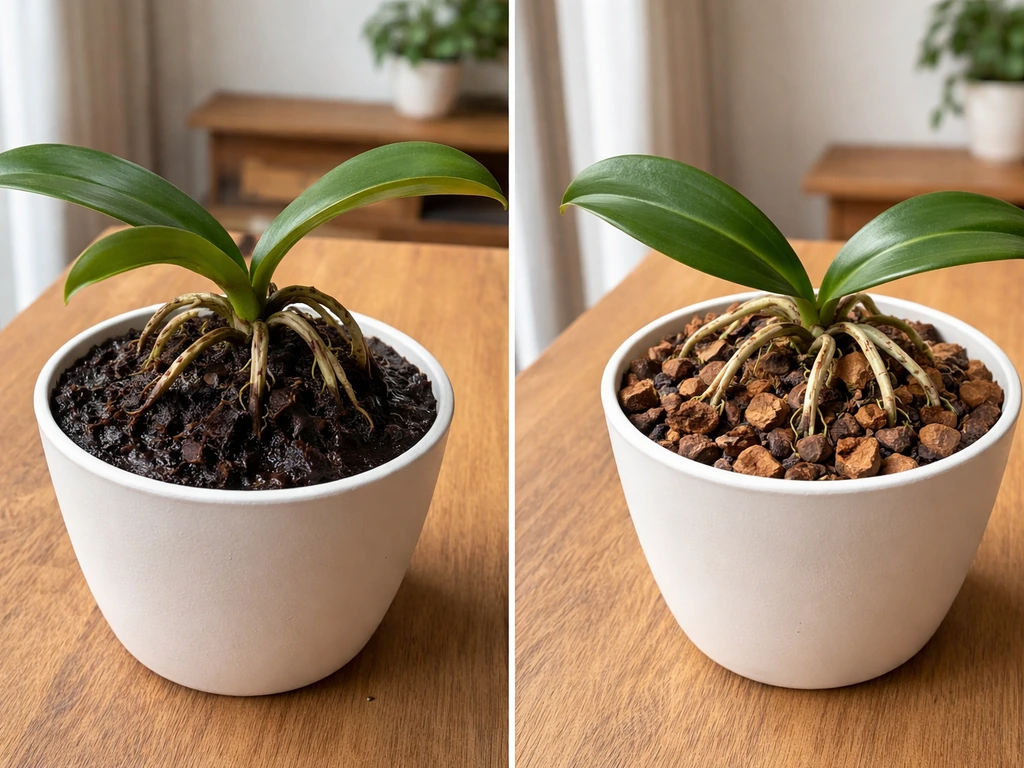
Most failures with these plants come down to four recurring problems. Knowing them in advance saves a lot of frustration.
- Overwatering and root rot: This is the number one killer. Epiphyte roots need to dry out between waterings; sitting in wet substrate for more than 24 to 48 hours triggers rot. If roots are brown and mushy, cut them back to healthy tissue, let the plant dry, and remount or repot in a much coarser, faster-draining mix. Switch to the soak-and-dry method: water thoroughly, then wait until the medium is nearly dry before watering again.
- Crown rot from overhead watering: Orchids and bromeliads with a central crown can rot if water pools in the growing point. Water at the base or roots, not directly into the crown. If you see the central leaves turning brown and pulling away easily, crown rot has set in. Remove affected tissue, dust with cinnamon (a mild antifungal), and improve airflow.
- Insufficient humidity for mounted plants: Mounted epiphytes dry out much faster than potted ones. In a typical heated or air-conditioned home, humidity can drop to 30 to 40 percent, which is too low for most tropical epiphytes. Tillandsia in particular will desiccate quickly. Fix this by misting more frequently (twice daily in dry conditions), clustering plants together to create a local humidity zone, or placing a tray of water and pebbles nearby. If the problem persists, a small ultrasonic humidifier near the growing area solves it immediately.
- Wrong light intensity: Epiphytes from open canopy positions need very bright light, but many orchids and shade-adapted ferns naturally live under filtered canopy light. Putting a shade-adapted orchid in direct south-facing sun will bleach and burn the leaves within days. Putting a sun-loving Tillandsia in a dim corner will cause it to slowly weaken over months. Match the plant to the light conditions of its natural canopy microhabitat: outer crown species need the brightest spot you can offer, while branch-crotch or understory-edge species want bright indirect light.
- Pest problems on weakened plants: Mealybugs are the most common pest on epiphytes grown indoors. They hide in leaf axils, root zones, and bark crevices, and they proliferate on plants already stressed by poor humidity, light, or watering. A plant in good health with correct conditions rarely suffers serious pest pressure. If mealybugs appear, isolate the affected plant immediately, remove visible colonies with a cotton swab dipped in 70 percent isopropyl alcohol, and treat with neem oil or insecticidal soap applied weekly for three to four weeks.
One broader point worth keeping in mind: these plants evolved in environments that fluctuate constantly. Light shifts as the canopy moves in wind, rainfall is intermittent, and nutrients arrive unpredictably. They are built for variability, not stability. The worst thing you can do is try to maintain them in perfectly consistent, artificial conditions. A little neglect, a good soak followed by a dry period, and a genuinely bright spot will get you further than meticulous daily attention with the wrong conditions. Start with species matched to your climate zone using the table above, choose the right mounting or substrate approach for your setup, and let the natural wet/dry rhythm do the work.
FAQ
Are plants that grow on tall trees to access sunlight the same as “parasitic” plants?
No. Epiphytes and lianas usually use the tree for support or a climb route, not as a food source. A key exception is some hemiepiphytes such as strangler figs that can eventually overwhelm the host as their roots reach the ground.
How can I tell if a tree-dwelling plant is an epiphyte, a liana, or a hemiepiphyte?
Look at root connection and climbing behavior. Epiphytes are rooted only in tree crevices and do not grow into soil. Lianas start in soil and climb upward. Hemiepiphytes have an unusual intermediate stage, often showing aerial roots descending from branches toward the ground (or plants that start in canopy then later connect to soil).
Can epiphytes be grown in regular potting soil if I use a fast-draining mix?
In most cases, no. They are adapted to absorb dilute nutrients from rain and air pockets in bark, so potting soil tends to stay too wet and can compact around roots, leading to rot. Mounting or using a bark-like, airy substrate is usually the safer approach.
What light should I provide if I buy an orchid, bromeliad, or Tillandsia?
Match the canopy position, not just the “bright or indirect” label. If it thrives in filtered light in nature, bright window sun can cause leaf scorching. If you see bleaching or crisping, move it back and increase airflow rather than increasing fertilizer.
How often should I water mounted epiphytes and Tillandsia?
Use the wet/dry rhythm, not a fixed schedule. Mounts and air plants typically need thorough wetting (or misting that actually wets the plant) followed by a full drying period with good airflow. If it never dries between sessions, the risk is crown and root rot, even if your water frequency is low.
Do tank bromeliads still work if my home has low humidity?
They work better when you can keep evaporation from drying the rosette too quickly. In drier indoor environments, consider placing the plant near a humidifier and ensure it still gets airflow, then empty and refill the tank occasionally with clean water to prevent stale, stagnant buildup.
How should I fertilize plants that live on tree surfaces?
Fertilize lightly and infrequently, because the “nutrient supply” in nature is dust, dissolved minerals in rain, and decomposing debris, which is dilute. Avoid soil-oriented slow-release granular fertilizers, and if you do feed, use diluted liquid fertilizer and flush with water periodically to prevent salt accumulation.
Why do my mounted orchids or bromeliads rot even though they’re not in soil?
Most rots come from trapped moisture plus low airflow. Common culprits include dense packing at the mounting contact point, keeping the plant constantly damp, or placing it in a stagnant corner. Improve airflow and allow full drying after wetting.
What’s the best mounting material for home use?
Tree fern slabs and cork bark both work well because they are porous or textured and dry quickly. If your indoor conditions are dry, a small pad of sphagnum at the establishment zone can help roots attach, but remove or thin it once the plant grips to avoid long-term soggy contact.
Can I grow these outdoors on my own trees in subtropical or warm temperate areas?
Often yes, but choose host trees with suitable bark texture and ensure you can provide reasonable airflow and incidental moisture. In practice, rough-barked trees like palms, oaks, or citrus are easier for epiphyte attachment. If winters are cold, bring plants indoors or choose only species that tolerate your minimum temperatures.
Are lianas and hemiepiphytes easier than epiphytes for beginners?
They can be easier because they tolerate more consistent container moisture than many epiphytes, but they have their own setup needs. For Monstera or Philodendron-type growers, prioritize a chunky, fast-draining mix and a sturdy moss pole or trellis so the plant can climb without getting waterlogged.
Why does “bright indirect light” fail in some homes?
Because indirect can still be too dim, or it can be direct sun through glass. If growth stalls, the plant may need more light hours or a closer bright window, but increase gradually to prevent sunburn. A grow light on a timer that provides 12 to 14 hours can stabilize conditions.
What should I do if my Tillandsia looks dry or shriveled?
Rehydrate it thoroughly rather than lightly misting. Let it get fully wetted, then dry with airflow afterward. If it stays shriveled after repeated proper rehydration, the likely issue is inadequate ambient humidity, insufficient wetting, or poor placement near light sources and airflow.