
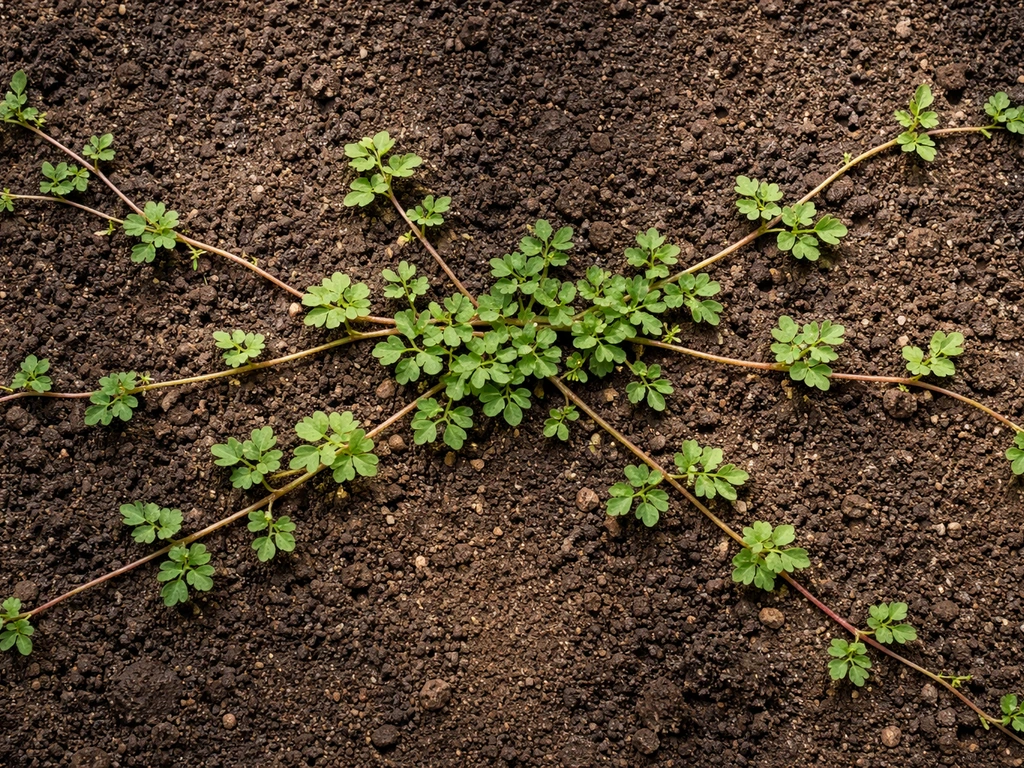
Plants that grow parallel to the ground are most precisely called prostrate, creeping, or procumbent, depending on one key detail: whether the stems root at their nodes or just lie flat. If a plant's stems hug the ground and produce new roots where they touch soil, it's blank" rel="noopener noreferrer">creeping (or stoloniferous). If it sprawls flat without rooting along the way, it's procumbent or prostrate. Those two distinctions are what separate the terms in real botanical usage, and getting them right makes a big difference when you're trying to identify a plant from a field guide or a plant database.
Plants That Grow Parallel to the Ground: Key Terms

Dr. Marcus Weatherby
3 Jun 2026
What botany actually means by 'parallel to the ground'
In botanical terminology, the phrase 'growing parallel to the ground' describes a plant's overall growth habit, meaning the direction its stems, branches, or main body extends relative to the soil surface. When that angle approaches horizontal, botanists reach for a specific set of terms rather than a catch-all like 'flat' or 'low.' The classical glossary definitions go like this: prostrate means lying close to the ground, procumbent means spreading along the ground for the greater part of the stem's length (without necessarily rooting at nodes), and creeping means growing along the ground and emitting roots at intervals. All three describe plants oriented roughly parallel to the ground, but they each carry a slightly different implication about stem posture and propagation behavior.
A node, by the same botanical glossary, is the point on a stem where leaves, branches, or leaf buds are given off. That anatomical detail matters because whether roots form at those nodes is the single most useful test for separating creeping plants from procumbent ones. It's a field-observable criterion, not an abstract concept, which makes it genuinely practical when you're crouching down looking at a mat of ground-hugging stems.
Common plant forms that look parallel to the ground
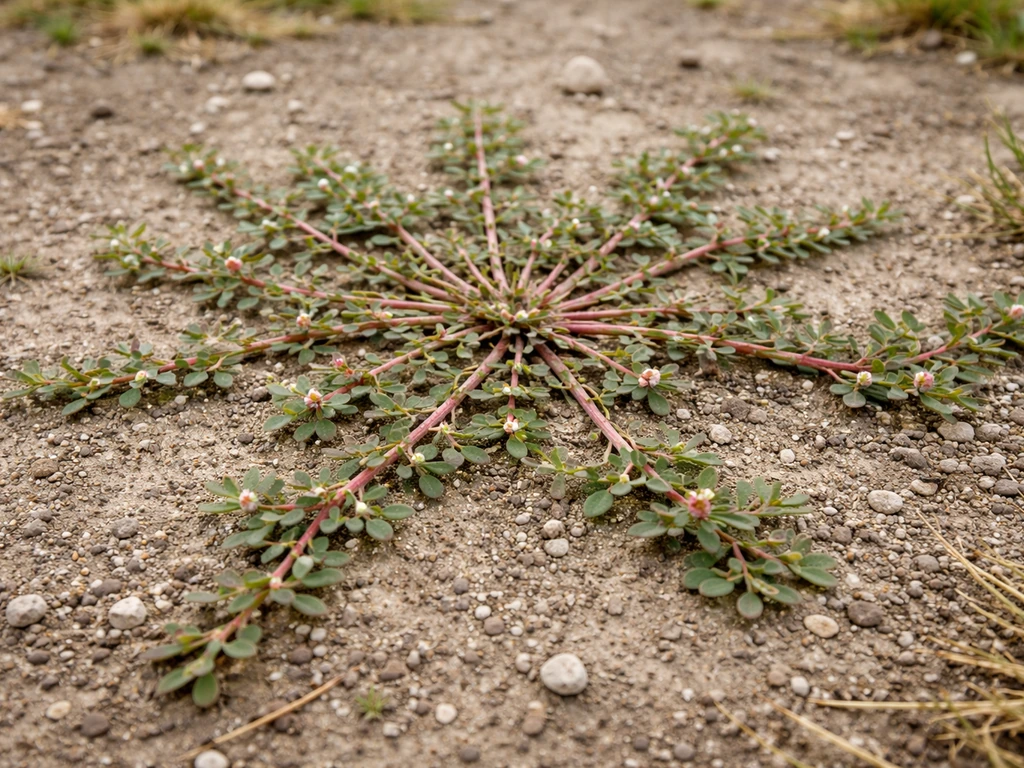
Not every low plant earns the same label. Several distinct growth forms produce that flat, ground-hugging look, and recognizing them helps you apply the right term.
- Prostrate mats: The whole plant lies flat, stems radiating outward from a central root system, rarely lifting more than a few centimeters above soil. Prostrate spurge and prostrate knotweed (which can have stems up to about 60 cm long spread across the ground) are classic examples used in extension plant ID keys.
- Creeping groundcovers with stolons: Stems sprawl horizontally and root at nodes, forming expanding colonies. Creeping bentgrass spreads this way via stolons, and ground ivy roots aggressively at nodes as it moves across a lawn.
- Trailing shrubs with long branches: Low woody plants like creeping juniper (Juniperus horizontalis) have numerous prostrate stems and long trailing branches that form large mats, but the rooting behavior is less systematic than a true stolon-producing plant.
- Rosette-forming plants: Some plants don't have sprawling stems at all but hold their leaves nearly flat against the ground in a rosette. This creates the parallel-to-ground appearance through leaf arrangement, not stem orientation.
- Decumbent plants: These start by lying along the ground but have tips that curve or ascend upward. They're not fully prostrate, but they spend most of their length horizontal before rising at the ends.
How to identify these plants in the field
The most reliable way to identify a parallel-to-ground growth habit is to follow the stem from its base outward and make a few simple observations. First, measure the spread versus the height. A plant labeled 'prostrate to low spreading' in a horticultural profile might be only about 60 cm tall but spread 150 to 450 cm wide, that ratio tells you more about habit than any label. Second, gently lift a stem section and look at the nodes.
Are there small roots emerging from the underside where it contacts soil? If yes, you're looking at a creeping or stoloniferous plant. If the stems just lie there without rooting, it's procumbent or prostrate. Third, look at branch and leaf angles.
In genuinely prostrate shrubs, branches extend nearly parallel to the soil with minimal upward angle. In decumbent forms, you'll see the tips curving skyward while the bases stay low.
Stem length is another useful clue. Extension identification resources describe prostrate knotweed with stems up to about 2 feet long spreading across the ground, which is a measurable, observable trait you can confirm without any lab equipment. Field guides that use dichotomous keys often present 'prostrate or decumbent' as a single habit category, so if a plant fits either description, you're already in the right zone of the key before you narrow further.
Sorting out the terminology: parallel, horizontal, prostrate, procumbent, and creeping
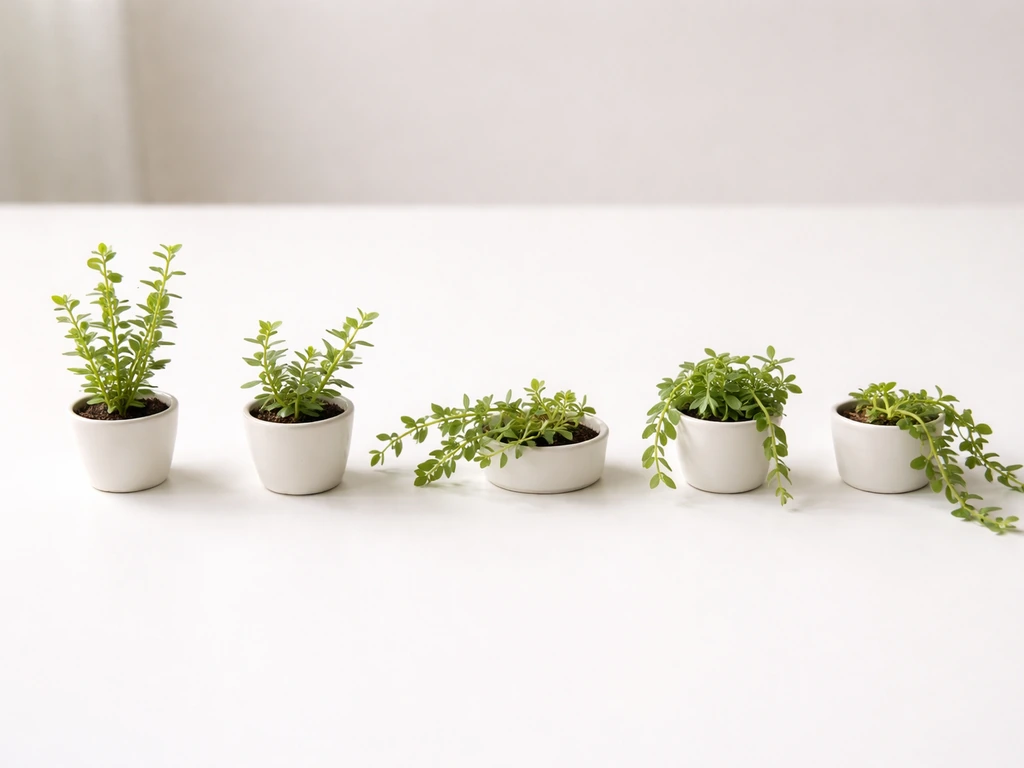
This is where most people get tripped up, and honestly the confusion is understandable because these terms overlap in everyday language but mean specific things in botany. Here's how they actually stack up:
| Term | What it means | Roots at nodes? | Typical use |
|---|---|---|---|
| Prostrate | Stems or whole plant lying flat, very close to ground | Not required | Botanical morphology, field ID keys, extension plant ID |
| Procumbent | Spreading along the ground for most of stem length, not rooting at nodes | No | Botanical glossaries, UPOV plant variety descriptions |
| Creeping | Growing along the ground and emitting roots at intervals | Yes | Ecological descriptions, turf science, field flora glossaries |
| Decumbent | Mostly horizontal but with ascending tips | Not required | Botanical keys where plants partially lie flat |
| Horizontal | Oriented parallel to the ground; used descriptively or in taxon names | N/A | Horticultural naming (e.g., 'horizontalis'), descriptive botany |
| Stoloniferous | Producing stolons (modified horizontal stems) that root at nodes and form colonies | Yes, via stolons | Propagation biology, grass and groundcover ecology |
The word 'horizontal' is worth flagging separately. You'll see it embedded in plant names like Juniperus horizontalis or Ceanothus griseus var. horizontalis, where it signals a prostrate, matting, low-spreading form. A prostrate to low-spreading profile in practice might mean about 60 cm tall and 150 to 450 cm wide. So when a plant name includes 'horizontalis,' treat it as a reliable cue that the growth habit is prostrate or mat-forming, even though 'horizontal' by itself isn't a formal botanical habit term. Similarly, 'parallel to the ground' is an intuitive description, not a technical term, so when writing a plant label or searching a database, translate it to prostrate, procumbent, or creeping based on the node-rooting test.
One more pitfall: the term 'creeping' in a common plant name doesn't always mean the plant roots at nodes. 'Creeping' sometimes just means low and spreading in casual usage. Always confirm by checking whether stolons or node-rooting are mentioned in the species description.
Where these plants actually grow: habitat and climate context
Ground-hugging growth forms are not random. They show up repeatedly in specific environments where staying low is a genuine survival advantage. Understanding those environments helps you predict where to find these plants and confirms whether a growth habit description makes ecological sense for the species you're looking at.
Wind-exposed and alpine environments

In alpine zones, strong winds create powerful selective pressure against tall growth. Taller plants risk mechanical damage from wind leverage, and their delicate growing points are exposed to desiccation and temperature extremes. Prostrate forms stay within the warmer, more humid boundary layer of air right above the soil surface.
Snow cover mosaics in alpine areas also matter: low plants can be insulated under snow in winter and exposed on ridges that blow clear, and the specific microclimate determines which low-growing forms dominate. Creeping juniper is a well-documented example, occurring across northern and upland grassland and steppe-shrubland habitats, where its prostrate stems form large mats across open terrain.
An autecology study of creeping juniper notes that it has numerous prostrate stems with long trailing or creeping branches that form mats across the ground creeping juniper is a well-documented example.
Disturbed ground and compacted soils
Prostrate weeds like prostrate spurge and prostrate knotweed thrive in compacted, low-fertility soils, roadsides, and cracks in pavement. These habitats favor plants that can spread laterally across the surface without investing in upright structure. Knotweed's stems, which can reach about 60 cm in length while staying flat to the ground, let it colonize wide patches of disturbed soil with minimal vertical competition.
Moist, shaded, and lawn environments
Creeping and stoloniferous plants dominate where moisture is reliable and competition from taller vegetation is moderate. Ground ivy spreads via stolons that root aggressively at nodes across lawns and moist, shaded areas. Creeping bentgrass similarly exploits moist turf conditions by spreading via stolons. These node-rooting forms are highly effective colonizers in these environments precisely because each rooted node becomes an independent plant, making them resilient and hard to remove.
Grazed and heavily browsed landscapes
There's solid evidence that prostrate growth habits can also be a response to grazing pressure. Some plant populations, including certain dandelion relatives, adopt flatter rosette forms in grazed areas as a way to avoid being clipped by livestock. This isn't just a growth-form curiosity: it means you might encounter more pronounced prostrate forms in repeatedly grazed pastures than in ungrazed reference plots of the same species. That's a useful thing to know if you're trying to identify a plant in a pasture versus a roadside.
For comparison, plants that grow on mountains more broadly span the full range of habits from upright trees and shrubs at lower elevations to prostrate and cushion forms near the treeline and above. The plants that grow on mountains are called alpine plants. The connection between altitude, wind exposure, and prostrate habit is one of the clearest plant-environment relationships you can observe in the field. Plants that grow on tall trees to access sunlight represent the opposite ecological strategy, trading ground-level stability for vertical access to resources.
How to verify the term and find the right plant
Once you've narrowed down which term fits the plant you're looking at, here's how to confirm it and find the species.
- Search the USDA PLANTS Database using the species name plus terms like 'prostrate,' 'procumbent,' or 'creeping.' The database includes growth habit as a filterable characteristic and gives standardized descriptions you can cross-reference against what you're seeing in the field.
- Use field guide glossaries to confirm the term. Look for entries that explicitly distinguish prostrate from procumbent and creeping by the node-rooting criterion. If the glossary doesn't make that distinction, check a second source.
- Search with the habitat in mind. Combining a growth habit term with a habitat descriptor, like 'prostrate alpine shrub' or 'creeping stolon lawn weed,' narrows results quickly and connects you to ecologically accurate matches.
- Check the species epithet. If a plant name includes 'horizontalis,' 'procumbens,' 'repens,' or 'humifusa,' those are reliable signals of prostrate or creeping habit embedded directly in the Latin name. 'Repens' and 'reptans' specifically signal creeping with node-rooting.
- Look at plant labels and extension resources. Extension publications from land-grant universities frequently use 'Growth Habit: Prostrate' or 'Spreading via stolons' as standardized descriptors in their plant ID tools, which map directly onto the botanical terms.
- Confirm in person using the node-rooting test. Gently lift a section of stem from the soil. Check nodes for roots or root primordia. Combine that with measuring the spread-to-height ratio to match what field guides describe for your candidate species.
If you're building a plant list for a specific climate zone or habitat, sorting by growth habit is one of the most practical filters available. Prostrate and creeping forms cluster in predictable environments, and once you know what to call them and what to look for, identifying them in the field becomes a much faster process.
FAQ
Can the same species be both prostrate and creeping?
Yes, a plant can show more than one pattern over its life. For example, a species may initially lie close to the ground as new stems develop, then later produce trailing branches that either root at nodes (creeping) or remain non-rooting (procumbent). Recheck the node under humid conditions, when rooting is easiest to detect.
What if the stems touch the soil but I do not see roots right away?
If stems contact soil intermittently, look for roots specifically at nodes, not just along the stem. Crepping requires node-rooting at intervals, whereas procumbent plants may touch down without forming roots where leaves or buds originate.
How do I measure height and spread when the plant is a messy mat?
Measure the height of the tallest leaf or stem tip, but measure spread as the farthest lateral extent of the prostrate mat. In low-lying species, leaf posture can mislead height, so the clean comparison is tallest growing point versus overall lateral coverage (width).
Are common plant-name uses of “creeping” always accurate for botany?
Don’t rely on the word “creeping” from casual labels. Confirm whether stolons are present and whether new roots emerge from the underside at nodes. If the description mentions stolons or rooting at nodes, that supports creeping/stoloniferous rather than a simple low-spreading look.
How can I tell the difference between prostrate and decumbent when only the tips lift?
Look for the growth direction of the stem tips. Decumbent forms keep the base low but curve upward at the ends, while prostrate forms keep branches near-horizontal with minimal upward angle. If only a few tips rise, treat it as decumbent rather than purely prostrate.
What should I do if the stems are on dry mulch or rocks and I cannot see whether they root?
If you cannot see soil contact, use indirect checks: search for scars or nodes where adventitious roots may have formed, and examine a moist underside where roots are most likely to have started. In dry sites, node-rooting can be less obvious until after rain.
Can soil compaction or fertilization change whether a plant looks prostrate versus procumbent?
Yes, growth habit can shift with disturbance and nutrients. Compacted or frequently disturbed ground often favors more extensive lateral spread (sometimes more prostrate or procumbent). In less disturbed, more shaded spots, the same species may grow less sprawling or root more readily at nodes.
How do I avoid mixing up low rosette plants with prostrate mat-formers?
To avoid confusing prostrate stems with a rosette, compare stem elongation and rooting points. Rosette plants can stay low but their leaves sit on or near the ground without the long, ground-running stems that create mats and node-rooting patterns.
What’s the quickest way to use a dichotomous key when it lumps prostrate and decumbent together?
If a field guide groups “prostrate or decumbent” into one couplet, you can resolve it by checking tip angle and whether bases remain horizontal. Take a photo from the side, then compare stem tip angle to the plane of the soil surface under similar light.
How much should I trust habitat (windy alpine sites, roadsides, lawns) when identifying the correct growth-term?
The habitat clue is helpful, but it is not proof. Confirm with the node-rooting test and stem posture, since similar growth forms can evolve in different unrelated groups. Use habitat to prioritize candidates, then use morphology to verify the term.