
Strawberries, bermudagrass, white clover, creeping bentgrass, zoysiagrass, and buffalo grass are some of the most common plants that grow and spread from stolons. A stolon is a horizontal stem that travels at or near the soil surface and roots at its nodes to form new plants. That's the key trait: rooting at nodes along an above-ground stem. If you can see that happening, you have a true stolon, and you can use that runner to propagate a new plant in the right conditions.
Which Plant Can Grow From Stolons? Top Options and Steps

Dr. Marcus Weatherby
2 Jun 2026
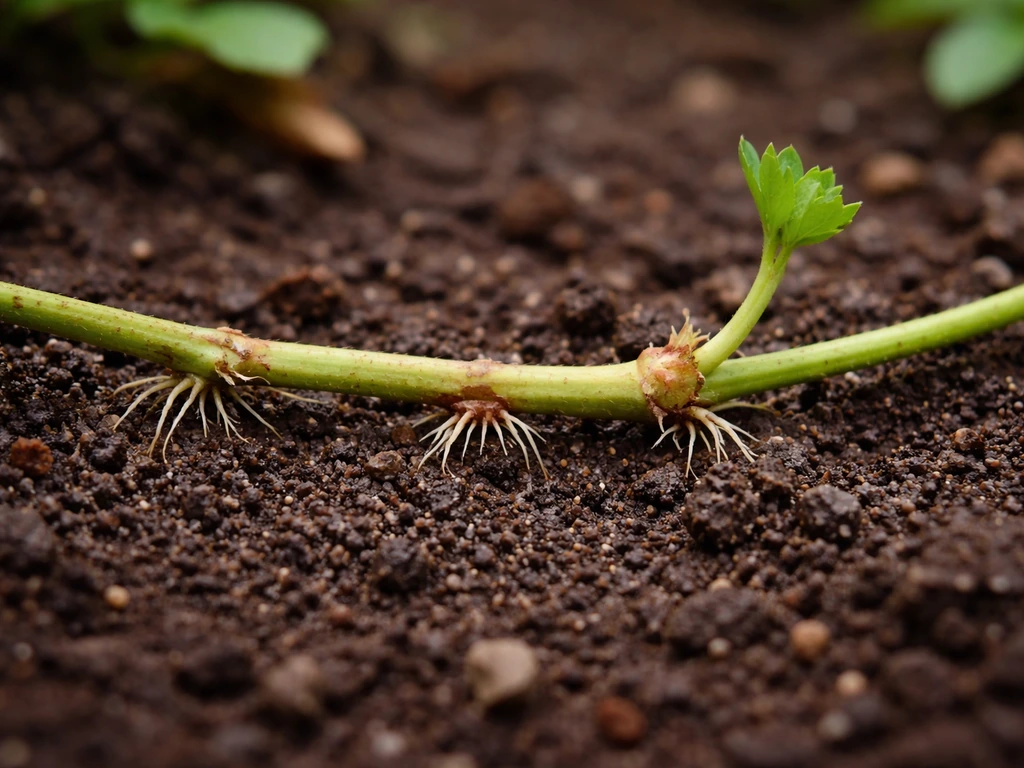
Plants that naturally spread by stolons (what to look for)
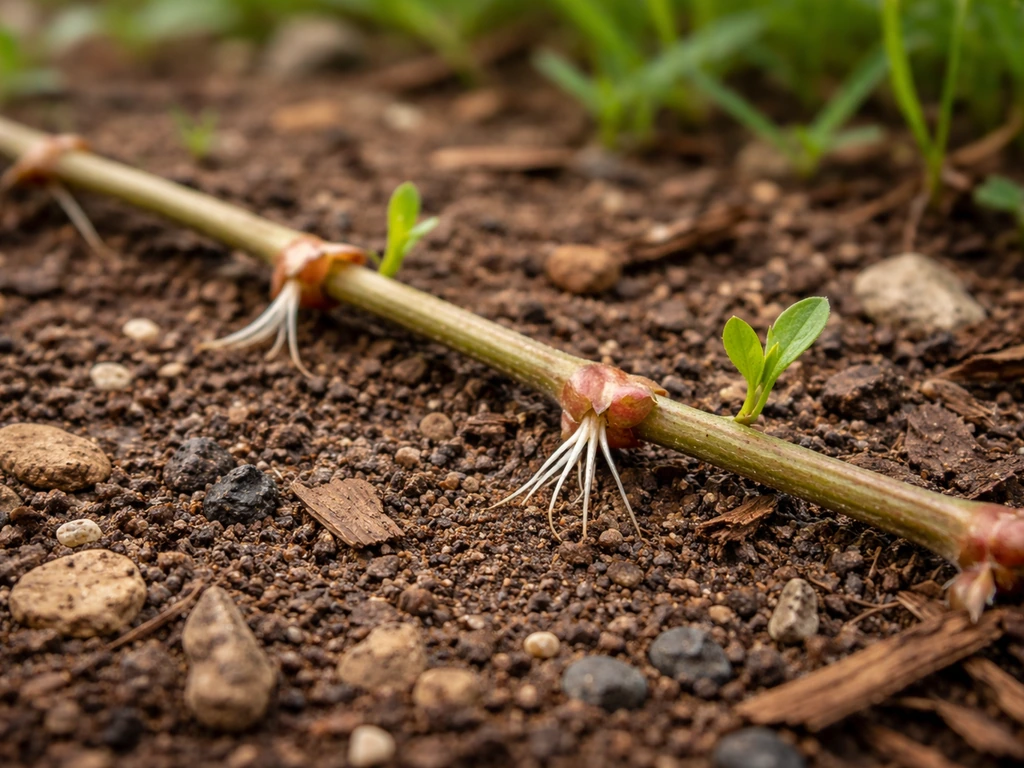
A stolon isn't just any horizontal stem. What makes it a stolon is that it stays near or at the soil surface and produces roots and shoots at nodes while it travels. This distinguishes it from a rhizome, which is an underground horizontal stem that often acts as a storage organ. If you pull up a spreading stem and it was running underground, it's almost certainly a rhizome, not a stolon. Plants that grow from rhizomes behave differently in the soil and need different handling when you propagate them.
The most recognizable example most people have seen is a strawberry runner. The mother plant sends out a long arching stem, that stem touches down on soil, and a new daughter plant roots in right there. Watch it long enough and you can see the whole cycle. Bermudagrass does the same thing across lawns in warm climates, creeping bentgrass does it on golf courses and damp meadows, and white clover does it quietly across pastures and lawns the world over. What they all share: horizontal above-ground stems, nodes that contact the soil, and roots that form at those nodes.
- Strawberry (Fragaria spp.): sends out long runners that produce rooted daughter plants at their tips
- Bermudagrass (Cynodon dactylon): dense above-ground stolons that root aggressively at every node
- Creeping bentgrass (Agrostis stolonifera): fine-textured stolons that root as they travel across the soil surface
- White clover (Trifolium repens): low-growing above-ground stolons that root at nodes throughout the plant
- Zoysiagrass (Zoysia spp.): spreads by both stolons and rhizomes, forming a dense mat over time
- Buffalo grass (Buchloe dactyloides): stoloniferous warm-season grass native to North American plains
Common stolon-forming plants by climate
Which stolon-forming plants will actually work for you depends heavily on where you are. Warm-season grasses like bermudagrass and buffalo grass dominate in hot, sunny climates, while cool-season types like creeping bentgrass and white clover are much more at home in mild, moist conditions. Here's a practical breakdown by climate zone.
| Plant | Climate / Zone | Habitat preference | Key stolon trait |
|---|---|---|---|
| Bermudagrass (Cynodon dactylon) | Warm/subtropical, USDA zones 7–10 | Full sun, well-drained, tolerates drought | Dense surface stolons root at every node; spreads aggressively |
| Buffalo grass (Buchloe dactyloides) | Semi-arid plains, zones 3–9 | Full sun, dry to moderately moist, clay or loam | Short stolons form dense low-growing mats; excellent drought tolerance |
| Zoysiagrass (Zoysia spp.) | Warm to transitional, zones 5–9 | Full sun to light shade, well-drained, pH 6.0–7.0 | Spreads by both stolons and rhizomes; slow but thorough coverage |
| Creeping bentgrass (Agrostis stolonifera) | Cool/temperate, zones 4–8 | Moist soils, tolerates shade, cool summers | Fine stolons root along their length; can spread into wetland edges |
| White clover (Trifolium repens) | Cool temperate, zones 3–9 | Well-drained fertile soil, pH 6–7, cool moist weather | Above-ground stolons root at nodes; thrives between 50–85°F |
| Strawberry (Fragaria × ananassa) | Temperate, zones 5–8 | Well-drained loam, full sun to part shade | Long runners produce rooted daughter plants at tips |
If you're in a transitional climate zone (roughly USDA zones 6–7), you have the most flexibility. Zoysiagrass handles the heat, white clover fills in during spring and fall, and strawberries do well through most of the season. In drier inland regions, buffalo grass is the stolon-forming groundcover that actually makes ecological sense rather than fighting the climate.
How to tell if a plant actually spreads by stolons
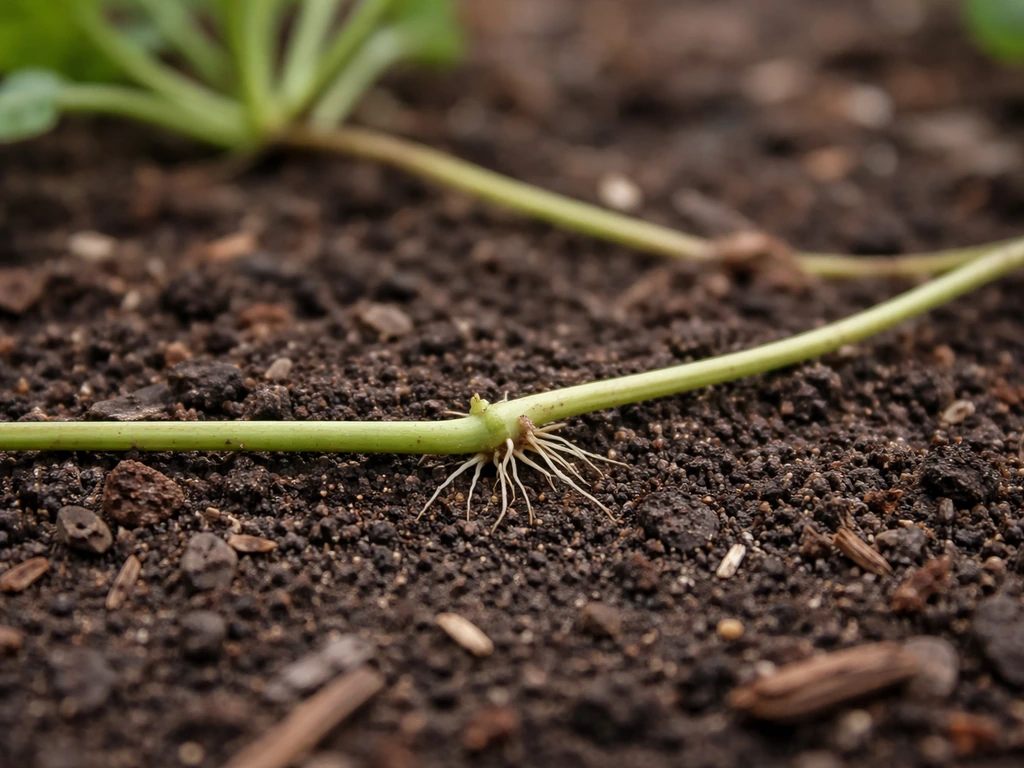
This is where a lot of gardeners get confused. Not every spreading plant is spreading by stolons. Some spread by rhizomes underground, some by seed, some by offsets from the crown, and some by true cuttings that root only when deliberately placed in moist media. Before you try to propagate from a runner or spreading stem, take a moment to confirm what you're actually looking at.
The clearest sign of a true stolon is rooting at nodes while the stem is still horizontal and above ground. Dig gently around a spreading stem. If it's running along the surface (or just barely under the surface) and you can see small roots emerging from the nodes where the stem touches the soil, that's a stolon. If the stem is running underground and looks fleshy or swollen, it's more likely a rhizome. Plants that grow from rhizomes are a related but distinct topic, and they behave quite differently when you propagate them.
- Trace a spreading stem back to the mother plant and note whether it runs above or below the soil surface
- Look at the nodes (the joints along the stem) for small white root nubs or fine hair roots contacting the soil
- Check whether new rosettes or shoots are forming at those nodes, not just at the stem tip
- Pull the stem gently: a stolon will often separate at a rooted node without much resistance, because it has already started establishing
- If the stem is below ground and appears thicker or more storage-like, compare it to descriptions of rhizomes before proceeding
It's also worth distinguishing stolons from simple stem cuttings. A cutting has no pre-formed roots at nodes; you're creating the rooting event artificially. A stolon node that has already contacted moist soil has often already begun rooting on its own. That head start is exactly what makes stolon propagation faster and more reliable than most cutting methods.
How to propagate plants from stolons
When to do it
For most stolon-forming plants, the best time to propagate is during active vegetative growth, when the plant is producing runners naturally. For warm-season grasses like bermudagrass and zoysiagrass, that's late spring through midsummer in most regions. For strawberries, runners typically appear after the main fruiting period (late spring through early summer in temperate climates). White clover and creeping bentgrass are best handled in cool, moist conditions, either spring or early fall, when soil stays consistently moist and temperatures sit between roughly 50 and 75°F.
Rooting steps
- Identify a healthy stolon with at least one node that shows root nubs or is close to the soil surface
- For strawberries and clover: leave the stolon attached to the mother plant and press the rooting node firmly into moist, prepared soil at the destination spot; anchor it with a wire pin or a small stone if needed
- For grasses like bermudagrass or bentgrass: cut a section of stolon that includes at least two to three nodes, keep it moist immediately after cutting, and press it horizontally into a prepared seedbed so nodes contact soil directly
- Water immediately and keep the rooting zone consistently moist; for strawberry runners, mist propagation (as used in commercial settings) produces roots in as little as 5–10 days
- Do not bury the stolon deeply; the nodes need to stay near the surface with light contact to moist soil, not submerged in it
- Once you see strong new leaf growth from the rooted nodes (typically 1–3 weeks depending on species and temperature), the new plant is establishing and can be separated from the mother plant if still attached
Aftercare
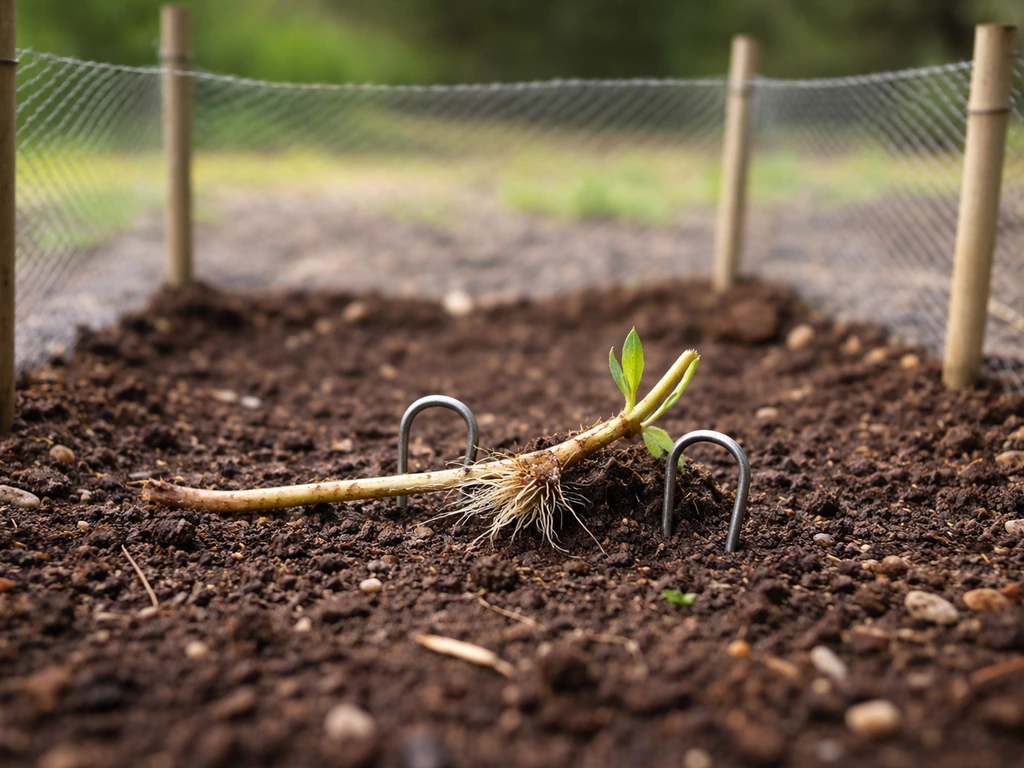
Keep foot traffic and disturbance away from newly rooted stolons for the first two to four weeks. The connection between node and soil is fragile until the root system has some depth. For strawberries, once the daughter plant has formed a strong rosette and has visible root mass, sever the runner connecting it to the mother plant and let it grow independently. For grasses, new shoots emerging from stolon nodes are a reliable sign that the plant has taken hold. Reduce watering frequency gradually once you see that growth, but don't let the soil dry out completely until roots are at least a few centimeters deep.
What conditions stolons actually need to root
Stolons are not magic. They root reliably only when the environment cooperates. Here's what matters most, and where each factor can trip you up.
| Condition | Ideal range | What goes wrong outside it |
|---|---|---|
| Soil moisture | Consistently moist, not waterlogged | Dry soil: nodes desiccate before roots form. Waterlogged: nodes rot. |
| Soil type | Well-drained loam or sandy loam; some species tolerate clay | Heavy compacted clay blocks rooting; pure sand dries too fast |
| Soil pH | 6.0–7.0 for most species | Outside this range, nutrient availability drops and establishment slows |
| Light | Full sun for warm-season grasses; partial shade tolerated by clover and bentgrass | Deep shade inhibits stolons on most grass species |
| Temperature | 50–85°F for cool-season types; 70–95°F for warm-season grasses | Cold soil slows rooting; frost kills exposed stolons without protection |
| Soil contact | Nodes must physically touch moist soil | Nodes suspended in air will not root regardless of other conditions |
Soil contact is the one people underestimate. I've seen gardeners lay strawberry runners on top of mulch expecting them to root through it. They won't. The node needs to press directly against mineral soil or a fine growing medium. If your planting area has heavy mulch, pull it back, press the node into the soil underneath, then pull the mulch back around (not over) the node.
Where stolons won't work, and what to do instead
Stolon propagation fails in predictable situations. Knowing them before you start saves a lot of wasted effort.
- Frozen or cold soil (below about 45°F): nodes cannot initiate roots in cold soil, and exposed stolons are vulnerable to frost damage without the buffer of underground placement
- Compacted or hydrophobic soil: nodes sitting on a hard surface or soil that repels water will dry out before roots form; loosen and amend the soil first
- Deep shade: most stolon-forming grasses fail in heavy shade; creeping bentgrass is the most shade-tolerant grass on this list but still needs some light
- Dry climates without irrigation: stolons from moisture-loving species like white clover and bentgrass cannot establish without consistent soil moisture; in arid regions, buffalo grass is a far better fit
- Species mismatch with climate: trying to establish bermudagrass by stolons in a cool northern climate (zones 5 and below) leads to winterkill of the above-ground stolons every year
Invasiveness is a real concern with some of these plants. Bermudagrass and creeping bentgrass both produce stolons that can survive mowing, fragmentation, and light soil disturbance, which is exactly what makes them effective and exactly what makes them persistent weeds when they escape into areas where you don't want them. Creeping bentgrass in particular has been flagged for its ability to establish from stolon fragments that spread into native plant communities. If you're working near natural areas, meadows, or wetland edges, these are choices to make carefully.
When stolon propagation isn't the right fit, consider the alternatives based on the same vegetative propagation logic. Plants that spread underground, like many ornamental grasses and some ferns, are better propagated by dividing rhizomes. Plants that grow from spores are produced through a completely different life cycle than stolons, but you can still propagate them when you understand how spores develop. Plants that produce swollen underground storage stems are propagated from tubers or corms. And if you're working with a species that doesn't spread naturally at all, stem cuttings or layering (bending and pinning a living stem to soil until it roots) may be the right approach. Gardening Know How also describes pegging or anchoring strawberry runners in medium so daughter plants root while still attached to the mother plant, a layering-like approach layering (bending and pinning a living stem to soil until it roots). The key difference from stolons is that with layering you're creating the rooting event artificially rather than harvesting a node that's already started the process.
The bottom line for choosing the right plant for your region: match the stolon-forming species to your climate zone before you worry about propagation technique. A strawberry runner in zone 6 fertile loam is going to root in a week with almost no effort. A bermudagrass stolon in a shaded zone 5 garden is going to struggle no matter how carefully you pin it down. Get the species-climate match right first, then the propagation mechanics fall into place.
FAQ
Which plant can grow from stolons besides strawberries and bermudagrass?
White clover, creeping bentgrass, zoysiagrass, and buffalo grass are also reliable stolon spreaders. Each roots from nodes that stay near the soil surface, so if you do not see node-to-soil contact, it is likely not a stolon.
How can I tell if the plant spreading in my yard is using stolons or rhizomes?
Look for where the stem is relative to the soil while it travels, stolons run at or just under the surface and form roots at nodes. Rhizomes move underground and often look more swollen or fleshy, with the new shoots arising from the underground stem rather than from a node that was touching open soil.
Can I propagate from stolons if the nodes are not touching soil yet?
Usually you need contact. If a node is suspended above the soil, it has not started the rooting process, so it behaves more like a cutting. The practical fix is to press the node into mineral soil or a fine growing medium so it can take up moisture and form roots.
Do stolons root through mulch if I pin a strawberry runner down?
Often no, thick mulch can block the node from making direct contact with soil or from staying consistently moist. A common approach is to pull mulch back, press the node into the soil underneath, then place mulch around the node without covering it.
What spacing should I use for stolon propagation, so new plants do not compete too early?
Give daughter plants room to build roots and leaves before they fully crowd the mother. For strawberry runners, separating once the rosette has visible root mass helps prevent tangled runners and uneven growth, for grasses, new shoots emerging from nodes is a cue to thin or manage spacing as they expand.
How long should I leave the stolon attached before separating it?
Do not separate until the daughter plant has established roots and visible above-ground growth, often after a few weeks. A typical rule is two to four weeks of minimal disturbance, then sever the connection when the daughter has enough root mass to stand on its own.
Why did my stolon propagation fail even though I pinned it down?
The most common causes are poor soil contact, inconsistent moisture, and too much traffic or disturbance while roots are forming. Also check timing, many stolon-formers need active vegetative growth, so propagating outside their growth window can stall rooting.
Is there a risk that stolon-forming plants become invasive or escape?
Yes. Bermudagrass and creeping bentgrass in particular can persist from fragments and mowing, which makes them problematic near areas you want to keep stable. If you are near natural areas or wet edges, plan for containment or choose a less persistent option.
Which stolon-forming plants are best suited for my climate zone?
Warm-season choices like bermudagrass, zoysiagrass, and buffalo grass tend to perform in hotter sunny climates, cool-season options like white clover and creeping bentgrass prefer cooler, moist conditions. Transitional zones are often more forgiving for multiple stolon-formers, but drought or heat stress still reduces success.
Are stolon propagation and layering the same thing?
They are different. With stolons, you are harvesting or relocating a node that already starts rooting after contacting soil. With layering, you intentionally create the rooting event by bending and pinning a stem to soil, so it can take longer and usually requires tighter moisture management.