Yes, plants absolutely can grow in sand. The key is understanding what sand actually does to roots, water, and nutrients, and then either working with those conditions by choosing the right species or adjusting the substrate enough to keep plants alive. I've walked coastal dunes, desert flats, and scrubby inland sand barrens, and the one thing they all have in common is that the plants there have figured out exactly what sand demands of them. Plants that grow in coastal areas are called coastal plants, and they are adapted to salty, well-drained sand and shifting conditions plants there have figured out exactly what sand demands of them. You can too.
Plants That Will Grow in Sand: Best Options and How to Grow Them

Dr. Marcus Weatherby
24 Mar 2026
Why sand is genuinely hard to grow in
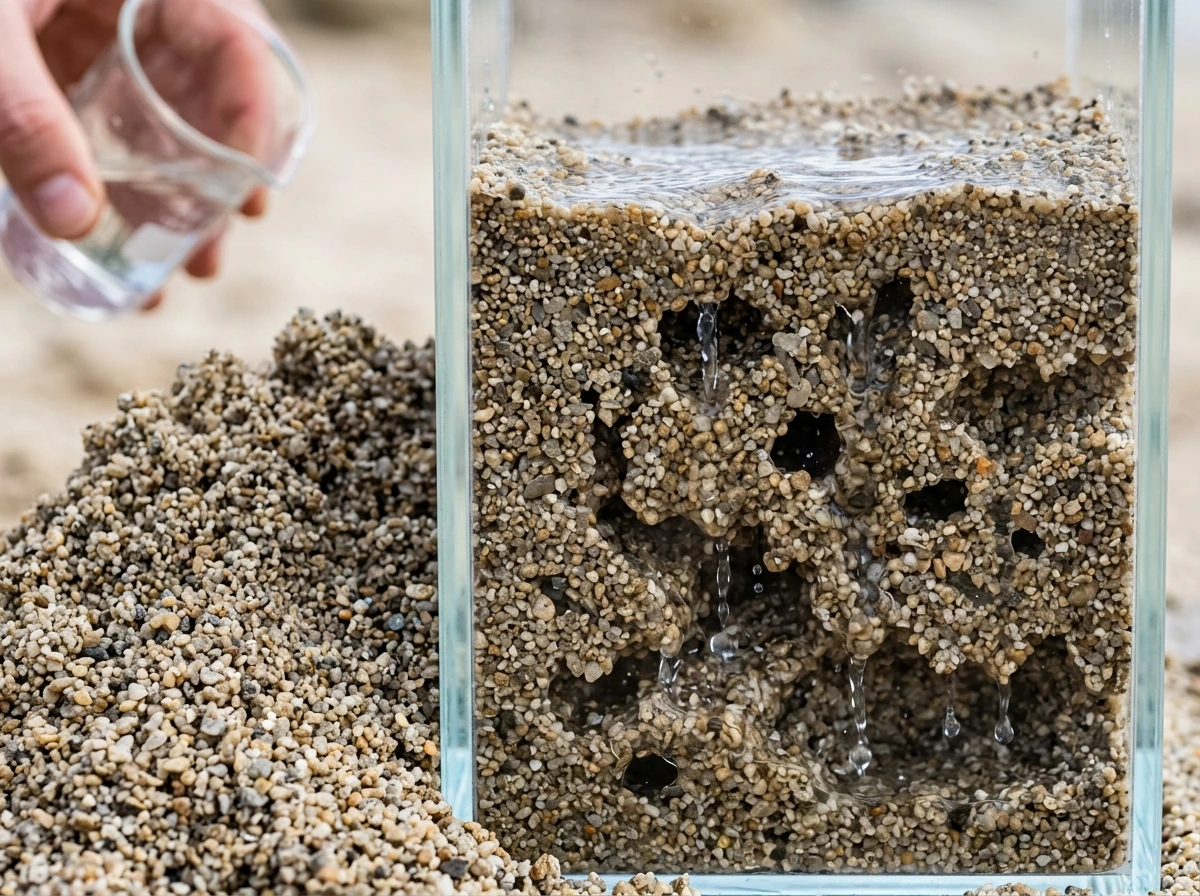
Sand particles are large and round, which means there are big air gaps between them. Those gaps are great for drainage but terrible for holding water. Water moves through sandy soil quickly, pulled down by gravity before roots can absorb much of it. Research from Penn State Extension describes this well: sandy soils have large air spaces that cannot hold water against gravity, making them prone to drought and forcing roots to keep exploring constantly just to find moisture.
The numbers back this up. The available water holding capacity for coarse sand sits at roughly 0.02 to 0.06 inches of water per inch of soil depth, compared to significantly higher values for loam or clay-rich soils. In practical terms, that means sandy soils run out of plant-available water fast, and according to Oklahoma State University Extension guidance, they require more frequent irrigation at smaller volumes than almost any other soil type.
Then there's the nutrient problem. Sand has an extremely low cation exchange capacity (CEC), typically less than 2 meq per 100 grams of soil. CEC is basically a soil's ability to hold onto positively charged nutrient ions like calcium, potassium, and magnesium so they don't get flushed away. With CEC that low, every time it rains or you water, nutrients leach straight out of the root zone. It's not that sandy soil is toxic to plants. It's that it's nearly empty, and it stays that way unless you actively replenish it.
How plants actually manage to grow in sand
The plants that succeed in sandy environments have evolved specific strategies rather than fighting against these conditions. The most common approach is a deep, wide-ranging root system. Plants like beach grass and many native prairie species send roots down several feet to reach moisture that has percolated below the dry surface zone. Others develop thick, waxy, or succulent leaves that reduce water loss through transpiration so the plant can survive on less frequent moisture.
Some sand-adapted plants form relationships with mycorrhizal fungi, which dramatically extend their effective root reach. Washington State University Extension cautions that mycorrhizal inoculants or inoculant products may not meaningfully improve results in many soils, since outcomes depend on factors like phosphorus levels, soil pH, existing fungal communities, and host compatibility. The fungi threads network through the sandy substrate far more efficiently than roots alone, pulling in phosphorus and other nutrients that would otherwise be unavailable. Many of the toughest sand plants, including oaks in scrubby habitats and most conifers in sandy pine barrens, rely heavily on these fungal partnerships.
A few nitrogen-fixing plants, like sea buckthorn and certain lupines, solve the nutrient scarcity problem from a different angle by manufacturing their own nitrogen supply through root bacteria. This is exactly why you often see nitrogen-fixers colonizing dunes and sand flats first. They enrich the substrate a little, which makes it slightly more hospitable for the next wave of plants.
Best plants for general sandy soil
If you're dealing with sandy inland soil rather than coastal or dune conditions, you have more options than you might expect. The plants below are well-documented in sandy, well-drained habitats and can handle the low nutrient and low moisture-retention realities of sand without constant intervention, so you can find what plants grow in beach sand
Herbaceous plants and groundcovers
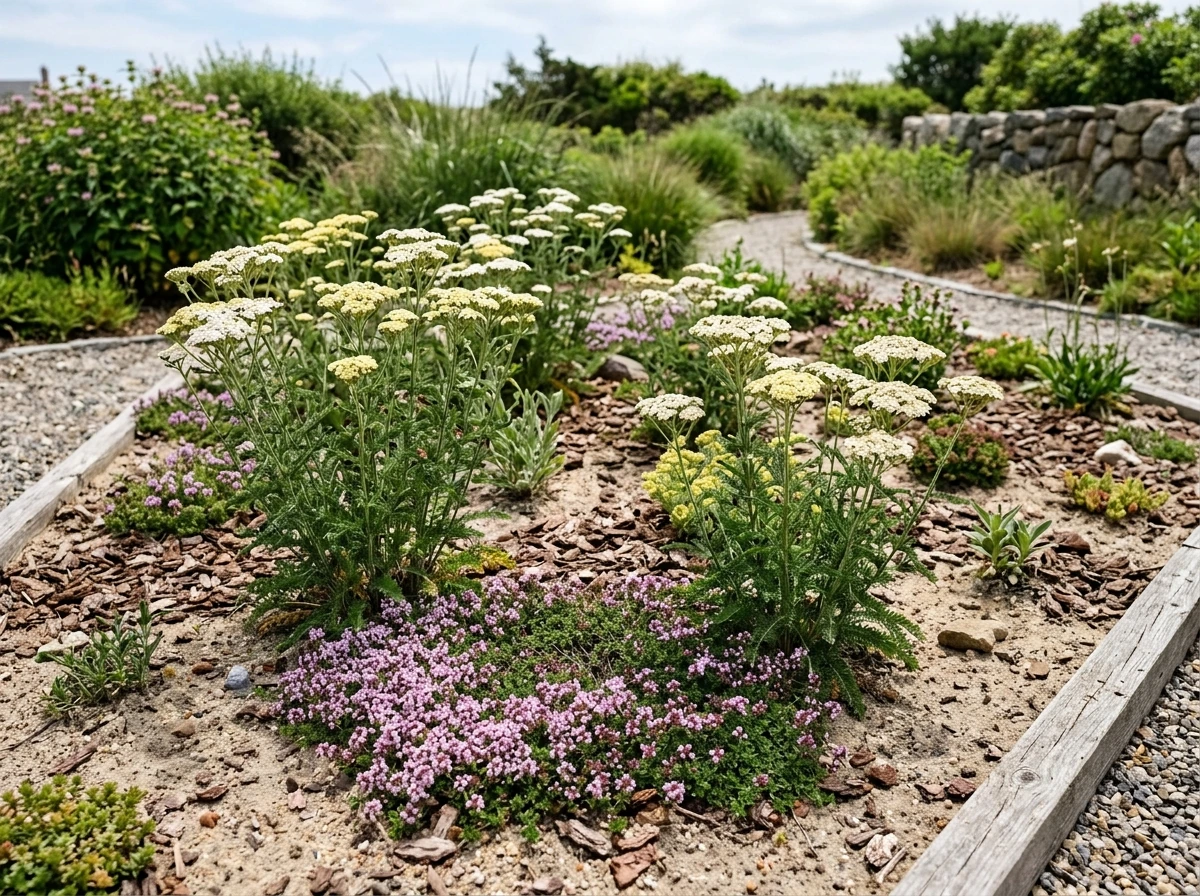
- Yarrow (Achillea millefolium): native to dry, sandy meadows across North America and Europe; spreads aggressively through root runners and tolerates extremely well-drained conditions
- Lavender (Lavandula spp.): evolved in rocky, sandy Mediterranean soils; actually grows better in low-fertility sand than in rich soil, which causes it to flop and rot
- Thyme (Thymus spp.): another Mediterranean native that thrives in shallow, sandy, and rocky substrates with low organic matter
- Black-eyed Susan (Rudbeckia hirta): a native prairie plant common in sandy, disturbed soils across the central and eastern US
- Portulaca/Moss Rose (Portulaca grandiflora): succulent stems and leaves allow it to thrive in hot, dry sand with minimal water
- Dusty Miller (Senecio cineraria): silvery-leaved plant native to sandy coastal cliffs and dry sandy habitats; extremely drought tolerant
- Evening Primrose (Oenothera spp.): a pioneering species that colonizes sandy and gravelly soils naturally
Shrubs and trees for sandy ground
- Scotch Broom (Cytisus scoparius): a nitrogen-fixer that colonizes sandy and gravelly slopes; note it is invasive in parts of North America and the Pacific Northwest
- Bayberry (Morella/Myrica spp.): a native North American shrub common in sandy coastal plains; fixes nitrogen and tolerates nutrient-poor sandy soils
- Bearberry (Arctostaphylos uva-ursi): a low-growing shrub native to sandy and gravelly ground across boreal and sub-arctic zones
- Eastern Red Cedar (Juniperus virginiana): grows across a huge range in the eastern US, including sandy, dry upland sites with minimal soil development
- Longleaf Pine (Pinus palustris): the defining tree of the southeastern US sand barrens and flatwoods; highly adapted to infertile, well-drained sandy soils
- Pitch Pine (Pinus rigida): tolerates extremely sandy, nutrient-poor barrens; the dominant tree of the New Jersey Pine Barrens
- Scrub Oak (Quercus ilicifolia): a short, sprawling oak adapted specifically to dry sandy scrub habitats in the eastern US
Plants specifically for sand dunes and beach sand
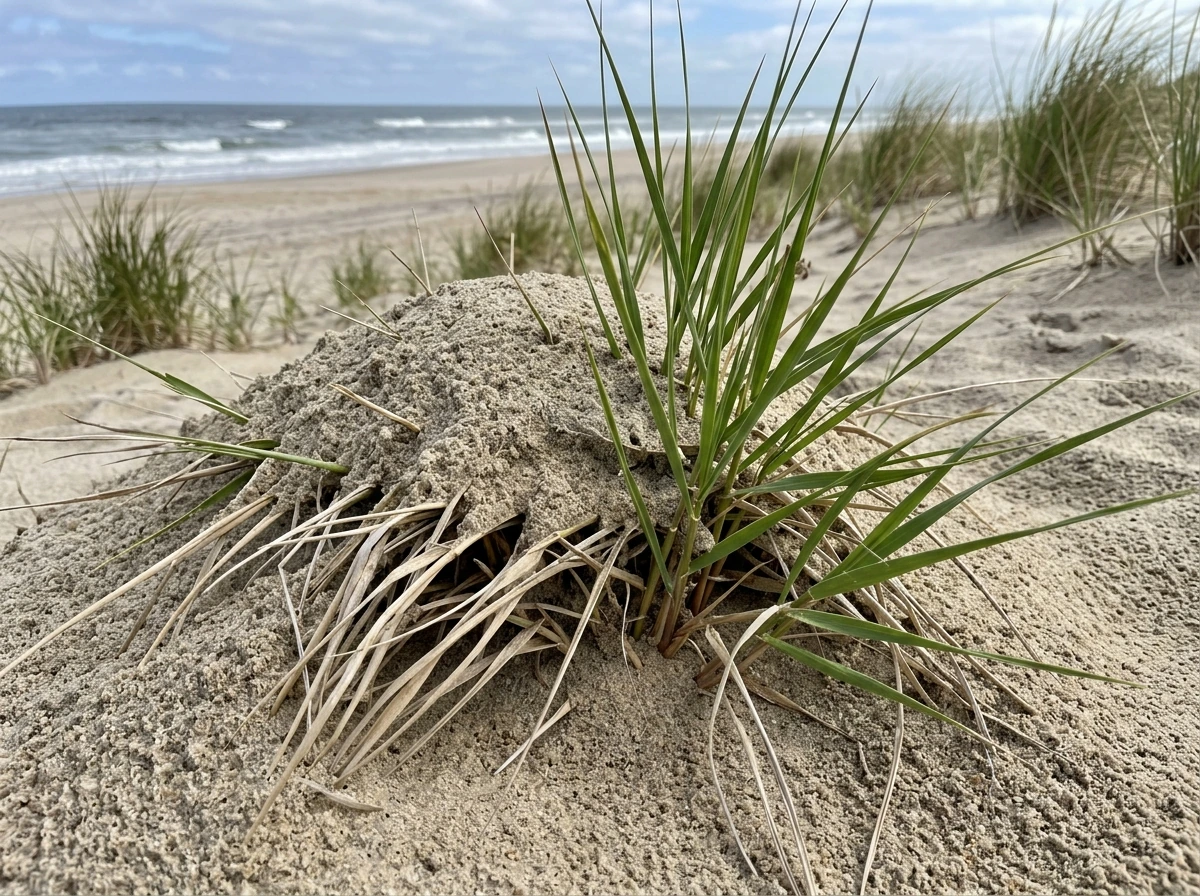
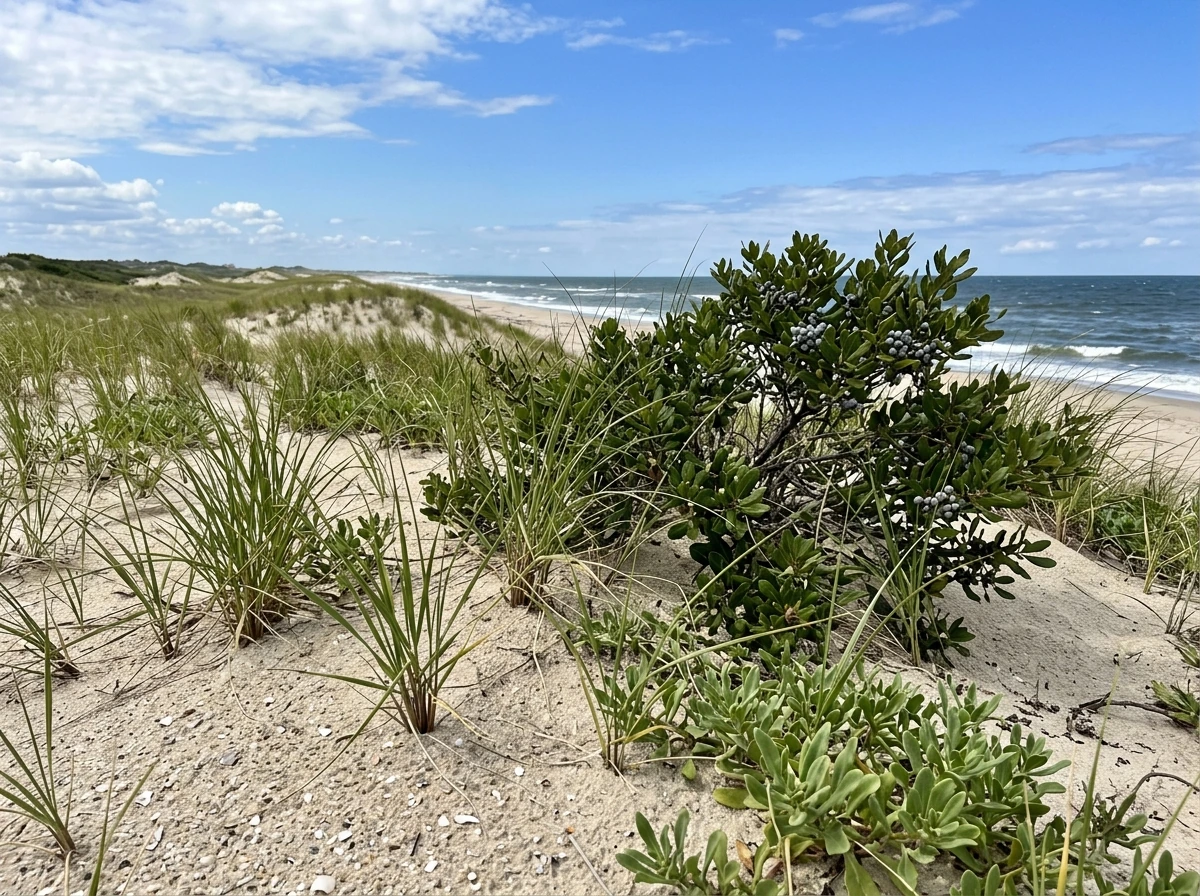
Beach sand and dune environments add two extra stressors on top of the standard sandy-soil challenges: salt and wind. Salt spray coats leaves and can desiccate them rapidly. Wind accelerates moisture loss and, on active dunes, can physically bury or expose roots. The plants that work here are a narrower group, but they're remarkably tough, if you're curious what plants grow in the ocean, sea buckthorn and other salt- and wind-tough species are often good starting points here.
Coral reefs are different from sand or dunes, but they can still support plant-like life such as seagrasses and algae. You can read more about the specific ecology of coastal plant communities in related guides on what plants grow in coastal areas and what plants grow in beach sand. Plants that grow in coastal areas are called coastal plants.
Dune grasses and groundcovers
- American Beach Grass (Ammophila breviligulata): the primary dune-builder on the US Atlantic coast; its rhizome network actually grows faster when sand buries it, making it uniquely suited to shifting dunes
- European Beach Grass (Ammophila arenaria): the equivalent species on European coasts and widely used (and now invasive in places) on US Pacific dunes
- Sea Oats (Uniola paniculata): the dominant dune grass on the US Gulf and southeastern Atlantic coast; highly salt-tolerant and protected in many states because of its dune-stabilization role
- Seaside Panicum / Switchgrass (Panicum virgatum): native to coastal and inland sandy sites; handles salt spray, drought, and poor sandy soil
- Saltmeadow Cordgrass (Spartina patens): found on sandy flats and dune hollows, highly salt-tolerant
- Beach Vitex (Vitex rotundifolia): a low-growing, sprawling shrub native to Asian coasts but widely used and now invasive in the southeastern US; extremely salt and drought tolerant
- Sea Rocket (Cakile edentula): a fleshy annual that colonizes the high-tide line and frontal dunes; one of the first plants to establish on raw beach sand
Shrubs for dune and coastal sand
- Beach Plum (Prunus maritima): a native shrub of the northeastern US coast; grows in pure sand, tolerates salt spray, and produces edible fruit
- Seaside Goldenrod (Solidago sempervirens): one of the most salt-tolerant flowering plants; common on dunes and sandy bluffs along the Atlantic coast
- Sea Buckthorn (Hippophae rhamnoides): a thorny nitrogen-fixing shrub native to European and Asian coastal sands; fixes nitrogen and stabilizes sandy banks
- Rugosa Rose (Rosa rugosa): native to sandy coastal habitats in eastern Asia; widely naturalized on North American and European dunes; thick, wrinkled leaves resist salt spray
- Wax Myrtle (Morella cerifera): a fast-growing shrub native to sandy, coastal plain soils from New Jersey to Texas; fixes nitrogen and tolerates salt
A side-by-side look at plant options by sand type
| Plant | Best Sand Context | Key Tolerance | Growth Form |
|---|---|---|---|
| American Beach Grass | Active coastal dunes | Salt, burial, drought | Rhizomatous grass |
| Sea Oats | Southeastern coastal dunes | Salt, wind, drought | Clump-forming grass |
| Pitch Pine | Inland sandy barrens | Drought, fire, nutrient poverty | Tree |
| Lavender | Inland sandy/rocky soil | Drought, low fertility | Shrub/herb |
| Bayberry | Coastal and inland sand | Salt, drought, low nutrients | Shrub (N-fixer) |
| Rugosa Rose | Coastal dunes and sandy shores | Salt spray, drought | Shrub |
| Bearberry | Sandy, gravelly, boreal soils | Cold, drought, low fertility | Low shrub/groundcover |
| Black-eyed Susan | Inland dry sandy meadows | Drought, low fertility | Herbaceous perennial |
| Portulaca | Any hot, dry sand | Intense heat, drought | Succulent annual |
| Sea Buckthorn | Coastal and riparian sand | Salt, drought, erosion | Shrub (N-fixer) |
For beach and dune settings, American Beach Grass or Sea Oats are the most practical starting point on the US coasts because they are specifically built to anchor moving sand. For inland sandy soil where salt isn't a factor, Bayberry, Bearberry, or native pines give you low-maintenance structure, and lavender or yarrow fill in the understory beautifully.
How to actually prepare sand and get plants established
The most common mistake I see is treating sandy soil exactly like garden soil. You can't just dig a hole, drop in a plant, and walk away. But you also don't need to haul in truckloads of topsoil. The goal is to make targeted improvements at the root zone, not overhaul the entire site.
- Test your sand: Before anything else, do a basic soil test. It will tell you pH (most sandy soils run slightly acidic to neutral, around 5.5–6.5) and will flag any extreme nutrient deficiencies. This tells you exactly what you're working with rather than guessing.
- Add organic matter at planting: Mix compost into the planting hole at a ratio of roughly 1 part compost to 3 parts existing sand. This is not about transforming the soil type. It's about raising organic matter locally so the root zone holds slightly more water and nutrients during establishment. Aim for a finished mix with 5–10% organic matter by volume in the immediate planting area.
- Add a slow-release fertilizer at planting: Because sandy soil leaches nutrients so quickly, a granular slow-release fertilizer (look for 3–6 month formulations) placed at root depth gives young plants a nutrient reservoir that won't wash away in the first rain.
- Inoculate with mycorrhizal fungi: This is especially useful in sterile or disturbed sand. Sprinkle mycorrhizal inoculant directly on the root ball at planting. For sand-adapted native plants especially, this can dramatically improve establishment.
- Mulch the surface: Apply 2–3 inches of organic mulch (wood chips, pine needles, or straw) over the planted area. Mulch dramatically reduces evaporation from the sandy surface. On dune or beach environments, use sand-appropriate materials or established grasses instead of loose organic mulch, which will blow away.
- Plant at the right depth: Deeper is generally better in sand. The moisture and temperature swings at the surface of sandy soil are extreme. Planting slightly deeper (by an inch or two beyond the root ball for most species) puts roots closer to the more stable moisture zone below.
- Water deeply and slowly at planting: Soak the root zone thoroughly at installation to settle the soil and ensure roots make contact with moisture. In the first two to four weeks, water every two to three days depending on temperature, then begin extending intervals to push roots deeper.
Watering and feeding once plants are in the ground
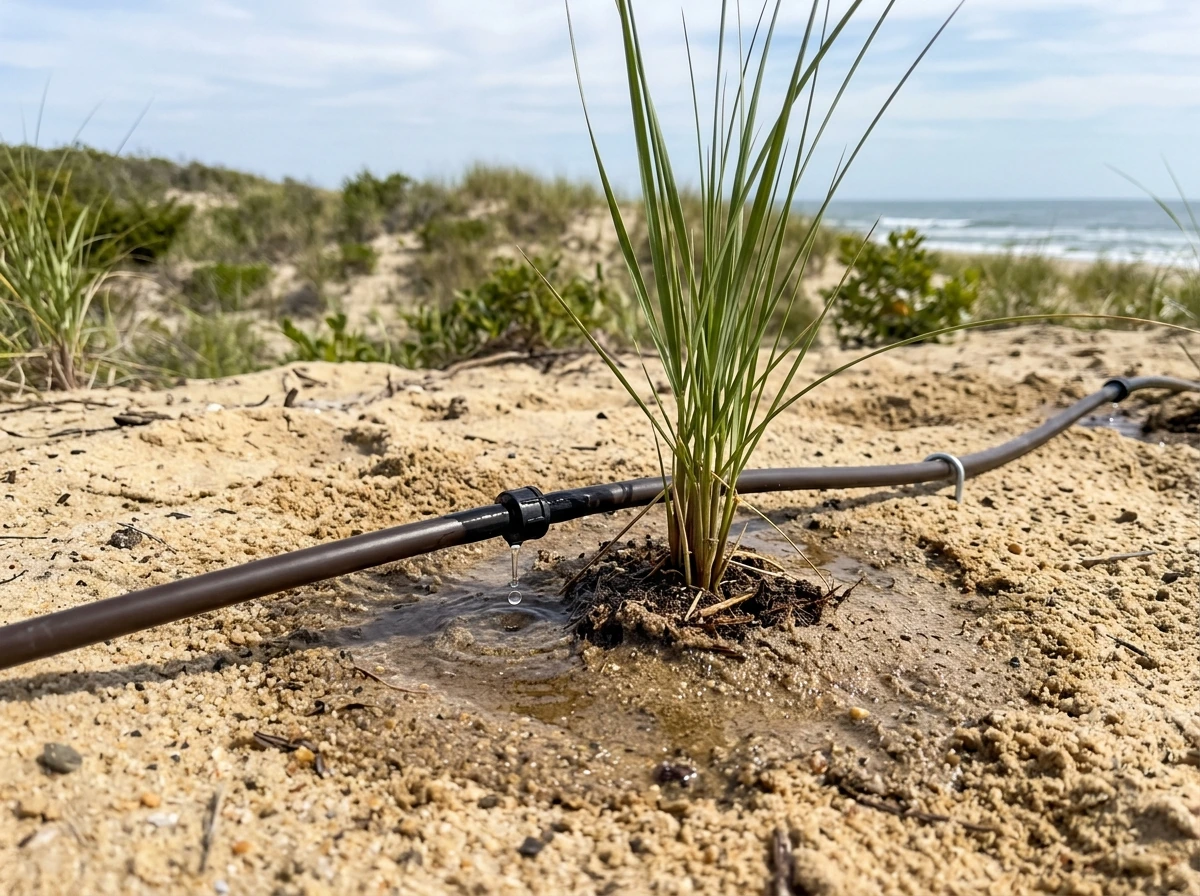
Sandy soils hold so little water that the standard 'water once a week' advice doesn't apply, at least not during establishment. Oklahoma State University Extension research is clear that sandy soils have the lowest total available water of any soil type, requiring more frequent irrigation in smaller doses. Think of it as topping up a leaky bucket rather than filling a reservoir.
Drip irrigation or soaker hoses are far more effective than overhead sprinklers in sand. They deliver water slowly and directly to the root zone, reducing runoff and surface evaporation. If you're working with container-grown plants in a sand substrate (for aquaria, terrariums, or horticultural experiments), the same principle applies: short, frequent watering rather than infrequent deep soaks.
For fertilizing, the low CEC of sand means liquid fertilizers are largely a waste of money. They flush through before roots can capture the nutrients. Slow-release granular fertilizers placed at root depth, or compost top-dressings worked lightly into the mulch layer, are the approaches that actually stick around long enough to matter. Topdress with compost once or twice a year, and reapply slow-release granular fertilizer each spring.
On beach or saline sand, keep sodium levels in mind. Soils with high salt content can cause osmotic stress (essentially pulling water out of roots even when moisture is present), which looks like drought stress but isn't solved by more watering. Salt-tolerant plants handle this through cellular adaptations. If you're gardening right at the coast, this is why species selection matters more than any amendment you can make.
Soil amendment options compared
| Amendment | Main Benefit | Best Use Case | Watch Out For |
|---|---|---|---|
| Compost | Raises organic matter, improves water retention, adds slow-release nutrients | General sandy soil improvement at planting | Breaks down over time; needs annual reapplication |
| Biochar | Increases CEC significantly; long-lasting carbon structure | Longer-term CEC improvement in sandy beds | Needs to be pre-charged with nutrients before use |
| Peat moss | Improves water retention; lowers pH slightly | Acid-loving plants in sandy soil | Hydrophobic when dry; sustainability concerns with extraction |
| Coir (coconut fiber) | Improves water retention; pH-neutral; sustainable | Sandy substrates and containers | Low nutrients; pair with fertilizer |
| Slow-release granular fertilizer | Supplies nutrients over months; resists leaching | All sandy soil plantings | Don't over-apply; still leaches some in heavy rain |
| Mycorrhizal inoculant | Extends root nutrient and water reach dramatically | All new plantings, especially natives | Killed by high-phosphorus fertilizers at application |
When things go wrong: troubleshooting sandy soil problems
If your plants are wilting quickly after watering, the most likely cause in sand is that water is moving through the root zone faster than roots can use it. Check moisture at 4–6 inches depth, not just the surface. If it's dry at that depth an hour after watering, you're either watering too fast (try slower drip delivery) or your sand is too coarse and you need more organic amendment in the root zone before replanting.
Yellowing leaves in sandy soil are almost always a nitrogen deficiency, because nitrogen leaches faster in sand than any other nutrient. A simple top-dressing of compost or a slow-release nitrogen fertilizer applied to the root zone will show results within two to three weeks. If the yellowing pattern is interveinal (the veins stay green but leaf tissue between them yellows), that points to iron or manganese deficiency, which is more common in high-pH sandy soils. Acidifying the soil with sulfur or pine needle mulch often resolves this.
On beach sand or areas that receive salt spray, if you're seeing leaf scorch on the windward side of plants, that's salt burn, and no amount of watering or fertilizing will fix it. The only real solution is switching to more salt-tolerant species, or using taller, established salt-tolerant plants as a windbreak to shield more sensitive species behind them.
Plants that establish well in spring and then crash by midsummer in sandy soil are usually running into moisture stress as temperatures climb. This is where mulch pays off most. Doubling your mulch layer from 2 inches to 4 inches through summer can cut evaporative loss dramatically and extend the time between necessary waterings.
Choosing the right plant for your specific sand situation
Before picking species, ask yourself three questions: Is your sand coastal or inland? Is it actively moving (dune) or stable? And is there any existing organic matter in it, or is it essentially pure mineral sand? These answers narrow your choices fast.
| Your Sand Situation | Priority Plant Traits | Top Plant Picks |
|---|---|---|
| Stable inland sandy soil, no salt | Drought tolerance, deep roots, low fertility adaptation | Lavender, yarrow, pitch pine, bayberry, bearberry |
| Active coastal dune, salt spray present | Salt tolerance, rhizome/spreading root system, burial tolerance | American beach grass, sea oats, rugosa rose, seaside goldenrod |
| Sandy coastal plain, stable but salty soil | Salt and drought tolerance, nitrogen-fixing preferred | Wax myrtle, beach plum, switchgrass, sea buckthorn |
| Inland sandy scrub or barren, very low nutrients | Extreme low-fertility tolerance, mycorrhizal dependency | Scrub oak, pitch pine, bearberry, blueberry (Vaccinium spp.) |
| Sandy garden bed, some amendments possible | Moderate drought tolerance, responsive to compost | Black-eyed Susan, portulaca, thyme, lavender, evening primrose |
The broader takeaway is that sand is not a hostile environment for plants in general. It's a specific environment with specific rules. The plants that grow naturally in sand around the world, from the pine barrens of New Jersey to the dunes of coastal Europe to the sandy savannas of the southeastern US, aren't struggling. They're precisely adapted. Match your species to your sand type, make targeted amendments at the root zone rather than wholesale soil replacement, and water more often with less volume. Do those three things and you'll find sandy soil is far more productive than it looks.
FAQ
How do I tell whether my sand is “coastal” enough to change my plant choices?
Start by identifying whether your sand is mostly coastal (salt spray or occasional tidal influence) or inland (little to no salt). For inland sand, you can usually focus on moisture retention and nitrogen, for example compost top-dressing and slow-release fertilizer. For coastal sand, prioritize wind and salt-tolerant anchors like sea oat or beach grass, and treat leaf scorch as a salt-spray symptom rather than a watering problem.
Do I need to replace all the sand, or just improve the area where the roots go?
If your sand is extremely clean mineral sand (very little organic matter), aim to improve only the top root zone rather than digging the whole yard. Work in 1–2 inches of compost at planting depth and mix it into the disturbed area, then mulch over it. This creates a small nutrient and moisture buffer that sandy soil otherwise cannot hold.
Can I use sprinklers instead of drip irrigation in sandy soil?
Yes, but it is usually less effective than it sounds unless you match it to delivery rate. Overhead watering can wet the top surface while most water quickly drains below usable depth. Use drip or soaker lines, keep emitters close to the root zone, and water in shorter cycles so moisture has time to soak in before it percolates away.
How can I tell if I’m watering correctly, since sand drains so fast?
Test at multiple depths. Surface wetness can disappear quickly, so check moisture around 4–6 inches (and deeper for deep-rooting plants). If it dries at that depth soon after watering, reduce flow rate (slower drip), increase mulch, and consider mixing more fine organic matter into the immediate planting pocket.
My plant wilts after watering, is it a water problem or a nutrient problem?
It depends on what “sand” you mean. If your plant is wilting right after watering, that often means water is passing through too quickly. If leaves yellow while soil looks damp, that points to nutrient loss, commonly nitrogen. If you see scorch on the windward side in coastal areas, it is typically salt burn, which requires changing species or adding wind protection rather than more fertilizer.
Do the same sandy-soil watering and fertilizer rules apply to container plants?
For containers, sandy substrates behave like fast-draining media, so use frequent light watering rather than long soak sessions. Also avoid over-fertilizing, because low nutrient retention means you can flush minerals out before roots can take them up. A slow-release option mixed into the potting zone or carefully scheduled liquid feeding works better than constant liquid drips.
How often should I fertilize plants in sand without wasting fertilizer?
Plan for shorter feeding intervals. Because sandy soil has low CEC, nutrients leach out readily, so split applications are smarter than one heavy dose. Slow-release granular fertilizer placed at root depth and compost top-dressing tend to stay in the root zone longer than quick liquid feeding.
What causes interveinal yellowing in sandy soil, and what should I do first?
Often, but watch the symptom pattern. Interveinal yellowing (veins stay greener, tissue between yellows) suggests iron or manganese issues, which are more likely when sandy soil is high pH. Remedy by adding organic matter plus using an appropriate soil acidifying approach (for example pine-needle mulch or sulfur), but confirm before applying anything aggressive.
Is mulch really necessary, or can I rely on more frequent watering?
Yes, especially in the first year. Mulch reduces evaporation, moderates soil temperature, and slows surface drying so roots can actually access water. In sandy sites, increasing mulch from about 2 inches to 4 inches during hot months can noticeably reduce watering frequency and help plants survive establishment.
How can I tell if the issue in sand is low nutrients versus poor rooting depth?
Look for signs of a shallow nutrient zone and frequent drought stress. If growth is slow, leaves yellow, and you are watering often, improve the root zone with compost and consider a slow-release nitrogen source. For phosphorus-limited sandy sites, planting species that naturally partner with mycorrhizal fungi can help, and you should avoid repeatedly disturbing the soil after planting.
What’s the best way to manage salt spray injury on sand? Can amendments fix it?
For beach and dune settings, choose plants that can handle salt spray and sand movement, and expect salt burn on the windward side for less tolerant species. Physical protection can buy time, like establishing a more tolerant windbreak first, but you still need to match species to exposure because watering cannot reverse osmotic salt stress.