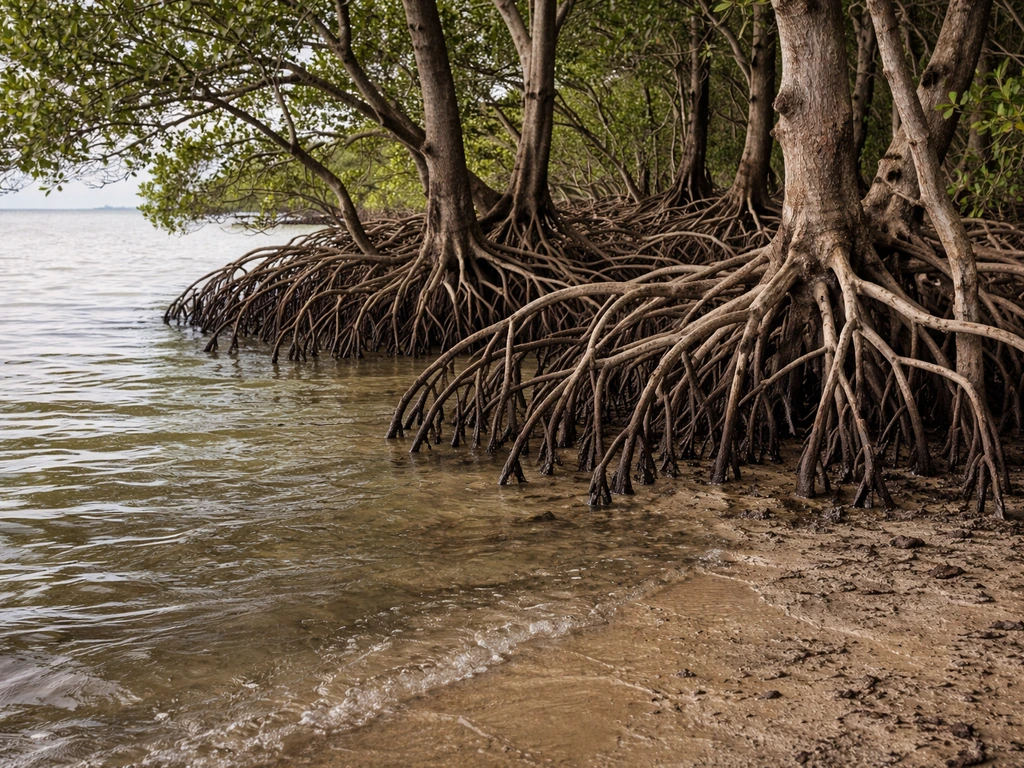
Plants that grow in marshy areas are called mangroves. Specifically, mangroves are a group of salt-tolerant trees and shrubs that thrive in coastal intertidal zones where waterlogged, muddy, often brackish or saline conditions would kill nearly every other woody plant on earth. If you've seen a tangle of arching roots rising out of coastal mud in a tropical or subtropical region, you've seen mangroves.
Plants That Grow in Marshy Areas Are Called Mangroves

Dr. Marcus Weatherby
21 May 2026
What 'marshy areas' actually includes
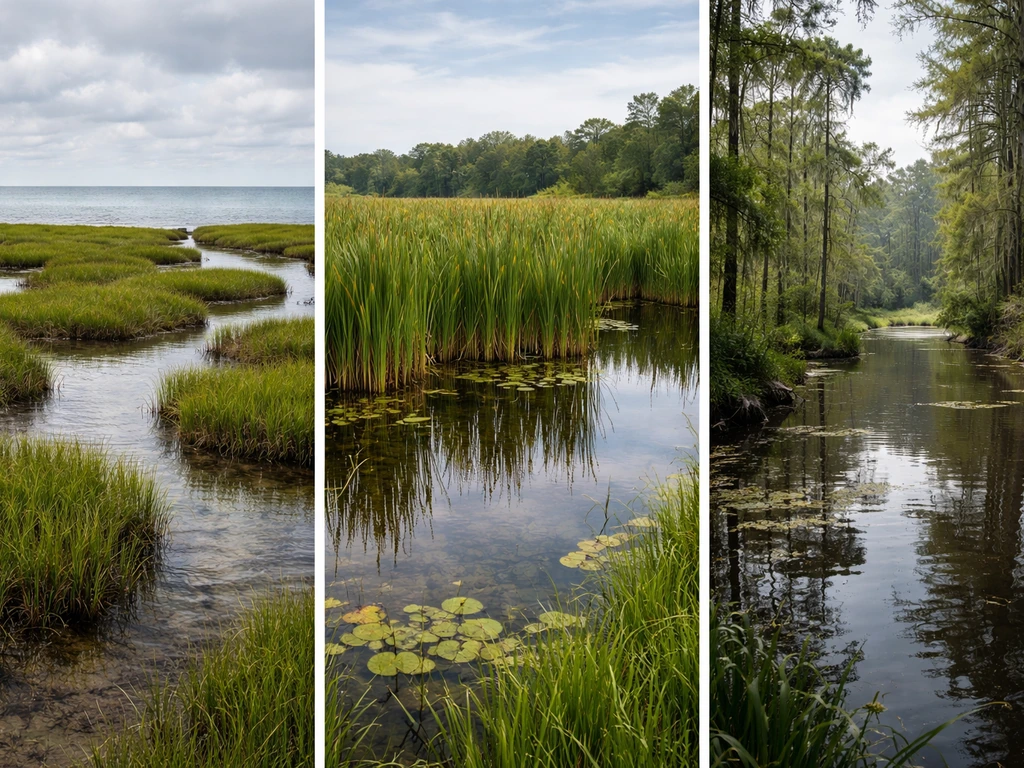
The term 'marshy area' gets used loosely, and it's worth pinning down exactly what habitat you might be picturing. Wetlands cover a broad range of environments, and the plants growing in them differ quite a bit depending on salinity, tidal influence, and water depth. The main marshy habitat types you might be thinking about include:
- Tidal salt marshes: coastal wetlands flooded and drained by saltwater tides, dominated by grasses and herbaceous plants
- Mangrove swamps: intertidal coastal zones in tropical and subtropical regions, dominated by halophytic (salt-loving) trees and shrubs
- Freshwater marshes: inland wetlands with standing or slow-moving fresh water, home to cattails and reeds
- Swamp edges and estuaries: transitional zones where fresh water meets salt water, where mangroves often establish alongside other wetland vegetation
- Freshwater forested wetlands: standing water habitats dominated by flood-tolerant trees like bald cypress
When the keyword 'plants that grow in marshy areas' points toward mangroves, it's specifically referring to the coastal intertidal wetland context. That said, what you're seeing on the ground depends heavily on where you are and whether the water is salty, fresh, or brackish. A marshy area in coastal Florida looks very different from a marshy area in Vermont or the Pacific Northwest.
Why mangroves can actually survive there
Standing in ankle-deep saltwater mud for most of your life sounds like a terrible existence for a tree, but mangroves have evolved a surprisingly elegant set of solutions. The core challenge is threefold: the soil is waterlogged and essentially oxygen-free (anoxic), the water is salty enough to dehydrate most plants, and the ground is unstable mud that shifts with every tide. Mangroves handle all three.
Breathing in oxygen-free mud
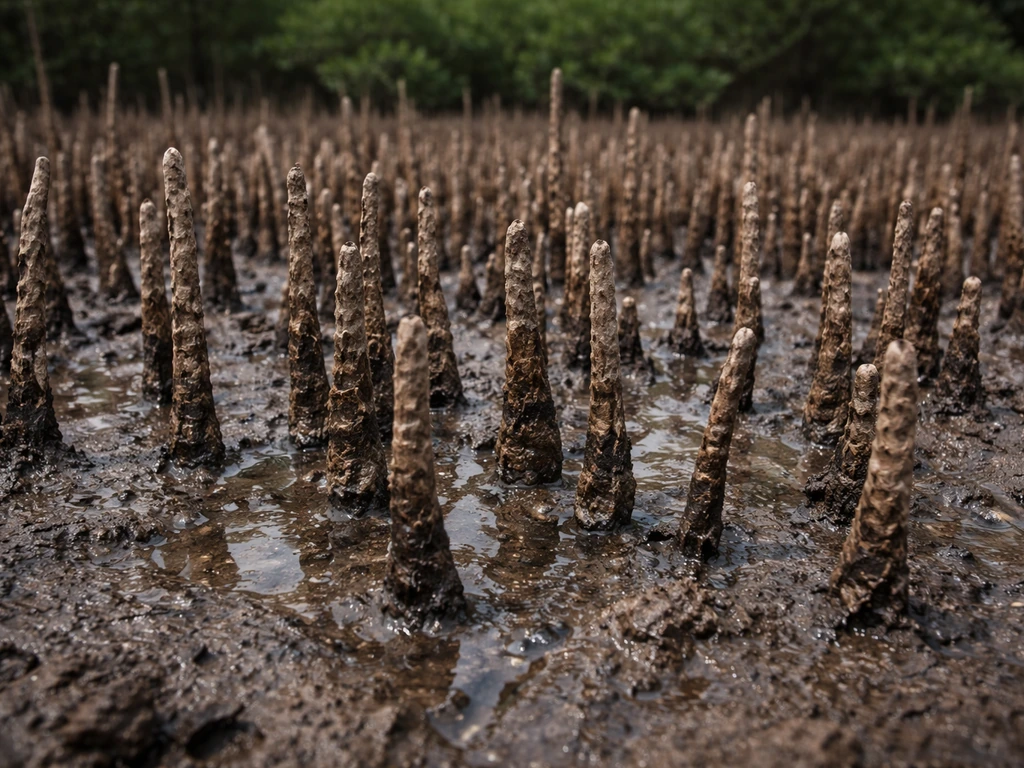
Mangrove roots can't pull oxygen from the waterlogged sediment the way most tree roots do, so they grow around the problem literally. Many species produce pneumatophores, which are specialized lateral roots that grow upward and poke out above the mud or water surface. Britannica notes that pneumatophores are characteristic of many mangrove species [pneumatophores, which are specialized lateral roots](https://www. britannica.
com/science/pneumatophore-root-system). [These finger-like projections exchange gases directly with the air](https://cdn. oceanservice. noaa.
gov/oceanserviceprod/education/tutorialestuaries/lessons/estuariestutorial. pdf), supplying the oxygen the buried root system can't get any other way. Red mangroves take a different approach with prop roots: arching, reddish aerial roots that drop down from the trunk and branches, creating that iconic tangle you see in photos. These also allow gas exchange while providing structural anchorage in soft sediment.
Dealing with salt
Salt is essentially a slow poison for most plants because it draws water out of plant cells through osmosis. Mangroves counter this in two main ways: some species block salt absorption at the root level (salt exclusion), while others absorb it and then actively excrete it through their leaves (salt elimination). This is why if you lick a black mangrove leaf in the field, it tastes genuinely salty. It's not a trick; that's the plant doing its job.
Reproducing in hostile conditions
Germinating a seed in anoxic, salty mud is nearly impossible for most plants. Mangroves solve this through vivipary: the seed actually germinates while still attached to the parent tree, producing a propagule (a seedling already in progress) that drops into the water fully developed. Tides and currents carry these propagules until they encounter suitable muddy ground, where they anchor and keep growing. It's one of the more clever reproductive strategies in the plant world.
Mangroves vs. other wetland plants: where people get confused
Not every wet, marshy area is mangrove territory. Once you understand the structural difference between mangroves and other common wetland plants, the confusion clears up quickly.
| Plant Type | Structure | Water Type | Climate | Key Visual Clue |
|---|---|---|---|---|
| Mangroves (red, black, white) | Trees and shrubs | Brackish to saline tidal water | Tropical and subtropical only | Prop roots, pneumatophores, woody trunks above water |
| Salt marsh grasses (e.g., cordgrass / Spartina) | Grasses and herbs | Saline to brackish tidal | Temperate to subtropical | Dense grass stands, no woody structure |
| Cattails (Typha latifolia, T. angustifolia) | Emergent herbaceous plants | Fresh to slightly brackish | Wide range, including temperate | Tall brown cigar-shaped seed heads, flat strap-like leaves |
| Common reeds (Phragmites) | Tall emergent grass | Fresh to brackish | Wide range, often invasive | Feathery plume tops, hollow stems |
| Freshwater marsh vegetation | Mix of sedges, rushes, grasses | Freshwater | Temperate and tropical | No aerial roots, no woody trunks, no salt tolerance |
The single biggest distinction is structure. Mangroves are trees and shrubs, meaning woody, branching, often multi-stemmed plants with trunks that stand above water. Everything else in this list is grass-like or herbaceous. If what you're seeing is a green carpet of grassy plants flooded by tides, you're likely looking at a salt marsh rather than a mangrove forest. Salt marshes are defined by saline-adapted grasses and grasslike plants, not woody vegetation. If you're in a freshwater inland marsh and you see tall plants with brown hot-dog shaped tops, that's cattail, not mangrove. The habitat type matters as much as the plant structure.
It's also worth noting that trees growing in freshwater swamps (like bald cypress) are sometimes lumped in with mangroves in casual conversation, but they're ecologically distinct. Mangroves are specifically halophytic coastal plants. A related topic worth exploring is trees that grow in marshy areas more broadly, which covers flood-tolerant tree species beyond the mangrove group. In the rainforest, climbers that grow in these wet habitats are often referred to as lianas trees that grow in marshy areas.
These plants that grow in wet areas are called differently depending on the habitat, but they all share adaptations for saturated soils trees that grow in marshy areas. You can also use these same coastal wetland conditions to answer where marshmallow plants grow, since the “marshy areas” plants most people mean are mangroves where do marshmallow plants grow. Mangrove trees are the mangrove plants most people mean when they ask where marshmallow plants grow trees that grow in marshy areas.
How to identify what you're looking at in the field
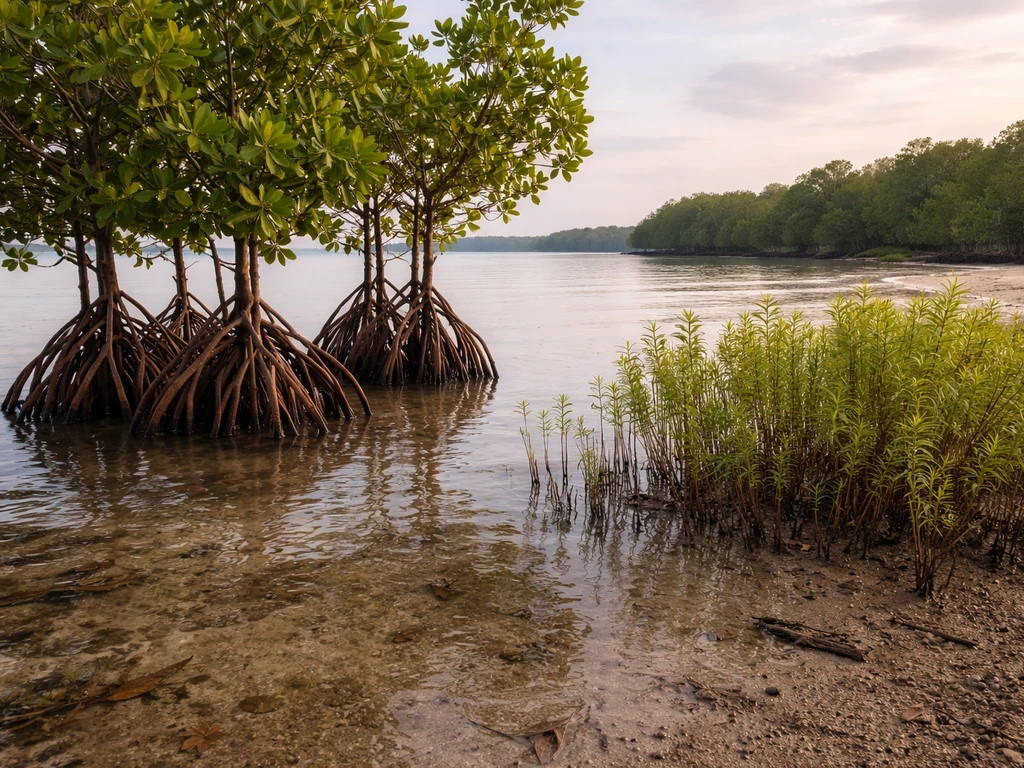
If you're standing at the edge of a wetland and trying to figure out whether you're looking at mangroves or something else, work through these questions in order.
- Are you in a tropical or subtropical coastal zone? Mangroves only grow in warm climates. In the continental U.S., that means southern Florida and Puerto Rico primarily. If you're in a temperate inland marsh, you're almost certainly not looking at mangroves.
- Is the water tidal and salty or brackish? Mangroves live in the intertidal zone where salt or brackish water floods and recedes with tides. Freshwater marshes host cattails, reeds, and sedges, not mangroves.
- Do you see woody trunks and branches? Mangroves are trees and shrubs, not grasses. If the plants are tall and grassy with no visible wood, you're likely in a salt marsh or cattail marsh.
- Look at the roots. Red mangroves have arching prop roots (sometimes called walking roots) that drop down from the trunk and branches in a reddish tangle. Black mangroves have finger-like pneumatophores sticking up from the mud around the base of the tree. White mangroves lack visible aerial roots but grow in the same coastal environments.
- Check the leaves. Mangrove leaves are typically thick, leathery, and dark green. Black mangrove leaves often have visible salt crystals on the underside if you look closely.
- Look for propagules. If you see cigar-shaped or spear-shaped seedlings hanging from branches or floating in the water nearby, that's a strong mangrove indicator. Those are viviparous propagules in transit.
The three-species identification shortcut used in Florida is simple and worth memorizing: tangled reddish arching roots means red mangrove, finger-like projections poking up from the mud means black mangrove, and neither visible prop roots nor pneumatophores (but still a woody coastal tree in that zone) points to white mangrove. That covers the vast majority of what you'll encounter in U.S. mangrove habitat.
Where to find mangroves and what conditions they need
Mangroves are geographically restricted to tropical and subtropical latitudes, generally within about 25 degrees north and south of the equator. In the United States, southern Florida and Puerto Rico are your best bets. The Florida Keys, Everglades coastline, and Tampa Bay area all have substantial mangrove coverage. Outside the U.S., major mangrove regions include the coasts of Brazil, West Africa, Southeast Asia (particularly Indonesia and Bangladesh's Sundarbans), and northern Australia.
The core conditions mangroves need are consistent: warm temperatures year-round, tidal or tidally-influenced coastal water that is brackish to fully saline, fine muddy sediment (the prop roots and pneumatophores physically need soft substrate to anchor and protrude through), and enough tidal energy to distribute propagules but not so much wave action that seedlings can't establish. Estuaries, where rivers meet the sea, are particularly productive mangrove habitats because fresh water mixing with salt creates the brackish conditions many species prefer.
If you want to observe mangroves up close, the most practical approach is to visit a coastal estuary or tidal flat in a subtropical or tropical location at low tide. That's when you get the clearest view of the root structures, especially the pneumatophores of black mangroves, which are usually submerged during high tide. A kayak or canoe lets you get into the root maze safely without disturbing the sediment or the ecosystem.
For students and gardeners trying to understand wetland plant ecology more broadly, mangroves are really the anchor concept for coastal intertidal vegetation. Once you have them placed, comparing them to the plants in freshwater systems makes more sense. Plants that grow in lakes and ponds, tiny plants that grow in moist places like mosses and liverworts, and plants that grow in wet areas more generally all occupy different niches on the wet-to-waterlogged spectrum.
Plants that grow in lakes and ponds are called aquatic plants, and they include several different groups depending on how much water they can tolerate. Mangroves sit at the extreme end: the salt, the tide, the anaerobic mud. Very few plant groups have adapted to all three at once, which is what makes them worth knowing.
FAQ
If a marsh is brackish, does that automatically mean the plants are mangroves?
Usually not. Mangroves are salt-tolerant woody plants in coastal intertidal zones, while many inland “marshes” are freshwater wetlands where you more commonly see cattails, sedges, or reeds. If the area is not tidally influenced and does not have brackish to saline water, mangroves are unlikely.
Can other plants in wetlands form similar root “tangles” that look like mangroves?
They can be, but you should use the tide and salinity context, not just the roots. The key clue is whether you are looking at a coastal intertidal, salt or brackish system. In non-coastal wetlands, similar-looking woody plants with aerial roots are rare and would indicate a different species group or habitat type.
When is the best time to identify mangrove species by their roots?
In many mangrove species, the visible aerial root structures are easier to confirm at low tide because portions like pneumatophores may be submerged at high tide. If you are unsure, check at different tidal stages before identifying the species group.
Why do mangrove propagules sometimes drift away instead of taking root?
Mangrove seeds and propagules are adapted to survive the transition from tree to mud, but “floating around” is not the whole story. Successful establishment usually requires the propagule to settle in fine, soft sediment in a spot that is repeatedly reached by tides but not blasted by strong waves.
Is licking a mangrove leaf a reliable way to identify it?
Avoid relying on taste or leaf color alone. Salty leaf taste is associated with some mangroves due to salt handling, but it is not a safe field test for identification and not all mangroves would be equally obvious. Better to confirm with root type and woody structure.
Can I grow mangroves in a backyard or container?
Not for most people. Growing mangroves in a typical home setting is hard because they need warm temperatures, a stable tidal or tidal-like wetting and drying cycle, and brackish to saline water plus soft anchoring substrate. Without those conditions, seedlings often fail even if they germinate.
What’s the difference between mangroves and flood-tolerant swamp trees like bald cypress?
Freshwater trees in swamps, like bald cypress, may tolerate flooding but they are not halophytic coastal plants. Mangroves specifically handle salt, anaerobic muddy sediment, and tidal movement together, which freshwater swamp species generally do not.
Why don’t mangroves grow in every coastal wetland worldwide?
Mangrove forests tend to occur within limited latitudes where temperatures stay warm enough year-round. Even if a site has mud and tides, cold winters can limit establishment, which is why major mangrove coverage is concentrated in tropical to subtropical coasts.
How can I tell quickly whether I’m looking at mangroves or a salt marsh?
If you see a green carpet of grasslike plants repeatedly flooded by tides, that points more toward a salt marsh than a mangrove forest because salt marsh vegetation is largely herbaceous, not woody. Mangroves should show woody trunks or multi-stem growth above the water.
What should I do if the mangrove area looks damaged or overgrown, and the roots are hard to see?
Yes, disturbed or recently cleared areas can blur the usual identification cues because root structure may be damaged or regrowth may be patchy. In that case, identify based on surviving woody individuals and the broader habitat signals (tidal brackish water, fine muddy substrate) rather than only the most obvious roots.