
Tiny plants that grow in moist places are most commonly called mosses, and their close relatives liverworts. Both belong to a group called bryophytes: small, nonvascular, seedless plants that thrive wherever moisture, shade, and a stable surface come together. If what you're looking at is more of a slimy green film than a leafy mat, you might be dealing with algae instead. Climbers that grow in rainforest are called lianas, and they are a completely different kind of plant than mosses or liverworts. Knowing which one you have matters, because each responds differently to the same habitat and calls for a different approach if you want to encourage or get rid of it.
Tiny Plants That Grow in Moist Places Are Called Moss

Dr. Marcus Weatherby
17 May 2026
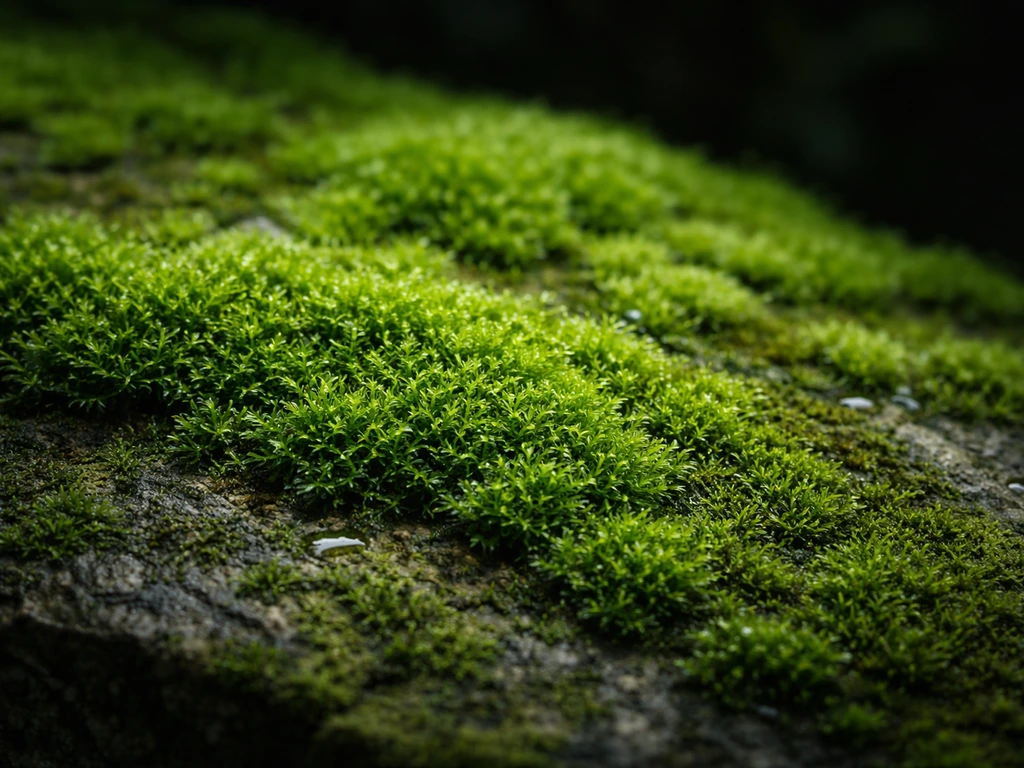
The common name: mosses (and their bryophyte relatives)
Moss is the word most people reach for, and it's usually right. Mosses are very small, green (sometimes yellow-green) plants in the division Bryophyta that spread across moist, shady areas in carpet-like mats. They grow on wet soil, rocks, tree trunks, walls, and even concrete structures like bridge abutments. They don't have true roots: instead, they anchor themselves with threadlike structures called rhizoids. Liverworts are close enough in appearance and habitat that they're often lumped in with mosses in everyday conversation, and the two are frequently found growing side by side.
Both mosses and liverworts are bryophytes. That's the botanical umbrella term for nonvascular, seedless plants that live in damp places. If someone asks you what the tiny plants covering a shady creek bank are called, 'bryophytes' is technically precise, but in practice most people just say moss, and that works for the vast majority of situations.
Why moisture, shade, and surfaces matter so much
Mosses and liverworts don't move water through internal vessels the way flowering plants do. They absorb moisture directly through their leaves and stems, which means they depend on their environment staying reliably damp. Shade slows evaporation, which is why you almost never find a healthy moss mat in a sunny, well-drained spot. The combination of low light, high moisture, poor drainage, compacted soil, and low soil fertility creates exactly the conditions these plants exploit. That's also why they show up so predictably in lawns with shallow or rocky soils, low pH (acidic) soils, and heavy tree canopy overhead.
One thing that surprises people: bryophytes are actually quite tough. They have a genuine tolerance for drying out, using physiological stress responses to survive periods when moisture drops. That's why a moss mat can look dead and brown after a dry spell, then green up within hours of rain. This resilience means simply letting an area dry out occasionally won't reliably eliminate them.
Moss vs liverwort vs algae: how to tell them apart
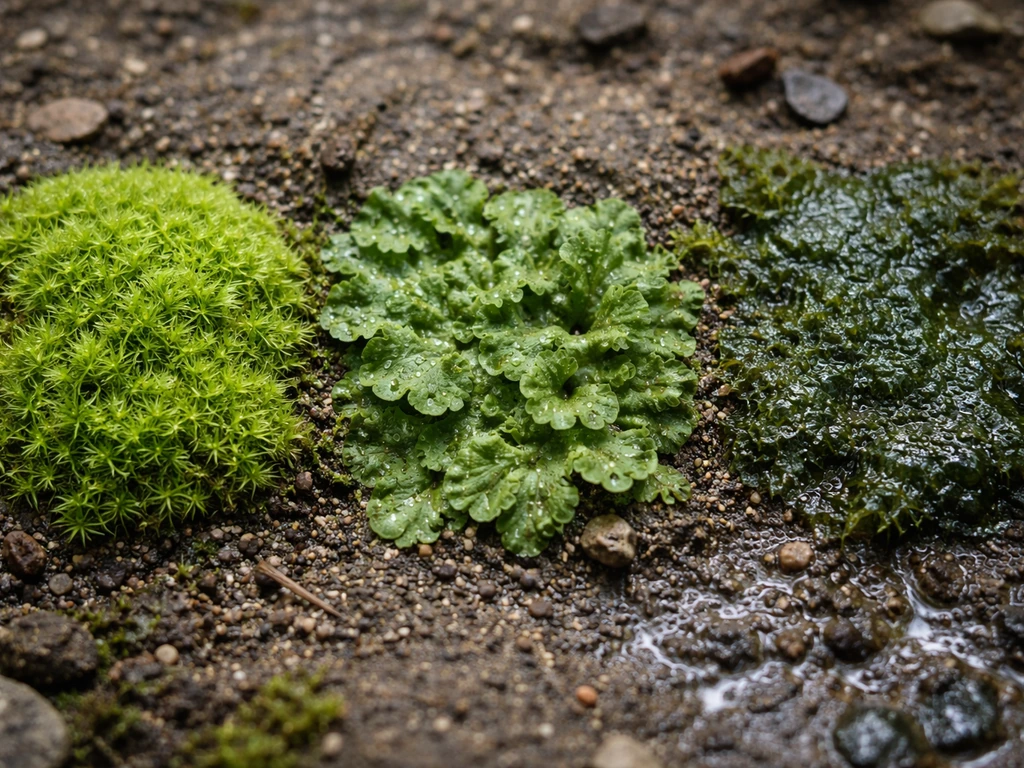
These three often get mixed up, especially by beginners, and the confusion is understandable. Here's what actually separates them, using the features you can check in the field without a microscope (mostly).
| Feature | Moss | Liverwort | Algae |
|---|---|---|---|
| Overall form | Leafy tufts or carpet-like mat with upright or sprawling stems | Flat, ribbon-like lobes (thallose) or tiny leafy stems (leafy liverwort) | Slimy, filmy, or crusty layer with no distinct leaves or stems |
| Leaf tips | Toothed edges; often pointed | Lobed or notched at the tip | No leaves at all |
| Midrib (central line on leaf) | Usually visible down the center of the leaf | Usually absent in leafy types | Not applicable |
| Texture when wet | Soft and springy; holds its shape | Flat and slightly rubbery | Slippery and slimy; smears when touched |
| Reproductive capsules | Capsule opens at the tip | Capsule splits into four sections | None; reproduces via spores or cell division |
| Rhizoids | Multicellular (need magnification) | Single-celled (need magnification) | None |
The trickiest overlap is early-stage moss and algae. Young moss can go through a slimy, mat-like phase that genuinely looks like algae before it develops its characteristic tufted structure. So if something looks slimy but is starting to show tiny leafy shoots, give it a few days and check again. A slimy appearance alone isn't enough to call it algae.
Quick field checks to confirm what you're looking at
- Touch it: moss and liverwort hold their shape when you press and release. Algae smears and feels slippery like wet soap.
- Look for leaves: use your phone camera zoomed in. Moss and liverwort have actual tiny leaves (only one cell thick, but structurally there). Algae has none.
- Check the leaf tips: if you can see individual leaves and they're lobed or notched, lean toward liverwort. If the leaf has a clear line running down its center (midrib), it's almost certainly moss.
- Look for capsules: if there are small capsules on thin stalks, check how they open. A capsule with a lid at the tip points to moss. A capsule that splits into four sections is a liverwort tell.
- Consider the location: consistently saturated soil or waterlogged surfaces favor algae. Shady but not waterlogged surfaces with stable moisture favor mosses. The waterline of a creek or a shady rock face with water seeping over it is prime liverwort territory.
- When in doubt, use a hand lens (10x loupe): the leaf structure becomes much clearer, and you can look for the midrib on moss leaves.
One honest limitation: rhizoid cellularity (the single-celled vs multicellular distinction between liverwort and moss rhizoids) genuinely requires magnification to confirm. For most practical purposes, the leaf tip shape and midrib presence are easier and more accessible anchors.
Where these plants actually grow
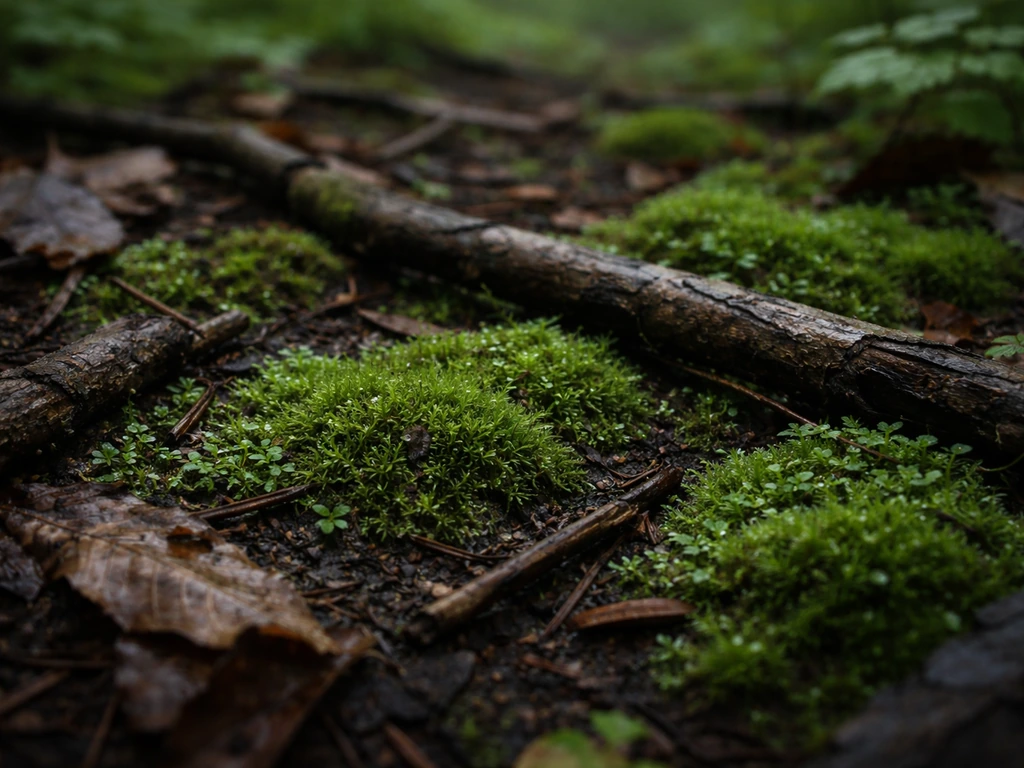
Natural habitats
In the wild, mosses and liverworts concentrate wherever moisture is reliably available. Forest floors are the classic setting: deep shade, leaf litter that holds moisture, and minimal disturbance. Tree trunks and exposed roots collect water and provide a surface for rhizoids to grip. Rocks near streams are a hotspot, and liverworts in particular favor the waterline of creeks and shady cliff faces where water seeps continuously.
Boggy or marshy ground can support dense bryophyte stands, sometimes building up into thick mats over saturated soils. Marshmallow plants specifically are typically found in wetlands and other consistently moist areas, where the soil stays wet and gets plenty of sunlight. These plants are closely connected to wetland and stream ecosystems, much like the broader community of plants that grow in marshy areas.
Trees that grow in marshy areas are called wetland trees, and they share the same moisture-rich habitats that favor mosses and liverworts.
Algae follows water even more closely. You'll find it as biofilm on the surface of ponds, slow-moving streams, and any surface that stays persistently wet and gets some light. Nutrient-rich water encourages algal growth, which is why puddles on compacted clay soil or areas near downspout discharge can develop green algal slicks quickly.
In gardens, lawns, and built environments
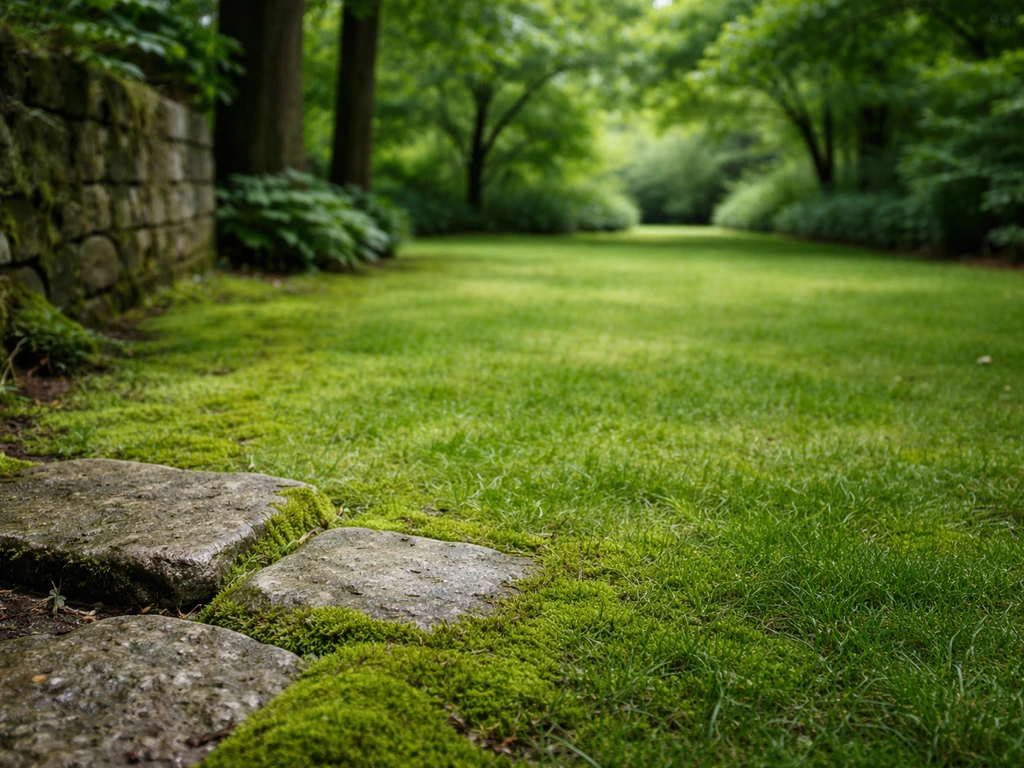
In gardens, moss appears most predictably in lawns under heavy tree canopy, on shaded patios and stepping stones, at the base of north-facing walls, and in any low-lying areas where water pools. Concrete, brick, and stone are particularly hospitable because they stay cool and damp while remaining stable enough for rhizoids to hold. Liverworts are common in greenhouse and nursery environments, where consistent overhead irrigation and high humidity mimic their preferred conditions perfectly. Algae tends to show up where water sits on compacted or poorly drained soil, often near downspouts, at the edge of driveways, or on persistently wet lawn patches.
What to actually do about it in your garden
If you want to encourage moss
Moss is genuinely useful as a low-maintenance ground cover in shaded spots where grass refuses to grow. If you want more of it, the strategy is simple: keep the area shaded and consistently moist, avoid disturbing the surface, and don't fertilize heavily (moss prefers low-fertility, slightly acidic soil). A north-facing slope, a shaded rock garden, or the base of mature trees are all good candidates. You don't need to do much; just stop fighting the conditions that already favor it.
If you want to control or remove it
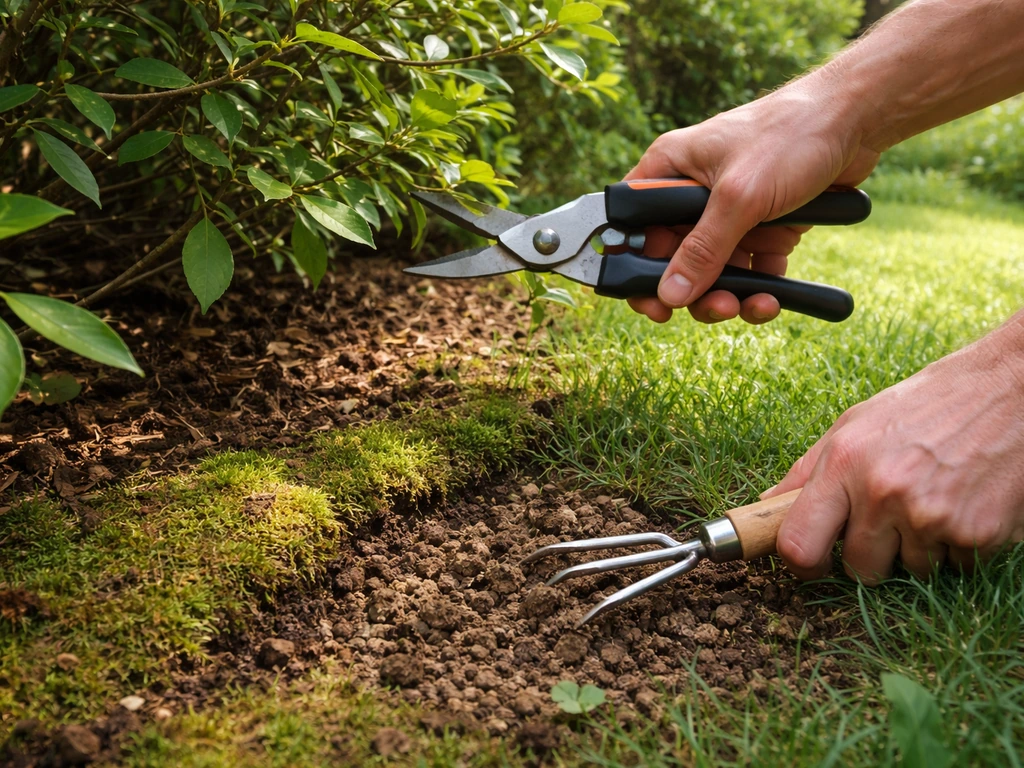
Moss thrives in conditions that stress grass and other plants. So the real fix is changing those conditions rather than just scraping the moss off (it will return if nothing else changes). The most effective cultural approach is improving drainage, reducing shade by pruning trees or shrubs, and aerating compacted soil. In lawns, improving soil fertility and raising the pH with lime can help turf compete more effectively. Redirecting downspouts or fixing grade problems to move standing water away from affected areas addresses the root cause for algae as well. For liverworts specifically, reducing irrigation frequency and improving air circulation can significantly reduce their vigor.
- Prune overhead branches to increase light and air movement
- Aerate compacted soil and improve drainage, especially in low spots
- Redirect downspouts and drainage away from problem areas
- Raise soil pH with lime if a soil test confirms acidity (below 6.0)
- For algae on hard surfaces, improve drainage and reduce shading; pressure washing addresses surface growth but not the cause
- For liverworts in pots or nursery beds, reduce irrigation frequency and improve airflow
When to get a second opinion on what you're looking at
Most of the time, the field checks above are enough to know whether you're dealing with moss, liverwort, or algae. But there are situations where it's worth getting a confirmed ID before acting. If the growth is spreading in or on standing water rather than on a solid surface, you may be dealing with aquatic plants or algae that need a different approach entirely.
If the mat is unusually large, thick, or a color you'd describe as rusty, orange, or black rather than green, it may not be a bryophyte at all. Liverworts can also be confused with mosses even by experienced observers, and reproductive structures are sometimes needed for a conclusive identification. In those cases, your local cooperative extension service, a botanical garden, or a university plant diagnostic lab can confirm what you have.
Sending a clear photo or a small sample in a sealed bag is usually all it takes.
If you're dealing with growth in or near a pond or stream, it's worth cross-referencing with what's typical for plants that grow in wet areas more broadly, since aquatic and semi-aquatic plant communities overlap significantly with the moist-surface bryophyte world. Plants that grow in wet areas are called wetland plants. Plants which grow in lakes and ponds are called aquatic plants. The overlap in habitat is real, and getting the category right saves a lot of guesswork on what to do next.
FAQ
If I see tiny plants on a damp wall, are they always moss?
Not always. If the growth forms a true crust on masonry that stays glossy when wet, it may be algae or a cyanobacteria film. Moss usually looks more like a soft mat or tuft that you can feel as a textured layer rather than a slick coating.
How can I tell moss vs liverwort without a microscope?
Look for leaf-like structure and midrib clues. Moss typically forms small upright shoots with a central line-like feature in many species, while liverworts often look flatter or more lobed. If you can only confirm by rhizoid details, assume you need either magnification or a professional ID.
Why does my “moss” turn green again within hours after watering or rain?
Moss can rehydrate quickly after drying out. That rapid green-up is a hallmark of bryophyte stress tolerance. If the color changes are extremely fast and surface tension remains slick, reconsider algae or a biofilm.
Does moss mean my soil is acidic and poorly drained?
It often correlates with low fertility and acidic, compacted conditions, but moss can also appear on stable damp surfaces like concrete or tree trunks regardless of soil chemistry. Check where it grows most heavily, on soil versus hardscape, before changing soil everywhere.
Will scraping moss off or power washing permanently remove it?
Usually not. If moisture, shade, and surface stability remain, moss can regrow from surviving fragments or spores. For lawns and hardscape, the more reliable approach is correcting the moisture and drainage drivers and then addressing what’s left.
What’s the fastest way to reduce moss in a lawn?
Improve drainage and reduce persistent dampness first. Then raise turf competition by aerating and adjusting fertility and pH to support grass. Simply adding water or shade reduction alone often fails if the underlying compaction keeps the surface wet.
Is it safe to use lime or fertilizer to get rid of moss?
It can help lawns, but don’t overdo it or you may create other problems like nutrient runoff or faster algae blooms on nearby wet areas. Increase pH and fertility gradually and watch for green slicks in low spots where water can pool.
Why does algae show up near downspouts even when it’s not that shady?
Algae loves light plus persistently wet surfaces, and downspout runoff often concentrates both. Redirecting or routing that water away, and fixing grade so puddles don’t linger, is usually more effective than scrubbing algae repeatedly.
Can liverworts thrive outdoors in normal weather?
Yes, especially in consistently humid, shaded zones or along the seep line of creeks and walls. But they often look strongest where irrigation and humidity are reliable, including greenhouse benches and nursery beds with overhead watering.
What if the growth is brown, orange, or black instead of green?
Color shifts can indicate something other than typical bryophyte mats, including non-plant biofilms, different organisms, or conditions like heavy staining. If the mat is thick, unusually colored, or persists despite correcting dampness, get an ID rather than assuming it’s moss.
Should I get a professional identification for moss-like growth?
Consider it when the patch is spreading in or on standing water, when it covers an unusually large area, or when control methods don’t work after correcting shade and moisture. A local extension service, botanical garden, or lab can confirm using reproductive structures when needed.
How do I collect a sample for identification without making things worse?
Use a small, intact piece from an edge where different textures meet, place it in a sealed bag or container, and keep it cool to prevent drying or overheating. Include a photo of the location, moisture level, and whether it’s on soil or hardscape to help with diagnosis.