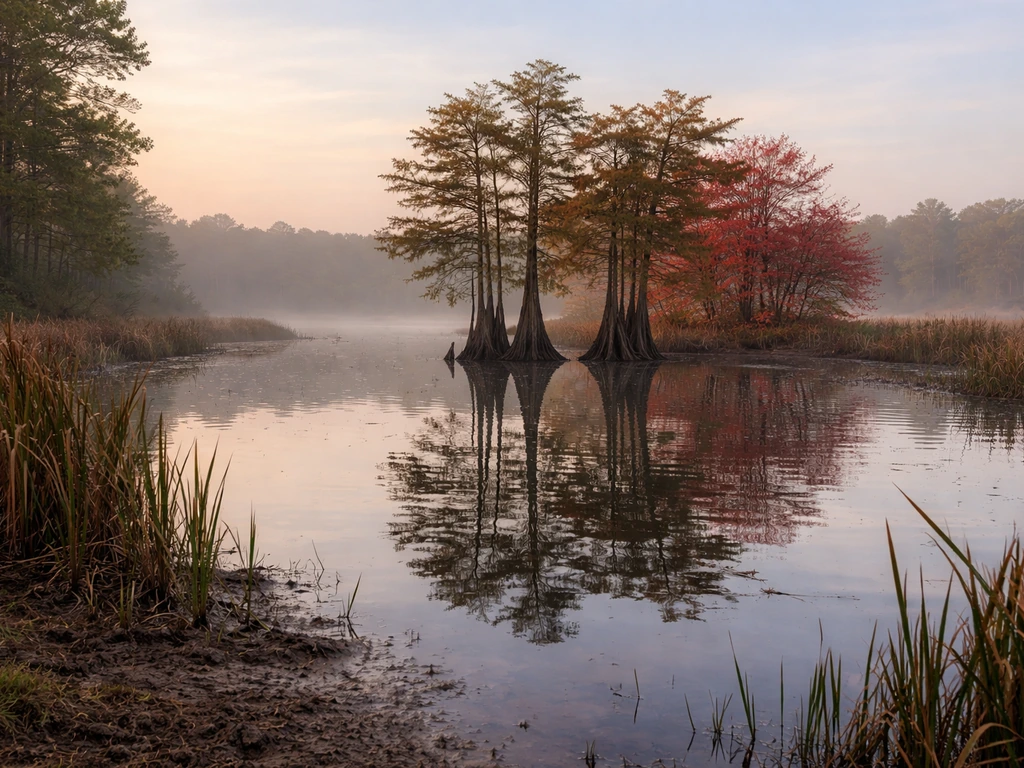
Trees that grow in marshy areas are called hydrophytes (or more specifically, woody hydrophytes) when they're fully adapted to waterlogged conditions, and the broader ecological category they belong to is called hydrophytic vegetation. In everyday wetland science, you'll also hear them described as wetland trees or riparian trees, depending on whether they're rooted in standing marsh water or along flooded stream and river edges. The key point: these are trees built to survive in saturated, oxygen-poor soils where most other trees would drown at the roots within a season.
Trees That Grow in Marshy Areas Are Called What?

Dr. Marcus Weatherby
21 May 2026
The actual terms used for marshy-area trees
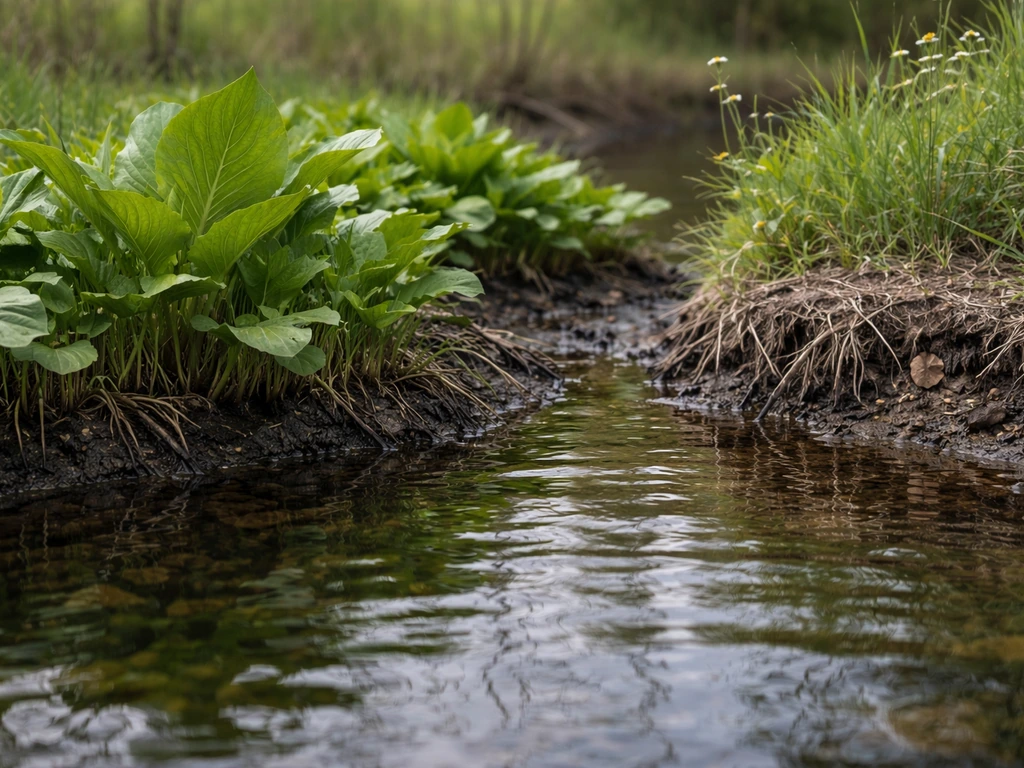
The formal ecological label is hydrophyte, from the Greek for "water plant." Under US federal law (16 USC § 3902), hydrophytic vegetation is officially defined as plants growing in water or in substrates that are periodically deficient in oxygen during the growing season because of excessive water content. Trees that qualify are woody hydrophytes. In wetland delineation work, every plant species gets a wetland indicator status rating from the US Army Corps of Engineers' National Wetland Plant List (NWPL). NWPL indicator status ratings include Obligate Wetland (OBL), Facultative Wetland (FACW), Facultative (FAC), Facultative Upland (FACU), and Upland (UPL) blank" rel="noopener noreferrer">wetland indicator status rating. The ratings work like this:
| Rating Code | What It Means | Wetland Occurrence Frequency |
|---|---|---|
| OBL | Obligate Wetland | Almost always in wetlands (>99% of the time) |
| FACW | Facultative Wetland | Usually in wetlands (67–99%) |
| FAC | Facultative | Occurs in wetlands and uplands roughly equally (34–66%) |
| FACU | Facultative Upland | Usually in uplands, sometimes in wetlands (1–33%) |
| UPL | Upland | Almost never in wetlands (<1%) |
Trees rated OBL or FACW are your true marsh and wetland trees. They're not just tolerating wet feet occasionally, they're the species you'll consistently find standing in saturated or flooded ground. When someone asks what trees grow in marshy areas, these are the ones the question is really pointing to.
Marshmallow plants tend to grow in parts of the world where moisture and mild conditions allow the seeds and roots to establish, often in damp or well-watered areas When someone asks what trees grow in marshy areas.
Closely related topics like plants that grow in marshy areas are called (covering non-woody wetland plants like sedges, cattails, and rushes) and plants that grow in wet areas are called help round out the full picture of hydrophytic vegetation beyond just trees. Plants that grow in wet areas are called hydrophytes as part of hydrophytic vegetation.
What actually counts as a marshy habitat
A marshy area isn't just ground that feels soggy after heavy rain. To genuinely qualify as marsh habitat, the soil needs to be saturated, flooded, or ponded long enough during the growing season to create anaerobic conditions in the upper soil layer.
In its NRCS/NTCHS guidance, hydric soils are defined as those formed under saturation, flooding, or ponding long enough during the growing season to develop anaerobic conditions in the upper soil layer hydric soils are formed under saturation, flooding, or ponding long enough during the growing season to develop anaerobic conditions.
That oxygen-depleted soil state is what defines hydric soil, and hydric soil is one of the three required markers for a true wetland (along with wetland hydrology and hydrophytic vegetation). The US EPA's Clean Water Act definition captures it well: wetlands are areas "inundated or saturated by surface or ground water at a frequency and duration sufficient to support a prevalence of vegetation typically adapted for life in saturated soil conditions. "
In practical terms, here's what a marshy habitat looks like on the ground:
- Standing or slowly moving water present for weeks to months during the growing season
- Soil that stays saturated within the top 12 inches even when surface water recedes
- Gray, blue-gray, or mottled soil colors (called redoximorphic features) indicating past or current oxygen depletion
- Characteristic plants like cattails, sedges, willows, or buttonbush already present
- Poor or no surface drainage, often in low-lying depressions, floodplains, or river margins
A yard with a low spot that holds water for a few days after rain is not a marsh. That's just poor drainage, and many ordinary trees handle it fine. True marshy ground stays wet or inundated for extended periods and produces those anaerobic soil conditions. Knowing the difference matters a lot when you're choosing trees, because a tree rated FACW or OBL that's planted in merely moist upland soil will often underperform compared to species that simply prefer good drainage.
Trees you'll actually find in marshes and wetland edges
Below are the most commonly encountered wetland trees across North America, grouped roughly by how wet their preferred conditions are. I've walked into most of these species in the field, and the conditions descriptions come from what I've actually observed: what the ground looks like underfoot, how long water sits, and what soil type they're rooted in.
Obligate and near-obligate wetland trees (OBL/FACW)
| Tree | Wetland Rating | Typical Conditions | Primary Range |
|---|---|---|---|
| Bald Cypress (Taxodium distichum) | OBL | Standing or slow-moving water, deep muck or clay soils, tolerates months of inundation | Southeast US, Gulf Coast, Mississippi floodplain |
| Black Gum / Tupelo (Nyssa sylvatica) | FACW | Seasonally flooded bottomlands, hydric soils, tolerates prolonged saturation | Eastern North America |
| Water Tupelo (Nyssa aquatica) | OBL | Permanently or near-permanently flooded swamps, deep standing water | Southeast US lowlands and river swamps |
| Swamp White Oak (Quercus bicolor) | FACW | Wet floodplain soils, edges of marshes, tolerates seasonal flooding | Eastern and Midwestern US |
| Black Willow (Salix nigra) | OBL | Streambanks, marsh edges, saturated alluvial soils, fast-colonizing | Eastern and Central North America |
| Red Maple (Acer rubrum) | FAC to FACW | Wide range from swampy bottomlands to moist uplands, highly adaptable | Eastern North America |
| Green Ash (Fraxinus pennsylvanica) | FACW | River floodplains, seasonally inundated bottomlands, heavy wet soils | Central and Eastern North America |
| Overcup Oak (Quercus lyrata) | FACW | Poorly drained bottomlands, tolerates prolonged flooding better than most oaks | Southeast and South-Central US |
| Atlantic White Cedar (Chamaecyparis thyoides) | OBL | Freshwater swamps and bogs, acidic saturated peat or muck soils | Atlantic Coastal Plain, Eastern US |
| Buttonbush (Cephalanthus occidentalis) | OBL | Marsh edges, pond margins, tolerates standing water around trunk base | Eastern, Central, and Southern US |
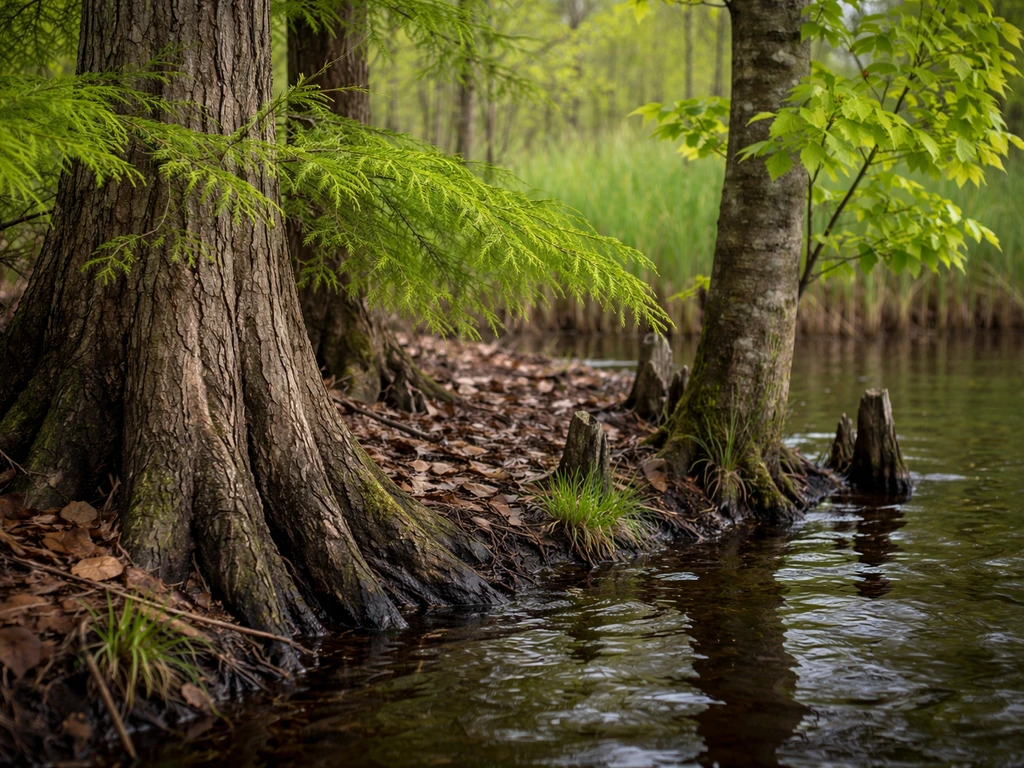
Bald cypress is probably the most iconic marsh tree in North America. Standing in a Louisiana or Florida swamp with its knobby pneumatophores (cypress knees) poking up through the water surface is one of the more striking field experiences you'll have in wetland ecology. Those knees are thought to assist with gas exchange in anaerobic soils, which tells you everything about how oxygen-deprived these environments are. Water tupelo grows in even more permanently flooded conditions, often right alongside bald cypress.
Further north, black willow is often the first woody plant to colonize newly disturbed streambanks and marsh edges, rooting aggressively in saturated alluvial soil. Swamp white oak and green ash are the workhorses of Midwestern and Northeastern floodplain forests, tolerating seasonal inundation while still producing substantial canopy. Red maple earns its FACW rating in many regions by thriving in depressional wetlands and poorly drained bottomlands, though it's adaptable enough to grow in drier sites too.
Choosing the right tree for your specific wet spot
Not all wet spots are the same, and matching the tree to the actual hydrology of your site is the most important decision you'll make. Here's a practical framework:
- Permanently or near-permanently flooded (water present most of the year): Go with OBL species like bald cypress, water tupelo, black willow, or Atlantic white cedar. These are built for it.
- Seasonally flooded (water present for weeks to a few months during the growing season, then recedes): FACW trees like swamp white oak, green ash, overcup oak, or black gum are the right fit.
- Seasonally saturated but rarely with standing water (soil stays wet and anaerobic but surface dries): Red maple, swamp white oak, or pin oak (Quercus palustris, FACW) work well here.
- Poorly drained but not truly hydric (wet for short periods, drains within days): FAC-rated trees or even adaptable upland species may outperform true wetland trees in these spots.
Also think about what the marsh is connected to. Is it a freshwater marsh fed by groundwater seeps? A tidal marsh with brackish influence? A floodplain marsh along a river? Trees like bald cypress tolerate some salinity, but most freshwater marsh trees won't survive tidal or brackish conditions. The plants that grow in lakes and ponds (a closely related category) often share habitat edges with wetland trees, but the tree species themselves need stable rooting substrate rather than open water.
How to verify whether a tree actually fits your site
Before you plant anything, it's worth taking the time to confirm three things: the tree's native range, its official wetland indicator status for your specific region, and the actual soil and hydrology conditions at your site.
Check the NWPL regional rating, not just the national one
The NWPL assigns wetland indicator ratings by region, not just nationally. A species rated FACW in the Southeast may carry a FAC or even FACU designation in a different region because its wetland occurrence frequency varies geographically. The US Army Corps of Engineers maintains the NWPL database, and you can search it by species and region to get the correct rating for your area. This matters more than most people realize: a tree listed as a "wetland tree" in a regional field guide from the wrong part of the country can lead you badly astray.
Assess your soil directly
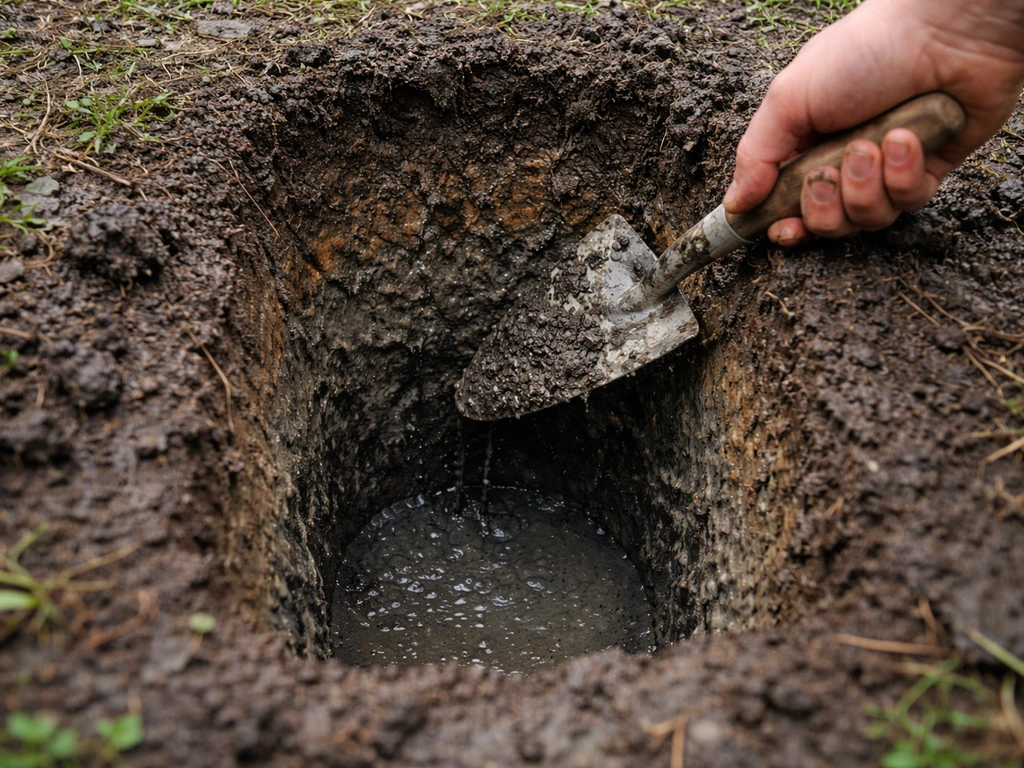
Dig a hole about 18 inches deep in your wet area. Look for gray or mottled soil colors (signs of periodic anaerobic conditions), smell for sulfur or organic muck odors, and check whether water fills the hole within minutes. These are field indicators of hydric soil. The USDA NRCS Web Soil Survey tool lets you enter your location and pull up mapped soil types, including whether they're classified as hydric, which is a strong confirmation that true wetland conditions exist.
Confirm the tree's native range for your region
Using native trees adapted to your specific region's climate, soils, and hydrology almost always outperforms using species from outside that range, even if they're technically tolerant of wet conditions. USDA Plants Database and your state's native plant society both have searchable range maps. Your local cooperative extension service (land-grant university based) is probably the most reliable single resource for region-specific tree selection in wetland or near-wetland settings.
What to do next: planting and managing wetland trees
Once you've identified the right species for your site, a few practical points will save you a lot of frustration:
- Plant during dormancy or early spring before the soil dries: wetland trees often establish best when planted just as water is receding from spring flooding, giving roots time to anchor before summer heat.
- Don't amend the soil with compost or fertilizer in true marsh planting: hydric soils are already nutrient-cycled by anaerobic processes, and amendments can promote invasive weed competition rather than help the tree.
- Source bare-root or container stock from local nurseries that grow wetland stock: these trees are already hardened to local hydrology and will transplant with much higher success than stock from distant growing operations.
- Protect young trees from herbivory: wet areas attract deer, beaver, and muskrat, all of which damage young woody plants heavily; wire cage guards are often necessary for the first three to five years.
- Check whether your site falls under Clean Water Act Section 404 jurisdiction before doing any grading, fill, or drainage modification: planting trees is generally fine, but altering the hydrology of a regulated wetland without a permit is not.
- Contact your state's department of natural resources or a local native plant nursery for regionally sourced wetland tree stock and site-specific recommendations.
If you're a student studying wetland ecology or plant classification, it's worth knowing that the broader category of plants in marshy areas extends well beyond trees. Tiny plants that grow in moist places (mosses, liverworts, and small emergents) form the groundcover layer of these same habitats, while floating and submerged plants dominate open water within the same wetland system. The trees are simply the canopy layer of what is often a complex, multi-layered plant community all operating under the same core driver: soil saturation that most plants can't handle. Trees are just one part of wetland plant communities, and the climbers that grow in rainforest are called lianas.
FAQ
Are all “wetland trees” hydrophytes?
Not necessarily. Some trees are found in wetlands because they tolerate wet feet seasonally, but true hydrophyte trees are specifically adapted to waterlogged, oxygen-poor soils during the growing season (woody hydrophytes). The NWPL indicator rating helps separate consistent marsh residents from occasional wet-tolerant species.
What’s the practical difference between OBL, FACW, and FACW only in seasonal flooding?
OBL and FACW species are typically rooted in conditions that stay saturated or flooded long enough to limit oxygen regularly, while many FACU or FAC species can cope with short wet spells without developing the same anaerobic soil conditions. If your site only pools after storms, you may not be meeting the hydric soil behavior these higher-wet indicator trees require.
How long does “marshy” water have to last to count as hydric conditions?
It’s not a fixed number of days, because it depends on soil type and timing, but the key is whether saturation, flooding, or ponding persists for sufficient duration and frequency during the growing season to create oxygen depletion in the upper soil layer. A site that drains within a day or two often behaves more like poorly drained upland than a true marsh.
Can I use a national wetland indicator rating if my region-specific rating is harder to find?
It’s risky. The NWPL assigns ratings by region because the same species can occur more or less frequently under wet conditions depending on local climate and soils. Using a rating from the wrong region can lead you to choose a tree that looks tolerant in theory but fails in practice.
Do hydrophyte trees have special roots or breathing adaptations in all cases?
Many do, but not all in the same way. Some species develop structures that help with gas exchange or root oxygen transport, while others survive through flood tolerance traits at the root and crown level. The clearest field evidence is your site’s oxygen stress (hydric soil indicators), not just what adaptations a species is known for.
What if my site is near a stream or river edge, but the water is mostly flowing rather than standing?
Flowing water can still create wet, oxygen-poor soils, especially where floodwaters back up, overflow repeatedly, or infiltrate fine-grained sediments. The right match depends on your actual hydrology, so confirm water table behavior and saturated duration rather than assuming “river edge” automatically equals marsh conditions.
How can I tell if a “wet spot” is just seepage or a tidal/brackish influence?
Look for salinity clues and hydrology patterns, like brackish plant associates nearby, salt-sensitive vegetation absence, or changes in water chemistry after tides or storms. Even if the ground is wet, most freshwater marsh trees will struggle under sustained brackish or tidal conditions unless they are known to tolerate it.
If a tree is labeled tolerant, will it still perform well for screening or landscaping in a marsh?
Tolerance does not always equal suitability. Even when a species survives, growth, form, and canopy quality can be poor if it is only marginally suited to your site’s saturation duration and soil chemistry. Use the indicator rating as a starting point, then match expected inundation patterns to the tree’s typical habitat.
What are common mistakes when planting wetland trees?
Two big ones are planting “wet-tolerant” upland species in sites that are truly hydric, and assuming a low spot equals a marsh without checking saturation duration or hydric soil indicators. Another mistake is skipping the native range and regional indicator status check, leading to a species that is wrong for climate or wetness regime.
How should I confirm the soil type and hydrology before buying trees?
Beyond field checks (mottling or gray tones, odor of organic muck, rapid water entry in a test hole), use mapped soil information to see whether the location is classified as hydric. Then observe how long water stays and whether flooding is seasonal, tidal, or event-driven so you can align the tree’s wetness requirements with real site behavior.