
Most plants will eventually flower given the right trigger, so the practical goal is choosing types that either never produce showy flowers at all (ferns, mosses, horsetails, many ornamental grasses managed well) or that flower so rarely and inconspicuously in your specific conditions that it barely registers. True non-flowering plants exist, they just reproduce differently. And for the rest, the right combination of shade, soil lean nitrogen, cool temperatures, and smart deadheading keeps blooming to an absolute minimum.
Plants That Do Not Grow Flowers: Options and Care Tips

Dr. Marcus Weatherby
6 May 2026
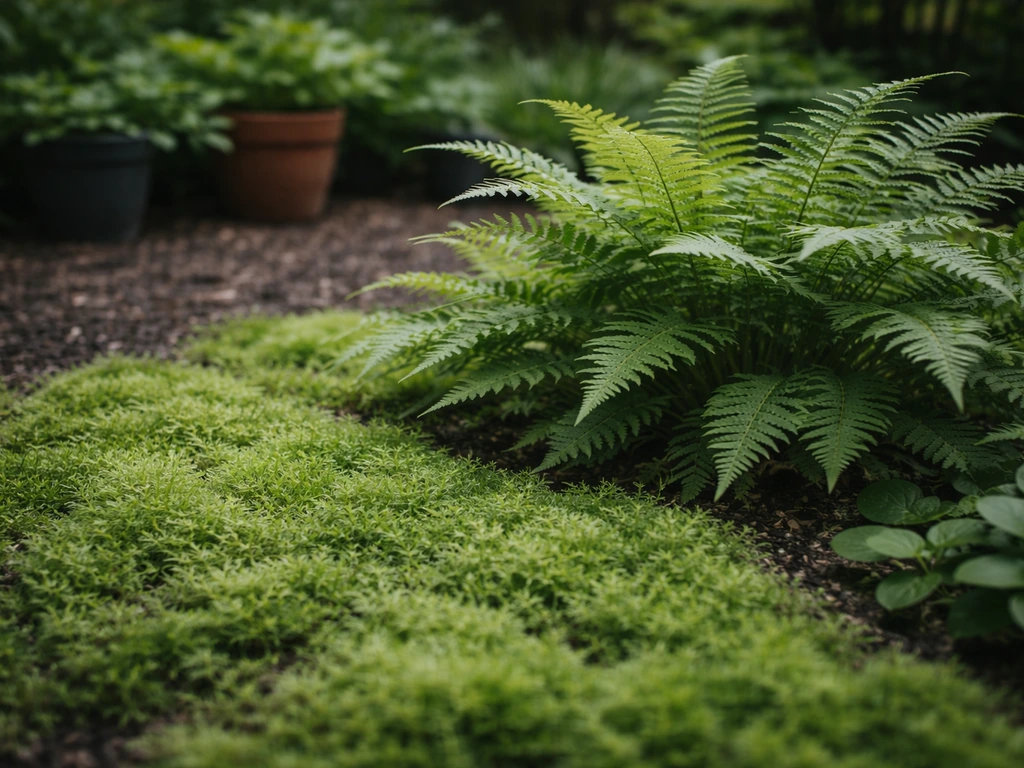
What 'no flowers' actually means in practice
When people search for plants that don't grow flowers, they usually mean one of three different things, and the right plant recommendation depends heavily on which one they actually want. The first is genuinely flowerless plants: species that have never evolved flowers and never will, reproducing instead by spores, runners, or other vegetative means. The second is foliage-forward plants that technically flower but bloom so rarely, so briefly, or so inconspicuously that most people never notice.
The third is plants that flower under certain conditions but can be kept in a reliable non-blooming vegetative state when those conditions are actively avoided or managed. All three are valid, but mixing them up leads to frustration. A Boston fern will never produce a petal, ever. A hostas will absolutely bloom every summer unless you cut the stalks early.
These are completely different situations.
It's also worth flagging that 'no flowers' doesn't always mean 'no reproductive structures.' Ferns produce sporangia, those small brown dots or clusters on the undersides of their fronds, which are spore cases. Mosses produce capsules on stalks. Neither is a flower in any botanical sense, but if you're hoping for a completely 'clean' plant with zero visible reproductive output, that's a narrower target than most people realize. For most gardeners and plant enthusiasts, fern sporangia are a non-issue aesthetically, but it's good to know going in.
Plant groups that genuinely stay non-flowering
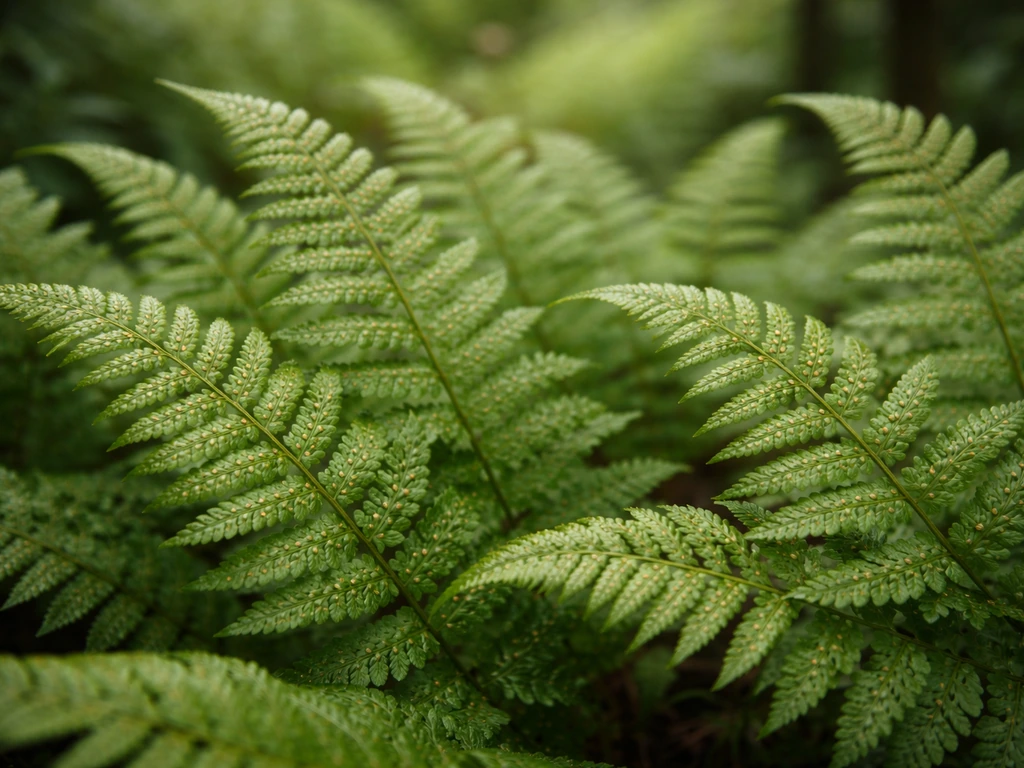
The most reliable non-flowering plants belong to divisions that predate flowering plants entirely. These groups evolved before the angiosperm lineage, and they have never developed flowers as a reproductive structure. They are not 'suppressed' from flowering, they are simply built differently.
Ferns and fern allies
Ferns are the most garden-ready non-flowering plants available across a huge range of climates. They reproduce entirely through spores produced in sporangia, usually clustered on the undersides of mature fronds. Spore germination requires a film of moisture, which is why the vast majority of ferns naturally favor moist, shaded habitats. From a practical standpoint, this means ferns perform best in shade gardens with consistent moisture and humid air, conditions that also happen to suppress flowering in any competing plants nearby.
Sword ferns (Nephrolepis) are cold-hardy down to USDA zone 10 in their native outdoor range, while Boston fern (Nephrolepis exaltata var. bostoniensis) thrives in containers in humid environments and is a standard choice for hanging baskets in temperate gardens. SDSU Extension identifies ferns broadly as classic shade-garden plants, and that holds true across most of the US. If you're in a cool, shaded, moist environment, ferns are your most straightforward answer.
If you are also trying to grow fast, choose varieties that naturally speed up vegetative growth in your light and moisture conditions while still staying non-flowering.
Mosses, liverworts, and hornworts
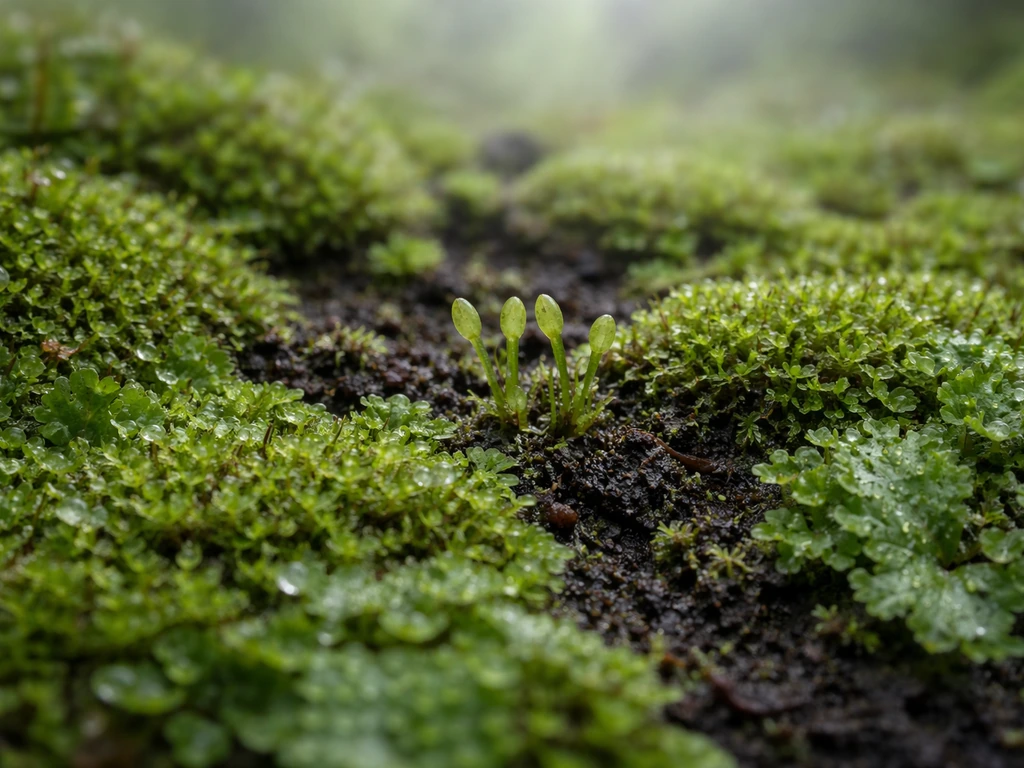
True mosses are non-vascular plants that reproduce by spores and never produce flowers or seeds in any form. They thrive in consistently moist, acidic, low-light conditions, often on north-facing slopes, under dense tree canopies, or along stream margins. If your soil is acidic (pH around 5.0 to 5.5) and you're in a reliably moist climate, moss can establish as a living groundcover that requires almost no management and produces zero flowers, ever. In drier or more alkaline conditions, mosses struggle and aren't a realistic option without significant soil and irrigation modification.
Horsetails and lycophytes
Horsetails (Equisetum species) are ancient, spore-reproducing plants that grow in wet ditches, stream banks, and boggy areas across North America, Europe, and Asia. They produce jointed, hollow stems and never flower. They are genuinely invasive in garden settings in many regions, spreading aggressively by rhizome, so they are best confined to containers or naturalistic bog gardens where spread is acceptable or manageable. Club mosses (Lycopodiaceae) are another ancient, non-flowering group, though they are slower growing and harder to establish in garden conditions.
Foliage plants that flower minimally or inconspicuously
Beyond the truly flowerless groups, several popular foliage plants bloom so rarely or so briefly in typical garden conditions that they function as effectively non-flowering choices. Hostas produce flower scapes in summer but these are easily removed before they open (more on that below). Reddit users in r/Hosta report that [hosta scapes or flower stems tend to occur regularly](https://www. reddit.
com/r/Hosta/comments/1u1dvgo/howoftendohostaturnintoscapes/) and that they cut back after the flowers fade. Caladiums, grown from tubers, produce occasional small arum-type flowers that most gardeners remove immediately. K-State Research and Extension also notes that caladiums need soil and air temperatures above 70°F for establishment and outdoor growth [caladiums need soil/air temperatures above 70°F for establishment and outdoor planting](https://hnr. k-state.
edu/extension/horticulture-resource-center/publications/publications/turf-ornamentals/flower-publications/caladiums. pdf). Many ornamental grasses produce seedheads rather than showy flowers, and cool-season grasses behave differently in terms of reproductive timing than warm-season types. If seedhead production bothers you, mowing or trimming before seedheads develop is straightforward.
The distinction between truly flowerless and 'managed to not flower' matters when you're choosing what to plant where.
| Plant Group | Flowers? | Best Conditions | Hardiness / Range | Reproductive Structure |
|---|---|---|---|---|
| Ferns (e.g., Nephrolepis, Dryopteris) | Never | Moist, shaded, humid | Zone 3-10 depending on species | Spores on frond undersides |
| True mosses | Never | Moist, acidic, low-light | Most temperate climates | Spore capsules on stalks |
| Horsetails (Equisetum) | Never | Wet, boggy, full to part sun | Zone 3-11 depending on species | Spore cones at stem tips |
| Hostas | Yes, summer | Shade to part shade, moist | Zone 3-9 | Flowers on scapes (easily removed) |
| Ornamental grasses | Seedheads, not showy | Varies by species | Zone 3-10 depending on species | Seedheads (mowable) |
| Caladiums | Rarely, minor | Warm, humid, bright shade | Zone 9-11 / annual elsewhere | Small arum-type flowers |
Why plants flower when they do: climate, season, and age
Understanding what triggers flowering in the first place is the key to preventing it in plants that technically can bloom. The three main drivers are photoperiod (day length), vernalization (cold exposure), and plant maturity. Getting a handle on which one applies to your plants lets you manipulate conditions to stay in the vegetative window as long as possible.
Day length (photoperiod)
Many plants switch from vegetative growth to reproductive growth based on the number of hours of uninterrupted darkness in a 24-hour period. Penn State Extension and Oregon State describe this as photoperiodism, and it explains why so many plants flower reliably in specific seasons. Short-day plants flower when nights are long (typically fall or late summer). Long-day plants flower when nights are short (late spring to midsummer).
Day-neutral plants flower regardless of day length once mature. Some long-day perennials require at least 14 to 15 hours of daylight before they'll initiate flower buds. If you're growing a long-day plant in a heavily shaded spot that receives limited light, you may naturally prevent flowering, not because the shade suppresses the bloom directly, but because the plant never registers the day-length threshold. This is especially useful to understand when pairing foliage plants with north-facing or canopy-shaded beds.
Cold exposure (vernalization)
Many temperate plants require a cold treatment, usually sustained temperatures around 35 to 45 degrees Fahrenheit, to prime themselves for flowering the following season. This process is called vernalization. Plants that require vernalization won't flower without that cold signal, which is why growing some biennials and perennials in frost-free climates (zones 10 and above) often results in plants that stay in a vegetative state indefinitely. Conversely, plants in climates with reliable cold winters will hit their vernalization requirement every year and bloom on schedule regardless of what you do.
Plant age and stress
Many perennials and woody plants won't flower at all in their first year or two after planting. This is often mistaken for 'this plant doesn't flower,' when really the plant just hasn't matured to reproductive age yet. Once established, it may bloom reliably. Stress, including drought, root disturbance, or sudden environmental change, can also push a plant into early reproductive mode as a survival response. This is why a fern that has never shown visible reproductive activity will suddenly produce sporangia after a dry summer, and why a foliage plant that seemed perfectly vegetative starts sending up a flower stalk the year after you divide it.
Match your plant to your actual conditions
The fastest way to end up with plants that stay non-flowering is to match species to the environmental conditions that naturally suppress or simply don't trigger their reproductive cycle. That means being honest about your sun exposure, moisture availability, soil type, and hardiness zone before you choose anything.
Sun and shade
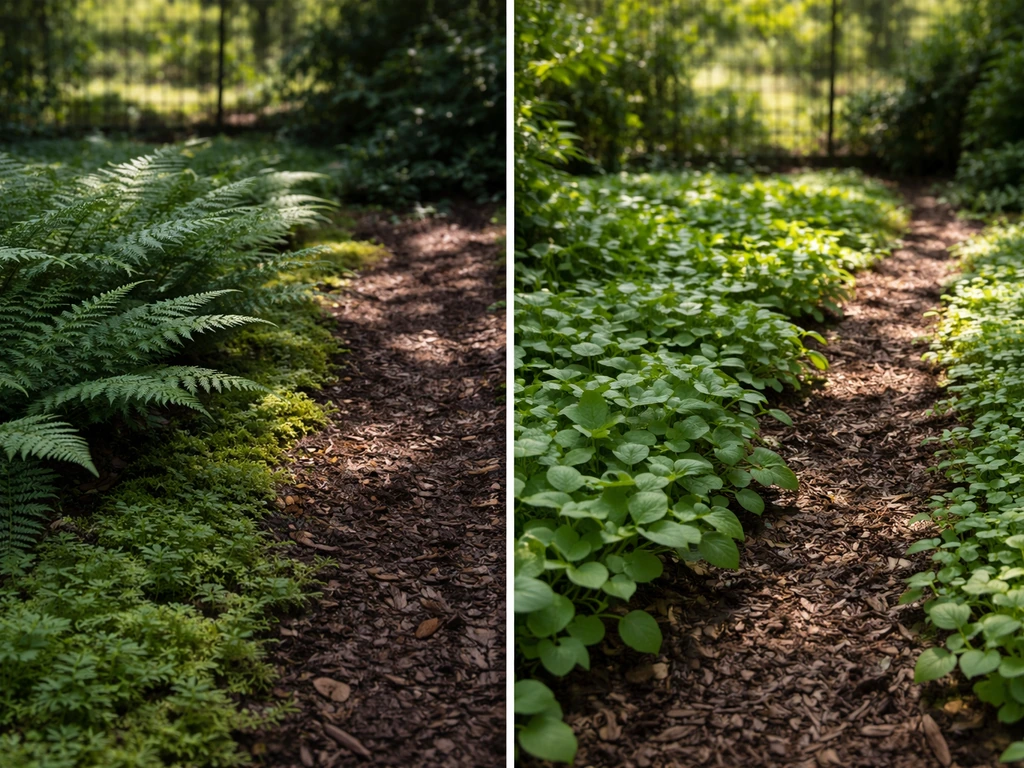
Shade is one of the most reliable passive tools for keeping foliage plants in a vegetative state. Deep shade (less than two hours of direct sun per day) suits ferns, mosses, and shade-tolerant foliage perennials like hostas, and it naturally limits the day-length signal that triggers flowering in many long-day plants. Part shade (two to four hours of direct sun) is the sweet spot for most decorative fern species and allows good frond growth without pushing plants toward reproductive stress. Full sun environments are genuinely harder to manage for non-flowering goals because the light and heat load speeds up the plant's developmental clock in most species.
Moisture and soil type
Ferns and mosses both require reliable moisture, and fern spore germination specifically needs a film of water to succeed. If you're in a climate with dry summers (much of the western US, Mediterranean-type zones), you'll need to irrigate consistently to keep ferns viable. Boggy, poorly drained areas are ideal for horsetails and some wetland fern species. For foliage plants that can technically flower, keeping soil consistently moist but not waterlogged tends to support vigorous vegetative growth.
Soil pH matters too: acidic soils (pH 5. The University of Vermont Extension also reports that many mosses found in dense shade prefer acidic soil, with a cited pH range around 5. 0 to 5. 5 [acidic soils (pH 5.
0 to 6. 0) favor ferns and mosses strongly](https://www. uvm. edu/extension/news/embracing-moss).
0 to 6. 0) favor ferns and mosses strongly, while alkaline soils (pH above 7. 0) will stress them into reduced growth or reproductive response.
Hardiness zone
Zone determines which non-flowering plants are even viable year-round in your location. Most hardy fern species (Dryopteris, Polystichum, Osmunda) are reliable in zones 3 through 8. Boston fern is a tropical that works outdoors in zone 10 and above, but it's used widely as a containerized annual or houseplant in cooler zones. Horsetails are broadly adaptable from zone 3 upward. Mosses are most reliable in zones 4 through 8 with consistent rainfall. If you're in a warm zone (9 to 11), your non-flowering plant palette shifts toward tropical foliage: caladiums, certain gingers, and shade aroids fill that space well, though some will flower occasionally.
How to actively prevent or minimize flowering
Even with the right plant selection, there are practical management steps that keep flowering suppressed or remove it quickly when it does appear. These work at different stages of the flowering process.
Choose the right variety to begin with
Within species that technically flower, cultivar selection matters enormously. Some hosta cultivars are bred primarily for foliage and produce sparse, easy-to-remove scapes. Some ornamental grass varieties are slower to produce seedheads. If keeping blooms absent is a priority, research cultivar-specific bloom behavior before purchasing rather than relying on species-level descriptions alone.
Manage nitrogen deliberately
Nitrogen drives vegetative, leafy growth. Keeping nitrogen levels moderately elevated, especially through the growing season, tips the plant's energy budget toward foliage rather than flowers. University of Maryland Extension notes that excessive nitrogen can reduce flowering in hydrangeas, and NC State Extension confirms that overfertilizing with nitrogen reduces flowering and produces excessive shoot growth in woody plants more broadly. This isn't license to dump fertilizer: too much nitrogen causes its own problems, including weak tissue and increased pest pressure. The practical approach is to use a balanced or slightly nitrogen-forward slow-release fertilizer during active vegetative growth, and then back off completely in late summer so you're not inadvertently triggering late-season reproductive responses.
Deadhead and disbud early and consistently
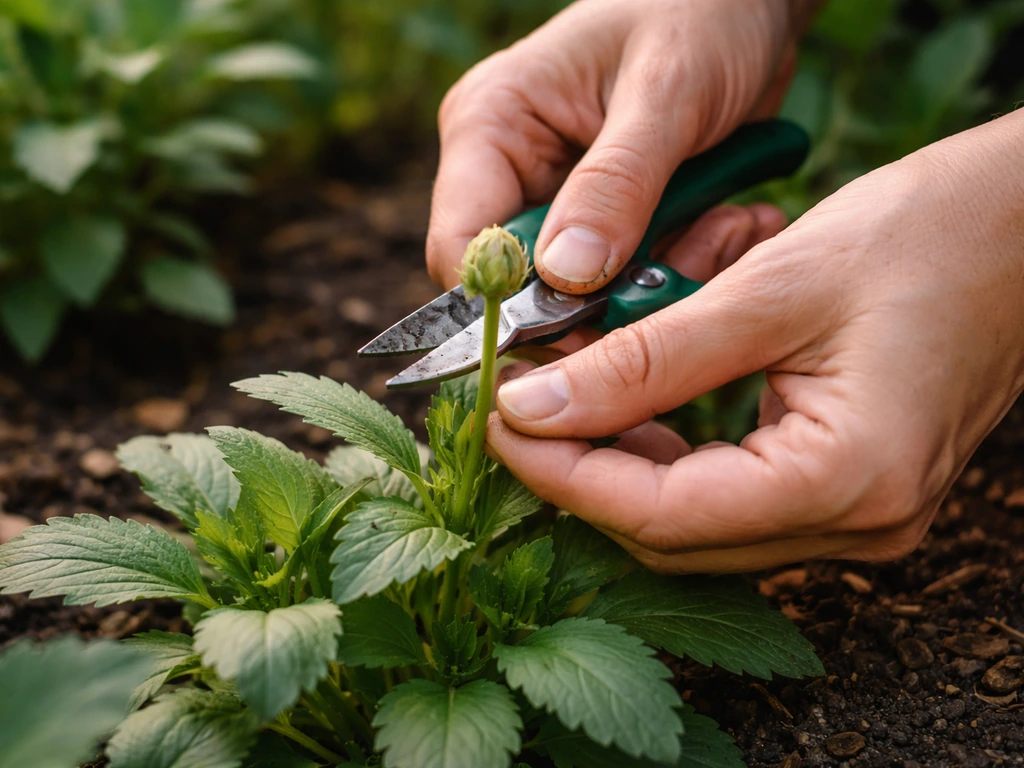
For plants that do send up flower stalks, removing them before they open is the most direct intervention. This is called deadheading when done to spent flowers, but for non-flowering goals you want to catch stalks or buds even earlier. University of Maryland Extension describes disbudding as removing small, young flower buds before they develop, which is exactly what you want here.
The Chicago Botanic Garden, RHS, and Iowa State Extension all note that removing flowers prevents seed set and can redirect plant energy. For foliage plants like hostas, cutting the scape at its base as soon as it emerges takes about 30 seconds and keeps the bed looking purely foliar all season. For sedges and grass-like plants that self-seed aggressively (pendulous sedge, for example), the RHS specifically recommends removing flower spikes promptly in midsummer before seeds form.
Manage light exposure strategically
Where possible, site plants in positions where they naturally won't receive the light signal needed to initiate flowering. North-facing beds, spots under deciduous tree canopies, and areas shaded by structures in the afternoon all reduce the effective day length a plant experiences. For long-day plants especially, shading naturally keeps them in a vegetative state. MSU Extension confirms that photoperiod is a central driver for seasonal flowering control, and that temperature and high-light conditions can accelerate the onset of blooming.
What to expect over time: establishment vs. later blooms
Year one after planting is almost always the least eventful in terms of flowering. Most perennials and many foliage plants are focused on root establishment and won't dedicate resources to reproduction yet. This can create a false sense of security: the plant 'never flowers' in year one, then reliably blooms from year two onward once the root system is established and the plant hits reproductive maturity. Ferns are genuinely an exception here because they don't flower regardless of age, but even ferns will start showing sporangia on mature fronds once they're fully established and producing adult-size fronds.
For foliage perennials like hostas, expect no flowering in year one, possible minor flowering in year two, and consistent scape production by year three. Plan your deadheading/disbudding routine from year two onward rather than assuming the plant is permanently non-flowering. Ornamental grasses follow a similar arc: cool-season types (which grow in spring and fall) and warm-season types (which peak in summer) differ in when seedhead production begins, but both will produce seedheads once mature. Knowing this schedule lets you time your management cuts correctly. If you're also aiming for height quickly, you'll want to balance flowering control with traits like fast vertical growth and mature size what plants grow tall and fast.
Environmental changes also reset the clock. A plant that has stayed vegetative for years can suddenly bloom after a drought, a division, significant root pruning, a change in sun exposure from nearby tree removal, or an unusually warm winter that alters vernalization timing. None of this is a failure: it's just the plant responding to a changed environment. The response is to return to your management toolkit, remove the flower structures early, reassess light and moisture conditions, and adjust fertility timing if needed.
Myths, limitations, and quick troubleshooting
Myth: 'Non-flowering' means no reproductive activity at all
Ferns, mosses, and horsetails are genuinely non-flowering, but they still reproduce, just via spores rather than seeds. Ferns produce sporangia on their fronds, mosses produce spore capsules on stalks, and horsetails produce spore cones. None of these are flowers, and none produce pollen in the angiosperm sense, but they are visible reproductive structures. If you're hoping to eliminate all reproductive output from your garden (for allergy management, for example), this distinction matters. That said, fern spores are not a significant allergen source for most people, unlike grass pollen.
Myth: Shade plants never flower
Many shade-tolerant plants bloom reliably in low light, hostas and astilbes being classic examples. Shade reduces the light intensity and can limit effective day length, but it doesn't automatically prevent flowering in plants that are mature and have met their vernalization requirement. If you want shade plants that genuinely don't flower, you need to choose within shade-tolerant, truly non-flowering groups (ferns, mosses) rather than assuming that shade alone will suppress bloom in all plants.
Myth: High nitrogen fertilizer always stops flowering
Elevated nitrogen does bias plants toward vegetative growth, and it can reduce flowering intensity in some species. But it's not a reliable or universal bloom suppressant. In plants with a hard photoperiod or vernalization requirement for flowering, nitrogen level is secondary: once the environmental trigger is met, the plant will flower regardless of fertilization. High nitrogen also causes its own issues, including excessive, weak growth and reduced root development in mature woody plants. Use nitrogen management as a supporting tool, not as your primary non-flowering strategy.
Troubleshooting: a plant you expected to stay vegetative is blooming
- Check if the plant has recently matured past its juvenile phase. Year two and three plants bloom when year one plants didn't.
- Assess whether sun exposure has increased (nearby tree removal, fence changes, seasonal canopy shift) and whether this has changed effective day length.
- Review your fertilizer timing. Late-season nitrogen can delay fruiting but doesn't reliably stop flowering, especially in photoperiod-driven species.
- Remove flower scapes or buds immediately at the base before they open to prevent seed set and redirect energy to foliage.
- Check for recent stress events: drought, division, transplant, or root disturbance commonly trigger reproductive response as a survival mechanism.
- If the plant is a grass or sedge producing seedheads, time your mowing or trimming cuts before seedhead emergence based on the species' typical timing for your zone.
Wildlife and ecological interactions
One practical point worth knowing: non-flowering plants like ferns and mosses do not provide nectar or pollen for pollinators. If you're managing a space for ecological value alongside the non-flowering aesthetic, you'll want to balance flowerless zones with at least some flowering plant coverage elsewhere. Spore-producing plants do still interact with the soil ecosystem and provide habitat structure, so they're not ecologically inert. But if pollinator support is a secondary goal, a purely fern-and-moss planting won't serve it.
If you're also exploring plants by their growth habit rather than flowering behavior, you may find it useful to consider how non-flowering choices fit alongside plants that stay compact or grow slowly, since those traits often cluster with the same shade-and-moisture conditions that keep flowering naturally suppressed. If your goal is a narrow, vertical look without worrying about blossoms, you can compare these non-flowering options to what plants grow tall and narrow for the best match.
If you want plants that stay compact, it can help to choose truly non-flowering options, since many of them naturally do not grow very tall. If you are also trying to avoid height, look for plants that do not grow tall within the same shade and moisture conditions that keep them from flowering. If you are aiming for plants that grow slow, focus on naturally slow groups like ferns and mosses and match them to consistent shade and moisture.
For the quickest results, focus on plant types that establish fast in your specific shade, moisture, and soil conditions grow slowly.
FAQ
If a plant is labeled “non-flowering,” will it still produce anything reproductive?
Not always. Ferns can show brown sporangia on mature fronds, mosses may produce spore capsules on stalks, and horsetails can form visible spore cones. If “no visible reproductive structures” is your goal, plan for sporangia and spore capsules even though they are not flowers (and they are generally less allergy-related than grass pollen).
Why did my foliage plant start sending up flower stalks after months or years of no bloom?
Yes, especially after stress. Drought, division, root disturbance, a warmer-than-usual winter, or a sudden change in sun exposure can push some foliage plants into reproductive mode even if they were quiet before. The fix is to remove any emerging stalks or buds early, then recheck your shade, watering consistency, and late-summer feeding.
Is any shade enough to prevent flowering?
Treat “shade” as light quantity, not just the absence of sun. Many flowering triggers depend on day length and how much light reaches the plant, so a plant in heavy canopy shade might never meet the light threshold needed to initiate buds. For long-day plants, deeper shade often works better than “afternoon sun only,” so aim for fewer than about two hours of direct sun if you want the most reliable suppression.
Why do my plants bloom in one year and not the next?
Year-to-year differences are common, particularly with vernalization. Plants that need cold exposure will bloom on schedule once they get a normal winter, but if winters are unusually mild or short, some may stay vegetative longer. Conversely, plants may bloom earlier in years when the cold period aligns well with their internal timing.
What is the best time to cut flower stalks or buds to keep plants effectively “non-flowering”?
Remove stalks early, not just spent flowers later. For foliage plants that send up scapes or spikes, disbudding or cutting at the base as soon as the stalk emerges is more effective than waiting for buds to open. For seedhead-forming grasses and sedges, trimming before seedheads develop prevents both the look and self-seeding.
Will fertilizing less or more reliably stop flowering?
High nitrogen can worsen the problem for some plants that are already vernalized and day-length-ready, because extra growth can increase the number and vigor of reproductive shoots. Use nitrogen as a supporting tool during active leaf growth, then stop feeding in late summer to reduce late-season reproductive push. Also avoid heavy dosing on woody plants, because weak tissue and pest pressure often follow.
How do I decide whether I need truly flowerless plants or plants that just rarely bloom?
Choose by your “repro target.” If you want plants that never develop flowers, use true flowerless groups like ferns, mosses, and horsetails. If you only want blooms to be rare, short, or easy to remove, pick foliage-forward options like hostas and control scapes. Mixing these categories is the most common reason people feel misled by results.
I live in a dry climate, can I still grow ferns that do not show flowers?
For ferns, dryness is the biggest practical failure point. Spore germination needs a thin film of moisture, and established ferns usually require consistently humid conditions, so dry summers often mean either irrigation or a more sheltered microclimate. If your summers are dry, focus on shade sites, consider drip or mist where appropriate, and expect less success without ongoing moisture.
What should I do differently if I’m in a warm zone (9 to 11)?
Yes, but the approach changes. In warm zones, some shade tropicals (like caladiums) may flower occasionally even if you remove blooms, while true non-flowering groups like mosses can be harder without acidic, consistently moist conditions. It can help to combine flowerless structure plants (ferns or other ancient groups that match your humidity) with foliage plants that are easy to disbud.
Will a garden of plants that do not grow flowers still support pollinators?
They are not ideal if your main aim is pollinator support. Flowerless and spore-based plants generally do not provide nectar or showy pollen, so an all-fern or all-moss garden may undercut pollinator goals. If ecology matters, keep some flowering species in separate areas while reserving the “no-blossom” zone for the flowerless plants.
Does repotting or dividing make plants more likely to bloom?
If you recently moved, divided, or pruned roots, it can shift maturity and trigger new growth pathways, sometimes including blooming. After any major root work, treat the first season as a “monitor for stalks” period, and keep conditions stable so the plant returns to vegetative growth as planned.