Xerophytes grow in any habitat where water is scarce or physiologically unavailable, most famously in hot deserts like the Sahara and Sonoran, but also in cold high-altitude drylands, rocky Mediterranean hillsides, coastal sand dunes, saline flats, and even nutrient-poor bogs where waterlogged soil paradoxically makes moisture hard for roots to absorb. The defining factor is not heat, it is drought stress, whether from low rainfall, fast-draining soils, high evaporative demand, or dissolved salts that lock water away from roots.
Where Do Xerophytes Grow Habitat and Plant Locations

Dr. Marcus Weatherby
27 May 2026
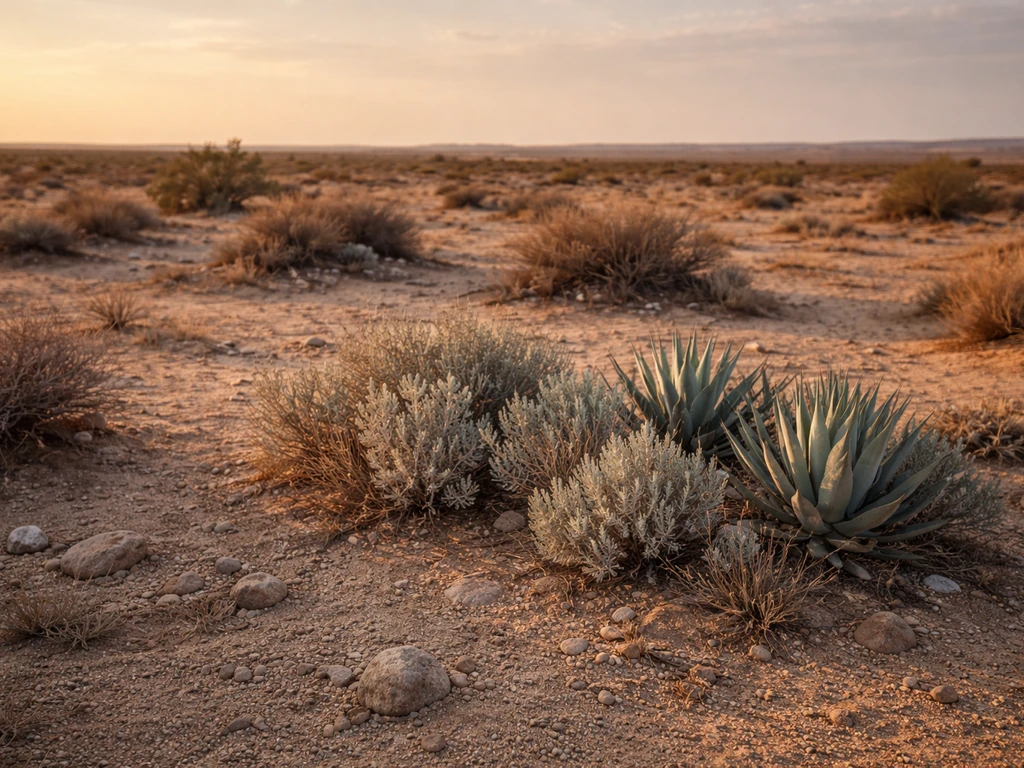
Typical habitats xerophytes prefer
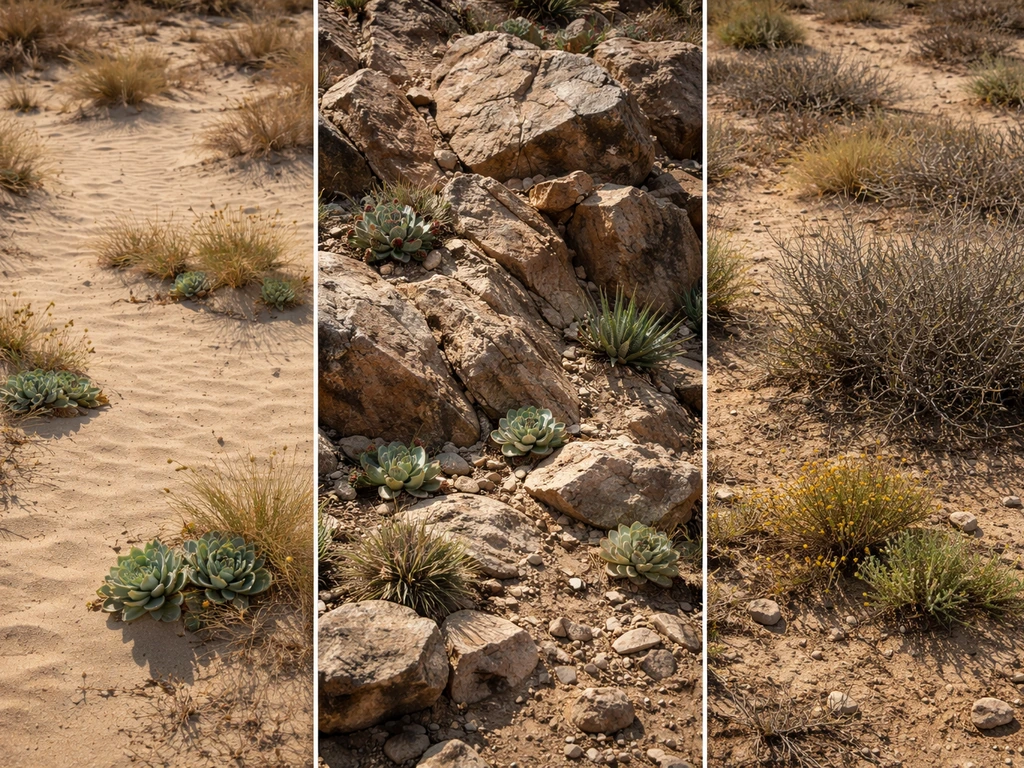
Walk into any landscape where most plants look stressed and xerophytes look perfectly at home, and you have found xeric habitat. That covers a surprisingly wide range of environments. The classic image is a cactus-studded desert, but xerophytes also dominate Mediterranean scrublands where summers are long and bone-dry, gravelly steppe grasslands in Central Asia, windswept alpine ridges above the treeline, and stabilized coastal dunes where salt spray and sandy soil combine to drain every drop of rain almost instantly.
What unites all these places is a water deficit during at least part of the growing season. Botanists define xerophytes broadly as plants adapted to life in dry or physiologically dry conditions, meaning even a salt marsh or an acid bog can produce xerophyte-like adaptations when the chemistry of the water makes it effectively unavailable to roots. That overlap with halophytes (salt-tolerant plants) is worth keeping in mind: a plant growing in a saline coastal flat is experiencing something biologically similar to drought even when the soil looks wet.
Hot dry vs cold dry: climate zones where xerophytes grow
Xerophyte territory spans two very different climate types, and mixing them up leads to planting mistakes. Hot drylands and cold drylands both produce xerophyte communities, but the species found in each are quite different.
Hot and semi-arid climates
The hottest xerophyte habitats sit in the BWh and BSh zones of the Köppen system, covering subtropical deserts and semi-arid savannas where annual rainfall drops below about 250 mm and summer temperatures regularly exceed 40°C. The Sahara, Arabian Desert, Sonoran Desert, Atacama edges, and the Thar Desert of South Asia all fall here. blank" rel="noopener noreferrer">High net radiation creates enormous evaporative demand, meaning even when rain does fall it is pulled back into the atmosphere quickly. Plants in these zones include succulents like cacti and euphorbias, drought-deciduous shrubs that drop leaves in the dry season, and annuals that complete their entire life cycle in the brief wet window.
Mediterranean-type climates (Köppen Cs) are a softer version of hot-dry habitat. Annual rainfall can reach 35 to 90 cm, but it falls almost entirely in winter, leaving summers reliably dry and warm. The average temperature never drops below 0°C in the coolest months, so frost stress is minimal. These conditions produce sclerophyllous shrublands: California chaparral, South African fynbos, the maquis and garrigue of the Mediterranean Basin, Chilean matorral, and Australian kwongan. The xerophytes here are not succulents but tough-leaved, deep-rooted shrubs and bulbous geophytes that go dormant through summer.
Cold and high-altitude drylands
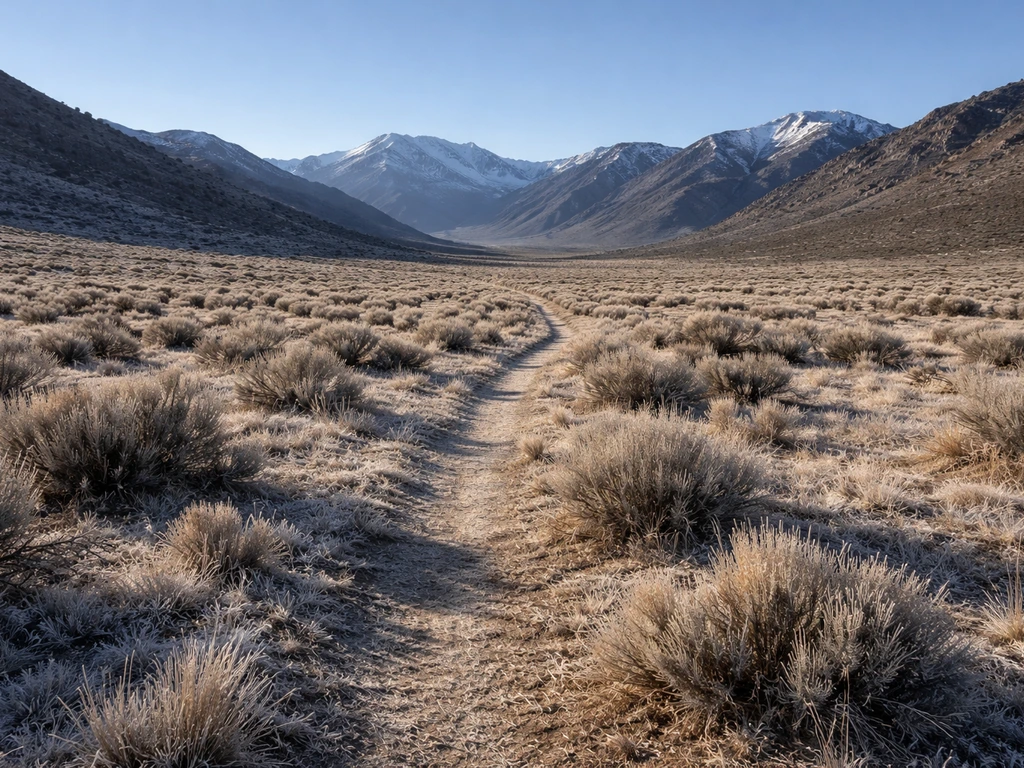
Cold drylands are often overlooked but produce some of the most specialized xerophytes. The Great Basin of the American West, the Patagonian steppe, Central Asian steppes from Kazakhstan into Mongolia, and the Tibetan Plateau all receive limited precipitation and experience intense cold-season drought. Even where snow falls, it may sublimate directly from frozen ground without ever becoming liquid water that roots can absorb. High-altitude ridges and exposed alpine slopes create similar conditions: low humidity, high UV radiation, strong winds that accelerate leaf-level water loss, and soils that freeze solid for months. Cushion plants, dwarf willows, and wiry bunchgrasses are the xerophytes here, shaped by cold desiccation rather than heat.
It is worth contrasting this with bryophytes, which tend to occupy the opposite end of the moisture spectrum, favoring consistently moist, humid, and shaded habitats. In contrast, bryophytes grow where moisture stays available, which is why they are often found in damp forests, stream banks, and other sheltered, humid spots favoring consistently moist, humid, and shaded habitats. Where you find a carpet of mosses and liverworts, you are almost certainly not in xerophyte territory, and vice versa.
Soil and water constraints: rocky, sandy, saline, and poor soils
Rainfall alone does not determine whether a site is xeric. Soil structure and chemistry matter just as much. I have walked through areas that receive 500 mm of annual rain but are dominated by xerophytes because the soil drains so fast that roots never encounter moisture for more than a day or two after each event.
- Rocky and gravelly soils: Thin soils over bedrock or talus slopes shed water almost immediately. Roots reach into cracks for mineral nutrients and occasional moisture, but the surface is effectively arid. These are classic xerophyte sites on limestone karst, volcanic fields, and eroded hillsides worldwide.
- Sandy soils and dunes: Sand has large particle sizes that hold very little capillary water. Coastal and inland dunes experience rapid percolation, salt exposure, and wind desiccation simultaneously. Plants like sea holly and sand couch in Europe, or sand verbena and dune evening primrose in North America, are fine-tuned to these conditions.
- Saline soils: High salt concentrations in soil water create osmotic stress that prevents roots from absorbing moisture even when water is physically present. This is physiological drought. Halophytes and some xerophytes overlap here, with plants like saltbush (Atriplex) and pickleweed (Salicornia) straddling both categories.
- Shallow or nutrient-poor soils: Acid bogs, serpentine barrens, and laterite outcrops can all produce xerophyte-like plant communities. Nutrient deficiency restricts root development, limiting a plant's ability to explore soil for water, which effectively intensifies drought stress even on sites with moderate rainfall.
The takeaway is that if a site has any combination of fast drainage, low water-holding capacity, high salt content, or nutrient stress that limits root growth, you are likely looking at a habitat that selects for xerophyte adaptations regardless of what the rainfall charts say.
Geographic distribution by region
Xerophytes are distributed across every continent except Antarctica, concentrated in the world's major dryland systems. Here is a region-by-region breakdown of where you will actually encounter them.
| Region | Key Habitat Types | Representative Xerophytes |
|---|---|---|
| Sahara and North Africa | Hyper-arid desert, stony reg, sandy erg | Date palm, Saharan cypress, various Acacia species |
| Arabian Peninsula | Rocky desert, wadis, salt flats | Ghaf tree (Prosopis cineraria), Ziziphus, desert roses |
| Sonoran and Chihuahuan Deserts (North America) | Cactus scrub, desert grassland, bajada slopes | Saguaro, ocotillo, prickly pear, creosote bush |
| Great Basin (North America) | Cold sagebrush steppe, rocky shrubland | Big sagebrush, shadscale, rabbitbrush |
| Atacama and Monte (South America) | Hyper-arid coastal desert, arid steppe | Llareta, candelabra cactus, Prosopis |
| Karoo and Namib (Southern Africa) | Succulent karoo, gravel plains | Quiver tree, lithops, mesembs, aloes |
| Mediterranean Basin | Maquis, garrigue, phrygana scrub | Wild olive, Cistus, lavender, rosemary |
| Australian Outback | Mulga scrubland, spinifex grassland, mallee | Spinifex grass, mulga (Acacia aneura), saltbush |
| Central Asian Steppe | Semi-arid and arid grassland, salt steppe | Saksaul (Haloxylon), feather grass, wormwood (Artemisia) |
| Tibetan Plateau and Alpine Zones | Cold desert, alpine rocky ridges | Cushion plants, dwarf juniper, edelweiss relatives |
Phreatophytes occupy a related but distinct niche in many of these regions. Unlike most xerophytes, which survive drought by reducing water use, phreatophytes survive by sending roots deep enough to tap permanent groundwater. You often find both strategies co-existing along desert washes and dry riverbeds where surface water is absent but groundwater is accessible at depth.
How xerophytes actually survive drought
Understanding xerophyte distribution is really about understanding their survival toolkit. Each adaptation directly explains why a plant can occupy a site that would kill ordinary plants within days.
Water storage
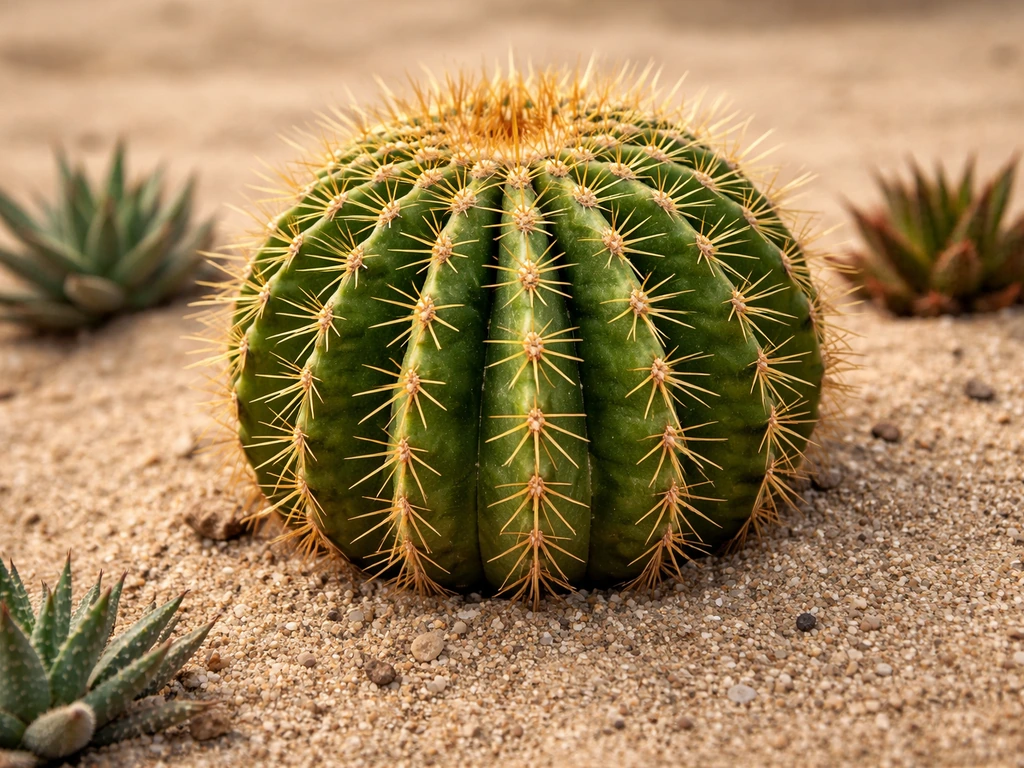
Succulents store water in swollen stems, leaves, or roots, acting as their own reservoirs between rain events. A mature saguaro cactus can absorb and store hundreds of liters during a single rainfall and then draw on that reserve for months. This strategy works best in habitats with infrequent but not entirely absent rainfall.
Reduced leaf area and leaf modifications
Leaves are where most water loss happens through transpiration. Xerophytes reduce this loss by shrinking leaf size, rolling leaves into cylinders, replacing leaves with photosynthetic spines or stems, or dropping leaves entirely during dry periods. Cacti and many euphorbias have eliminated leaves altogether. Mediterranean shrubs like rosemary and lavender have narrow, needle-like or waxy leaves that minimize surface area exposed to dry air.
Stomatal control and waxy surfaces
Stomata, the pores that let CO2 in and water vapor out, are often sunken into pits or grooves in xerophyte leaves, trapping a small pocket of humid air that slows evaporation. Many xerophytes open their stomata at night using a photosynthetic pathway called CAM (Crassulacean Acid Metabolism), fixing carbon dioxide when temperatures are cooler and evaporative demand is low. Waxy cuticles on leaf surfaces add another barrier against water loss.
Root architecture
Xerophyte root systems come in two main designs. Wide, shallow roots spread laterally close to the surface to capture brief rainfall over a large area, which is why creosote bushes space themselves so evenly across the desert floor. Deep taproots pierce down through rock and soil to reach subsoil moisture or permanent groundwater. Some species combine both strategies, with shallow feeder roots and a central taproot.
Dormancy and drought deciduousness
Many xerophytes simply shut down during the driest periods. Drought-deciduous species drop all their leaves when soil moisture falls below a threshold, entering a state of near-suspended growth until the next rain. Annual xerophytes go further, completing their entire life cycle in a matter of weeks after rain, spending the dry season as dormant seeds in the soil.
Recognizing xerophyte habitat and choosing plants for your site
If you want to find xerophytes in the wild or figure out whether your site calls for them, here are the field cues and practical steps I use.
Reading a site for xeric conditions
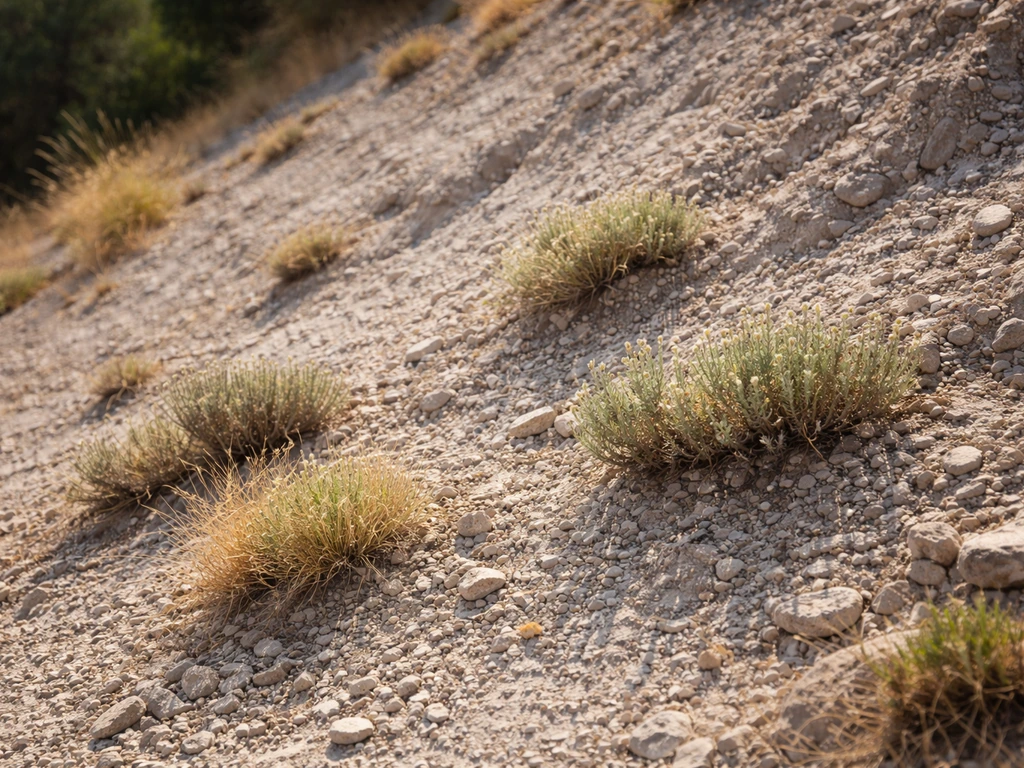
Sun-facing slopes (south and west facing in the northern hemisphere) dry out far faster than shaded aspects and almost always carry more xerophyte species. Look for exposed rock, thin pale soils, and sparse plant spacing with visible bare ground between individuals. Plants that are low-growing, grey-green, waxy, or spiny are visual cues that a site is xeric. If the soil crunches underfoot, drains visibly after rain within an hour, or shows salt efflorescence (white crystalline crusts), you are looking at xerophyte territory.
Matching plants to your specific site conditions
- Check your annual rainfall and, more importantly, its seasonal distribution. Mediterranean xerophytes like Cistus and lavender tolerate wet winters but demand dry summers. Desert succulents need low rainfall year-round.
- Test your drainage. Dig a 30 cm hole, fill it with water, and time how fast it drains. If it empties within an hour, your site is xeric regardless of rainfall figures. If it holds water for 12 hours or more, most true xerophytes will struggle.
- Assess your soil texture and salt level. Sandy or gravelly soils with low organic matter are natural xerophyte sites. If you see salt crusts or your soil smells of sulfur when wet, look at halophyte-tolerant xerophytes like saltbush.
- Map your sun exposure. Full sun all day combined with reflected heat from walls or rocks replicates xeric conditions even in relatively humid climates. Xerophytes placed in full shade lose the competitive advantage their adaptations give them.
- Match the climate origin of your chosen plants to your conditions. A Sonoran desert cactus planted in a cold steppe will die from cold desiccation, not heat. A Mediterranean shrub in a monsoon climate may rot in the wet season. Region of origin is your best guide.
- Start with native or locally adapted species. A plant that evolved in your region's xeric habitats is always a safer bet than an exotic that merely tolerates similar conditions. Local nurseries specializing in native plants or botanic gardens with regional dryland collections are the best sources.
The broader ecological picture matters too. Xerophytes exist on a spectrum with other stress-tolerant plant groups. At the wet extreme you have bryophytes, which need consistent moisture and shade to survive. At the wet extreme you have bryophytes, which need consistent moisture and shade to survive, as plants in the phylum Bryophyta grow in areas that are.
At the saline end, halophytes occupy salt marshes and tidal flats. Halophytes are plants that grow in saline habitats such as salt marshes and tidal flats, where high salt levels would stress most other plants. Phreatophytes occupy a middle ground in desert washes, anchored by deep roots in groundwater. And some plants traditionally associated with mountain environments also share xerophyte traits when exposed to wind and thin soils at altitude.
plants that grow in mountains are called xerophytes mountain environments. Knowing where xerophytes sit in this spectrum helps you place the right plant in the right corner of your site.
FAQ
If my area has decent yearly rainfall, can it still be xerophyte habitat?
In landscaping terms, look for drought stress that happens during the plant’s active growing season (or for long stretches of the warm season), not just an annual rainfall total. A site with 400 to 600 mm of yearly rain can still be xeric if water drains in hours, roots rarely encounter usable moisture, or salts accumulate near the surface.
Do xerophytes from hot deserts work in cold drylands?
Yes, but the species and design can differ. Hot-dry xerophytes (often succulents and drought-deciduous shrubs) cope with high evaporative demand and heat, while cold-dry xerophytes cope with winter desiccation from frozen or wind-exposed conditions. Planting a “desert cactus” type in a cold, windy, snow-influenced dryland can fail due to temperature and timing mismatches even if both are dry.
Is dry air the main factor for where xerophytes grow?
Not automatically. Xerophytes can tolerate dry air, but if rainfall is accompanied by persistent cloud cover, high humidity, or deep, slow-draining soils, the site may not select for xerophyte traits. A practical test is drainage and root access: after a rain, see how long it takes for the soil to dry to a depth where roots would sit, and whether salts are building up.
How can salt-heavy, possibly wet-looking ground still support xerophytes?
They often overlap with halophytes, so a saline site can look wet at the surface yet behave like drought because roots cannot access water held by dissolved salts. A clear next step is to check for salt crusts or white efflorescence after drying, because that points to “physiologically dry” conditions that favor xerophyte or halophyte strategies.
What’s the most common mistake when trying to grow xerophytes outdoors?
Common mistake: matching by “look” rather than by mechanism. Use cues that link to water loss and water access, such as grey-green waxy or spiny foliage (water conservation) plus fast drainage or salt efflorescence (water not available to roots). If the plant’s native habitat is driven by winter rain but your garden’s summer is wet, the adaptation may not provide protection.
How do I choose xerophyte plants based on seasonal rainfall timing?
If you’re deciding what to plant, treat the site as a water-access problem with timing. For example, Mediterranean-type xerophytes expect a dry summer dormant phase, while many desert xerophytes can exploit brief rain windows. Before buying, note when rain actually occurs locally (seasonality) and whether summer irrigation is needed, because overwatering can eliminate their competitive advantage.
Why are xerophyte areas sometimes sparse, even when there’s life present?
Xerophytes usually look sparse, but the spacing can also reflect soil depth and root competition. Where soils are very shallow and rocky, you may see even more bare ground and patchy establishment because roots cannot expand. In deeper soils that still drain quickly, you may find larger shrubs or grasses with less bare spacing.
How can I tell xerophytes apart from phreatophytes in the wild?
Yes, and it matters for identification. Some “drought-tolerant” ornamentals store water (succulents), some reduce leaf area, and some primarily avoid stress by using deep groundwater access (phreatophyte strategy). If a plant survives because it reaches groundwater, it may not be appropriate for a site that only gets episodic rain.
Are there truly xerophytes that grow in wet or bog-like places?
You can still get xerophyte-like adaptations in bogs or wetlands when the chemistry makes water effectively unavailable, but the soil can be unpredictable. For practical work, don’t assume all bogs are moist for roots, instead check whether the substrate is waterlogged with poor root access, acidic conditions, or other factors that limit uptake. Otherwise you can misread the habitat as “not dry enough.”
What’s a quick way to confirm a site is xeric before planting?
A simple “next step” for field verification is to combine drainage observation with a time check. After a rain, note whether soil dries rapidly at the depth you expect feeder roots to occupy, and whether salts appear as the surface dries. If both happen, the site is likely xeric even if rainfall amounts are moderate.