
Plants in the phylum Bryophyta grow in areas that are moist, humid, and typically shaded. In short, the question "where do bryophytes grow" comes down to consistently damp, humid, and mostly shaded places. Mosses, liverworts, and hornworts all share this core requirement: they need consistently damp surfaces and high ambient humidity to survive and reproduce. You'll find them on shaded forest floors, along stream banks, on dripping rocks, in bogs, and even near snowpack at high elevations. If a spot stays reliably wet and out of harsh direct sun, there's a good chance something from Bryophyta is already living there.
Plants in Phylum Bryophyta Grow in Moist, Shaded Areas

Dr. Marcus Weatherby
24 May 2026
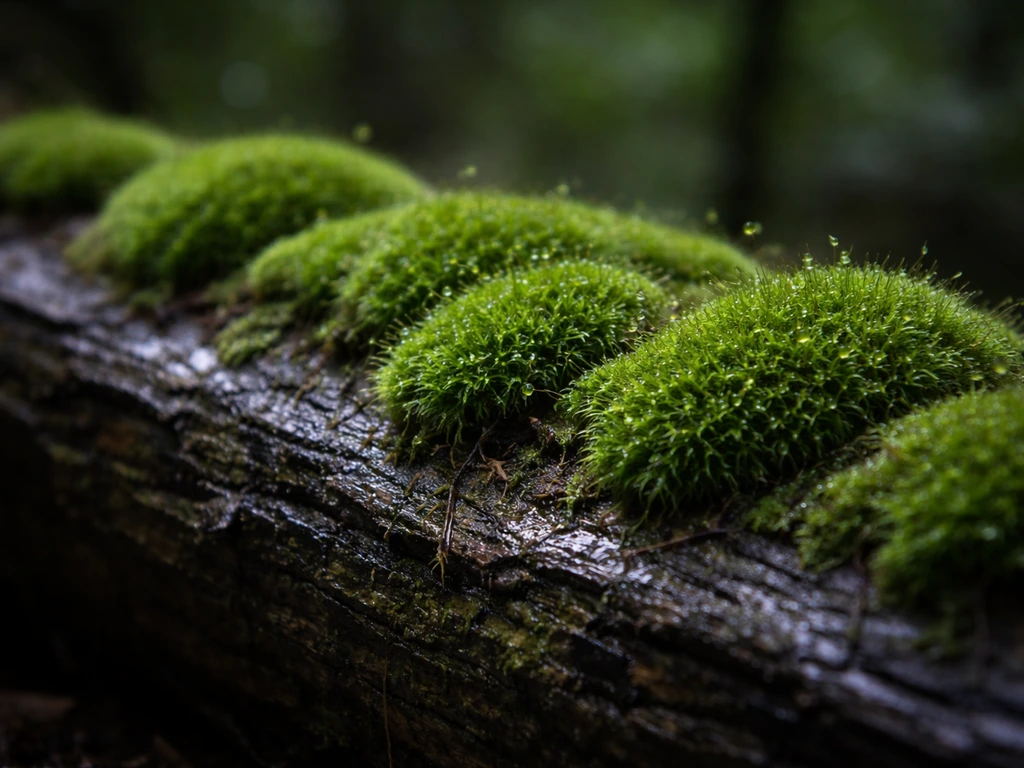
What Bryophyta actually are
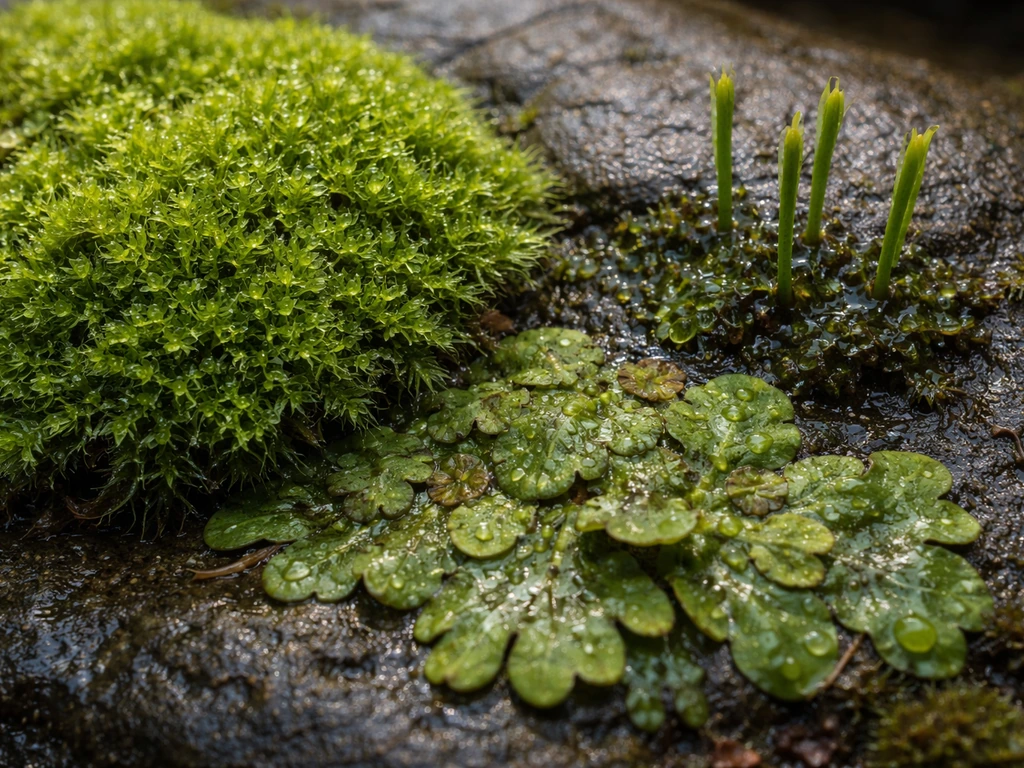
Bryophyta is the phylum that covers three groups of small, non-vascular land plants: mosses, liverworts, and hornworts. They're some of the oldest land plants on Earth, and their basic body plan hasn't changed much in hundreds of millions of years. Unlike the flowering plants and ferns most people picture when they think of 'plants,' bryophytes have no true roots, no stems with internal plumbing, and no flowers. Instead they anchor themselves with hair-like structures called rhizoids and absorb water and nutrients directly through their surfaces. That simple, ancient design is exactly why their habitat requirements are so specific.
- Mosses (class Bryopsida): the most familiar group, forming dense cushions or mats on rocks, logs, and soil
- Liverworts (class Marchantiopsida): flat, ribbon-like or leafy plants often found on wet soil and shaded stream banks
- Hornworts (class Anthocerotopsida): small, ground-hugging plants with distinctive horn-shaped spore structures, common in moist disturbed soil
The core habitat requirement: moist and humid
The single most important environmental condition for Bryophyta is persistent moisture. Not occasional rainfall, but reliably damp conditions that keep the plant's surface wet or at least highly humid most of the time. bryophytes grow in habitats that are consistently damp and humid, and the shade keeps that surface moisture from evaporating too quickly.
This matters because bryophytes have no vascular tissue, meaning they have no internal system to move water from roots up through stems the way a tree or fern does. Every cell has to absorb water directly from the surrounding environment. The moment the environment dries out, the plant's access to water stops. That said, many mosses are surprisingly resilient: [a dry moss mat can look completely dead but will revive and function normally once moisture returns](https://www.
usgs. gov/publications/bryophytes-and-lichens-small-indispensable-forest-dwellers). That bounce-back ability is impressive, but it doesn't change the fact that moist areas are where they genuinely thrive rather than just survive.
Shade is the second major requirement, and it's closely tied to moisture. Direct sunlight dries surfaces quickly. Shaded areas retain surface moisture longer, which is why you consistently find bryophytes on the north-facing sides of rocks and trees in the northern hemisphere, under forest canopies, and in sheltered gorges. The shade itself isn't the goal; it's what the shade does to the moisture level that matters.
Where you'll actually find bryophytes in the real world
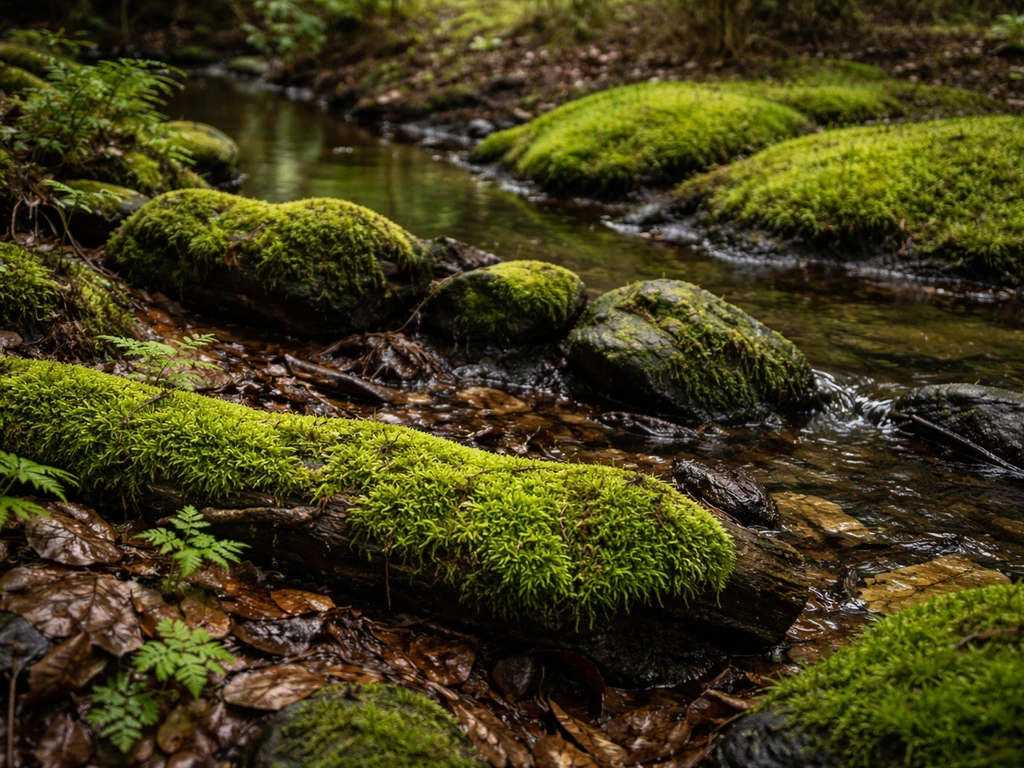
I've come across bryophytes in more places than most people expect, once you start looking. The conditions repeat themselves across wildly different landscapes, from tropical cloud forests to arctic tundra. Here are the real-world habitats where these conditions consistently occur:
- Shaded forest floors: Deciduous and coniferous forests with closed canopies keep light low and humidity high. Moss carpets on the forest floor are one of the most common bryophyte habitats worldwide.
- Stream banks and riparian zones: The area right along a stream or river stays persistently damp from spray and high water tables. Liverworts especially favor these zones.
- Bogs and fens: Sphagnum moss dominates peat bogs across northern latitudes. These waterlogged, acidic environments are among the most bryophyte-rich ecosystems on the planet.
- Wet rock surfaces and cliff faces: Seeping water on shaded rock faces creates near-perfect bryophyte conditions. Look for bright green moss colonies on north-facing cliff walls or gorge interiors.
- Rotting logs and stumps: Decaying wood holds moisture like a sponge and offers a stable, sheltered surface. Mosses and liverworts colonize fallen logs faster than almost any other plant group.
- Arctic and alpine tundra near snowmelt: The prolonged release of meltwater keeps ground surfaces wet through summer. Mosses are major contributors to tundra ground cover in these zones.
- Tropical cloud forests: Constant cloud cover, dripping vegetation, and near-100% humidity create ideal conditions. Bryophyte diversity in cloud forests is extraordinary.
- Damp walls, old stone, and shaded pavement: In urban and rural areas alike, mosses colonize any porous, persistently damp surface that gets enough shade.
What 'damp' really means: moisture and light unpacked
When ecologists say bryophytes need 'moist' conditions, they mean the surface where the plant lives stays wet or at least damp for the majority of the time, not just after rainfall. A good way to think about it: if you pressed your hand to the ground or rock and it came away damp, that's the moisture level bryophytes are working with. They aren't aquatic plants in the way pondweed or water lilies are. You won't find healthy moss colonies fully submerged in a running stream. But they need moisture close enough to the surface that their entire body stays hydrated through direct contact.
Light requirements are more variable than most people assume. Some mosses tolerate quite a bit of indirect light and will grow in open but humid environments. Others are extremely shade-tolerant and will grow in deep forest understories where almost no other plant survives. The consistent pattern is that they avoid intense, prolonged direct sunlight, which both desiccates them and raises temperatures beyond their preferred range. Compare this to xerophytes, which are specifically adapted to thrive under intense sun and dry conditions, the opposite end of the spectrum from bryophytes.
| Condition | What bryophytes need | Why it matters |
|---|---|---|
| Moisture | Persistently damp to wet surfaces | No vascular tissue means water must be absorbed directly through cell surfaces |
| Humidity | High ambient humidity (often above 70%) | Reduces evaporative water loss from the plant body |
| Light | Low to moderate indirect light, shade preferred | Direct sun dries surfaces and raises temperatures rapidly |
| Temperature | Cool to moderate (though some tolerate wide ranges) | Cool air holds moisture at the surface longer; reduces desiccation risk |
| Substrate | Porous, moisture-retaining surfaces (soil, rock, wood) | Allows water to wick upward and keep plant surfaces damp between rain events |
The biology behind why these conditions are non-negotiable
There are two biological reasons bryophytes are locked into moist, humid habitats, and understanding them makes the whole picture click. The first is reproduction. Bryophytes reproduce using sperm cells that have flagella, meaning they physically swim to reach the egg. That's not a metaphor: the sperm needs a film of liquid water on the plant surface to travel from the male structure to the female structure. No water, no fertilization, no next generation. This is why you'll often see moss reproduction happening in spring when surfaces are wet from snowmelt or rain, and why populations stall in extended dry periods.
The second reason is the lack of vascular tissue. Vascular plants (trees, ferns, grasses, most of what we think of as 'plants') have xylem and phloem, internal tubes that transport water and sugars throughout the plant body. Bryophytes have none of that. Water can only move through them by slow cell-to-cell diffusion, which means the external environment has to supply moisture continuously. A moss sitting on dry rock isn't pulling water up from deep soil the way an oak tree does. It's entirely dependent on what the air and immediate surface provide. This is why bryophytes are sometimes compared to living sponges: when water is available, they absorb it fast; when it's gone, they go dormant and wait.
How bryophyte habitats compare to what other adapted plants need
It helps to frame bryophyte habitat requirements against other plant groups covered on this site. Halophytes grow in salty coastal or desert soils where most plants can't survive. Halophytes are plants that grow in salty conditions where other plants struggle, which is a different stress tolerance from bryophytes Halophytes grow in salty coastal or desert soils. <a data-article-id="FF149009-DA08-41D0-A749-A3724C54DE2C">Phreatophytes send roots down to deep groundwater tables, accessing moisture no surface plant can reach.
</a> Xerophytes thrive in arid conditions with minimal water and intense sun. Bryophytes are on the opposite end: they need surface-level moisture constantly, can't access deep water reserves, and need protection from drying conditions. Phreatophytes are the plants adapted to grow in dry areas by reaching water from deeper layers <a data-article-id="FF149009-DA08-41D0-A749-A3724C54DE2C">need surface-level moisture constantly. Among the non-vascular plant groups, they occupy the wet, shaded, sheltered niche. If a habitat would suit a xerophyte, it almost certainly won't suit a bryophyte, and vice versa.
Plants that grow in mountains are called xerophytes, and they use different strategies to survive long dry spells.
Quick checklist to identify bryophyte-friendly areas today
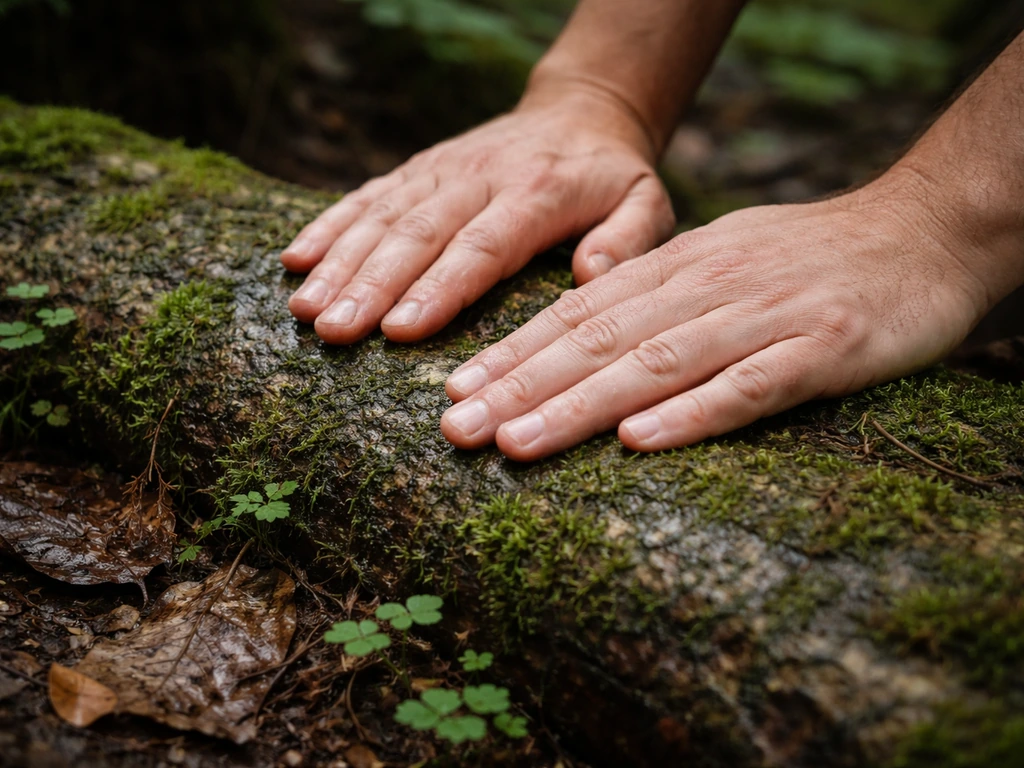
Whether you're trying to spot bryophytes in the field, understand why they're growing somewhere, or find a suitable spot to encourage them, here's a practical field checklist you can run through on the spot:
- Check surface moisture: Press your palm to the ground, rock, or log. Does it come away damp? If yes, that's a promising start.
- Check for shade: Is the spot shaded for most of the day? North-facing surfaces, canopy cover, or sheltered walls all count.
- Check ambient humidity: Does the air feel noticeably humid? Are there nearby water sources like a stream, seep, or pond? High humidity compensates for occasional dry periods.
- Look at the substrate: Is the surface porous or textured? Rough rock, decaying wood, and packed organic soil all retain moisture and give bryophytes something to grip.
- Check for existing colonizers: Lichens on rock surfaces often indicate the kind of stable, persistent moisture that mosses also favor. If you see lichens, check the shadier spots nearby for moss.
- Assess light levels: Hold your hand about 30 cm above the surface. If you cast only a faint shadow, light levels are low enough. If your shadow is sharp and dark, the spot may be too sunny for most bryophytes.
- Time of day and season: Visit in the morning when dew is still present, or after recent rain. Bryophyte-friendly spots will stay visibly damp long after surrounding areas dry out.
Once you train your eye to these conditions, you start seeing bryophytes everywhere: on the shaded side of a garden wall, in the grout between old stone steps, on the north face of a boulder in the woods, or massed along the edges of a forest path that stays muddy after rain. The phylum Bryophyta isn't rare or hard to find. It's just quietly occupying every moist, shaded corner the world has to offer.
FAQ
If bryophytes need moisture, can they grow in places that dry out every day?
They can persist where drying is brief, but they will not thrive if the surface stays dry for long stretches. Look for microhabitats where the top layer remains damp most of the day, such as north-facing rocks, shaded soil that stays cool, or areas with frequent condensation.
Why don’t bryophytes grow in fully aquatic habitats like pondweed does?
Even though they need water, most bryophytes are not built to live fully submerged for long periods. Healthy colonies typically stay attached to a surface and remain hydrated from direct contact with water films or humid air, rather than depending on constant flow under the water.
Will mosses grow in sun if the area is humid?
Some species tolerate more indirect light, but prolonged direct sun usually causes overheating and fast surface drying. The practical test is whether the surface stays damp to the touch under your sunlight exposure, not just whether the air feels humid.
How can I tell whether a patch of moss is thriving or just surviving?
Thriving moss often forms a dense, continuous mat with consistent color and structure across nearby spots. If it only appears after rainfall or turns brittle quickly in dry weather, it may be surviving intermittently rather than actively growing.
Do all bryophytes require the same amount of shade?
No. Light tolerance varies by species, but the shared pattern is avoidance of intense, prolonged direct sunlight. Some can handle brighter indirect conditions in open areas if moisture remains high, while others need deep understory shade.
Could I mistake algae or liverwort for each other when looking at moist shaded spots?
Yes, which is why field ID matters. Algae often look more slimy or filamentous and may wash away more easily, while liverworts and hornworts have more defined leaf-like or flattened structures. If you’re unsure, check whether the growth forms a persistent surface mat anchored to the substrate.
What should I consider if I want to encourage bryophytes in my garden?
Focus on persistent surface dampness, not just occasional watering. Options include creating shade using taller plants or structures, improving moisture retention in shaded corners, and avoiding disturbance like frequent weeding that dries the ground.
Do bryophytes prefer acidic or basic soils?
They are not as dependent on soil chemistry as they are on surface moisture and humidity, but substrate can still matter. Many mosses do well on stone, bark, and organic-rich but consistently damp material; extremely dry or frequently watered but fully drained soil tends to fail regardless of pH.