
Bryophytes (mosses, liverworts, and hornworts) grow wherever moisture and shade combine long enough for them to stay active. That usually means forest floors, stream banks, waterfall splash zones, shaded rock faces, tree bark, rotting logs, and peatlands. But they also turn up in sidewalk cracks, cemetery walls, and desert soil after rain because they can go fully dormant when dry and bounce back the moment water returns. If a surface stays damp, stays shaded, and doesn't get disturbed too often, there is probably a bryophyte on it or moving toward it.
Where Do Bryophytes Grow? Habitats and How to Find Them

Dr. Marcus Weatherby
30 May 2026
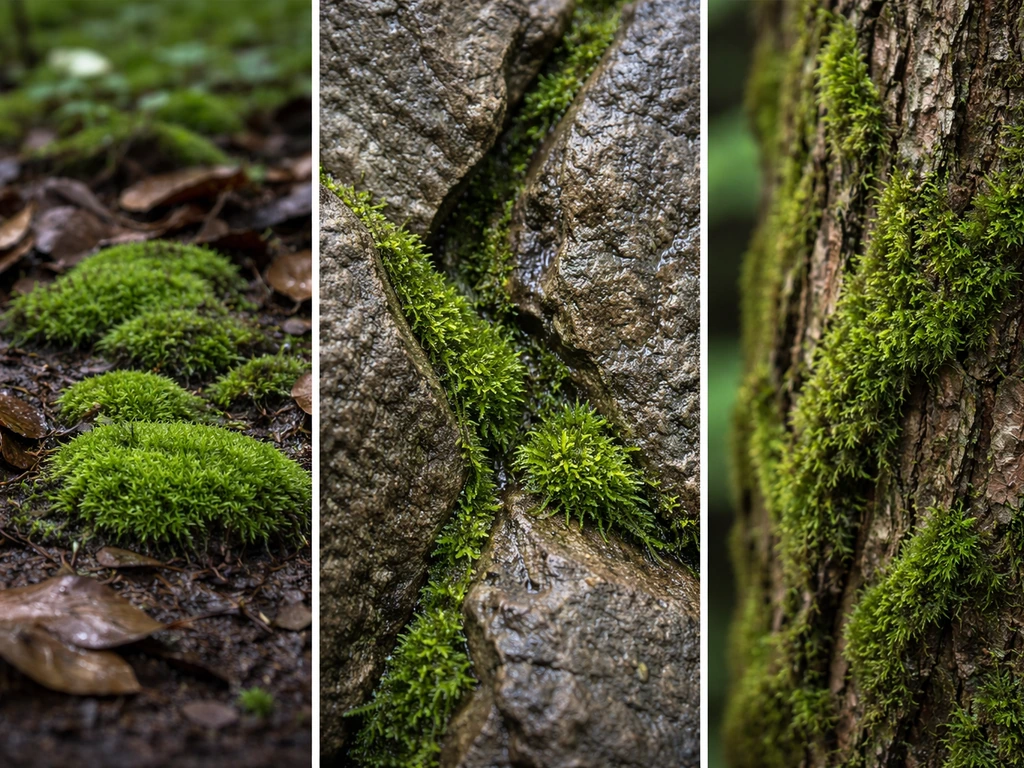
Quick answer: typical bryophyte habitats by moisture and shade
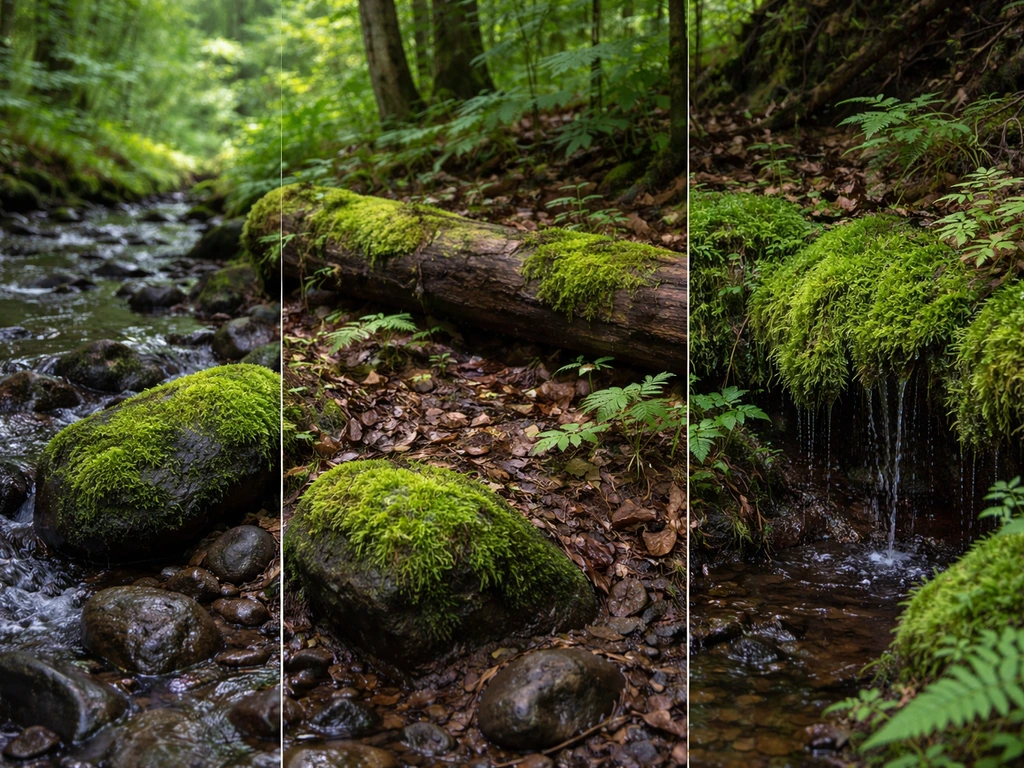
The fastest way to predict where bryophytes grow is to think in two axes: how wet is it, and how shaded is it? The wettest, shadiest spots (stream splash zones, waterfall margins, north-facing cliff bases, bog surfaces) carry the highest diversity. Moderately moist shaded spots (forest floor, tree bark, shaded boulders, rotting logs) are where you'll find the most abundant and familiar moss mats. Dry or seasonally wet spots with some shade (sidewalk cracks, cemetery stone, open rocky soil after rain) are colonized by specialists that tolerate desiccation. Almost no bryophyte prefers full sun and persistent drought, but many can handle it intermittently.
| Moisture level | Shade level | Typical habitat | Main group found |
|---|---|---|---|
| Permanently wet | Deep shade | Splash zones, stream waterline, bog mats | Liverworts, Sphagnum moss, hornworts |
| Consistently moist | Partial to deep shade | Forest floor, shaded boulders, log surfaces, tree bark | Mosses (most genera), some liverworts |
| Seasonally wet / dries out | Variable, often open | Cliff crevices, sidewalk cracks, tundra, desert margins after rain | Desiccation-tolerant mosses |
| Waterlogged, acidic | Open to partial shade | Northern peatlands, sphagnum bogs | Sphagnum and bog mosses |
On the ground: forest floor, peatlands, stream edges, and soil types
The forest floor is one of the most reliable places to find bryophytes. Mosses form dense mats and tufts directly on soil, humus, and decaying leaf litter, especially where the canopy stays closed enough to keep humidity high. What's underneath matters too: species like Leucobryum glaucum (white cushion moss) prefer nutrient-poor, acidic soils. Sphagnum species cluster in waterlogged, anaerobic conditions where the soil pH can drop as low as 3, roughly as acidic as orange juice. Those extreme acidity levels slow decomposition and allow organic matter to build up into peat, which is why northern peatlands are almost entirely blanketed by a continuous moss mat.
Stream banks and the terraces just above streams are classic liverwort and hornwort territory. Liverworts actually prefer wetter conditions than most mosses, and a good spot to confirm this is the waterline of any creek or the base of a shady rock cliff near moving water. Marchantia polymorpha, one of the most widely recognized liverworts, turns up reliably on moist neutral-to-basic soils along perennial streams, often in the shadow of fallen logs.
Hornworts follow a similar pattern and tend to cluster on cool, moist stream banks and north-facing valley slopes where sunlight rarely hits directly. [Across Alberta's Mackenzie River basin peatlands, ribbed bog moss has been recorded across a pH range of 4. ](https://en. wikipedia.
org/wiki/Aulacomnium_palustre)5 to 7. 5, which tells you bryophytes can dominate across a wide soil chemistry gradient as long as water saturation is maintained.
On rocks and surfaces: cliffs, boulders, walls, tree bark, and logs
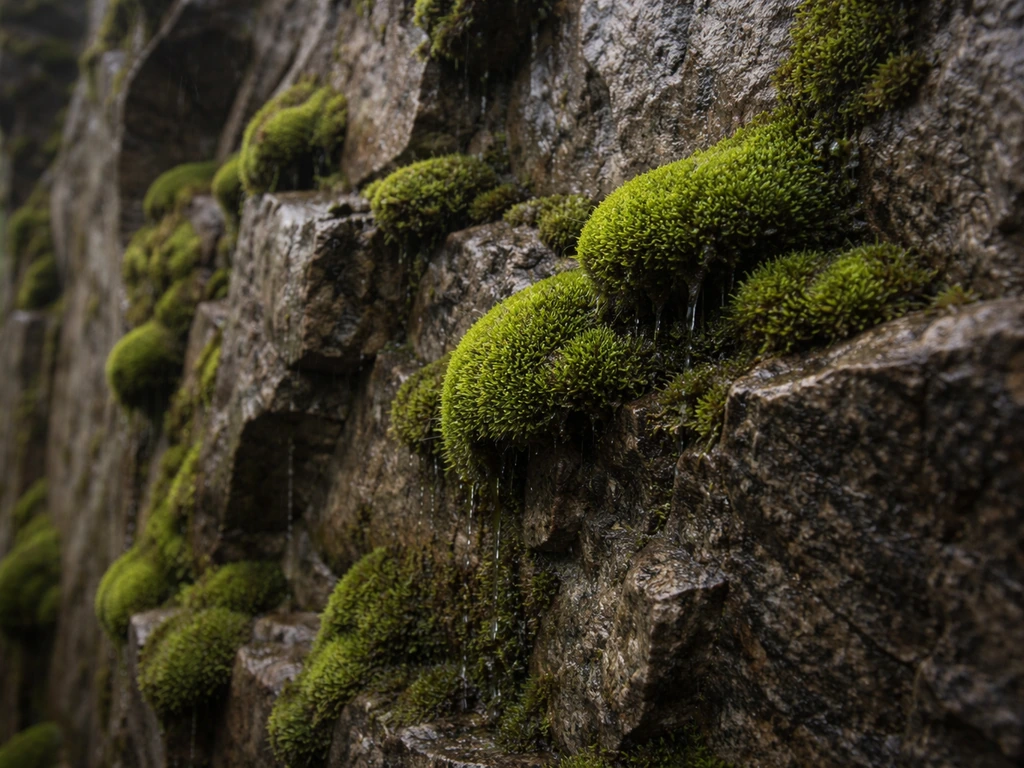
Bryophytes are some of the best colonizers of hard surfaces precisely because they don't need soil. On boulders and cliff faces, mosses form cushion colonies that act like tiny sponges, pulling moisture from rain, fog, and condensation and holding it against the rock surface. Liverworts are especially common on shady rock cliffs, particularly in the splash zone of streams or at the base of waterfalls where there is constant misting. The snakeskin liverwort (Conocephalum salebrosum) is a textbook example: look for it on very moist soil or rocks in the shade, often right in the creek splash zone.
Tree bark and rotting logs are equally productive. Mosses cling to bark by collecting and holding small amounts of water in their leaf cells, which means the north or northeast sides of tree trunks (shadier, slower to dry out) tend to carry more growth than south-facing bark. Old logs in various stages of decay are particularly good because the wood softens, holds moisture longer, and provides stable attachment. Old cemetery walls, garden stones, brick mortar, and concrete all serve the same structural role as natural rock: rough, porous surfaces that catch moisture and stay shaded long enough for spores to establish.
Dry-to-seasonal habitats: where moss survives brief wet spells
One of the most underappreciated things about bryophytes is their ability to survive in places that look too harsh for them. Sidewalk cracks, exposed cliff faces, open rocky soil, and even desert margins after rainfall all host mosses that are simply dormant between wet periods. In mountaineous, dry conditions, plants that tolerate low moisture are often called xerophytes. This is also why you can find xerophyte-like plants in similarly dry, seasonal places where water is brief sidewalk cracks, exposed cliff faces, open rocky soil, and even desert margins. When rain or heavy dew arrives, they rehydrate within minutes and resume photosynthesis and growth. When conditions dry out again, they go back into a non-metabolic dormant state without dying.
This desiccation tolerance is what allows bryophytes to colonize environments where vascular plants can't get a foothold. The newly turned soil on a roadside bank, a bare boulder face with no organic matter, the dark crevice of a cliff that gets wet only seasonally: these are all real bryophyte habitats. The key difference from their wetland counterparts is that you usually find fewer liverworts and hornworts in these dry-seasonal spots because both groups are less tolerant of desiccation than most mosses.
Climate and season patterns: where to look by region and time of year
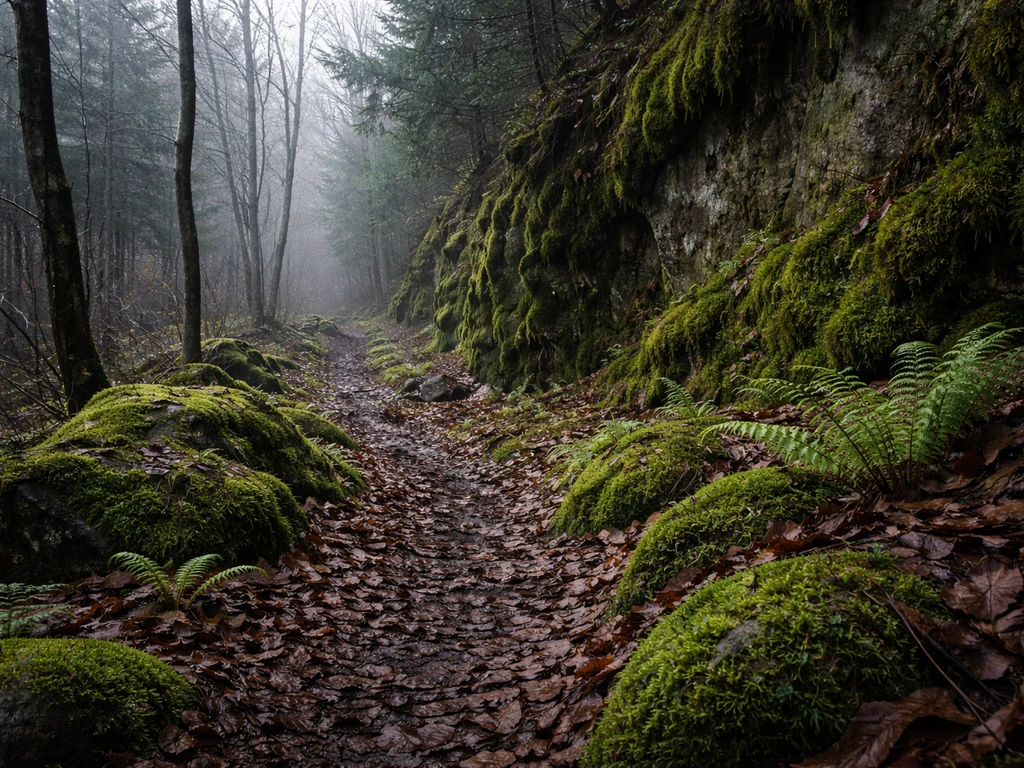
Cool-temperate forests in the Northern Hemisphere (think the Appalachians, the Pacific Northwest, upland Britain, the boreal zone) are globally among the richest bryophyte habitats. These regions combine persistent humidity, mild temperatures for much of the year, and dense canopy shade. Fog is a major factor: parks in the Appalachians and Shenandoah specifically describe higher-elevation forests frequently wrapped in fog as hotspots for mosses and liverworts, because persistent airborne moisture means the surface film bryophytes need never fully disappears.
In tropical regions, bryophyte diversity shifts upward in elevation. Cloud forest zones, where temperatures drop and fog is near-constant, can rival temperate rainforests in moss cover. Lowland tropical areas tend to be less productive for bryophytes because high temperatures accelerate drying between rain events. In arid and semi-arid climates, bryophytes concentrate in microhabitats: canyon walls, north-facing slopes, spring seeps, and the shaded undersides of rock overhangs.
Seasonally, look for the most active bryophyte growth during the cool, wet months of the year. In northern temperate climates that usually means late autumn through spring, when temperatures are low enough that moisture evaporates slowly and humidity stays high. Summer heat and dry spells in continental climates push many mosses into partial dormancy even in forests. In Mediterranean climates with dry summers, winter and early spring are the productive window. Monsoon climates see a burst of bryophyte activity during and just after the rainy season.
What bryophytes actually need: light, humidity, water film, and dispersal
Understanding why bryophytes grow where they do comes down to four things: diffuse light, ambient humidity, a surface water film, and a way for spores or fragments to reach the spot in the first place. Unlike flowering plants, bryophytes have no true roots and no vascular system to pull water up from deep soil. Every cell has to be in contact with or very close to available moisture, which is why the whole plant stays low, flat, or cushion-shaped.
Reproduction is where water becomes absolutely non-negotiable. Bryophyte sperm are flagellated (they swim), and they can only reach the egg by traveling across a surface water film. That film can come from heavy dew, rain splash, or the thin layer of condensation on a cool rock, but it has to be there. No water film means no fertilization, regardless of how well-established the colony is. This explains why waterfall splash zones and stream banks carry such high liverwort diversity: the water supply is constant and the reproductive cycle can run uninterrupted. It also explains why drier sites host mostly mosses that reproduce heavily by fragmentation rather than relying on sperm-to-egg water transport every season.
Light requirements are modest compared to most plants. Bryophytes photosynthesize at low light levels and often grow better in indirect or filtered light than in full sun, which accelerates drying. Deep shade with high humidity is their sweet spot. That said, bog mosses like Sphagnum do grow in open conditions because the waterlogged substrate keeps them perpetually moist even without canopy cover. Open-habitat mosses on tundra or cliff faces manage by being especially efficient at capturing and retaining whatever moisture falls.
How to find (and assess) bryophytes today: scouting tips and practical checks
If you want to go find bryophytes today, start by thinking about where moisture pools and shade overlaps in your local landscape. You don't need to travel to a national park. A shaded garden wall, the north side of a tree in a city park, the grout between paving stones in a damp corner, or any stream bank with overhanging vegetation will almost certainly have moss on it. Here's how to read a site quickly:
- Check the north-facing side first: less sun exposure means slower drying, and that's where bryophytes concentrate on rocks, walls, and tree trunks.
- Look near moving water: any creek, drainage ditch, or downspout splash zone is worth a close look, especially on adjacent rocks and soil.
- Get low and get close: bryophytes are small. Crouching and looking at the surface of a rock or log at eye level reveals structure that you miss standing up.
- Feel the surface: if a rock or log surface is slightly cool and damp even on a dry day, it is holding enough moisture to support bryophytes.
- Look for green where nothing else grows: the edges of sidewalk cracks, the grout of old stone walls, bare soil under dense shrubs. These are prime colonization sites.
- Check after rain: bryophytes that were brown and dormant will green up within hours of getting wet, making them suddenly visible in spots you may have walked past for months.
- In peatlands and bogs, scan the ground surface rather than individual plants: the entire mat may be Sphagnum, and diversity in those habitats is found by looking at subtle differences in color and texture across the mat.
If you're trying to encourage bryophyte growth in a specific spot (a shaded garden bed, a stone wall, a log feature), the most important variables to manipulate are shade and surface moisture retention. Keeping a surface consistently damp, removing competing vascular plants, and sourcing local moss fragments or simply letting spores arrive naturally are the practical steps. Acidic, nutrient-poor conditions favor the richest moss growth, so avoid fertilizing or liming those areas.
Bare, undisturbed soil in deep shade is also a reliable starting point. Unlike the water-specific adaptations needed by phreatophytes or the salt tolerance required by halophytes, bryophytes are relatively easy to accommodate once you understand their core requirement: keep the surface moist and the light indirect. This is different from halophytes are plants that grow in salty soils, where salt tolerance is the main constraint rather than surface moisture.
Phreatophytes are plants adapted to grow in areas where groundwater is reachable, so their moisture strategy differs from bryophytes that mainly rely on surface moisture.
The best next step after reading this is simply to go outside and look at the shadiest, dampest surface you can find nearby. Kneel down. Check the north side of a rock or wall. Look at the base of a tree. If any of those surfaces stay even slightly moist between rain events, you will almost certainly find a bryophyte already living there, or one that will arrive on its own very soon.
FAQ
Why do I find bryophytes on the north side of rocks or walls, even when it looks dry sometimes?
Bryophyte growth depends on a persistent surface moisture film more than on total rainfall. North-facing surfaces usually lose water more slowly because they stay cooler and receive lower direct sun, so dew, mist, and brief wetting events linger long enough for colonies to establish and remain active between showers.
Are bryophytes only found in forests and wetlands?
No. They often colonize hardscape and sparse soil as long as shade and brief wetness occur. Sidewalk cracks, mortar lines, cemetery stones, and exposed rocky ground after rain can host mosses, especially where water collects in pores and rehydrates the surface repeatedly.
If the soil is nutrient-poor or very acidic, will bryophytes always grow better there?
Many mosses and peat-forming Sphagnum tolerate and even prefer acidic, low-nutrient substrates, but not every bryophyte needs extreme acidity. A practical approach is to avoid liming or heavy fertilizing, then observe which species show up naturally, since local pH and competing plants control the final outcome.
Can bryophytes survive full sun if I water them regularly?
Some can persist with intermittent watering, but prolonged full-sun exposure usually dries the surface too fast for many species to stay active and reproduce reliably. If you must try, prioritize indirect light and moisture retention, for example shaded rock faces or the shaded underside of overhangs where water is held longer.
Why do liverworts and hornworts seem rarer on drier sites compared with mosses?
Liverworts and hornworts generally cope with drying less effectively than many mosses, so they are often excluded from seasonally dry microhabitats. Mosses can remain dormant for long dry periods and still bounce back, but liverwort and hornwort establishment typically needs more frequent surface wetness, especially for reproduction.
How can I tell whether a bryophyte patch is thriving or just temporarily wet?
Look for consistent, fine green growth and a textured structure (tufts or cushions) that remains intact between rain events. In contrast, patches that only look alive right after a storm tend to shrink, curl, or pale quickly when surfaces dry, indicating limited time in active, hydrated conditions.
What is the best season and time of day to search for bryophytes?
Choose the cool, wet season in your region, and search after prolonged humidity or right after light rain. Morning is often best because dew and condensation provide the surface water film needed for active growth and, on moist sites, more visible reproductive structures.
Do bryophytes need soil to establish?
Not necessarily. Many thrive on rocks, bark, concrete, and mortar because they absorb water at the surface. Rough, porous, moisture-holding substrates provide better attachment and longer dampness than smooth surfaces.
If I want to encourage bryophytes in a garden, should I fertilize or lime the area?
Usually no. Bryophytes often do better in low-nutrient, stable conditions, and adding fertilizer or lime can favor competing vascular plants and shift pH away from what local mosses tolerate. Instead, maintain shade, reduce disturbance, and keep the surface damp.
Can bryophytes spread in dry weather, or do they only spread when it rains?
They can spread beyond immediate wet events through fragments and spores, but successful colonization still requires brief hydration afterward. In practice, after rain or heavy dew, fragments can reattach and spores can germinate on the moist film, so spread is most noticeable following wet periods.
Why do bryophytes disappear after I pressure wash or scrub a surface?
Even if a surface looks bare afterward, bryophytes may have been dormant, attached, or sheltered in pores and crevices. Aggressive cleaning removes existing material and also eliminates the microhabitats that hold dampness, so recolonization takes time and depends on local spore sources and how quickly moisture returns.