
The plants that grow successfully in rocks and water depend almost entirely on one thing: where the water sits relative to the roots. If you are wondering what plants grow well in stones, start by matching each species to the water level around its roots. Mosses, lichens, and alpine plants like saxifrage handle dry-to-moist rock crevices with minimal soil.
Plants That Can Grow in Rocks and Water: Picks and Setup

Dr. Marcus Weatherby
4 Jun 2026
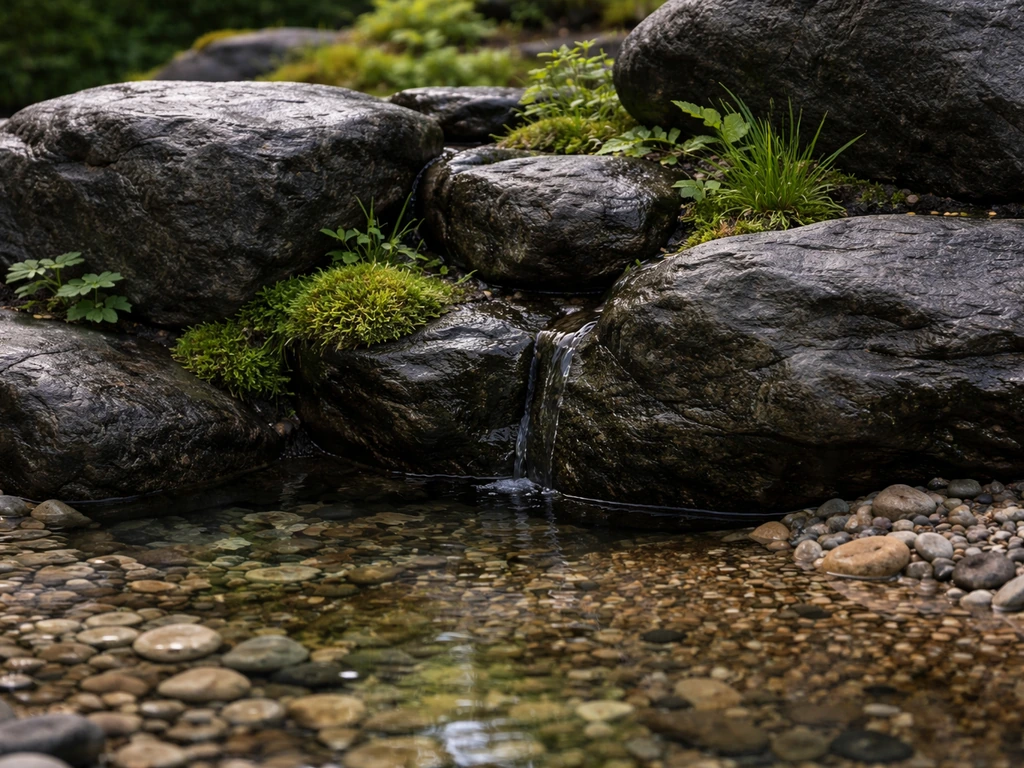
If you are wondering what can grow on rocks, mosses and lichens are some of the most reliable starters for dry-to-moist rock crevices. Marginal pond plants like marsh marigold (Caltha palustris) thrive where roots stay in boggy gravel and crowns sit just at or above the waterline. True aquatics and submerged species go fully underwater. Get that crown-to-water relationship right, and most rocky wet setups work beautifully.
Get it wrong, and roots suffocate and rot within weeks.
Dry crevices, wet edges, or fully aquatic: which setup are you actually building?
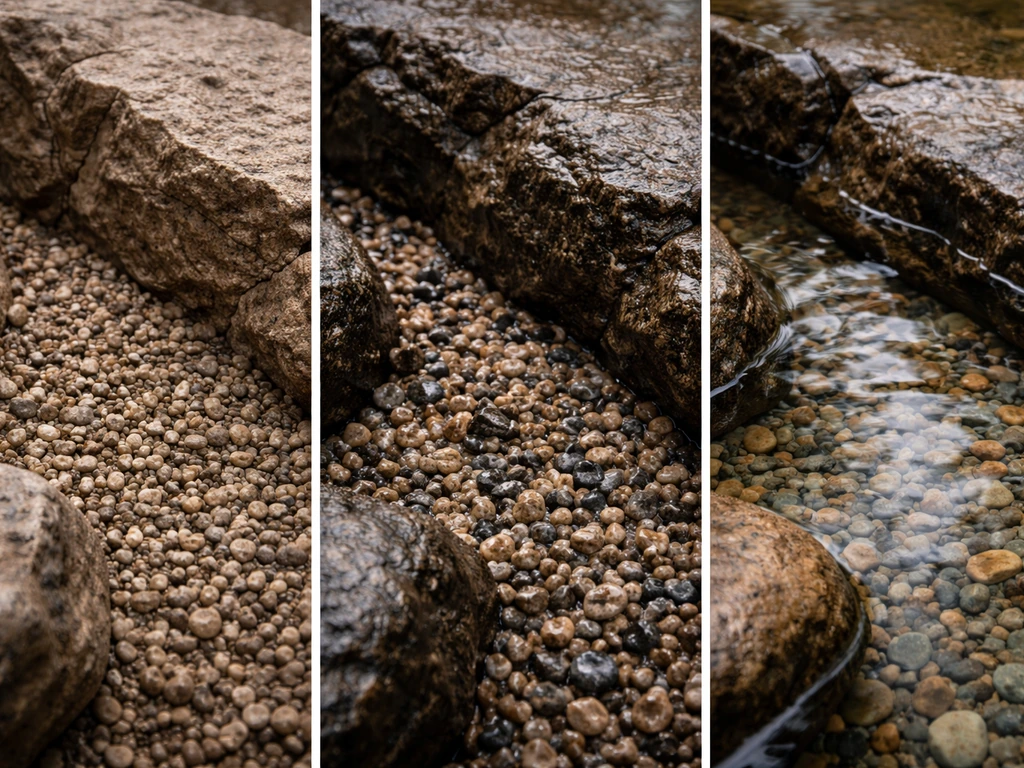
Before picking plants, you need to be honest about your water situation. These are three genuinely different growing environments, and plants that love one will die quickly in another.
- Dry rock crevices and scree: Stone-dominant substrate with minimal soil, good drainage, and moisture that comes from rain or irrigation but drains away quickly. Think alpine rock gardens, tufa walls, and gravel beds. Roots find moisture in pockets between stones but never sit in standing water.
- Wet rock edges and boggy seams: The margins of streams, ponds, and rain gardens where gravel or stone sits at or just below the waterline. Roots stay in saturated or near-saturated substrate, but crowns stay above the water surface. This is the marginal or bog zone.
- Fully aquatic or hydroponic setups: Roots are permanently submerged or suspended in water, either in a pond's deeper shelf, an aquascape tank, or a hydroponics container where gravel (like LECA) acts as the medium. Crowns and foliage may be submerged or floating depending on species.
This distinction matters more than any other variable. A saxifrage planted in a permanently wet crevice will rot. A marsh marigold stuck in dry scree will wilt and die. The species lists below are organized by these three zones so you can match plants to your actual conditions rather than guessing.
Plants built for rocky dry-to-moist conditions
These species evolved in environments where soil depth is minimal, nutrients are low, and drainage is fast. They anchor into cracks, porous rock faces, scree slopes, and gravel beds. They tolerate periodic drought and hate having wet feet for any extended period.
Lichens
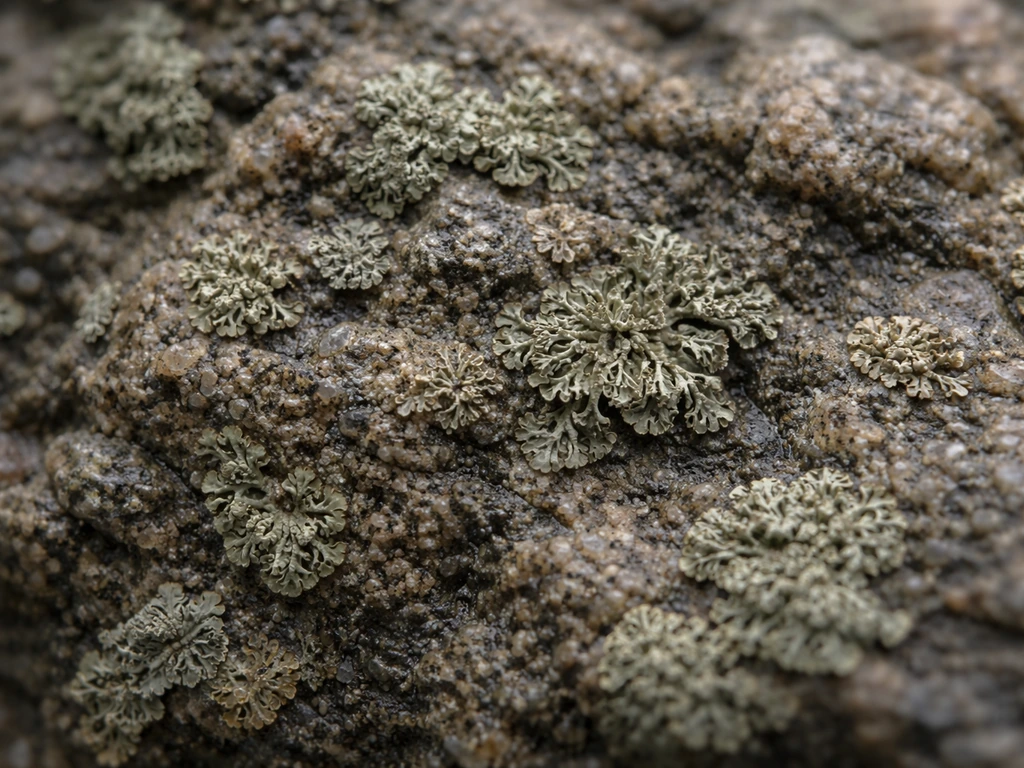
Lichens are the original rock colonizers. They need no soil at all, anchoring directly onto rock surfaces using holdfasts. Their growth strategy is called poikilohydry: when wet, they photosynthesize and grow; when dry, they go dormant and wait. Crustose lichens form flat, paint-like patches directly on stone. Foliose types are leafy and slightly raised. They need light, occasional moisture (rain, mist, or splash), and a stable rock substrate. They are slow growers but essentially impossible to kill if conditions are met. You cannot really plant lichens so much as encourage them by keeping rock surfaces moist and free of competing algae.
Mosses
Mosses are the next step up. Species like Grimmia orbicularis are classic rock-surface colonizers, found on exposed stones worldwide. Like lichens, mosses absorb water directly through their cells rather than through roots, which means they can tolerate complete dehydration and bounce back when moisture returns. Some desert mosses even grow under translucent quartz stones that act as built-in shade cloth, using the rock itself to balance light and moisture. For a rock garden or stone wall, mosses establish best on north- or east-facing surfaces where moisture lingers longest. Misting regularly during establishment helps. Once anchored, they largely take care of themselves.
Saxifrages and alpine plants
Saxifrages are purpose-built for rock gardens. The name literally means 'stone breaker,' and in the wild you find them wedging into limestone crevices, tufa faces, and high-altitude scree. They need sharp drainage above everything else. One reliable planting method is drilling small holes into tufa rock, filling them with a mix of tufa grit, a small amount of fibrous loam, and chopped sphagnum moss, then setting saxifrage plugs directly into those holes.
A good crevice mix runs roughly 60% fine tufa grit (0 to 3 mm), 15% fibrous loam, 15% chopped sphagnum, and 10% peat. The goal is a substrate that holds just enough moisture to support roots without ever becoming waterlogged. Saxifrages absolutely cannot tolerate excessive winter wet, so if you are in a wet climate, protect them with a pane of glass or cover the crown through the coldest, wettest months.
Other reliable choices for dry-to-moist rocky conditions include sedums (stonecrops), sempervivums (houseleeks), thyme, creeping phlox, dianthus, and low-growing campanulas. All share the same need: sharp drainage, moderate fertility, and a substrate that breathes.
Plants for wet rock edges, boggy seams, and marginal zones
This middle zone is where rocks and consistent water overlap. The substrate stays saturated or near-saturated, but plant crowns sit at or just above the waterline. For marginal pond plants, Water X Scapes recommends keeping the crown just above the water line while the roots sit in moist or boggy soil crown sits at or just above the waterline. Most marginal plants tolerate about 0 to 6 inches (0 to 15 cm) of water above their crowns, which puts them squarely on the first shallow shelf of a pond or in a gravel-filled stream edge.
Marsh marigold (Caltha palustris)
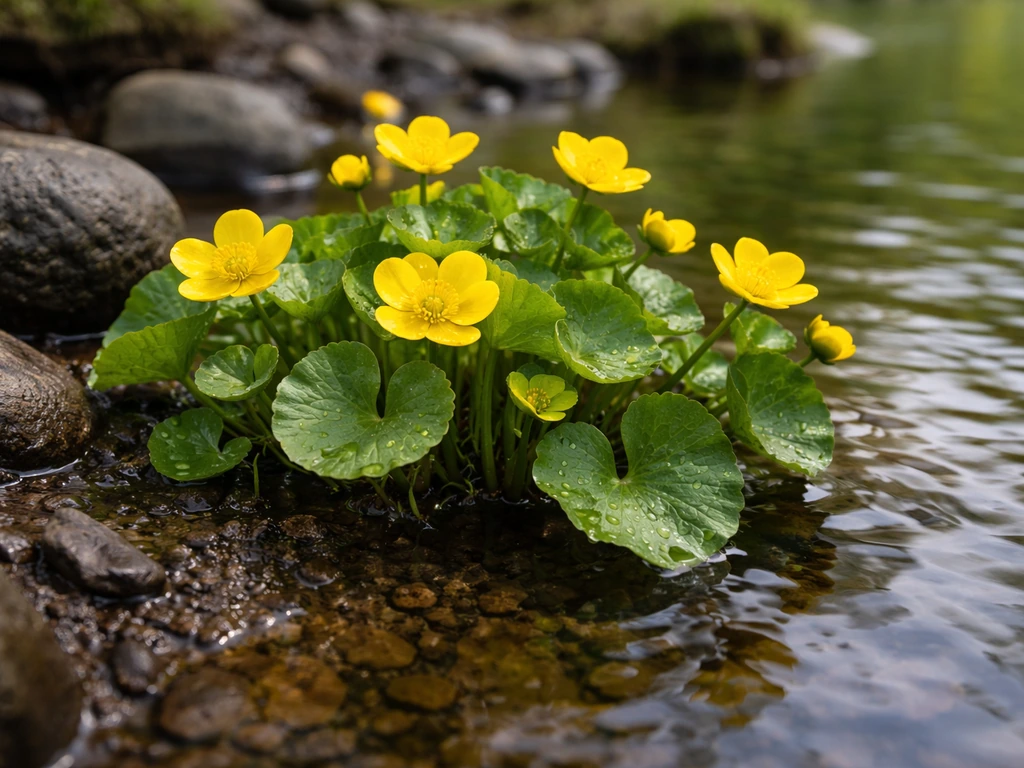
Marsh marigold is one of the most reliable wet-rock edge plants in temperate climates. It grows naturally along stream banks and pond margins where roots stay in perpetually moist or flooded soil and crowns sit just at or slightly above the waterline. For placement, keep the soil line at water level or up to about 6 inches below the surface. It is cold-hardy, dies back in summer in warmer climates (it is a spring bloomer), and comes back reliably year after year in USDA zones 3 through 7.
Other strong marginal and bog-zone choices
- Iris versicolor (blue flag iris): tolerates saturated gravel substrate with crown at or just above waterline, zones 3–9
- Acorus calamus (sweet flag): grows in shallow water over gravel or stone, tolerates up to 4 inches of water over crown
- Lobelia cardinalis (cardinal flower): likes consistently moist to wet rocky streambank conditions, zones 2–9
- Mimulus (monkeyflower): naturally colonizes wet rock seams and stream margins, tolerates periodic flooding
- Equisetum (horsetail): thrives in gravel-bottomed wet margins, tolerates shallow submersion
- Peltandra virginica (arrow arum): handles boggy gravel shelves with crowns at or near waterline
- Juncus effusus (soft rush): grows through gravel and stone in saturated conditions, extremely hardy
The key rule for this zone: the crown must stay above water even when roots are submerged. Bog plants specifically keep their soil line right at the water surface or a few inches below. If the crown goes underwater for extended periods, most of these species will decline.
Fully aquatic and hydroponic rocky setups
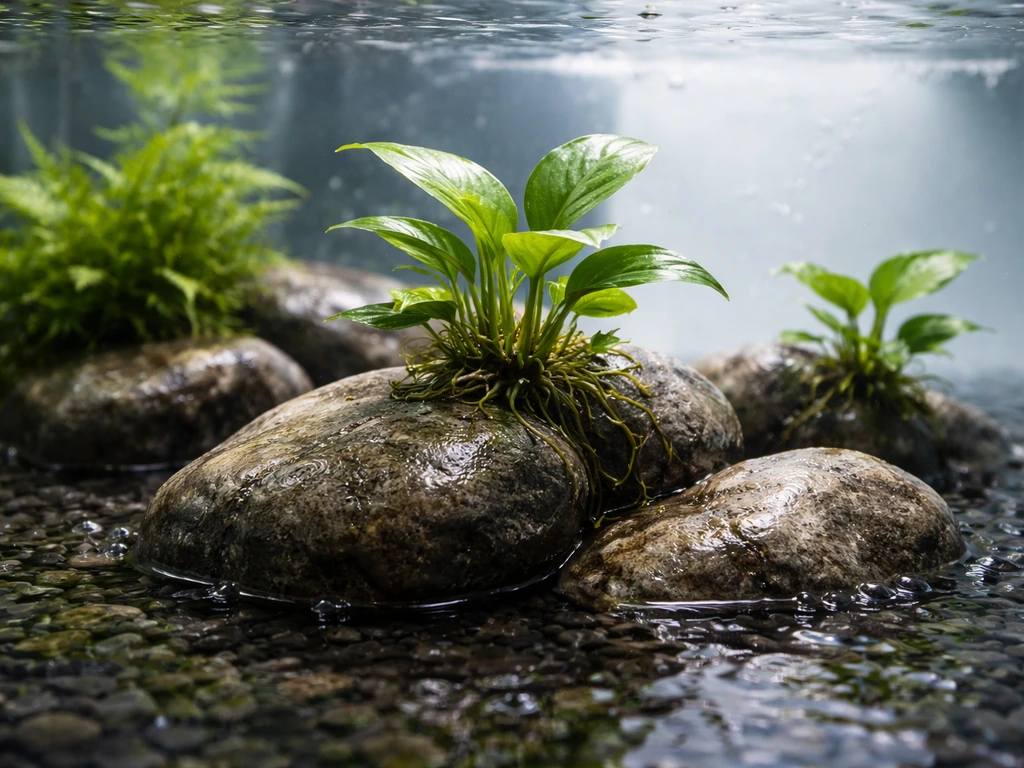
If you are building an aquascape, pond deep shelf, or gravel-based hydroponic system, you need species that are genuinely adapted to permanent root submersion. Anubias, java fern (Microsorum pteropus), and cryptocorynes anchor well into gravel and stone in aquariums without needing soil. Submerged oxygenating plants like Elodea canadensis and Vallisneria root into gravel beds and grow entirely underwater.
For a pond's deeper zones, water lilies (Nymphaea) root in heavy gravel or soil-filled containers on the pond floor at depths of 12 to 36 inches. In true hydroponic setups using LECA or lava rock as the medium, many terrestrial plants adapt when their roots reach an oxygenated nutrient solution, but the medium itself must not allow roots to sit in stagnant, oxygen-depleted water.
Building the right growing medium: depth, drainage, and oxygen
The medium is where most rocky and water-involved setups fail or succeed. Roots need three things from whatever they are growing in: anchorage, moisture, and oxygen. The last one is the easiest to forget and the most fatal to neglect. When roots sit in waterlogged, oxygen-depleted media, they suffocate. That creates the conditions for Phytophthora, Pythium, and other root-rot pathogens to move in, and by the time you see symptoms above ground, root damage is usually already severe.
For dry-to-moist rock gardens and crevice setups
Use a gritty, fast-draining mix. A 60% grit or gravel component (crushed granite, fine tufa grit, or horticultural grit) combined with 20 to 30% compost or loam and 10 to 20% porous additions like perlite or chopped sphagnum works well for most alpine and rock-garden species. Scree beds work best with 15 to 20 cm (6 to 8 inches) of gritty mix over a coarser drainage layer.
In containers, a 1 to 2 inch drainage layer of pebbles, lava rock, or LECA at the base prevents water from pooling around roots if the container lacks drainage holes. But be clear-eyed: that drainage layer only helps if water drains out of the system entirely. If it just collects at the bottom and the roots eventually reach it, you still have a waterlogging problem.
For wet-edge and marginal plantings
Use heavy, nutrient-rich substrate like aquatic planting compost or a mix of topsoil and coarse gravel. Avoid lightweight potting mixes, which float and disperse. Plant into fabric pond baskets or mesh containers filled with this mix, then top-dress with pea gravel to keep substrate in place. Place baskets so the crown sits at or just above the water surface. For bog zones, pack gravel or stone around plants in a shallow gravel tray that stays consistently moist, with water at substrate level.
For fully aquatic and hydroponic rocky setups
Aquatic substrates like LECA, lava rock, or coarse aquarium gravel provide anchorage and allow water to flow through without compacting. In hydroponic systems, keep the water level below the base of the stem so the roots dip into oxygenated, circulating nutrient solution rather than sitting in stagnant water. Pumps, air stones, or regular water changes are not optional: they are what keeps roots alive. In aquascapes, a 2 to 3 inch gravel substrate layer is usually sufficient for most rooting aquatic plants.
Matching light, temperature, and season to your setup
Rocky habitats span enormous climate ranges, and the plants you choose need to match not just your water situation but your actual climate zone, sun exposure, and seasonal pattern.
| Plant group | Best climate zones | Light needs | Seasonal notes |
|---|---|---|---|
| Saxifrages / alpines | Zones 3–7 (cool-temperate, montane) | Full sun to part shade | Protect from wet winters; most active spring to early summer |
| Sedums / sempervivums | Zones 3–9 (very adaptable) | Full sun | Drought-dormant in summer heat; evergreen in mild climates |
| Mosses | Zones 3–9 (shade-tolerant types) | Shade to dappled light | Most active in cool, moist seasons; dormant when dry |
| Lichens | All zones (rock-surface specific) | Full sun to deep shade (species-dependent) | Grow when wet; dormant when dry; no seasonal removal needed |
| Marsh marigold (Caltha palustris) | Zones 3–7 | Full sun to part shade | Spring bloomer; dies back in summer heat |
| Iris versicolor | Zones 3–9 | Full sun to part shade | Spring to early summer bloom; persistent foliage |
| Aquarium aquatics (Anubias, Vallisneria) | Indoor/tropical (60–82°F) | Low to moderate artificial or natural light | Year-round if temperature is stable |
| Hardy water lilies (Nymphaea) | Zones 3–10 (hardy types) | Full sun (6+ hours) | Die back in winter in cold zones; overwinter on pond floor |
One practical point on light: wet-edge and marginal setups in full sun will grow algae aggressively on the rock surfaces. That is not always a problem, but if you want clean stone surfaces, position the setup in morning sun with afternoon shade, or plan on regular scrubbing. Mosses, on the other hand, actively prefer the cooler, shadier side of rocks and will establish faster there.
How to plant and maintain a rock-and-water setup
Getting plants established
- Identify your zone first: dry crevice, wet edge, or fully aquatic. This determines every other decision.
- Prepare the substrate before planting. For dry crevices: mix gritty compost and set it into pockets between stones. For wet edges: fill mesh baskets with heavy aquatic compost topped with gravel. For aquatic setups: rinse and layer gravel or LECA to 2–3 inches depth.
- Plant at the correct depth. For rock-crevice plants, set the crown level with the stone surface or slightly above. For marginal plants, keep the crown at or just above the waterline. For aquatics, anchor roots into substrate and allow foliage to reach its natural zone.
- Water in carefully. For dry-crevice species, water once after planting to settle roots, then let the substrate dry slightly between waterings. For marginals, fill to the correct water level and hold it steady.
- For mosses and lichens, press firmly onto clean, moist rock and mist daily for 2 to 3 weeks during establishment. Avoid fertilizer entirely.
Feeding (or mostly not)
Most rock-adapted plants evolved in low-nutrient environments and do not need or want regular feeding. Overfeeding saxifrages, sedums, or alpines produces lush, weak growth that is more susceptible to rot and frost damage. For marginal pond plants, a slow-release aquatic fertilizer tablet pushed into the basket substrate once or twice a season is sufficient. For aquascape or hydroponic setups, use dilute liquid nutrients formulated for aquatic or hydroponic use. Never use standard potting fertilizers in a pond or aquascape: the nutrient runoff feeds algae blooms.
Preventing rot and algae
For dry-crevice setups, the single biggest mistake is watering on a schedule instead of checking the substrate. Water only when the top inch of the medium is dry. In wet climates, add a layer of grit around the crown of alpines and saxifrages to prevent moisture from sitting against the stem. For wet-edge setups, keep water moving or refreshed if possible, and pull out dead plant material promptly, as it feeds algae. In enclosed containers or terrariums with a rock-and-water aesthetic, use a mesh or physical separator between the drainage layer and the substrate layer so fine particles do not migrate down and clog the drainage zone.
Why plants fail in rocky and wet setups, and how to fix it
Most failures come down to a handful of repeatable mistakes. Here is what goes wrong and how to correct it:
| Problem | What's happening | Fix |
|---|---|---|
| Stems and crowns rotting at the base | Roots sitting in oxygen-depleted waterlogged media; often triggered by poor drainage or overwatering | Improve drainage, reduce watering frequency, repot into grittier substrate, check that water is not pooling in drainage layer |
| Leaves yellowing and wilting despite moist substrate | Root suffocation from anaerobic conditions; Pythium or Phytophthora infection possible | Remove plant, trim rotted roots, treat with a fungicide if infection is confirmed, replant in better-draining mix |
| Mosses going brown and crispy | Drying out too quickly, especially in wind or full sun | Move to shadier, more sheltered position; mist more frequently; north or east-facing placement is better |
| Algae coating rock surfaces and crowding out plants | Excess nutrients, high light, and standing water creating ideal algae conditions | Reduce fertilizer, increase shading, improve water flow, scrub surfaces and remove algae manually |
| Marginal plants declining or dying back out of season | May be normal dormancy, or crown is sitting too deep in water | Check water depth against crown: crown should be at or above waterline; if normal dormancy, leave roots in place and allow regrowth |
| Alpine/saxifrage plants dying in winter | Winter wet rotting crowns rather than cold killing them | Improve drainage, add grit mulch around crown, use a rain cover or cold frame in wet winters |
| Aquatic plants floating loose or not rooting | Substrate too light or not deep enough to anchor roots | Switch to heavier gravel or aquatic compost, increase substrate depth to at least 2–3 inches, weight down with additional stone |
One pattern worth mentioning: people often assume that if a plant is dying in a rock and water setup, the problem is too little water. In almost every case I have seen, the opposite is true. The most common cause of failure in these setups is too much water with too little oxygen at the root zone, whether that is overwatering a crevice garden, setting a marginal plant too deep on the pond shelf, or letting a hydroponic reservoir go stagnant. Check the drainage and the oxygen situation before adding more water.
Quick reference: matching plant to setup
| Setup type | Best plant choices | Crown-to-water relationship | Key substrate need |
|---|---|---|---|
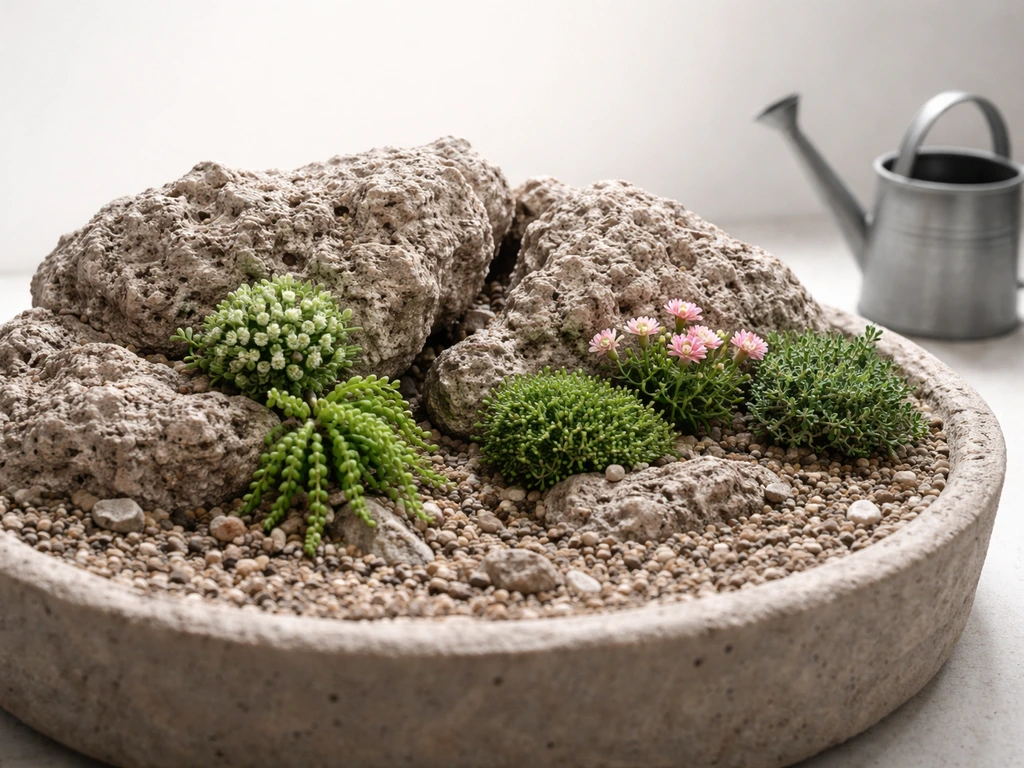
| Dry rock crevice / scree / tufa wall | Saxifrages, sedums, sempervivums, thyme, dianthus, creeping phlox, alpines | Crown well above any water; substrate drains in minutes | 60%+ grit; excellent drainage; low nutrient |
| Moist rock face / occasional splash | Mosses, lichens, ferns (Asplenium), creeping thyme | No standing water; surface stays damp but drains | Bare rock or thin organic film; high humidity |
| Boggy seam / wet gravel edge | Marsh marigold, monkeyflower, cardinal flower, sweet flag, soft rush | Crown at or just above waterline; roots in saturated substrate | Heavy aquatic compost or topsoil in gravel; constant moisture |
| Marginal pond shelf (0–6 inches) | Iris versicolor, Acorus, Equisetum, Peltandra, Caltha palustris | Crown just at or slightly above water surface | Mesh basket with heavy substrate; gravel top-dress |
| Fully aquatic / pond deep shelf | Hardy water lilies, submerged oxygenators (Elodea, Vallisneria) | Foliage reaches surface; roots fully submerged | Heavy substrate in container; 12–36 inches water depth |
| Aquascape / terrarium rocky setup | Anubias, java fern, cryptocorynes, mosses (Java moss) | Roots in gravel; foliage submerged or emergent | 2–3 inch inert gravel or LECA; oxygenated water |
| Hydroponic / LECA container | Adaptable tropicals (pothos, philodendron) + aquatic herbs | Roots reach nutrient solution; medium stays aerated above solution line | LECA or lava rock; circulating oxygenated nutrient solution |
If you are exploring more specific rocky habitats, the dynamics change somewhat depending on whether you are working with river rock beds, stone walls, or pure rock crevice environments. Each of those settings has its own microclimate and moisture pattern that shifts which plants perform best. To get the best results with river rock beds, choose plants that tolerate the exact water depth at the crown and keep the root zone oxygenated. But the core principle stays constant across all of them: match the plant's crown and root expectations to the actual water level in your setup, give the roots oxygen, and let the stone do what it does naturally: drain, anchor, and moderate temperature.
FAQ
How deep should I place plants if I am not sure where the “crown” ends up after settling?
Plan for settling and water displacement. Position so the crown is at or slightly above the intended waterline when everything is fully packed, then recheck after 1 to 2 weeks. If you’re using baskets or a gravel tray, raise the plant slightly at planting time, because substrate can compact and lower the crown relative to the water.
What’s the fastest way to tell if my problem is too much water versus too little oxygen?
If the media stays wet, the first signs are usually yellowing, soft or brown roots, and plants that fail suddenly after a period of consistent dampness. In that situation, additional watering will not help. Improve oxygen by increasing grit/porosity, preventing water from collecting, and for hydro setups ensuring circulation with a pump or air-driven movement.
Can I use the same substrate mix for saxifrages and marsh marigold?
No. Saxifrages need a very sharp-draining, low-moisture crevice mix and are sensitive to prolonged winter wet. Marsh marigold tolerates persistently moist roots as long as the crown stays at or slightly above the waterline. Use a grit-heavy, oxygenated mix for saxifrages, and a heavier aquatic-friendly medium with stable moisture at the root level for bog-edge plants.
How do I prevent algae from taking over when I have plants on rocks near water?
Algae usually blooms when light is strong and nutrients are available. Reduce the exposure by giving morning sun with afternoon shade, scrubbing surfaces during establishment, and avoid standard fertilizers. Also remove dead plant material quickly, since it adds nutrients and encourages film algae.
What should I do if lichens or mosses won’t establish on my rock?
They often need the right placement rather than “more product.” Keep the surface consistently lightly moist during establishment, focus on low-competing surfaces, and prioritize cooler or shadier orientations for moss. Lichens are extremely slow, so give them time, and keep algae growth down so the rock surface stays usable for colonization.
Is a drainage layer at the bottom of a container enough to stop root rot?
Only if water actually leaves the container. A drainage layer helps prevent pooling, but if the container lacks drainage holes, water can still accumulate and eventually wet the rooting zone. Use containers with proper drainage where appropriate, or switch to an open aquatic basket system so roots never sit in stagnant bottom water.
How can I keep gravel-based or LECA-based hydro setups from turning stagnant?
Use active flow. Add a pump, air stone, or ensure regular water changes so the roots are surrounded by oxygenated water. Also keep the water level below the base of the stems so roots are what receives the oxygenated solution, not the upper plant tissue.
Will feeding once or twice a season harm rock-garden plants?
It can, especially for low-nutrient specialists like saxifrages, sedums, and alpines. Excess nutrients can produce soft growth that rots faster in cold wet periods. If you fertilize, use very targeted, dilute aquatic or hydro-appropriate nutrients for the specific setup, and avoid routine feeding for dry-crevice species.
Can I grow these plants indoors in a terrarium-style rock-and-water display?
Yes, but the water and airflow conditions are usually the tricky part. In enclosed setups, fine particles can clog drainage zones, so use a physical separator between the drainage layer and the substrate. Also avoid overmisting or keeping the stem base continually wet, because closed environments can rapidly shift into oxygen-poor conditions at the roots.
What are common signs I planted marginal or bog-edge plants too deep?
If the crown drops below the waterline for extended periods, you’ll often see thinning, declining vigor, and eventual dieback even if the roots seem “happy.” Correct by raising the plant so the crown sits at or slightly above the waterline, and pack substrate firmly enough to avoid later sinking.