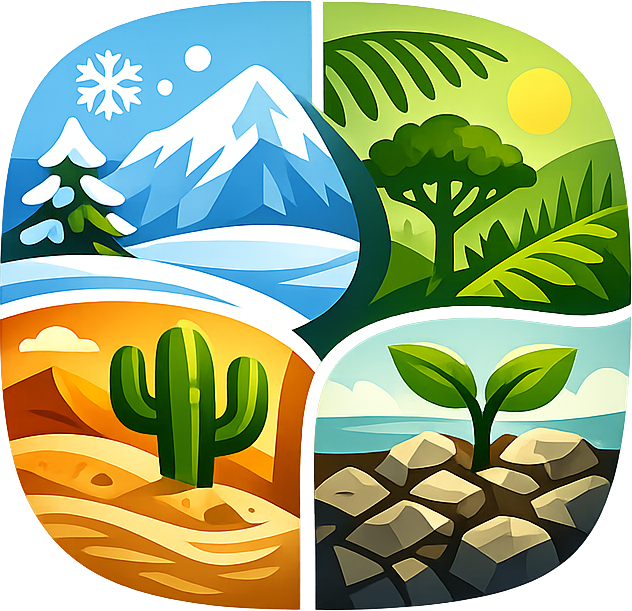
Algae, mosses, lichens, fungi, and occasionally true vascular plants can all colonize bare rock, depending on moisture, light, and whether there are any cracks or accumulated debris to anchor them. The most common things you'll see on rocks are lichens and algae, both of which need almost no soil to get started. Mosses come next, followed by ferns and flowering plants that root into crevices where wind-blown dust and organic matter have slowly built up a thin layer of substrate.
What Can Grow on Rocks: Algae, Moss, Lichens, Fungi

Dr. Marcus Weatherby
8 Jun 2026
Quick ID: What are you actually looking at?
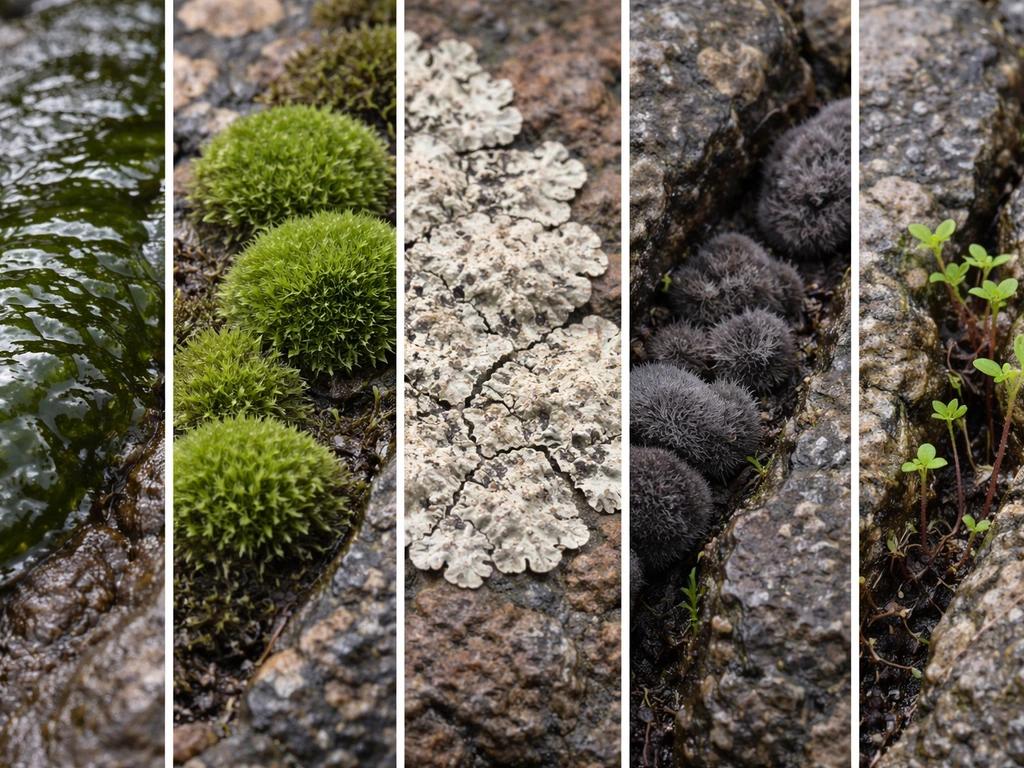
Before you can encourage or remove whatever is growing on your rocks, you need to identify it correctly. These five groups look similar from a distance but behave very differently up close.
Algae
Algae on rocks shows up as a green, gray-green, or black slick or film. Individual algal cells are microscopic, so what you're seeing is a mass of cells. On stream or pond rocks, it's the slimy green coating that makes stepping stones treacherous. On dry garden rocks or pavement, it appears as a dull green or blackish stain. One particularly notorious freshwater species, Didymosphenia geminata (commonly called didymo or "rock snot"), forms thick pale mats on submerged rocks in cold, fast-flowing water and is considered invasive in many regions.
Moss
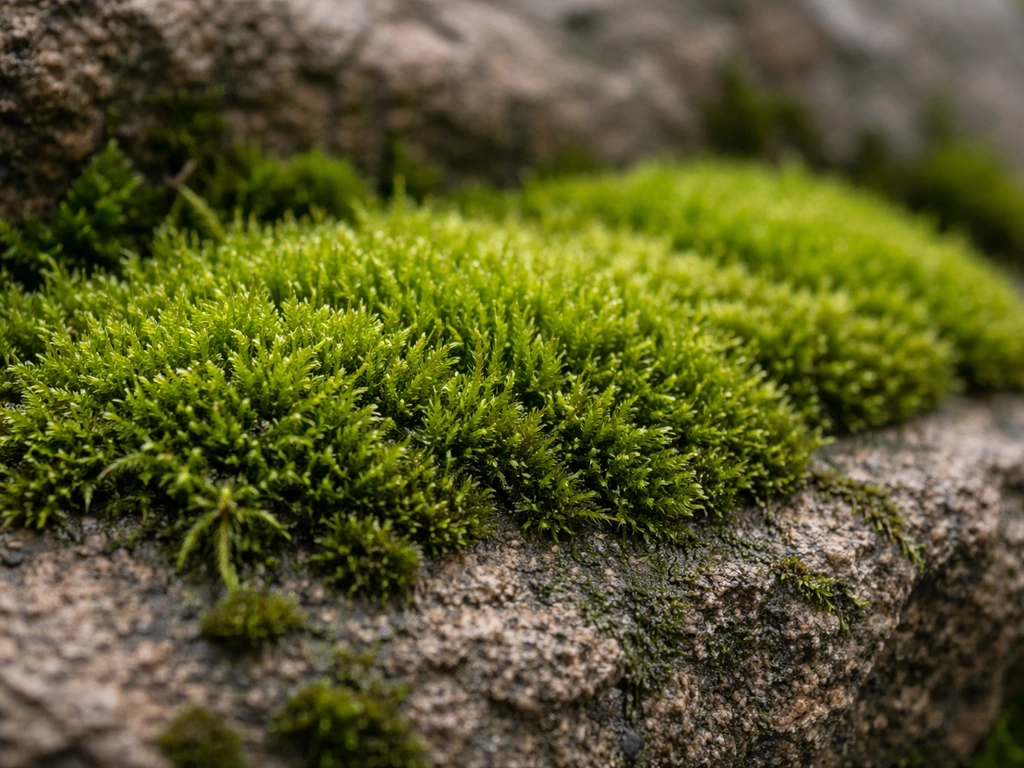
Mosses are easy to spot because they're bright green and noticeably three-dimensional: small upright or creeping leafy stems, often forming a soft cushion or mat. If you look closely, you'll frequently see thin stalks topped with tiny capsules, which are the spore-producing structures. Mosses attach to rock using rhizoids rather than true roots, and they're excellent at retaining moisture after rain. They're non-vascular, meaning they don't transport water internally the way a tree does, so they depend heavily on surface moisture.
Lichens
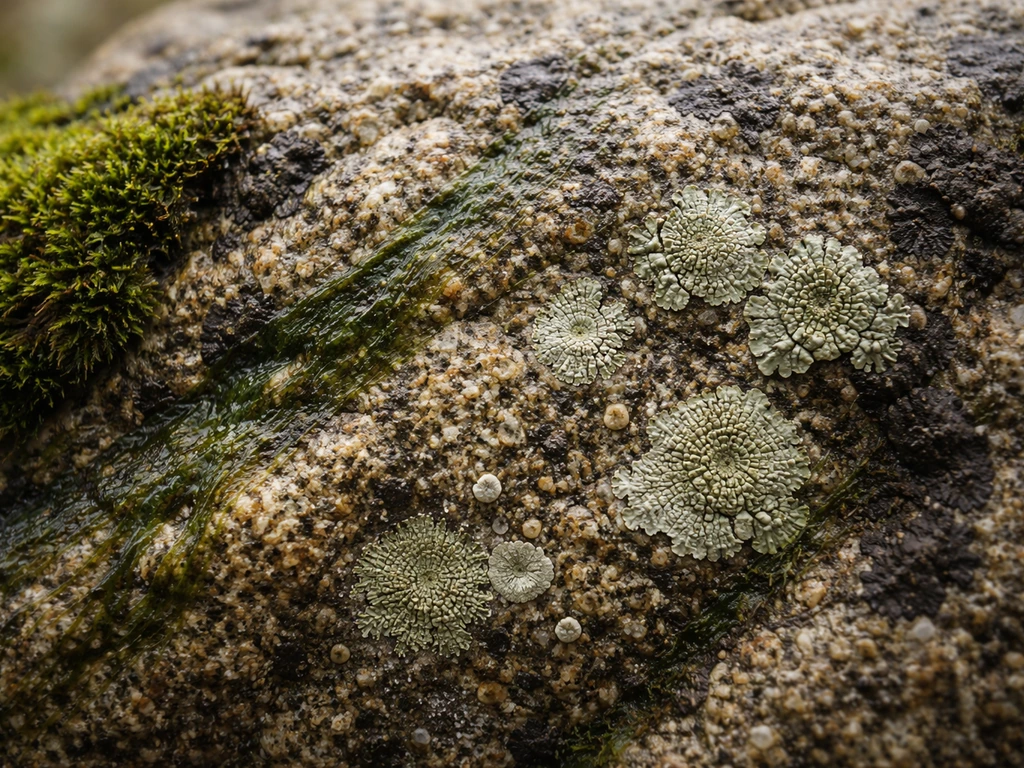
Lichens are the crusty, scaly, or leafy growths you'll see on exposed rock faces, old stone walls, and boulders in almost every climate on earth. They're not a single organism but a partnership: a fungus provides the structure and housing, while an alga (or cyanobacterium) inside produces energy through photosynthesis. They come in three main forms. Crustose lichens are flat, crust-like, and so tightly cemented to the rock surface that you can't peel them off without damaging them.
Foliose lichens are leafy and loosely attached, with a more leathery texture. Fruticose lichens are shrub-like or hair-like and stand away from the surface. A useful field rule: [lichens are rarely bright green](https://www. nps.
gov/isro/learn/nature/lichens. htm) (that's usually moss), tend to have a dry, leathery or powdery look, and have no visible leaves.
Fungi
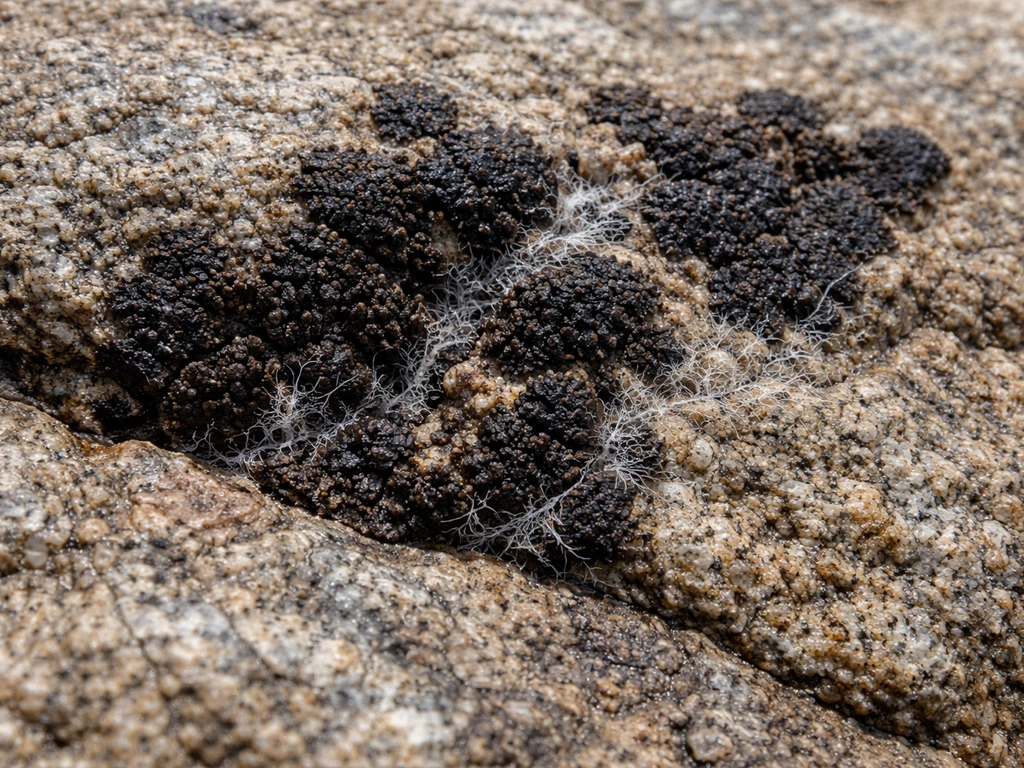
Rock-inhabiting fungi often go unnoticed because they don't look like the mushrooms most people picture. What you're more likely to see are black or dark brown stains or patches on rock surfaces. These are caused by microcolonial fungi that embed into the mineral surface itself. They're slow-growing and often mistaken for algal stains or weathering. If the dark patch doesn't wipe off with water and doesn't have any green tint, there's a good chance you're looking at fungal colonization.
Vascular plants in crevices
True flowering plants, ferns, and grasses growing directly out of solid rock are always rooted in a crevice, crack, or ledge pocket where some soil has accumulated. The rock itself isn't the substrate, the accumulated organic matter and fine mineral particles wedged into the gap are. These plants are often called chasmophytes or, more broadly, plants of rock crevices. Ferns like polypody, species like stonecrop (Sedum), and rock-loving grasses are the most common examples.
If you're looking at a plant growing out of a crack in a garden wall or boulder, this is what you're dealing with. Plants that grow in stone walls often start in cracks and crevices where dust and organic matter build up into a thin substrate.
Why things grow on rocks at all
Rock seems like the least hospitable surface imaginable, no soil, extreme temperature swings, and constant exposure. But it offers something a lot of organisms actually need: stability, mineral nutrients leached from the surface, and in many cases reliable moisture from condensation, rain, or nearby water. Here's what each factor looks like in practice.
- Moisture: Rain, condensation, coastal spray, or stream splash keeps rock surfaces wet long enough for algae, mosses, and lichens to absorb water directly through their surface. Without any moisture source, even these pioneers can't establish.
- Light: Algae and photosynthetic lichens need some light to produce energy, but many rock colonizers actually prefer shade, which reduces drying. Deep shade favors moss and certain lichens. Full sun favors specific crustose lichens and drought-tolerant algae.
- Nutrients: Rock itself provides minerals as it slowly weathers. Airborne dust, bird droppings, decaying organic matter, and rainfall deposit additional nutrients. This is why rocks near trees or under bird perches colonize faster.
- Cracks and texture: Rough, pitted, or cracked surfaces give spores, propagules, and rhizoids something to grip. A perfectly smooth, polished stone colonizes much more slowly than a rough sandstone or weathered granite face.
- Accumulated substrate in crevices: For vascular plants, the critical factor is whether a crack holds enough windblown soil, leaf debris, and organic material to support roots. Even a few millimeters of this mix allows stonecrop, ferns, and grasses to establish.
Where growth happens: matching organism to environment
The most useful frame for understanding rock colonizers is habitat, because what grows on a shaded forest boulder in the Pacific Northwest is completely different from what colonizes a sun-blasted desert outcrop or a coastal cliff face.
| Environment | Primary colonizers | Key condition driving growth |
|---|---|---|
| Shaded woodland (temperate) | Mosses, foliose lichens, ferns in crevices | Consistent moisture, indirect light, organic debris |
| Coastal/maritime (spray zone) | Crustose lichens, algae, salt-tolerant mosses | Salt spray, high humidity, strong light |
| Desert / arid outcrop | Crustose lichens, cyanobacterial crusts, drought-tolerant algae | Infrequent but intense rain, full sun, extreme temp swings |
| Mountain / subalpine | Crustose and foliose lichens, cushion mosses, alpine stonecrop in crevices | Snow melt moisture, UV exposure, short growing season |
| Stream and riverbank rocks | Aquatic algae (including invasive didymo), aquatic mosses | Constant water contact, moderate to fast flow |
| Garden or urban rock features (outdoor) | Algae, moss, lichens depending on aspect and moisture | Watering frequency, shade from structures or trees |
| Indoor rock features / terrariums | Moss, algae, occasional ferns if humid | Controlled humidity, indirect artificial or natural light |
Climate and season matter too. In temperate climates, moss and lichen growth is most active in cool, wet seasons: autumn through spring. Summer heat and drought slow or pause growth, especially for mosses. In Mediterranean climates, rock colonization is most active in winter. In humid subtropical or tropical zones, algae and moss can grow year-round if moisture is consistent.
What's easiest to establish vs. what takes real effort
Be honest with yourself about timelines here. Lichens grow slowly, sometimes advancing only a millimeter or two per year on bare rock. Mosses spread faster but still need the right surface and consistent moisture. Flowering plants in crevices depend on years of accumulated organic matter unless you provide it.
Easiest rock colonizers
- Algae: The first thing to appear on almost any consistently wet rock. No intervention needed. If your rock stays moist, algae will find it on its own.
- Mosses: Faster to establish than lichens if you match the conditions (shade, moisture, rough or slightly acidic surface). You can speed things up by applying a moss slurry (blended moss mixed with water or buttermilk) to a dampened rock surface and keeping it moist.
- Crustose lichens: Will colonize bare rock over years given the right light and moisture, but you can't really transplant or apply them the way you can moss. Your main tool is patience and matching the rock type to what grows locally.
- Foliose lichens: Easier to transplant than crustose types because they attach more loosely. Press a small piece against a dampened rock in similar light conditions to where you found it and keep it humid for the first few weeks.
- Microcolonial fungi: You won't be actively cultivating these in most cases, but they'll appear naturally on outdoor rocks over time, especially in warm, dry climates with periodic wetting.
Harder to establish: vascular plants in rock
Getting a fern or stonecrop to grow out of a rock face is satisfying but requires more setup. The plant needs a crack or pocket deep enough to hold at least a couple of centimeters of mixed substrate (a sandy, low-nutrient mix with some organic matter works well). Hardy species like polypody fern (Polypodium), common stonecrop (Sedum acre or similar), and rock-loving thymes are the most realistic choices. They tolerate drought once established but need reliable moisture while getting started.
Plants that grow in stones and those suited to river rock or stone walls are separate practical topics, each with their own species lists and substrate considerations. Plants that grow in stones and those suited to river rock share some overlap, but river rock plantings typically require specific moisture and substrate conditions.
If you want to focus specifically on what plants grow well in stones, start by targeting species that fit your light and moisture, then build up the right crevice substrate Plants that grow in stones.
How to actually encourage growth on your rocks
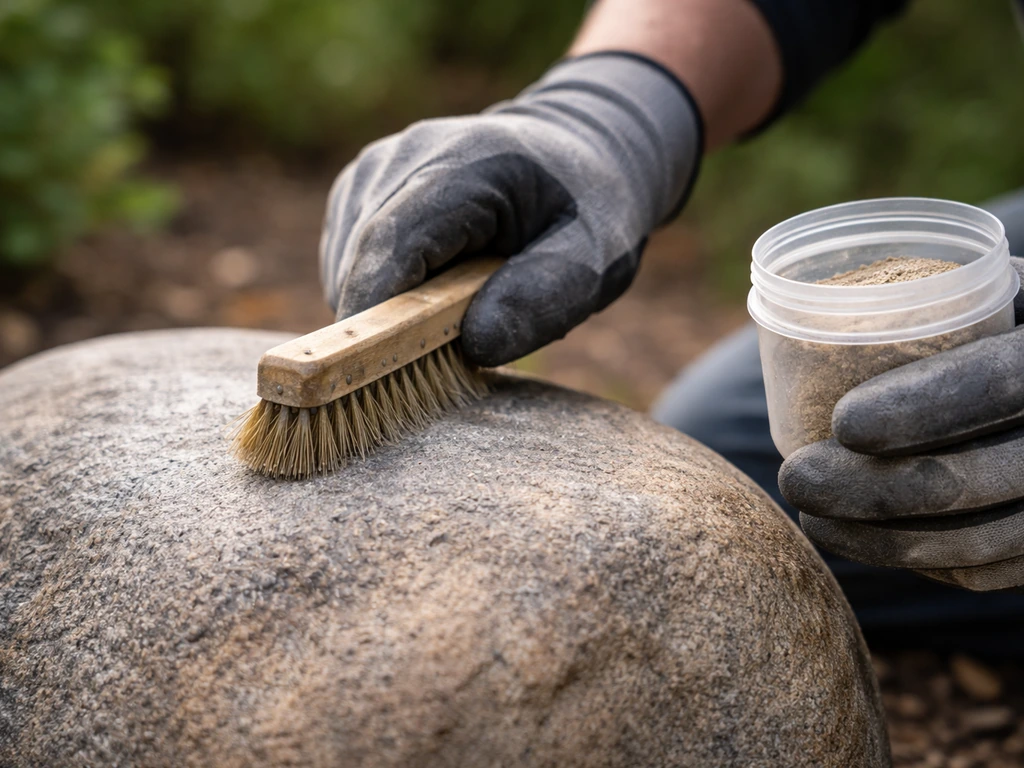
Here's the practical part. Whether you're trying to get moss on a garden boulder or encourage lichens on a dry stone wall, the same principles apply: match what's already growing locally, solve the moisture problem first, and give spores or propagules something to grip.
- Roughen smooth surfaces: A wire brush or rough sandpaper applied to polished stone creates micro-texture that spores and rhizoids can grip. This alone significantly speeds up colonization on decorative stones or cut granite.
- Increase surface moisture without waterlogging: Mist the rock daily in the morning, especially during establishment. For outdoor rocks, positioning them where they receive morning shade helps retain moisture longer than full afternoon sun. A drip irrigation emitter nearby can work for a moss garden.
- Match your local colonizers: Go find what grows on similar rocks nearby, whether in a park, along a trail, or on an old stone wall, and use those species as your guide. They're already adapted to your climate, rainfall pattern, and light levels.
- Apply moss directly: Blend a palm-sized piece of living moss with water (a blender or food processor works fine) until it's a loose slurry, then paint or pour it onto a dampened rock surface. Keep it misted for two to four weeks. This works best in shade and in cool, moist seasons.
- Add minimal substrate to crevices: For vascular plants, pack crevices with a 50/50 mix of coarse sand and a small amount of compost or leaf mold. Avoid rich potting soil, it holds too much water and promotes rot in rock environments.
- Be patient with lichens: You cannot speed lichen growth dramatically. Your best bet is to source a flat stone from a local natural area that already has crustose lichens and introduce it into your garden. The lichen will slowly spread to adjacent surfaces over years.
- Time it seasonally: Start in autumn or early spring in temperate climates when temperatures are cool and rainfall is reliable. Avoid trying to establish moss or lichens in summer heat.
Dealing with growth you don't want
Not everyone reading this wants more green on their rocks. If you have algal slime on paving, black fungal stains on decorative boulders, or moss making a path slippery, here's how to address it without damaging the rock or the surrounding environment.
Cleaning existing growth safely
- Wet the surface first before scrubbing. This is especially important for lichens, which are brittle when dry and can shatter and scatter fragments if scraped while dry. Wetting also makes algal and moss removal easier.
- Use a stiff brush and plain water for algae and moss on garden rocks. For most cases, physical removal is enough and avoids chemical runoff.
- For persistent algal or fungal stains on decorative stone, a diluted white vinegar solution (roughly 1 part vinegar to 3 parts water) applied and left for 10-15 minutes before scrubbing is effective and far less damaging to the surrounding soil and plants than bleach-based products.
- Avoid bleach or high-concentration biocides near planted areas or water features. Even if the label calls a product safe for outdoor use, concentrated biocides kill soil microorganisms and can affect water quality in ponds or streams.
Preventing regrowth
- Reduce moisture on surfaces you want to keep clear: Improve drainage around rocks, trim overhanging plants that keep surfaces shaded and damp, or reposition rocks to receive more afternoon sun.
- Increase air circulation: Dense plantings around rock features trap humidity and encourage moss and algae. Opening up the space around rocks lets the surface dry out between rain events.
- Use lighter-colored or naturally smoother stones in areas where you want to minimize colonization. Rough, dark, moisture-retaining rock in shade is essentially an invitation for moss.
- Reapply a thin coat of diluted vinegar solution at the start of the growing season as a preventive measure on paths or walls where algae has been a repeated problem.
Your practical starting point
If you want to encourage life on bare rock, start by identifying what already grows on similar rocks within a kilometer of your site. That tells you what climate and moisture conditions you're actually working with, not what you wish you had. Moss is your fastest and most reliable option if you have shade and consistent moisture. Lichens are your long-game choice for sunny, exposed rocks.
Algae will show up on its own anywhere water sits regularly. And if you want actual flowering plants rooted in rock, focus on building up the crevice substrate first, because the rock itself is never the growing medium. Get those basics right and you'll see results within a single growing season for moss and algae, with lichens following over years.
FAQ
When is the best time to remove moss, algae, or lichens from rocks?
Yes, but timing matters. For moss or lichen removal, the safest window is after rain or watering (when growth is hydrated but before dry weather forces it to spread). Avoid scraping in hot, dry conditions because it increases damage and can leave mineral scars that invite faster reinvasion by algae.
How can I tell if a dark patch on rock is algae, fungus, or weathering?
Start with the simplest “does it wipe?” test. Algal films often smear or rinse away with water (sometimes leaving a pale stain), while microcolonial fungal patches usually do not wipe off easily and look dark brown to black without a green cast. Moss will feel cushiony and remains as leafy stems.
What should I avoid using to clean rocks covered with growth?
Do not treat rock growth with generic bleach or strong acids. They can damage the rock surface, kill harmless partners in lichen, and leave residues that keep the area damp. If you need cleaning, use gentle physical removal plus controlled water, and only target the exact growth type you identified.
Can I move lichens from one rock to another to speed up colonization?
You usually cannot reliably “transfer” lichens by transplanting like turf. Lichens reproduce by spores and fragmentation, and many forms are tightly cemented. If you want new lichens, the more effective approach is to create the right exposure and dryness pattern, then allow local species to colonize naturally.
Why does algae keep coming back after I scrub it off paving stones?
Algae typically appear where there is recurring wetness, even if it is just condensation, splash, or runoff. If the rock stays wet for long periods, algae will keep returning. Fixes often involve reducing splash, improving drainage, or changing the surface exposure, not just cleaning.
What conditions do flowering plants or ferns need to grow out of solid rock?
Yes, but the environment must match the species needs. In most cases, a crevice must hold a couple of centimeters of mixed substrate (fine mineral particles plus some organic matter), otherwise seeds and plugs dry out or wash away. Also, vertical or shady walls may require different species than open, sunlit boulders.
How can I confirm slow-growing dark growth on rock is alive and not just mineral staining?
If you see only tiny black specks or a thin, dark coating that grows slowly, it may be fungal colonization or mineral staining rather than algae. Compare with a week of observation in similar weather, then use the wipe test and look for color changes after rinsing (algae often shows greener tones when wet).
What can I change to encourage lichens instead of moss or algae on the same rock?
Lichen survival often depends on not letting the surface stay wet too long in the wrong pattern. Frequent wetting followed by drying can break down some crustose types, while shaded, consistently damp conditions may favor moss and algae instead. For “more lichen,” aim for steady sun exposure with drying between wet events.
How do I choose the right species or approach for my specific rock location?
If your goal is ornamental greening, start with nearby “reference rocks.” Photograph and note what is growing on similar stone, at the same height and exposure, within about a kilometer. That local community is the best predictor of what species your site can support.