
Plants that grow "in air" are mostly epiphytes: species that attach to tree trunks, branches, or rocky surfaces and pull water and nutrients from rain, humidity, and airborne dust rather than from soil. The most familiar examples are Tillandsia air plants, epiphytic orchids, staghorn ferns, tank bromeliads, mosses, and lichens. None of them grow in pure air with no water at all, but they genuinely do not need soil, and with the right light, moisture, and airflow you can grow most of them mounted on wood or hanging in a basket with zero potting mix.
What Plants Grow in Air? Types and How to Grow Them

Dr. Marcus Weatherby
16 May 2026
What 'grow in air' actually means
The phrase gets used in two ways that are easy to confuse. The first and most ecologically accurate meaning describes epiphytes: plants whose roots never contact soil, instead anchoring to bark, rock, or other surfaces while their leaves and specialized root tissues absorb moisture directly from the atmosphere. The second, looser meaning just refers to plants people grow mounted on walls, hanging in glass globes, or displayed without a pot, which includes many of the same species.
The big misconception worth clearing up immediately is that "air plant" implies surviving on air alone. It does not. Every species in this group still needs water, and most need some form of dissolved nutrients too. What they skip is soil as a delivery mechanism. Rain, fog, dew, and periodic soaking do the job instead. If you remember one thing from this article, make it this: no soil does not mean no water.
For the purposes of this guide, "plants that grow in air" covers three overlapping groups: vascular epiphytes (orchids, bromeliads, ferns), non-vascular epiphytes (mosses), and aerophytic cryptogams (lichens). They share the trait of living without soil contact but differ quite a bit in what they need to thrive.
Epiphytes: plants that live on trees and other supports
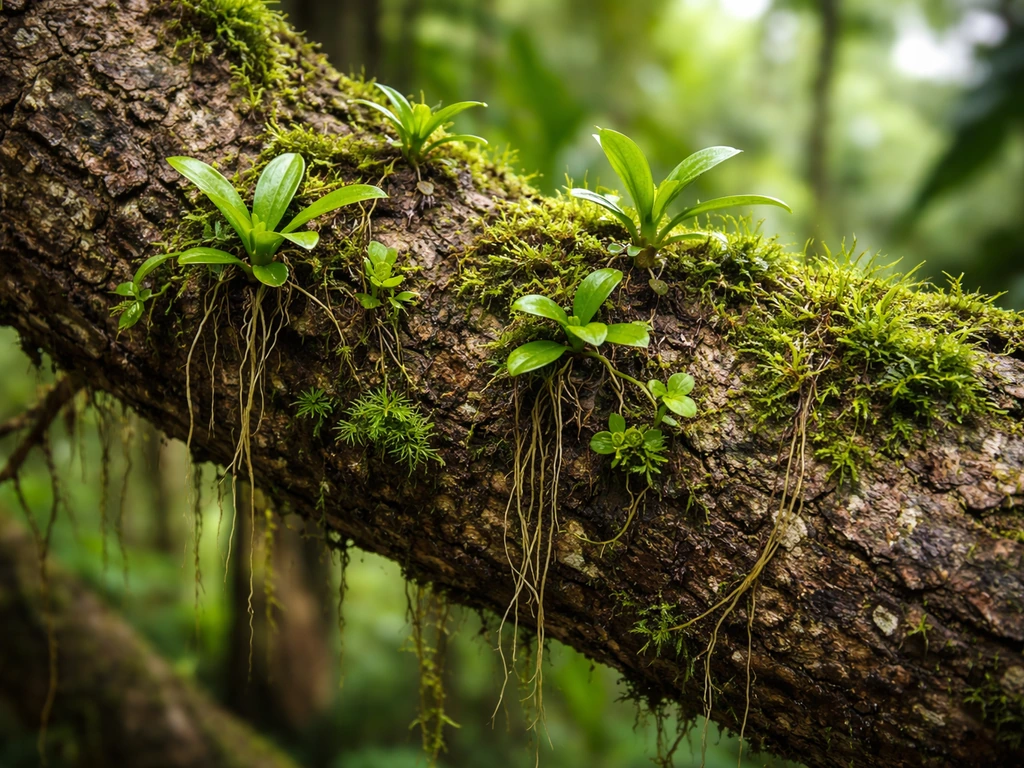
Epiphytes are probably what most people picture when they search this topic. By definition, their roots are not connected to the soil and are often in direct contact with the atmosphere. In other words, aerial plants grow on trees, rocks, and other surfaces where moisture from rain, fog, and dew can reach them where do aerial plants grow. They use a host plant (or a rock face, a fence post, a wooden slab) purely as a physical anchor, not as a food source. The host gets nothing from the arrangement and loses nothing either.
Tropical cloud forests are the epicenter of epiphyte diversity. Persistent fog and high humidity support dense communities of orchids, bromeliads, filmy ferns, mosses, and lichens all sharing the same canopy layer. But epiphytes are not limited to the tropics: mosses and lichens colonize tree bark across temperate forests, boreal zones, and even subalpine environments. The tropics just have the most spectacular vascular epiphyte diversity.
Tillandsia (air plants)
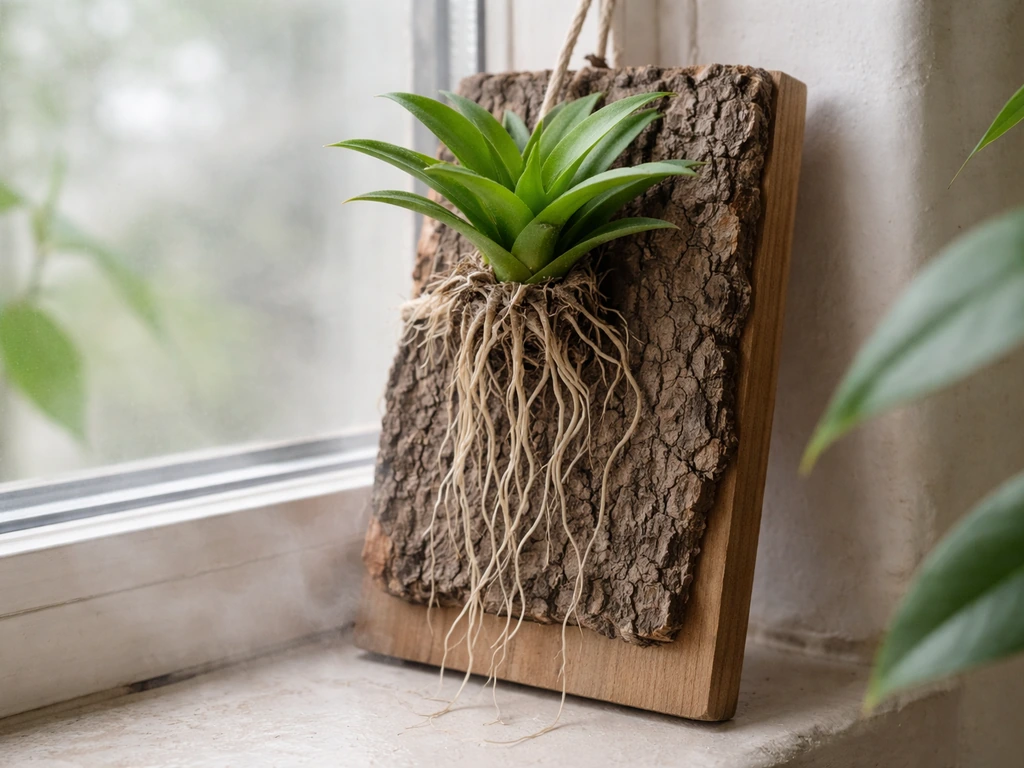
Tillandsia are the genus most people call "air plants" and the ones sold in glass terrariums and wall displays everywhere. Most species in cultivation are what botanists call aerial Tillandsia: they have no functional soil roots and absorb all their moisture and nutrients through specialized leaf scales called trichomes. Rain, dew, dust, and decomposing debris falling from the canopy above are their nutrient sources in the wild. In your home, a weekly soak and occasional dilute fertilizer replaces all of that.
Epiphytic orchids
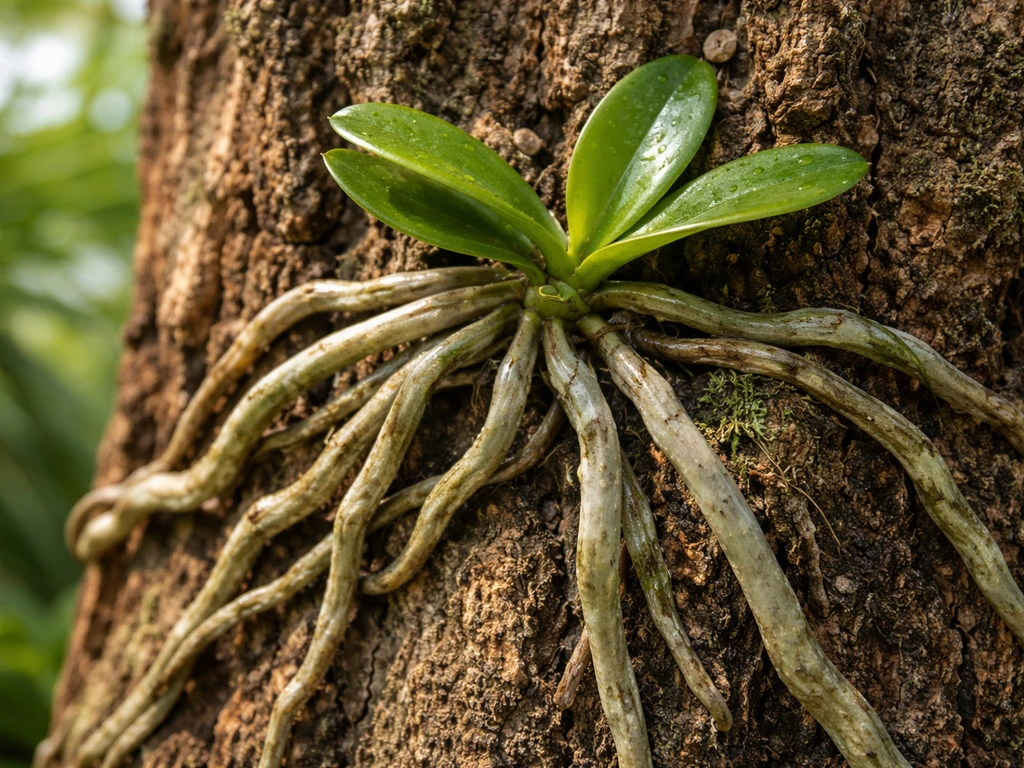
The majority of orchid species are epiphytic, growing on tree branches in tropical and subtropical forests. Their thick, velamen-covered aerial roots absorb rainfall rapidly and then dry out between events. Unlike Tillandsia, most epiphytic orchids do better with a small amount of mounting substrate (sphagnum moss or bark chips packed around the roots) rather than bare attachment. Cork bark is a standard mounting material because it resists decay, stays pH-neutral, and mimics what orchids grow on in the wild.
Staghorn ferns
Staghorn ferns (genus Platycerium) are native to tropical rainforests across Africa, Australia, and Southeast Asia, where they grow as bracket epiphytes on tree trunks and branches. Platycerium bifurcatum specifically is native to Java, Bali, New Guinea, Queensland, New South Wales, and Lord Howe Island. In the wild these ferns press flat shield fronds against bark to collect falling debris and moisture, while their dramatic antler-shaped fertile fronds reach out into the air. Mounted on a wooden plaque at home, they behave exactly the same way.
Tank bromeliads
Most bromeliads are epiphytes that derive water from rain and nutrients mainly from windblown dust and debris falling into their leaf rosettes. Those central tanks can hold up to roughly 20 litres (about 5 gallons) of water in large species, making the bromeliad itself a micro-habitat. In a home setting you fill and refresh the central tank rather than watering through roots.
Mosses, lichens, and other soil-free colonizers
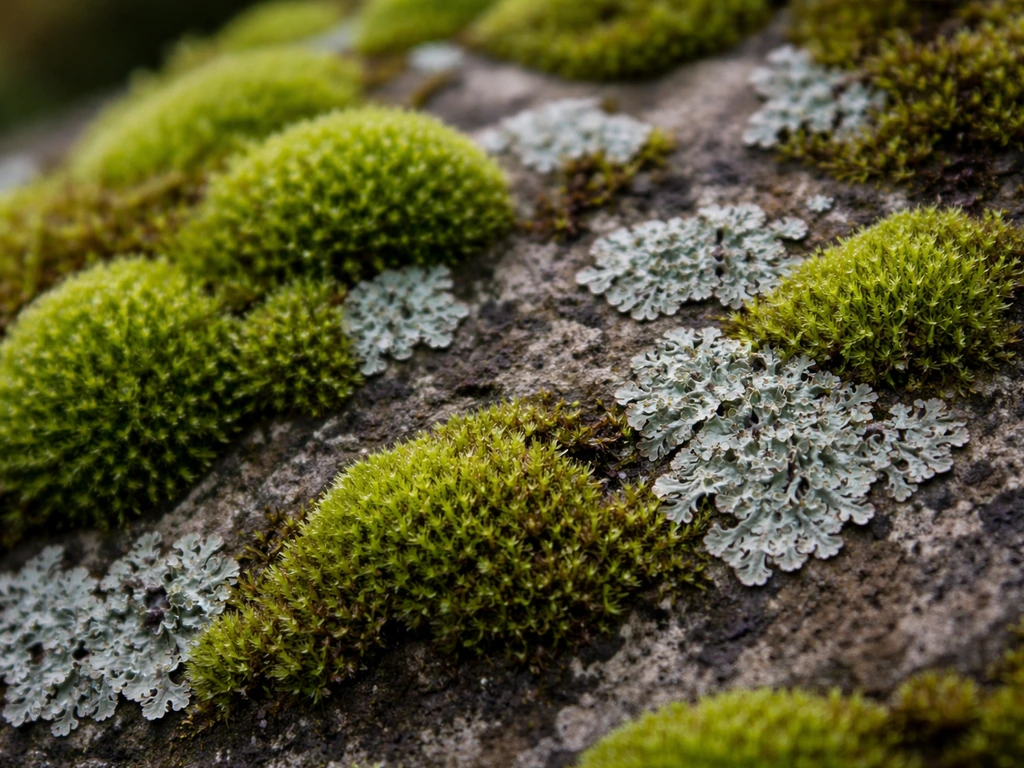
Mosses are bryophytes, meaning they lack the vascular tissue and true roots that ferns and flowering plants have. They obtain water through direct surface contact with their environment, pulling moisture in through their entire body surface. Because of this, mosses are tightly tied to moisture availability: rain, dew, and fog are what keep them green and photosynthesizing. You find them on living tree bark (not just rotting logs), rock faces, and even concrete walls in humid climates. Many moss species also derive a significant portion of their nutrients from atmospheric dust and rainwater rather than any substrate below them.
Lichens take this even further. A lichen is a partnership between a fungus and a photosynthetic partner (usually algae or cyanobacteria), and the fungal body absorbs the bulk of its nutrients from the air, without roots of any kind. When a lichen looks pale and dry it is not dying, it is dormant, waiting for the next rain or fog event to rehydrate and resume photosynthesis. This drying-and-reviving cycle is a core survival strategy, not a sign of neglect. Lichens are genuinely among the most air-dependent organisms on earth, making them the clearest real-world example of "growing in air."
If you want to explore closely related territory, the natural habitats of aerial plants and the full range of aerial plant species are worth examining alongside the examples here, since the ecology overlaps considerably. If you are wondering where do ghost plants grow, it is worth starting with the same idea of matching habitats and climate shown for these soil-free aerial plants. For spider plants, knowing where they grow naturally helps you mimic their typical temperature, light, and moisture needs at home where do spider plants grow naturally.
What these plants actually need to survive
Even without soil, air-growing plants have real requirements. Getting all four of the following right is the difference between a thriving mounted plant and a dried-out or rotting one.
Light
Most epiphytic species come from forest canopy environments where light is bright but filtered. Tillandsia and bromeliads generally need 12 to 16 hours of relatively bright indirect light daily indoors, or a spot near a south- or east-facing window. Staghorn ferns prefer bright indirect light and will burn in direct midday sun. Orchids vary by genus: Phalaenopsis tolerates lower light, while many Cattleya relatives want near-full sun. Mosses prefer shade or dappled light and will dry out and die in full sun without constant moisture.
Moisture and humidity
This is the factor people underestimate most. Tillandsia need more humidity than people expect: typical indoor air in a heated or air-conditioned room can dehydrate them faster than weekly soaking recovers. University of Wisconsin Extension notes that Tillandsia need more humidity than many typical homes provide, and that misting alone may be inadequate Tillandsia need more humidity than people expect. Staghorn ferns prefer humidity at 50% or above. If your indoor air runs dry (common in winter), a small humidifier near your display or daily misting between soaks genuinely helps. Bromeliads are somewhat more tolerant of lower humidity because they store water in their tanks, but the tank still needs regular refreshing.
Airflow
Good air circulation is not optional. It is what lets mounted plants dry properly after watering and prevents the rot and mold that kill more air plants than anything else. In a forest, epiphytes get constant airflow between wetting events. At home, a ceiling fan on low, an open window, or a small oscillating fan placed at a distance replicates this. High humidity combined with stagnant air is a recipe for fungal problems, so always pair your humidifier or misting routine with some air movement.
Nutrients
In the wild, rain carries dissolved minerals, dust delivers micronutrients, and decaying debris from above supplies nitrogen. At home you supply this through dilute fertilizer in your watering routine. A balanced liquid fertilizer (like 20-20-20) at quarter strength works well for staghorn ferns and orchids, applied once a month during the growing season (roughly April through September). For Tillandsia, a bromeliad-specific or low-urea fertilizer at quarter strength in the soak water once a month is enough. Mosses and lichens generally do not need supplemental feeding if they receive rainwater or low-mineral water.
Setting up an air-growing system at home
The practical side of growing these plants comes down to three decisions: what to mount them on, how to water them, and where to put them.
Mounting options
- Cork bark slabs: the standard for orchids and many Tillandsia; resists rot, pH-neutral, and replicates natural bark texture so roots attach readily
- Hardwood plaques (untreated oak, cedar, or driftwood): excellent for staghorn ferns; attach the plant with fishing line or nylon mesh until the shield fronds grip on their own
- Tree fern fiber boards: traditional orchid mounting surface; hold moisture longer than cork, which helps in dry climates
- Wire baskets with sphagnum: good for high-humidity species like some orchids and staghorn ferns in dry indoor environments; the moss retains moisture between waterings
- Branches or forks: natural-looking display for smaller Tillandsia and smaller epiphytic orchids; just secure with a small amount of wire or thread until the plant attaches
Watering routines that actually work
For Tillandsia, the most reliable routine is a full soak of 20 to 30 minutes in room-temperature water, once a week. After soaking, shake out any excess water caught in the leaf bases, then place the plant upside down in a spot with good air circulation until it dries completely, which should take about 4 hours in a well-ventilated room. Misting between soaks is helpful but is not a full substitute for the weekly soak in most indoor conditions. Water in the morning so the plant dries during the day; plants that stay wet overnight are much more likely to rot.
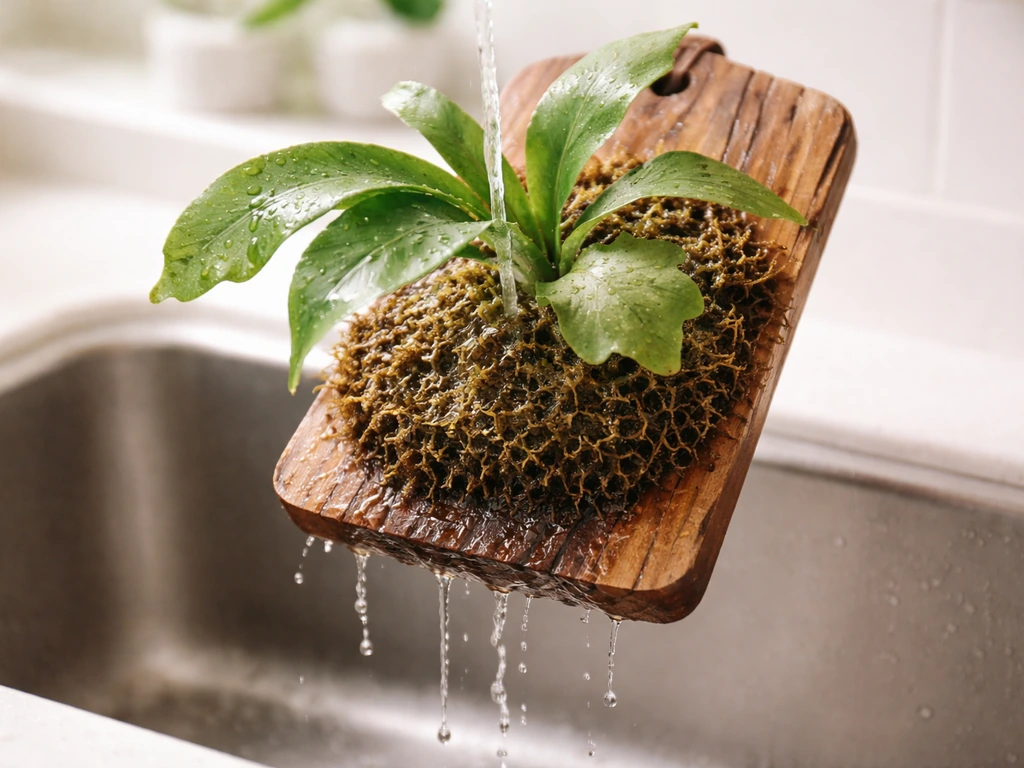
For staghorn ferns on a mount, the reliable trigger is weight: lift the plaque and water only when it feels noticeably light. When you do water, soak the whole mount (shield fronds and all) in a bucket or under a shower, then let it drain completely before hanging it back up. During the growing season (spring through summer), add a quarter-strength balanced fertilizer to the soak water once a month.
For tank bromeliads, keep the central cup filled with water and flush it out with fresh water every week or two to prevent stagnation. The roots barely function for water uptake; the tank is doing the work.
For mosses on a vertical mount or a living wall panel, mist heavily every day or two in dry conditions. In humid climates or a greenhouse, once every few days may be enough. Mosses tell you when they need water: they lighten in color, curl, and feel dry to the touch.
Common problems and how to fix them
| Problem | Likely cause | Fix |
|---|---|---|
| Tillandsia leaves curling inward, tips browning | Dehydration from insufficient watering or low humidity | Switch from misting-only to weekly soaks; check that soak water reaches the leaf bases; increase ambient humidity |
| Soft, mushy base on Tillandsia or orchid | Rot from water trapped in leaf crown or poor drainage after watering | Remove affected tissue; let dry fully; shake out water after every soak and water in mornings only; improve airflow |
| White crust on mount or leaf bases | Mineral buildup from tap water | Switch to rainwater or filtered water; occasionally rinse the plant and mount under running water to flush deposits |
| Staghorn fern fronds yellowing or shield fronds turning black | Overwatering or constantly wet mount; inadequate drainage | Water only when the mount feels light; ensure complete drainage before re-hanging; reduce watering frequency in winter |
| Mold or fuzzy growth on wooden mount | Stagnant air combined with high moisture on an organic surface | Improve air circulation; let mount dry more thoroughly between waterings; wipe mold with dilute hydrogen peroxide solution |
| Moss turning brown and crispy | Low humidity or too much direct sun | Move to a shadier, more humid location; mist more frequently; consider placing near a humidifier |
| No growth or very slow growth | Insufficient light or nutrients | Move closer to a bright window or add a grow light; start monthly fertilizer applications at quarter strength |
Picking the right plant for your climate and location
Your local climate and the season you are starting in matter a lot here, which is worth thinking through before you buy anything.
If you live in a humid subtropical or tropical climate (think southern Florida, coastal Southeast Asia, or Queensland), you can grow many of these plants outdoors year-round, mounted on trees or fence posts with minimal intervention. For specific tips on locations that suit them, see where to grow air plants based on humidity, light, and airflow. Tillandsia, tank bromeliads, and staghorn ferns thrive in those conditions with rain and natural humidity doing most of the work for you.
In the wild, they typically grow on tree trunks and branches, as well as on rocky surfaces, where they can capture moisture from fog, dew, and rain where do air plants grow naturally. The main risk outdoors in those climates is too much direct sun on sensitive species.
In temperate climates with cold winters, almost all of these plants become indoor projects for most of the year. Spring and summer are the best time to start because longer days and warmer ambient temperatures support active growth, and you can often place plants outdoors on a shaded porch during warm months to give them the airflow and humidity they love. Bring them in before nights drop below 10°C (50°F) for tropical species.
In dry climates (high desert, arid Mediterranean summers), the challenge is maintaining enough humidity. A glass terrarium or enclosed display actually helps Tillandsia retain moisture, though you still need to open it for airflow and watering. Staghorn ferns are harder to maintain in very dry air without a dedicated humidity setup. Mosses and lichens are essentially impractical as indoor display plants in arid conditions unless you have a greenhouse or misting system.
| Plant | Best climate | Light | Humidity needed | Difficulty |
|---|---|---|---|---|
| Tillandsia (air plants) | Subtropical to temperate (indoors) | Bright indirect | Moderate to high (50%+) | Easy to moderate |
| Tank bromeliads | Tropical to subtropical | Moderate to bright indirect | Moderate | Easy |
| Epiphytic orchids (Phalaenopsis) | Temperate indoors | Low to moderate indirect | Moderate (50–70%) | Moderate |
| Staghorn fern | Tropical to warm temperate | Bright indirect | High (50%+) | Moderate |
| Epiphytic mosses | Temperate to boreal | Shade to dappled | High (constant) | Easy outdoors, hard indoors |
| Lichens | Any climate (outdoors) | Variable | Tolerates dry periods | Not cultivated; observe in the wild |
If you are just starting out, Tillandsia are the most forgiving entry point: they are widely available, inexpensive, and genuinely do not need soil or a pot. A small xeric species like Tillandsia ionantha tolerates more dryness than most, making it the right first choice for anyone in a drier climate or a home with low ambient humidity. Once you have the soak-and-dry routine dialed in, stepping up to a staghorn fern on a plank or a mounted epiphytic orchid becomes much more intuitive.
The natural growing habitats of these plants, including where air plants grow in the wild and where aerial plants naturally occur, give useful context if you want to understand why a specific species needs what it needs. Matching your setup to a plant's native habitat conditions is always the most reliable shortcut to success.
FAQ
Can I keep “air plants” in a closed terrarium or glass globe all the time?
If the display stays wet continuously, many epiphytes rot even though they have no soil. After watering, they should dry fully in a few hours, so use a setup that lets water run off (good mounting drainage, no sealed glass touching wet leaves) and keep airflow on low.
What can I mount epiphytes on, and what materials should I avoid?
Yes, but only if the mount surface does not hold water against the plant. Use materials that dry fast (cork, hardwood, or dry bark) and avoid spongy moss pads that stay soggy, especially for orchids, because trapped moisture around roots can cause bacterial or fungal rot.
Do I need special water for air-growing plants, and what about tap water?
Water quality matters most when you fertilize or when rainwater is hard to supply. If your tap water is very hard or heavy with chlorine, switch to filtered or dechlorinated water, and if you fertilize, use quarter-strength and rinse with plain water during the next soak cycle to prevent salt buildup on leaf trichomes.
How do I adjust the watering schedule for my home’s humidity and airflow?
“Air plants need weekly soaking” is a general rule, but indoor conditions change the interval. If your room is very humid and plants dry quickly, you can stretch the schedule slightly, but if they feel damp or smell musty after a soak, shorten the interval and increase airflow so they fully dry.
How much light is safe if I’m not sure what my plant tolerates?
Air-growing plants can be sunburned even indoors. Tillandsia and bromeliads prefer bright indirect light, but mosses and many ferns should be shaded from direct midday sun. A practical check is leaf color and texture, if they pale dramatically or crisp, move the display farther from the window.
My plants get humid, but they still decline. What’s the most common missing factor?
Airflow is usually more important than humidity alone. If you mist a lot but there is no air movement, you raise the risk of rot and mold. Aim for consistent gentle circulation, for example a small fan a few feet away, and mist or soak in the morning so everything dries during the day.
How do I avoid over-fertilizing mounted plants?
Fertilizing should be light and seasonal. Overfeeding shows up as browning leaf tips, mushy growth, or persistent crust on mounts, especially on Tillandsia. Stick to quarter-strength monthly in the growing season, and skip feeding in winter unless the plant is actively growing under strong light.
Do epiphytic orchids always need sphagnum or can I mount them bare?
Some orchids and other epiphytes can be grown bare-root on mounts, but many perform better with a small breathable pack around roots (like thin sphagnum or bark chips). If you see drying that looks excessive and the plant stalls, add a minimal, aerated medium rather than switching to heavy soil.
What’s the correct way to water tank bromeliads so they don’t stagnate?
Tank bromeliads should be treated as a “cup plant,” not a root plant. Keep the central tank filled, flush it regularly, and make sure excess water can drain from the base area so the stem does not stay underwater for long periods.
My moss or lichen turned pale and dry. Did I kill it?
Mosses and lichens look like they are doing “nothing” when dry, but that is normal dormancy. The best approach is to rehydrate gradually and maintain consistent moisture in the display, if you keep them wet all the time indoors, you can encourage algae growth, which looks green and slimy.
Can I grow these outdoors year-round where winters are cold?
Yes, but temperature swings and dry indoor air usually make it harder than epiphytes. If you want to try outdoor growth in colder regions, start in spring when nights are mild, mount on a surface that stays drier than puddling ground, and bring plants in before temperatures drop below about 10°C (50°F) for tropical species.