
Plants that grow along the ground are most commonly called groundcovers. You'll also hear them described as creeping plants or prostrate plants, depending on exactly how they spread and hug the soil. All three terms point to the same basic growth habit: low, spreading, and ground-hugging rather than upright. If you're trying to identify a plant or search for one that fits a specific habitat, knowing which term fits the plant's actual structure will save you a lot of time.
Plants Which Grow Along the Ground Are Called Groundcovers

Dr. Marcus Weatherby
27 May 2026
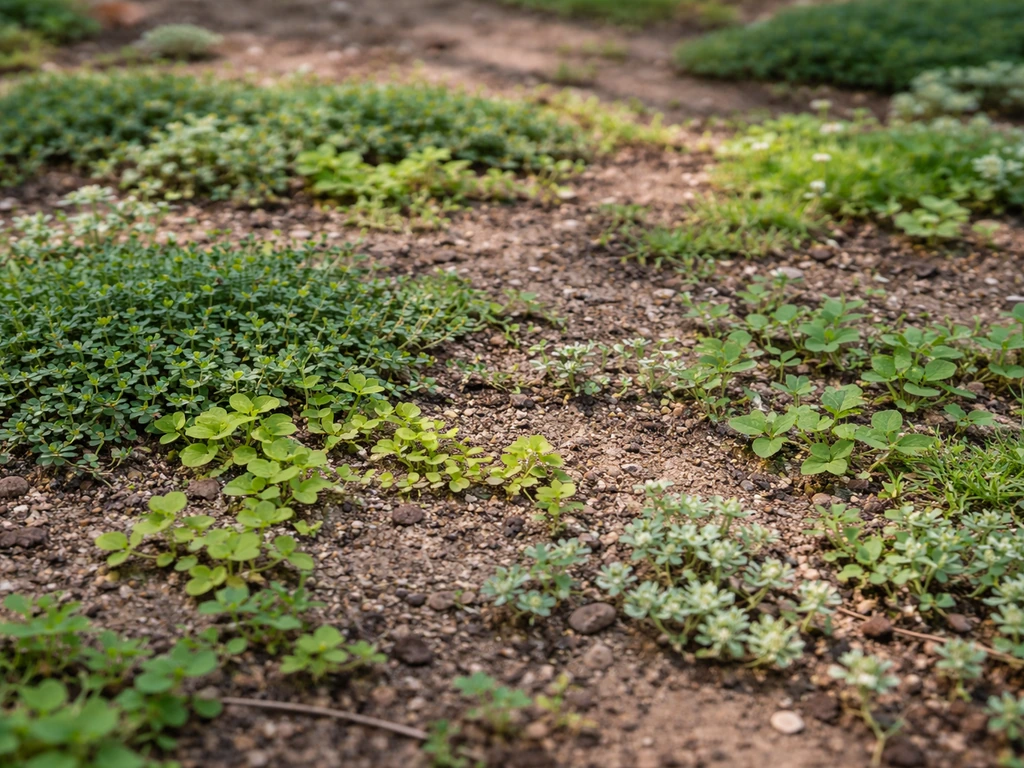
The correct terms: groundcover, creeping, and prostrate
Groundcover is the broadest and most practical term. It describes any low-growing plant that spreads to form a dense layer over bare soil, generally staying under 3 feet tall, and often well under 12 inches. The term is somewhat of a catch-all, as it covers the plant's function (covering the ground) rather than a single precise growth structure. It can include spreading perennials, low shrubs, mat-forming herbs, and even some grasses.
Creeping plant is a more specific description that focuses on how the plant moves across the ground. Creeping plants spread via specialized stems that run along or just below the soil surface and root at nodes (the joints where leaves attach). These stems are called stolons when they run above ground and rhizomes when they travel just below the surface. blank" rel="noopener noreferrer">Ground ivy (also called creeping Charlie) is a textbook example: it creeps across shaded lawns via stolons, rooting at every node it touches, and can spread 1 to 3 feet in a season.
Prostrate is a botanical term that describes growth orientation. A prostrate plant has most of its branches lying along or just above the ground rather than growing upright. It's used most precisely in plant identification keys and herbarium records. If you're searching a plant database or a botanic garden's ID tool, 'prostrate' is the term to use. Creeping thyme, for instance, is described as prostrate to mat-forming, typically reaching only 5 to 10 cm high and spreading 20 to 30 cm across.
Groundcover vs creeping vs prostrate: how to tell the difference
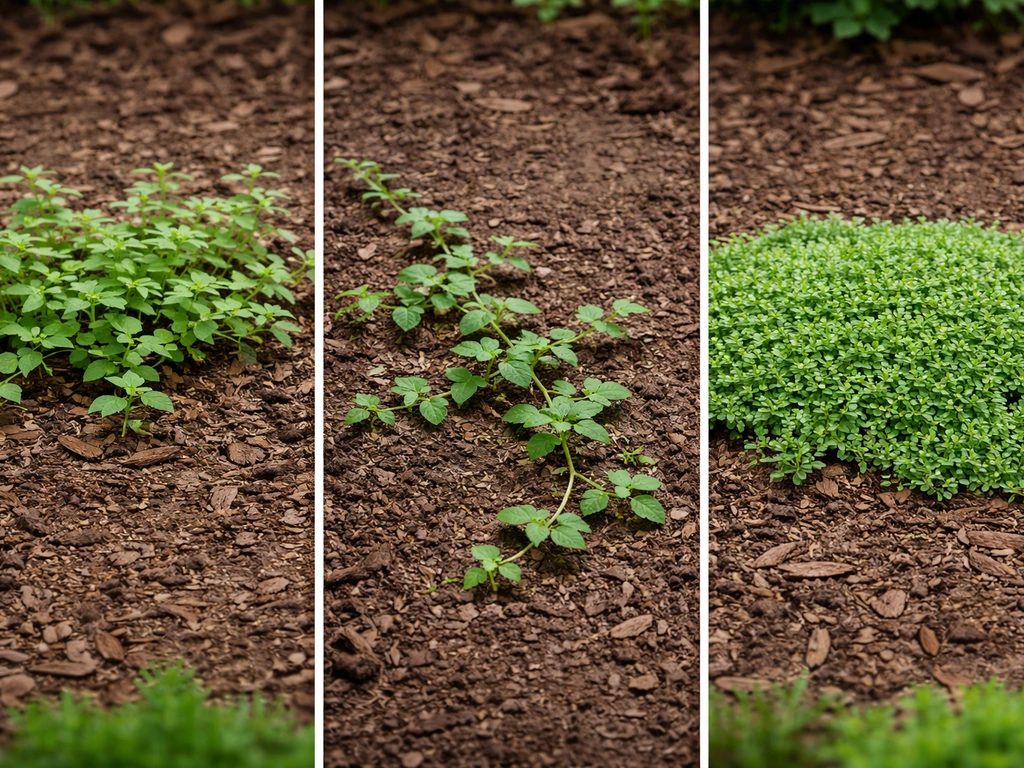
The easiest way to separate these terms is to ask what you're describing: the plant's function, its spread mechanism, or its physical orientation.
| Term | What it describes | Key diagnostic trait | Best used when |
|---|---|---|---|
| Groundcover | Landscape function: covers bare soil with a dense, low layer | Low height (often under 12 in / 30 cm), spreads to fill area | Selecting or naming plants for a site |
| Creeping | Spread mechanism: stems run along or under soil and root at nodes | Visible stolons or runners with rooting at leaf joints | Identifying how a plant spreads or controlling it |
| Prostrate | Growth orientation: branches lie along or near the ground | Most stems horizontal rather than upright | Using plant ID keys, databases, or botanical descriptions |
A single plant can fit all three labels at once. Candytuft (Iberis sempervirens) is a low-growing groundcover, it spreads in a prostrate habit, and its stems root when they contact soil, making it technically creeping as well. Don't worry too much about the overlap. What matters practically is using the right term for the task: groundcover when you're choosing a plant for a site, prostrate when you're searching an ID key, and creeping when you need to understand or manage how fast something spreads.
How to identify ground-hugging growth in the field or online
In the field, the clearest sign of a true ground-hugging plant is horizontal stem growth combined with rooting along that stem. If you want plants that grow along the ground, look for creeping, prostrate, or mat-forming species suited to your light and soil conditions ground-hugging plant. Get down close to the plant and look at where the stems meet the soil. If you see roots emerging from nodes (the small bumps or joints along the stem where leaves attach), you're looking at a creeping or stoloniferous plant. Gently lift a stem and you'll often find it has already anchored itself in two or three places.
Mat formation is another reliable visual cue. Groundcovers tend to knit themselves into a dense, interlocking carpet rather than growing as separate individuals. From a standing position, look for a uniform low layer with no visible gaps between plants. If the whole patch moves together slightly when disturbed, it's likely a mat-former.
Online, the most useful search filters are growth habit terms. On plant databases and extension toolboxes, look for filter options labeled 'prostrate,' 'mat-forming,' 'spreading,' or 'creeping.' Height filters set to under 12 inches will also pull up most true groundcovers. When reading a plant description, watch for phrases like 'spreads by stolons,' 'roots at nodes,' 'trailing stems,' 'low spreading habit,' or 'forms a dense mat.' Those confirm the plant will actually behave as a groundcover rather than just being short.
- Look for horizontal stems lying along the soil surface with roots at leaf joints
- Check for mat formation: a dense, low carpet rather than distinct individual plants
- Search databases using 'prostrate,' 'mat-forming,' 'creeping,' or 'spreading' as habit filters
- Set height filters to under 12 inches (30 cm) for true low groundcovers
- In descriptions, look for 'stolons,' 'runners,' 'rhizomes,' 'roots at nodes,' or 'trailing'
Typical habitats and conditions groundcovers prefer
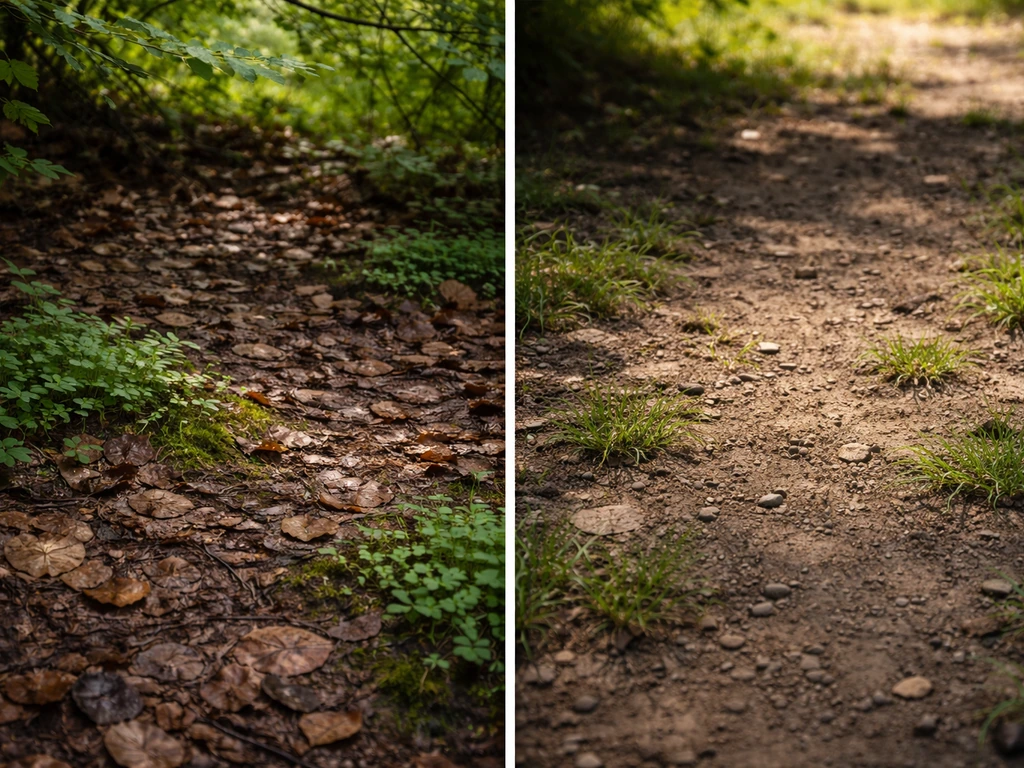
Ground-hugging plants show up across nearly every ecosystem, but they're especially common in places where taller vegetation can't get established: deep shade under forest canopies, disturbed slopes prone to erosion, rocky outcrops with thin soils, and heavily shaded root zones under large trees. These are the niches where a low spreading plant wins. It doesn't need to compete for height, and it can colonize ground that nothing upright would bother with.
Sun and moisture requirements vary widely by species, but a few patterns hold. Shade-tolerant groundcovers like ajuga, wild ginger, and native ferns dominate moist, well-drained forest floors and do poorly in open sun. Iowa State University Extension also describes shade-tolerant groundcovers as thriving on moist, well-drained forest-floor conditions shade-tolerant groundcovers like ajuga, wild ginger, and native ferns dominate moist, well-drained forest floors. Drought-tolerant groundcovers like creeping thyme, ice plant, and sedums thrive in exposed, dry sites with lean soils, often full sun. The rule of thumb: match the groundcover's native habitat to your site conditions as closely as possible.
Soil drainage is probably the single most important condition to get right. Most groundcovers fail not from wrong light but from wrong drainage. In clay-heavy soils, you need either species that tolerate wet feet (like some sedges or creeping Jenny) or you need to amend the soil to improve drainage before planting. In sandy, fast-draining soils, organic matter helps retain enough moisture for establishment. For slopes specifically, prioritize species with vigorous root systems and active spreading, since slope erosion control depends on roots and dense horizontal coverage working together.
Disturbance tolerance is also worth factoring in. Some groundcovers like ground ivy are extremely aggressive and thrive in disturbed, compacted, or nutrient-poor soil, which is exactly why they colonize bare patches so fast. If your site has been recently disturbed (graded, cleared, or compacted), these tougher, more aggressive creepers will establish faster than delicate native species. Just know they can also be hard to contain once established.
Where groundcovers thrive by climate and season
Ground-hugging plants are found on every continent and in almost every climate zone, but the species mix changes dramatically depending on where you are.
Temperate and humid climates
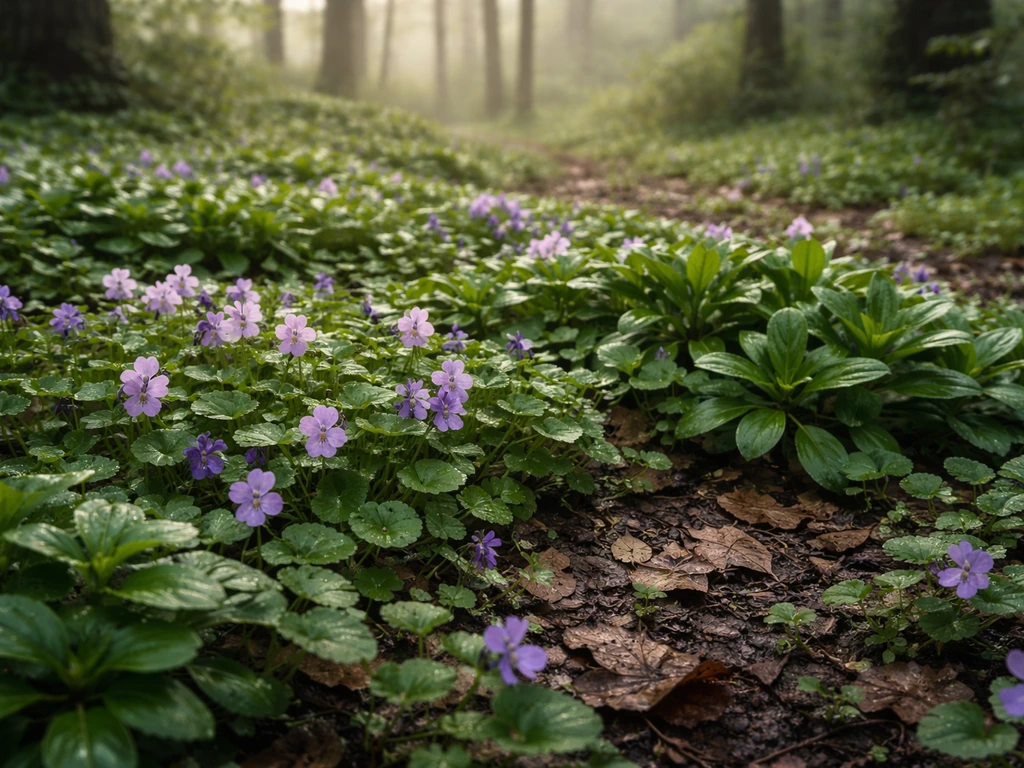
In the humid eastern US, the UK, and similar temperate zones, the forest floor is the classic groundcover habitat. Native options like pachysandra, creeping phlox, and wild violets spread readily under deciduous trees where grass won't grow. Many are evergreen or semi-evergreen, holding their leaves through winter and providing year-round soil coverage. Astilbes and other moisture-loving shade perennials prefer these same conditions: moist, rich, well-drained soil, with consistent organic matter.
Arid and semi-arid climates
In dry climates like the American Southwest, the Mediterranean, and parts of Australia, groundcovers take a different form. Drought-tolerant creeping species like ice plant, creeping rosemary, and various sedums spread across exposed, rocky, or sandy ground where little else survives. In xeriscaping contexts, low-water groundcovers replace turf grass entirely and reduce irrigation demand significantly. The key selection criterion here is water use: choose species whose native range overlaps with arid or semi-arid conditions.
Grasslands, prairies, and disturbed ground
In grassland and prairie systems, native low-growing plants colonize open ground between taller grass species. Clover, wild strawberry, and various native ground-hugging herbs fill this role. These ecosystems see the most seasonal variation in groundcover: spring and early summer bring rapid spreading and flowering, while late summer and fall slow growth considerably. In cold-winter climates, the root systems and rhizomes of perennial groundcovers survive underground and re-emerge in spring.
Slopes and disturbed sites
Slopes are one of the most important use-cases for groundcovers from an ecological standpoint. Steep slopes with bare or disturbed soil erode fast, and turf grass often can't establish well on them. Groundcovers with extensive root systems and vigorous horizontal spreading, like crown vetch, creeping juniper, or native bunch grasses, stabilize slopes by holding soil both above and below ground. The combination of surface mat coverage and root depth is what makes them effective, and this is exactly the growth habit to look for when selecting species for slope stabilization.
How to find and choose the right groundcover for your area
Start with your site conditions, not a plant name. Before searching for species, note your sun exposure (full sun, part shade, or full shade), soil drainage (does water pool after rain or drain immediately?), and climate zone (most countries use a version of a hardiness zone map). These three factors will eliminate most of the wrong choices before you even start browsing.
Once you know your site conditions, use the right search terms. 'Groundcover for [your climate zone] full shade' or ['prostrate perennial for dry slope [your region]'](/plant-growth-habits/what-plants-grow-in-the-ground) will return much more useful results than just searching for 'plants that grow along the ground.' Your local cooperative extension service (in the US) or equivalent regional horticultural authority is the best starting point, since their plant lists are filtered for your actual climate and conditions, not just general appearance.
Pay attention to how a plant spreads. Rhizome-spreading species can be aggressive and hard to contain without physical edging barriers buried several inches deep. Stolon-spreading species root on the surface and are easier to pull back or redirect. Tip-layering and offset-forming species spread more slowly and are easier to control. If you're planting near a path, lawn edge, or bed border, the spread mechanism matters as much as the plant's height or appearance.
Spacing is also worth getting right from the start. Plants spaced too far apart leave bare soil for weeds to colonize, and once weeds are established among groundcovers, they're difficult to remove without disturbing the groundcover itself. Follow recommended spacing for your chosen species and growth rate. Fast spreaders can go farther apart; slow spreaders need to be planted closer together if you want coverage in the first season.
If you're exploring related questions, it's worth knowing that underground-growing plants and the plants that grow just below the soil surface (spreading via rhizomes) are a closely related topic, since many groundcovers use both above-ground and below-ground spread mechanisms at the same time. Understanding which parts of the plant are above vs below ground helps you predict how far and how fast it will spread, and whether physical barriers will actually contain it.
- Write down your sun, drainage, and climate zone before searching for any species
- Use 'prostrate,' 'mat-forming,' or 'creeping' as habit filters on plant databases
- Check your local extension service for regionally appropriate groundcover lists
- Confirm the plant's spread mechanism (stolons, rhizomes, tip layering) and plan containment accordingly
- Space plants based on growth rate: tighter spacing for slow spreaders, wider for vigorous ones
- Remove weeds thoroughly before planting, since post-planting weeding in groundcover beds is very difficult
FAQ
If a plant is short, does that automatically mean it is a groundcover?
No. A plant can be low but still not act like a groundcover if it does not spread and knit into a mat. In practice, confirm it roots along stems (nodes) or spreads by stolons, rhizomes, or dense mat formation, otherwise you may get scattered tufts rather than weed-smothering cover.
How do I choose between “creeping,” “prostrate,” and “groundcover” when looking up plants?
Because “creeping,” “prostrate,” and “groundcover” describe different things, a single plant may need multiple tags to behave as expected. If you are trying to prevent spread near a border, prioritize the mechanism label (stolon, rhizome, mat-forming, or layering) rather than the height descriptor.
What’s the best way to stop groundcovers from invading a lawn or pathway?
For containment, edging depth and barrier material matter. Rhizome-spreading types often require buried, continuous edging (typically several inches deep) and regular inspection, since they can travel belowground. Stolon-rooting types are usually easier to redirect because growth anchors along the surface nodes.
Can I space groundcovers farther apart to reduce maintenance, or will weeds take over?
Yes, but you may need different spacing than you expect. With slow mat formers, wider spacing can leave gaps that weeds fill before the carpet closes. A practical rule is to follow the plant’s recommended spacing for first-year coverage, then adjust tighter if you want rapid soil shading.
Do groundcovers need to be planted at a specific time of year to succeed?
Yes, but it can fail if the soil is wrong or the plant is stressed at planting time. Groundcovers typically establish best when drainage matches their tolerance, and when you plant during the period they actively grow (cool-season shade plants often prefer cooler months, while many drought-tolerant types establish better in mild seasons with lower stress).
If a groundcover is sold as “shade-tolerant,” what else should I check besides light?
Tolerating shade can mean very different things, especially for groundcovers in deep forest conditions. Shade-tolerant does not always mean wet, and some species will survive in low light but still require consistent moisture and good drainage for roots to anchor and spread.
Should I mulch when planting groundcovers, and can mulch affect how they spread?
Mulch helps but can also slow spreading if applied too thickly at planting. Use a light layer to suppress weeds until the groundcover fills in, and avoid burying creeping stems so they can contact soil and root at nodes.
How can I tell early on whether my groundcover will actually spread and fill in?
Use a simple spread check. After a few weeks, look for new rooted nodes where stems touch soil, or new shoots from the mat edge. If you only see leaf growth with no outward rooting or expansion, the plant may be too crowded, under- or overwatered, or planted in a spot with incorrect drainage.
Can groundcovers handle foot traffic, or will they thin out on paths?
Often, yes. Some aggressive creepers can form a dense mat but still tolerate foot traffic poorly, especially when young. Test in a small section first, or choose a species known for traffic tolerance if the groundcover will be near frequently walked areas.
If I prune a groundcover regularly, will it automatically stay contained?
Sometimes. If a groundcover is rhizome-driven, surface pruning alone may not stop it because material can move underground and re-sprout. For sensitive sites, combine pruning with physical edging and plan on periodic removal of any escaping shoots at the edges and across beds.