Plants that grow underground are called geophytes. That is the correct botanical term, and it covers any herbaceous plant whose perennating buds (the tissue that survives bad seasons and regrows) sit below the soil surface. In everyday gardening, most people just say 'bulbs,' but that word is technically too narrow. Geophyte is the umbrella that actually fits all of them: true bulbs, corms, tubers, rhizomes, and tuberous roots. If you are trying to name what you are growing, find it in the wild, or understand why it survives winter underground, geophyte is the word you need.
Plants That Grow Underground Are Called What

Dr. Marcus Weatherby
7 Jun 2026
The correct term: geophytes
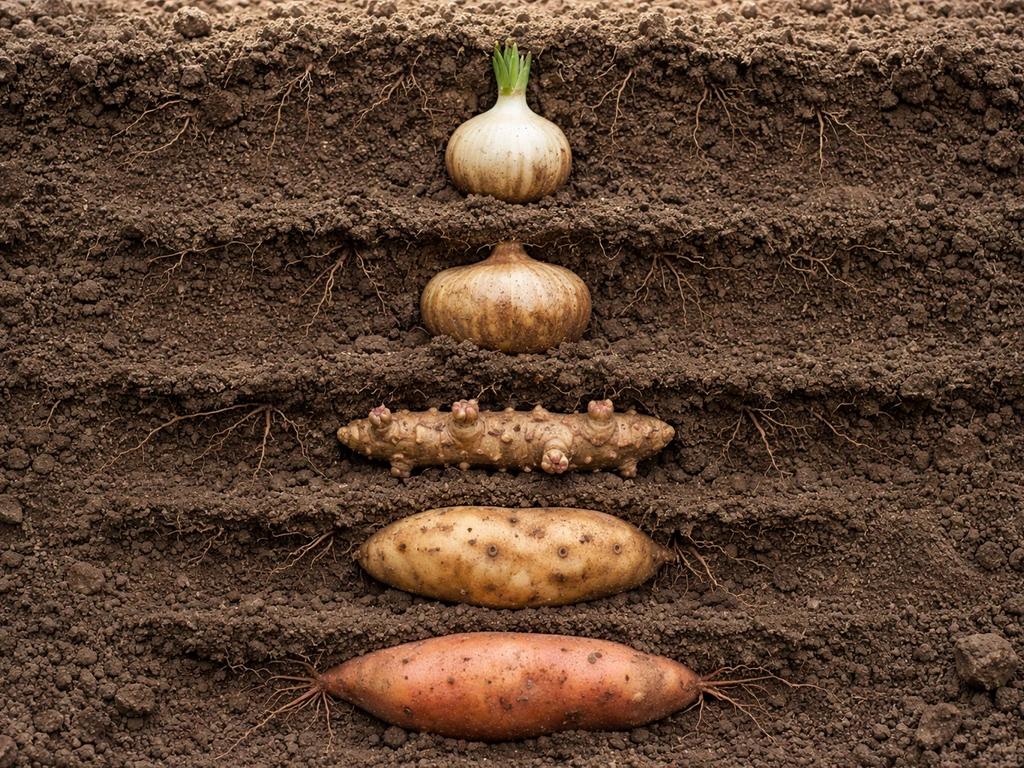
Geophyte comes from Greek roots meaning 'earth plant,' and the definition is precise: a perennial plant whose dormant buds are below the soil surface. That below-ground position is the whole point. It protects the plant's most critical tissue from frost, drought, fire, and grazing animals. When conditions improve, the plant draws on energy stored in its underground organ and re-sprouts from those protected buds. The USDA Forest Service, Merriam-Webster, and major botanical institutions all use this definition consistently.
The confusion around the word 'bulb' is real and worth addressing directly. Gardening retailers, seed catalogs, and even university extension services often use 'bulb' as shorthand for all underground-storage structures. Colorado State University Extension, the Royal Horticultural Society, and the University of Minnesota Extension all acknowledge this, essentially saying: when we say 'bulb,' we mean true bulbs and all bulb-like structures. So if you see 'bulb' on a bag of gladiolus or ginger, know that the plant inside is technically a corm or a rhizome, not a true bulb. Geophyte covers them all without the ambiguity.
The main underground growth forms
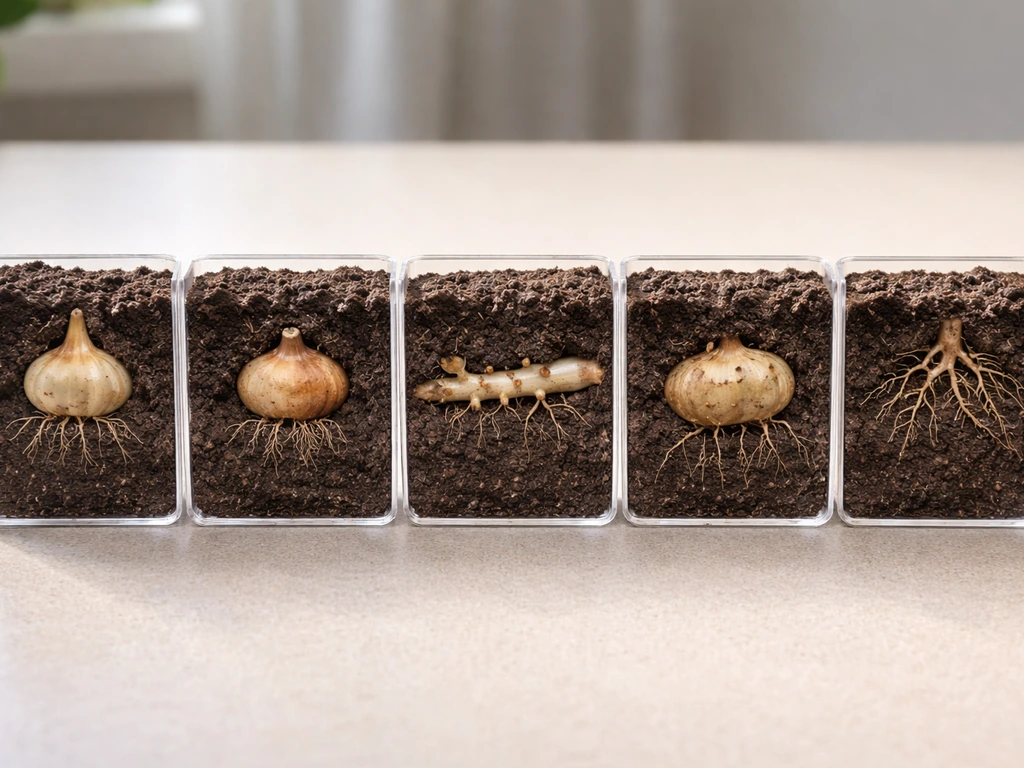
Geophytes are subdivided by what kind of underground organ they produce. Each type has a different structure, stores energy differently, and behaves differently in the soil. Here is how they break down.
True bulbs
A true bulb is essentially a compressed stem surrounded by fleshy scale leaves that store carbohydrates. Slice one open and you can see the embryonic flower already formed inside. Daffodils and tulips are classic examples. The standard planting rule for daffodils is to bury them about three times the height of the bulb, pointy side up, so the emerging shoot has a clear path to the surface.
Corms
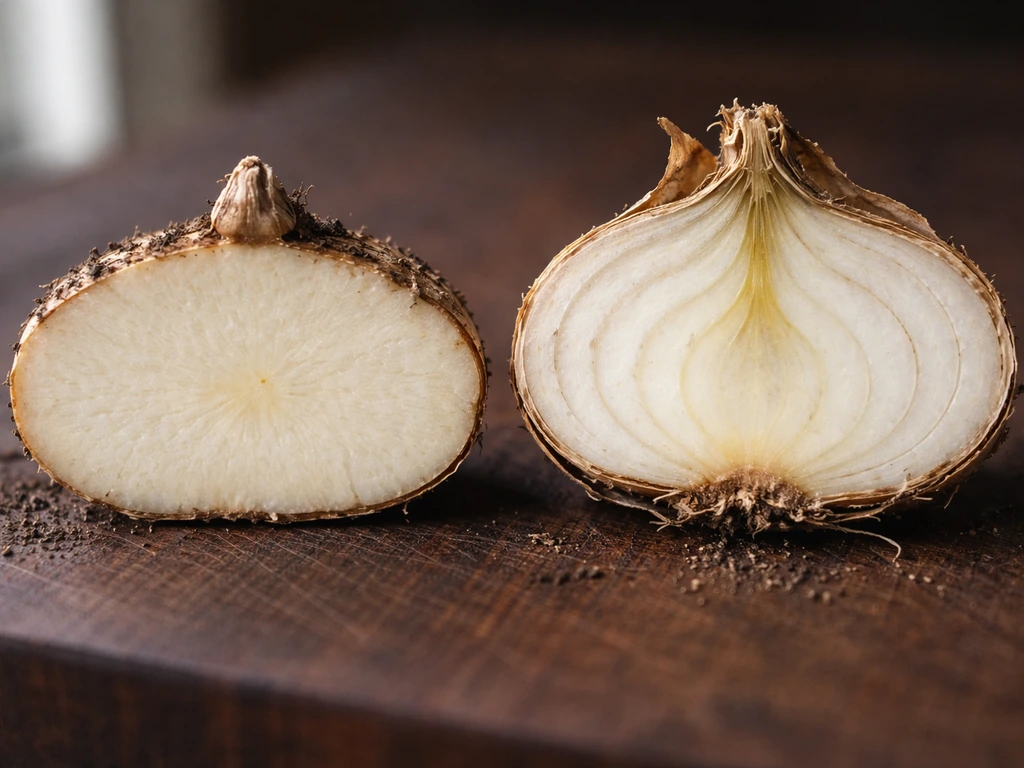
A corm looks like a bulb from the outside but is actually a solid, compressed stem with food reserves and a bud on top. Crocus and gladiolus are the go-to examples. Unlike a bulb, a corm does not have the layered scales when you cut it open. Corms are typically planted about 3 inches deep and 6 inches apart in spring after the last frost has passed.
Rhizomes
A rhizome is the main stem of the plant running horizontally, usually just at or below the soil surface. A rhizome is the main stem of the plant running horizontally, usually at or below the soil surface, and botanically it has nodes and internodes with auxiliary buds from those nodes rhizome is the main stem running horizontally at or below the soil surface. The key distinguishing feature botanically is that rhizomes have nodes and internodes, which roots do not. Auxiliary buds grow from those nodes. Iris and ginger are well-known rhizome growers. Ginger rhizomes are planted 2 to 4 inches deep with the growth buds pointing upward, spaced 6 to 8 inches apart. Iris rhizomes are typically planted shallower, often in a slight mound, so the top of the rhizome is barely covered or even exposed to sun in warmer climates.
Stem tubers
A stem tuber is a thickened underground stem that stores starch and functions as the plant's overwintering stage. Potatoes are the clearest example. The 'eyes' of a potato are the buds. Potato seed pieces go in about 1 to 3 inches deep, spaced 10 to 12 inches apart, ideally 14 to 21 days before the last frost date once soil temperatures are workable but not waterlogged.
Tuberous roots (root tubers)
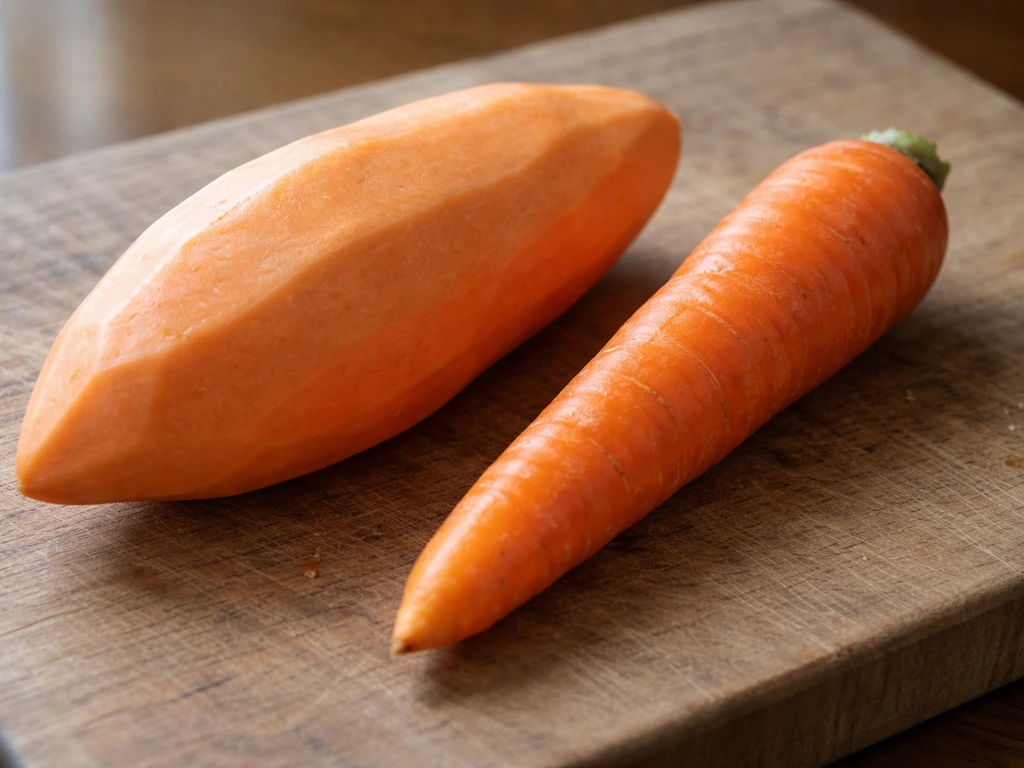
These are fleshy storage roots, not stems. Sweet potatoes, carrots, beets, and cassava are examples. Sweet potato slips are planted 6 to 8 inches deep, spaced 12 to 15 inches apart, and are cold-sensitive, so timing matters. Carrots and beets are true root crops where the taproot swells with stored sugars. The distinction from stem tubers matters because root tubers do not have nodes or eyes in the same way.
| Type | Structure | Key feature | Common examples |
|---|---|---|---|
| True bulb | Compressed stem + scale leaves | Layered; embryonic flower inside | Tulip, daffodil, onion |
| Corm | Solid compressed stem | No layers; single bud on top | Crocus, gladiolus |
| Rhizome | Horizontal stem, at/below surface | Has nodes and internodes | Iris, ginger, turmeric |
| Stem tuber | Thickened underground stem | Has 'eyes' (buds) | Potato, Jerusalem artichoke |
| Tuberous root | Fleshy storage root | No nodes; stores sugars/starches | Sweet potato, cassava, dahlia |
Common plants and how they actually grow underground
Knowing the categories is useful, but it helps to walk through specific plants to see how the underground organ actually works in practice.
- Potato (Solanum tuberosum): Stem tubers form along underground stolons. Hilling soil up around the base of the plant encourages more stolon growth and therefore more tubers. Avoid hoeing too close to the base or you will slice developing tubers.
- Ginger (Zingiber officinale): Grown entirely from rhizome pieces. Plant in loose, loamy, organically rich soil in a warm climate or a container. The rhizome spreads horizontally and the leafy stalks emerge from nodes along it.
- Iris (Iris spp.): Rhizome growers. The rhizome should be near the soil surface, not buried deep. Each division needs at least one healthy bud or growing point to regenerate.
- Crocus (Crocus spp.): Corm growers. Plant in fall for spring bloom. The old corm shrinks as it feeds the plant; a new replacement corm forms on top each season.
- Daffodil (Narcissus spp.): True bulbs. Plant pointy end up at a depth of about three times the bulb's height. The bulb contains everything the plant needs to bloom even before it touches soil.
- Sweet potato (Ipomoea batatas): Storage roots develop from the base of transplanted slips. The plant is warm-season and cold-sensitive; roots can begin forming within about 24 hours of transplanting under ideal conditions.
- Turmeric (Curcuma longa): Rhizome grower closely related to ginger. Requires warm temperatures and moisture during its growing season; the rhizome is harvested after the aerial foliage dies back.
How to identify underground growers in the wild or in your garden
Above ground, geophytes often have a characteristic look: they emerge quickly in early spring or after rain, grow lush for a season, then die back completely. That sudden disappearance is the most reliable field clue. If a plant vanishes entirely and leaves no woody or persistent stem behind, it is very likely a geophyte of some kind storing energy below the surface.
In the garden, you can confirm by carefully digging around the base of the plant after the foliage dies. What you find tells you which type you have. A layered, onion-like structure is a true bulb. A solid rounded mass with a papery tunic and a single top bud is a corm. A horizontal stem with visible nodes is a rhizome. Swollen, knobby underground stems with eyes are stem tubers. Swollen, smooth fleshy roots without nodes or eyes are tuberous roots.
In wild habitats, geophytes tend to cluster in areas with strong seasonal variation, places where a Mediterranean dry summer, a cold temperate winter, or a tropical dry season makes it advantageous to retreat underground. If you are walking through a woodland in early spring and see a flush of low, broad leaves followed by flowers and then nothing by midsummer, you are almost certainly looking at geophytes. Wild garlic, ramps, trilliums, and camas are classic examples from North American woodlands. Do not dig wild plants to identify them; observe the foliage pattern, bloom time, and disappearance timing instead.
What underground-growing plants need to thrive
The single most important environmental factor for geophytes is drainage. These plants evolved to survive dry or cold dormant periods underground, and waterlogged soil during dormancy is one of the fastest ways to kill them. Rhizomes, corms, and bulbs are all susceptible to fungal and bacterial rot when sitting in wet soil for extended periods.
Soil type and structure
Loose, well-draining soil is the baseline requirement. Sandy loam is ideal for most geophytes because it holds enough moisture for active growth but drains quickly enough to prevent rot during dormancy. Heavy clay soils cause problems by holding water around the storage organ. If you are working with clay, amend heavily with compost or grit, and adjust planting depth: on clay soils, plant bulbs and corms 1 to 2 inches shallower than standard guidance. On sandy soils, go 1 to 2 inches deeper so the organ does not dry out. Ginger specifically prefers loose, loamy, organically rich soil.
Moisture and seasonal timing
Most geophytes follow a cycle that mirrors the climate they evolved in. Mediterranean-climate bulbs (tulips, daffodils, crocus) want moisture during their active growing season (fall through spring) and dry conditions during summer dormancy. Tropical rhizomes like ginger and turmeric want consistent moisture and warmth during their growing season and reduced water as they go dormant. Matching your irrigation to the plant's native seasonal rhythm is more important than any particular watering schedule.
Climate zone and temperature
Temperature at planting time matters enormously. Potato seed pieces rot in cold, wet spring soil if you plant too early. Sweet potato slips are cold-sensitive and should not go in the ground until soil temperatures are consistently warm. Daffodil and crocus bulbs need a cold period (vernalization) to bloom properly, which is why they thrive in temperate climates and struggle in frost-free zones without refrigerator pre-chilling. Always connect the plant's underground type to its climate of origin to understand what it actually needs.
Soil pH and nutrients
Most geophytes prefer a slightly acidic to neutral soil pH, roughly 6.0 to 7.0. Nutrient levels affect how well storage organs develop; a soil that is too lean will produce small tubers or corms. Testing your soil every 3 to 5 years and amending based on results gives you a reliable baseline. After planting, a 2 to 3 inch layer of leaf mulch, wood mulch, or clean straw helps regulate soil temperature and moisture around the storage organs.
Quick troubleshooting when things go wrong
If your underground-growing plants are not emerging, are rotting, or are producing weak growth, the cause is almost always one of the following issues. Work through this list before assuming the plant variety is the problem.
- Nothing is coming up: Check planting depth first. Bulbs or corms planted too deep in heavy soil may not have enough energy to push through. Also check timing; many spring-blooming geophytes need cold vernalization and will not emerge without it.
- Storage organ is soft or smells bad: This is rot, almost always caused by poor drainage or planting in cold, wet soil. Dig it up. If the rot is limited, cut back to clean, firm, healthy tissue and let the cut surface dry before replanting in better-draining conditions. If the whole organ is affected, discard it.
- Rhizome failed to sprout: Confirm the rhizome piece has at least one visible bud or growing point. A rhizome section without a bud will not regenerate. Also check that it was not planted too deep; iris rhizomes in particular should be barely below the surface.
- Weak or no flowering despite healthy foliage: Often a nutrient or soil pH issue, or the bulbs have become overcrowded and need dividing. Overcrowded bulbs and corms compete for resources and flower less vigorously.
- Tubers were damaged at harvest or during cultivation: Potato tubers are easy to slice accidentally when hoeing close to plants. Keep cultivation shallow near the base of the plant. At harvest, use a fork rather than a spade and work from outside the plant's drip line inward.
- Plant bought at a store looks fine but fails to establish: Always select firm specimens with no soft spots and no off odor when purchasing bulbs, corms, tubers, or rhizomes. Soft or musty planting material is already compromised and will rot rather than establish.
Underground-growing plants are some of the most ecologically resilient species on the planet precisely because they figured out how to survive unfavorable conditions by hiding their most important tissue below ground. Whether you are trying to grow potatoes in a cool temperate garden, establish ginger in a warm humid climate, or simply understand what you are seeing emerge in a spring woodland, the term geophyte and its subtypes give you a framework that actually maps to what is happening in the soil. If you are curious about plants that grow along the ground surface rather than underground, or about what specific species are common underground growers in different regions, those are closely related questions worth exploring from the same ecological angle. Some examples of plants that grow along the ground include creeping thyme, strawberry, and groundcover sedum plants that grow along the ground examples. Some geophytes also spread along the ground, but you will find true ground-hugging plants by looking at their growth habit and leaf placement plants that grow along the ground surface. Some common examples of plants that grow underground include daffodils and tulips, plus ginger and potatoes.
FAQ
If geophytes are underground plants, why does “bulb” labeling on seed packets confuse my planting?
“Geophyte” describes the life strategy (dormant buds underground), but the planting instructions depend on the specific underground organ. If your plant label says “bulb,” check whether it is truly a bulb, a corm, a rhizome, a stem tuber, or a tuberous root before choosing depth and spacing.
Can I mulch geophytes heavily and still avoid rot?
Yes, but you need a different approach. Mulching helps moderate temperature and moisture, yet rot still happens if the soil stays wet in dormancy. For plants like corms and bulbs, improve drainage first, and only then apply mulch so the organ is protected from temperature swings but not waterlogging.
My geophyte has not emerged yet, how do I tell if it is dormant versus dead?
Often, but not always. If a geophyte goes dormant, you might see no shoots for weeks. Confirm by checking moisture and gently excavating a small corner of soil near the organ after the expected emergence window, instead of repeatedly digging the whole planting area.
Do all geophytes need cold winter exposure to survive and grow?
Do not assume all underground growers need the same winter conditions. Many temperate bulbs require a cold period to bloom, while tropical types like ginger prefer warmth and may struggle outdoors in frost. Match the species to your local climate, not just its underground category.
How do propagation and spreading differ among bulbs, corms, and rhizomes?
Yes, because their underground organs can multiply differently. Bulbs and corms typically increase by forming new storage units, rhizomes spread by nodes, and stem tubers can generate new plants from eyes. If you want predictable multiplication, propagate by the organ-appropriate method rather than the same technique for every category.
Is it safe to transplant geophytes after they start dying back?
You can, but the success rate drops if you disturb the wrong timing. Storage organs are often healthiest when dug after foliage dies back and soil has dried slightly, then replanted promptly. For clumping rhizomes, minimal division and rapid replanting helps prevent drying out and rot.
What planting depth mistakes most often cause geophytes to rot or fail to sprout?
Replanting too deep is a common reason for weak growth, especially in heavy clay. As a rule of thumb from the article guidance, on clay plant bulbs and corms shallower than standard, and on sandy soils plant deeper so the organ does not dry out.
How can I reliably identify whether my plant is a bulb, corm, rhizome, or tuber?
Look at the underground structure after dormancy, not just leaf shape above ground. Bulbs show layered, scale-like tissues, corms are solid with a single top bud, rhizomes show nodes and internodes, stem tubers have eyes, and tuberous roots lack nodes and eyes in the same way.
Should I fertilize more if my geophytes are weak or small?
Feeding can backfire if the soil is waterlogged, and it can also produce soft growth that rots. Prioritize improving drainage and timing, then use balanced nutrition so storage organs develop well. If growth is already weak, test soil because “not enough fertilizer” is less common than “wrong moisture during dormancy.”
Why should I avoid digging wild geophytes to identify them, and what’s the safer alternative?
Yes. Many geophytes are toxic or irritant, and some wild look-alikes are dangerous. Instead of digging wild plants for identification, confirm by observing emergence pattern, bloom timing, and disappearance schedule, then use a local expert or guide before handling or planting anything.