
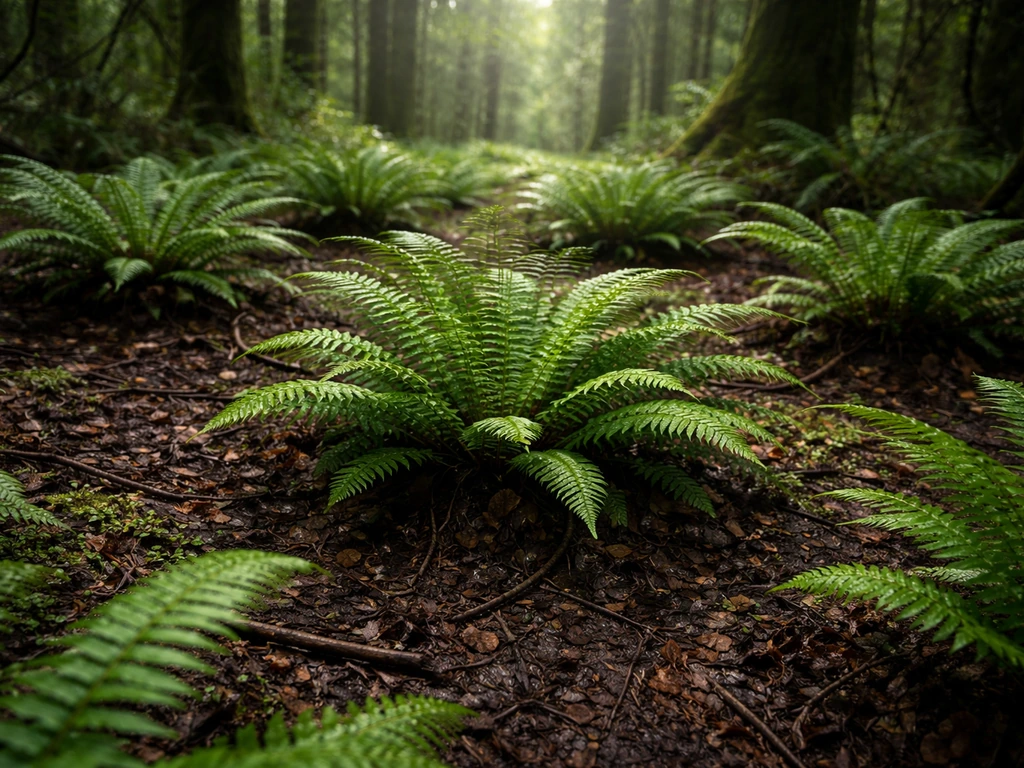
Ferns are most likely to grow in shaded, humid spots with consistently moist, organically rich soil. Most plants tend to grow best in conditions that provide the right mix of light, moisture, and nutrients for their specific needs grow in shaded, humid spots. In the wild, that usually means blank" rel="noopener noreferrer">forest understories, stream banks, wetland edges, and mossy rock faces. In the broadest terms: if you find a place that is cool, damp, and sheltered from direct sun, ferns are probably either already there or could thrive there. The specifics shift depending on the species and your climate zone, but those three conditions (shade, moisture, organic soil) do the most work.
Where Are Fern Plants Most Likely to Grow Nearby

Dr. Marcus Weatherby
7 May 2026
What ferns actually need to grow
Ferns are ancient plants, and their basic requirements haven't changed much in millions of years. They need reliable moisture at the root zone, decent humidity in the air around their fronds, protection from harsh direct sunlight, and a soil that holds water without staying waterlogged. That last part matters more than people think: ferns want consistently damp, not swampy, ground (with a few genuinely wet-footed exceptions like royal fern).
Organic matter is the other big factor. Ferns thrive in soils loaded with decomposing leaf litter, rotting wood, and humus. In natural settings, fern rhizomes and roots actually trap falling debris over time, gradually building their own thin organic layer around themselves. That self-made micro-soil is part of why you find ferns so reliably on rotten logs and under deciduous canopies. Their roots are engineering the exact environment they need.
One common mistake is assuming ferns want deep, heavy shade. South Dakota State University Extension is clear that most ferns don't do well in dense, uniform darkness. What they want is filtered light, the kind you get under a forest canopy or on the shaded side of a building, not a dark basement or a north-facing cave. Dappled shade to partial shade is the sweet spot for the majority of species.
Climate zones where ferns are most common
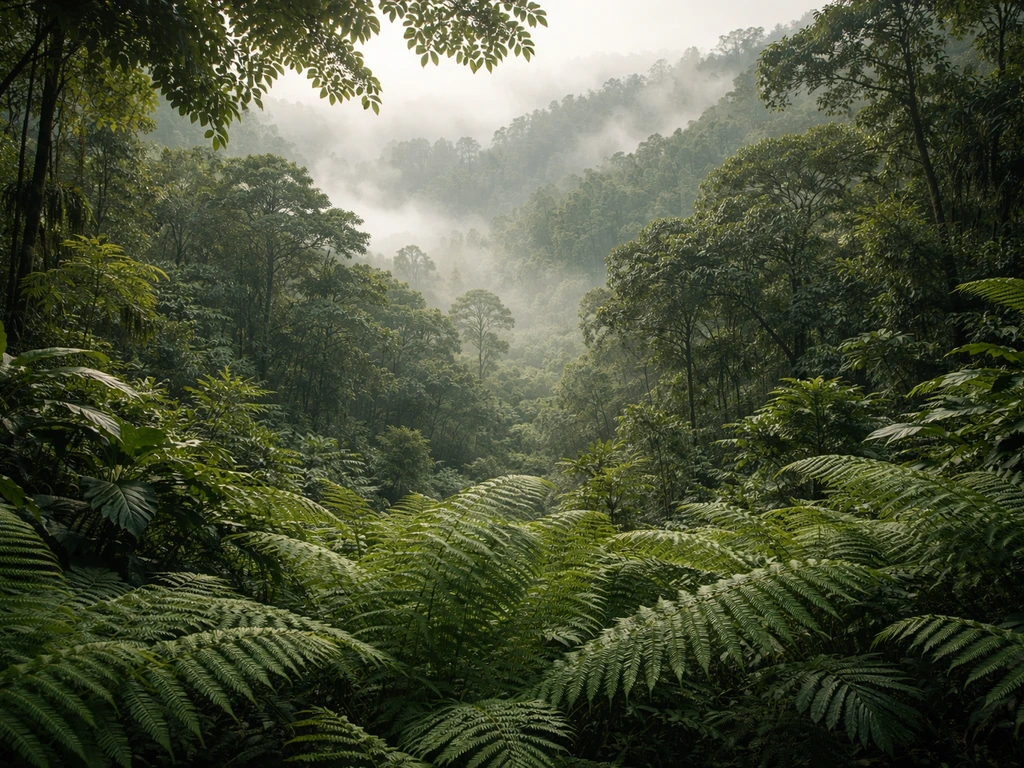
Ferns exist on every continent except Antarctica, but they are not evenly distributed. The single most fern-rich environment on the planet is the tropical rainforest. Britannica notes that in just a few hectares of tropical rainforest, you can encounter more than 100 fern species. Central America, South America, Southeast Asia (including Taiwan), the Brazilian Atlantic Forest, and Madagascar are the global hotspots, particularly for delicate filmy ferns in the family Hymenophyllaceae, which need near-constant atmospheric moisture to survive.
Cloud forests sit just below tropical rainforests in terms of fern richness. These are montane ecosystems where mist and low cloud cover keep humidity perpetually high, and epiphytic ferns (ferns growing on tree bark and branches rather than soil) are especially abundant. If you've ever hiked through a misty mountain forest in Costa Rica, Ecuador, or the highlands of Southeast Asia and seen ferns carpeting every surface, you've seen a cloud forest doing what it does.
In temperate regions, ferns are common across the eastern United States, the Pacific Northwest, much of Europe, Japan, New Zealand, and southern Australia. These zones offer the cool temperatures, seasonal rainfall, and deciduous or mixed forest cover that support reliable fern populations. Temperate ferns tend to be more cold-tolerant and can handle seasonal drought better than their tropical counterparts, though they still cluster around reliable moisture sources. Subtropical zones support a mix of temperate and tropical fern species, depending on elevation and rainfall.
| Climate Zone | Fern Diversity | Typical Species Examples | Key Conditions |
|---|---|---|---|
| Tropical rainforest | Highest (100+ species per few hectares) | Filmy ferns, Polypodiaceae, tree ferns | Year-round warmth, very high humidity, consistent rain |
| Cloud forest (montane tropical) | Very high, especially epiphytes | Hymenophyllaceae, many epiphytic ferns | Persistent mist, cool-to-warm temps, saturated air |
| Temperate deciduous forest | Moderate to high | Royal fern, ostrich fern, maidenhair fern | Cool to warm seasons, seasonal rainfall, leaf-litter soils |
| Pacific Northwest / Atlantic coast | Moderate | Sword fern, bracken fern, wood fern | Cool, wet winters; mild summers; heavy forest shade |
| Subtropical | Moderate | Southern wood fern, cinnamon fern | Warm temps, humid summers, partial dry season |
| Arid / semiarid | Low | Cliff brake, resurrection fern (rock crevices only) | Micro-niches near seeps, shaded rock faces, canyon walls |
Light and moisture: what you're really looking for
When I'm out in the field and want to predict where ferns will show up, I'm scanning for two things almost simultaneously: shade and water. Not just surface water, but signs of consistent soil moisture. North-facing slopes hold moisture longer. Hollows and ravines trap humidity. The ground within 10 to 30 feet of a stream or pond stays reliably damp even in dry spells. These are the places where you slow down and look carefully at ground level.
Humidity matters almost as much as soil moisture. Filmy ferns, which have fronds only one cell thick, can only survive in air that is close to 100% humidity. Most common garden and forest ferns aren't that extreme, but they still suffer when the air dries out. That's why ferns cluster near moving water (which constantly adds moisture to the air), in valleys and gorges, and on the sheltered sides of hills where breezes don't strip the humidity away.
Direct sun is the main killer for most fern species. Species like Osmunda regalis (royal fern) can handle more light when growing in wet soil or at the water's edge, because the constant moisture compensates for the sun's drying effect. But in typical garden or woodland settings, afternoon sun on fern fronds causes leaf scorch and browning quickly.
SDSU Extension says ferns are commonly found where they receive at least some sun during part of the day or dappled sunlight most of the day, and it recommends avoiding hot afternoon sun for best results avoid hot afternoon sun. The closer you get to full sun, the more moisture the plant needs to compensate, and most home gardens can't provide that balance without extra work.
Soil signals that tell you ferns are nearby
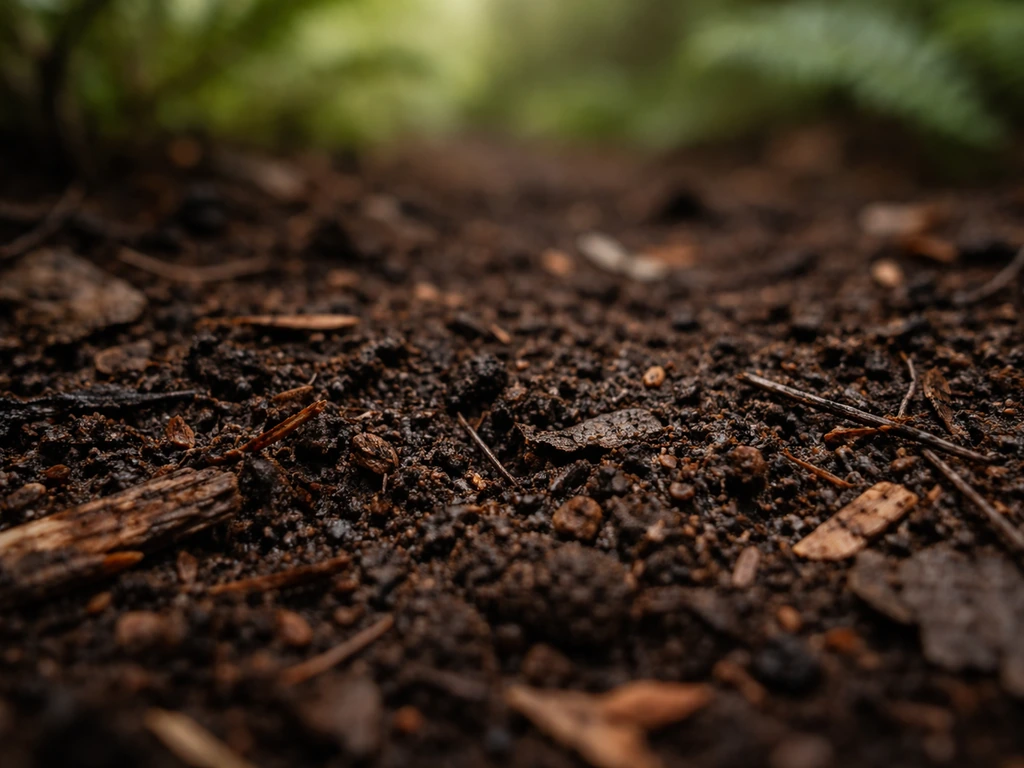
The soil in strong fern habitat has a specific look and feel. It's dark, loose, and smells like forest floor. It's loaded with decomposing organic matter: leaf mold, rotting wood fragments, old root material. It holds moisture but doesn't pool water. When you squeeze a handful, it stays loosely clumped rather than running through your fingers or forming a dense, wet ball.
Most ferns prefer slightly acidic to neutral soil (roughly pH 5.0 to 6.5), which aligns with the natural chemistry of forest soils rich in decomposing oak leaves, pine needles, and sphagnum moss. Some species, like those found in sphagnum bogs and swampy wet woods, are comfortable in even more acidic conditions. UGA Extension explicitly notes ferns growing in wet, acidic soils including swamps, sphagnum bogs, and wet woodlands. If you find a spot with sphagnum moss and standing or slow-moving water nearby, there is likely a fern species adapted to exactly that niche.
Good drainage is still important, even in moist spots. The difference between a fern-friendly soil and a root-rot disaster is whether water moves through slowly rather than sitting stagnant. Sandy loam or loamy soil amended heavily with compost, leaf mold, or pine bark hits that balance well. The RHS recommends improving fern-growing spots with garden compost or leafmould, which mimics what the forest floor does naturally.
Where to look outdoors for wild ferns
Knowing the habitat cues, here are the specific outdoor locations that are most productive when you're actively looking for ferns in the wild or trying to identify fern-friendly zones near your home.
- Stream banks and river floodplains: The classic fern habitat. Royal fern (Osmunda regalis) grows directly along streams, sometimes with its roots in standing water, and floodplain soils stay rich in organic material from seasonal flooding. Check within 20 to 30 feet of any moving water in a shaded area.
- Forest understories: Particularly under deciduous or mixed canopies where leaf litter builds up. Look for ferns around the bases of large trees, along fallen logs, and in slight depressions where moisture collects.
- Wetland margins and swamp edges: Where open water meets dry land, you get the moisture gradient ferns love. Cinnamon ferns, chain ferns, and royal ferns are common in these transitional zones in temperate North America.
- North-facing and east-facing slopes: These get less direct sun and retain soil moisture longer. Even in relatively dry regions, these aspects often harbor fern patches that wouldn't survive on a south-facing slope 20 feet away.
- Mossy rock faces and cliff ledges: Especially where water seeps through cracks. Fern rhizomes wedge into crevices and build their own organic layer from trapped debris. Shaded bluffs and moist ledges near water are productive spots.
- Rotten logs and decaying stumps: Old wood holds moisture like a sponge and provides the organic substrate ferns love. Many species establish first on rotting wood before spreading to surrounding soil.
- Ravines, gorges, and hollows: Topography that traps cool, moist air. These micro-climates can support ferns even in otherwise dry or warm landscapes, because the air movement is reduced and humidity concentrates.
How to find likely fern spots in your own area
Rather than searching randomly, use this checklist when you're assessing your yard, neighborhood, or local natural areas. The more boxes you check, the higher the probability you'll find ferns or that ferns would thrive there.
- Check light levels at ground level mid-morning: Is the area getting filtered or dappled light rather than full sun? Is there overhead tree cover or a structure casting consistent shade?
- Look for moisture indicators: Is there moss growing on soil, rocks, or bark nearby? Moss is one of the best indicators that an area holds enough moisture for ferns. Are there signs of regular moisture like darker soil, standing water nearby, or seepage from a slope?
- Assess proximity to water: Is there a stream, pond, drainage ditch, or wet area within 50 to 100 feet? Even seasonal water movement enriches soil and keeps air humidity higher.
- Smell and feel the soil: Dig a small handful. Does it smell earthy and rich? Is it dark and loose? That organic content is a strong positive signal.
- Check slope direction: North and east-facing areas in the Northern Hemisphere receive less intense sun and stay cooler and damper longer. Mark these on a rough map of your yard.
- Look for existing volunteers: If any ferns, mosses, or moisture-loving plants like hostas or astilbe are already growing without irrigation, that spot can likely support more ferns.
- Identify your climate zone and local forest type: In the eastern US, temperate woodland ferns are widely available and adaptable. In the Pacific Northwest, sword ferns and wood ferns are almost ubiquitous in any shaded spot with decent rain. In the Southeast, match species to your rainfall pattern and heat level.
When your habitat isn't ideal: building fern-friendly conditions
Most home gardens don't have a forest stream running through them. Rubber plants prefer warm, bright, indirect light and grow best in settings similar to tropical climates Most home gardens don't have a forest stream running through them.. That doesn't mean ferns are off the table. The goal is to replicate the three core conditions (consistent moisture, shade, organic soil) close enough that the ferns don't notice what's missing. It's more achievable than it sounds.
Build the soil first
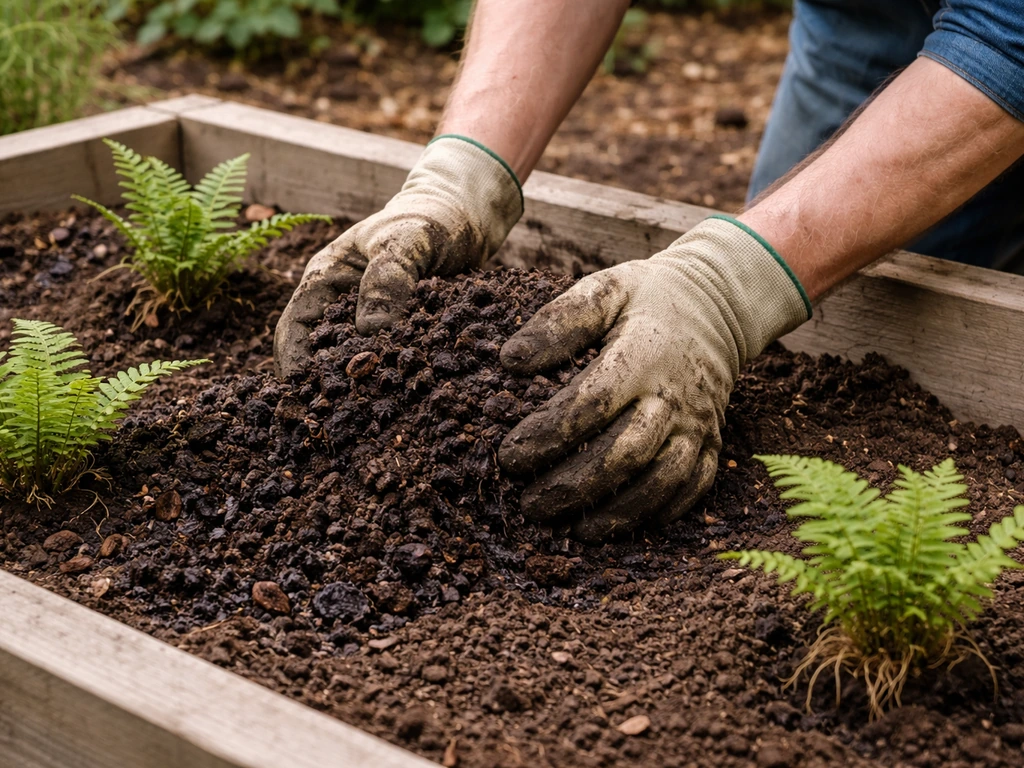
This is where most people underinvest. Dig in generous amounts of leaf mold, garden compost, or well-rotted bark. If you're growing ferns in containers, a mix of peat moss (or coir as a sustainable alternative), vermiculite, and pine bark gives you the moisture retention and drainage balance ferns need. UGA Extension specifically recommends this combination. For ferns that need even more acidic conditions, adding chopped sphagnum moss or oak leaf compost lowers pH and adds the right texture.
Create or use shade
If you don't have tree cover, work with what you have: the north or east side of a house, fence, or wall. Shade cloth rated at 30 to 50% can substitute for tree canopy in a pinch. In my experience, ferns planted on the east side of a building, getting morning sun and afternoon shade, do surprisingly well even in warmer climates.
Keep moisture consistent
A thick organic mulch layer (2 to 3 inches of shredded leaves or bark) does a lot of the work here, slowing evaporation and keeping soil temperatures stable. The RHS recommends topdressing with well-rotted compost or leafmould annually to maintain this effect. In very dry climates or during hot stretches, misting the fronds in the morning helps maintain the humidity ferns want. Drip irrigation or soaker hoses keep soil moisture steady without wetting foliage, which reduces fungal issues.
Match the species to your actual conditions
This is the most important step that most people skip. Not all ferns want the same thing. Royal fern tolerates wet, even waterlogged soil and more sun. Maidenhair fern needs extremely consistent moisture and is sensitive to any drought. Ostrich fern is cold-hardy and spreads aggressively in temperate woodland conditions. Bracken fern is tough and colonizes open, drier sites. UGA Extension is direct about this: your job is to match the site characteristics to the specific fern variety, not force a single species into every garden corner. When you line up what your site actually offers with what a particular fern actually needs, the results are almost automatic.
If you're curious how ferns fit into the bigger picture of non-vascular and spore-reproducing plants, or how they compare to other moisture-loving specialists like carnivorous plants (which tend to occupy even more extreme, nutrient-poor wet habitats), those are related threads worth pulling on once you've got your fern habitat sorted. Insectivorous plants generally grow in habitats that stay consistently wet while offering low-nutrient conditions, which limits competition from other plants carnivorous plants.
Non-vascular plants grow in places where moisture and shelter help them survive, which is why ferns often thrive in shaded, humid habitats. If you’re wondering where do carnivorous plants grow, they typically establish in wet, nutrient-poor habitats where competition is lower. Ferns are often described as the link between those primitive non-vascular plants and the more complex vascular plant world, and their habitat needs reflect that ancient ecological positioning.
FAQ
If a place is shaded and humid, why might ferns still fail to grow there?
Look for filtered light (dappled shade or morning sun with afternoon shade) plus soil that stays consistently damp but drains slowly. In other words, avoid spots that are either deep, unbroken darkness or dry between watering, both reduce spore germination and long-term frond survival.
Can I grow ferns in a north-facing cave or a very dark basement?
Basements, caves, and other “dark all day” areas are usually too low in light intensity for most garden and woodland ferns. Aim for bright shade or filtered daylight, and if the area is indoors, place near an east or north window rather than relying on dim rooms.
How wet is “too wet” for fern plants?
Waterlogged can be worse than damp for many ferns. The key is moisture that is constant but not stagnant, so build in drainage (loamy soil, leaf mold, pine bark, and avoid compacted clay). If the ground squishes and smells sour, that is a rot risk rather than a fern habitat.
Do all ferns need acidic soil?
Most ferns appreciate pH roughly in the 5.0 to 6.5 range, but adaptations vary. If you are trying to grow a bog-adapted fern, use sphagnum-rich mixes and keep water movement gentle. For more general woodland ferns, compost and leaf mold usually handle pH without extreme amendments.
What is the best watering approach for ferns in hot or dry weather?
For outdoor planting, topdress with 2 to 3 inches of shredded leaves or bark to slow evaporation, then keep watering targeted to the root zone. Morning watering or drip irrigation helps maintain humidity and reduces the fungal risk that comes from wet fronds.
Can ferns grow on tree bark or rocks instead of in soil?
Yes, epiphytic ferns can grow without soil by attaching them to bark or mounting on a breathable surface. The tradeoff is that they require more frequent humidity management because they dry out faster than ground-rooted ferns.
What should I do if my yard has heavy clay soil but I want ferns?
If your soil is compacted or heavy clay, you can still make a fern-friendly zone, but it usually takes structure changes. Mix in compost plus leaf mold or pine bark, and avoid walking on the area to prevent compaction that blocks slow drainage and oxygen.
How do I choose the right fern for my specific spot?
Start by matching the fern’s typical moisture and light tolerance to your site. Royal fern and some others tolerate wetter conditions and more light, while maidenhair types often need steadier moisture and higher atmospheric humidity, so those are harder to place in average yards.
What if there is no stream, pond, or wetland edge near my home?
If you do not have a natural stream or consistent dampness, you can still create “nearby” fern conditions by combining shade with organic mulch, adding a moisture-retentive but well-draining potting mix, and using drip or soaker watering. For best results, avoid overhead watering that keeps fronds constantly wet.
What are the most common misidentifications of a fern-friendly location?
Do not rely only on the word “shade.” In warm climates, afternoon sun is the most common cause of browning, even if the location looks shaded overall. Test by observing the spot during the hottest part of the day, then shift to east or north exposures if fronds scorch.