Plants that can grow without drainage include soft rush (Juncus effusus), cattails (Typha spp.), swamp milkweed (Asclepias incarnata), red-osier dogwood (Cornus sericea), buttonbush (Cephalanthus occidentalis), red maple (Acer rubrum), and sedges like Carex comosa. These aren't random picks, they're plants that have evolved specifically in waterlogged, oxygen-poor soils. But which ones actually work for your spot depends on whether you're dealing with standing water year-round, a soggy low spot after rain, heavy clay that just never dries out, or a pond edge. Get that diagnosis right first, and you'll pick the right plant every time.
What Plants Can Grow Without Drainage: Wet Soil Options

Dr. Marcus Weatherby
2 Jun 2026
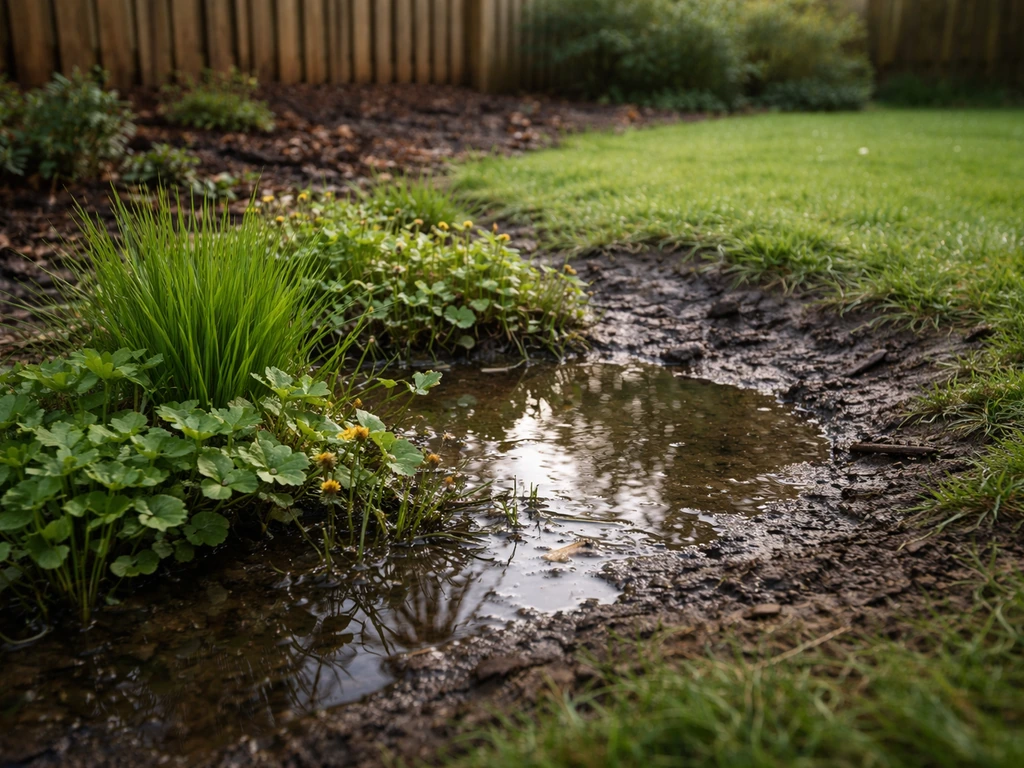
What 'no drainage' actually means in the ground
Before you pick a single plant, you need to know what you're actually dealing with. 'No drainage' covers at least four very different scenarios, and planting the wrong species for the wrong one is the fastest way to lose everything to root rot.
- Standing water: Puddles that sit for days or weeks after rain, or year-round shallow water. These are true wetland conditions.
- Consistently soggy soil: Soil that feels perpetually damp but doesn't have open water sitting on it. Common in low spots and compacted lawns.
- Heavy clay or low-permeability soil: Water drains slowly or barely at all. The soil may dry to concrete in summer but stay waterlogged for weeks in spring.
- Seasonal flooding: Soil that's saturated for part of the year (spring snowmelt or wet season) but dries out significantly in summer.
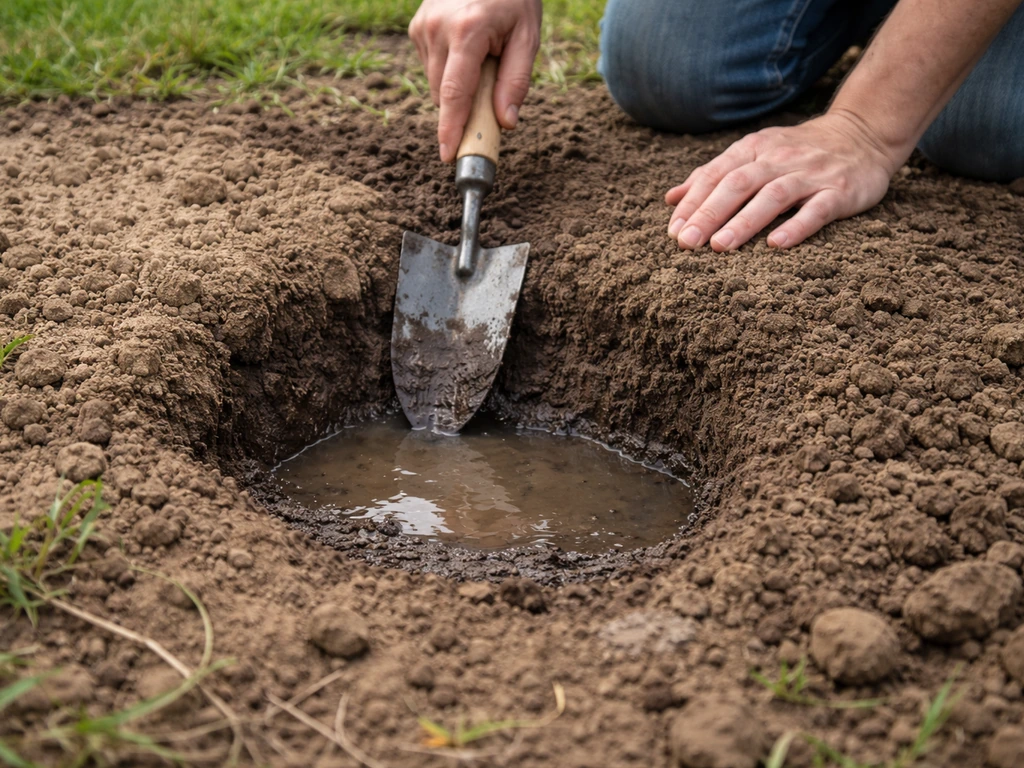
Here's a quick field test you can do today. Dig a hole about 10 inches deep and fill it with water. UMN Extension’s rain-garden viability test digs a wide 10-inch-deep hole, fills it with water, and if it drains within 48 hours the site passes the infiltration test. If the water is gone within 48 hours, you have slow but workable drainage, that's a rain-garden scenario and many native plants will handle it. If water still sits after 48 hours, you have a genuine drainage problem. University of Maryland Extension uses a similar test and notes that water should drain within 8 hours for healthy root growth in most garden plants, so anything slower than that signals you need wet-tolerant species. If the hole stays full for days, you're looking at standing-water or bog conditions.
You can also read your soil itself. If you dig down 12 to 18 inches and see mottled patches, rusty orange, grayish-blue, or pale yellowish streaks mixed into the soil, those are redoximorphic features caused by iron and manganese cycling in and out of reduced (oxygen-starved) conditions. Soil scientists use these as reliable evidence that the site stays saturated for extended periods seasonally. Gray or blue-gray soil throughout usually means chronic saturation. That soil is telling you it behaves more like a wetland than a garden bed, and you should plant it that way.
Match your plant to the wet-soil type and light conditions
Once you know your moisture scenario, the next split is light. Wet habitats range from open sun (pond edges, marshes, rain-garden swales) to deep shade (under tree canopies with poor drainage). Most wet-tolerant plants are sun-lovers because that's where natural wetlands and stream edges tend to be. But there are solid shade options too. The table below maps the main scenarios to help you find your zone before scrolling to the plant lists.
| Moisture Scenario | Light Needed | Examples from Nature | Plant Zone |
|---|---|---|---|
| Standing water / pond edge | Full sun to part shade | Cattail marsh, pond margin | Aquatic/emergent zone |
| Boggy, always wet soil | Full sun to part shade | Bog meadow, wet prairie | Wet/saturated zone |
| Consistently soggy clay, low spots | Sun or shade | Compacted floodplain edges | Seasonal wet zone |
| Slow-draining, 24-48 hr standing water | Full sun preferred | Rain garden, swale | Inundation-tolerant zone |
| Shaded wet area under trees | Part to full shade | Streamside woodland floor | Shaded riparian zone |
One thing Penn State Extension gets right in their rain-garden plant guides is the reminder that there's no one-size-fits-all wet-spot list. Exposure, how long water actually sits, and your region's climate all matter. A plant that thrives at a sunny pond edge in Minnesota will sulk in deep shade under oaks with poor drainage. Use the moisture scenario and light conditions as your two primary filters, then pick from the lists below.
Best plants for standing water and pond-edge or boggy areas
These are true wetland plants. They don't just tolerate waterlogged roots, they need them, or at least perform best with them. Most are native to North American marshes, pond margins, and wet prairies. If you have standing water that persists for weeks or you're right at a pond edge, start here.
Emergent and marsh plants (standing water and saturated soil)
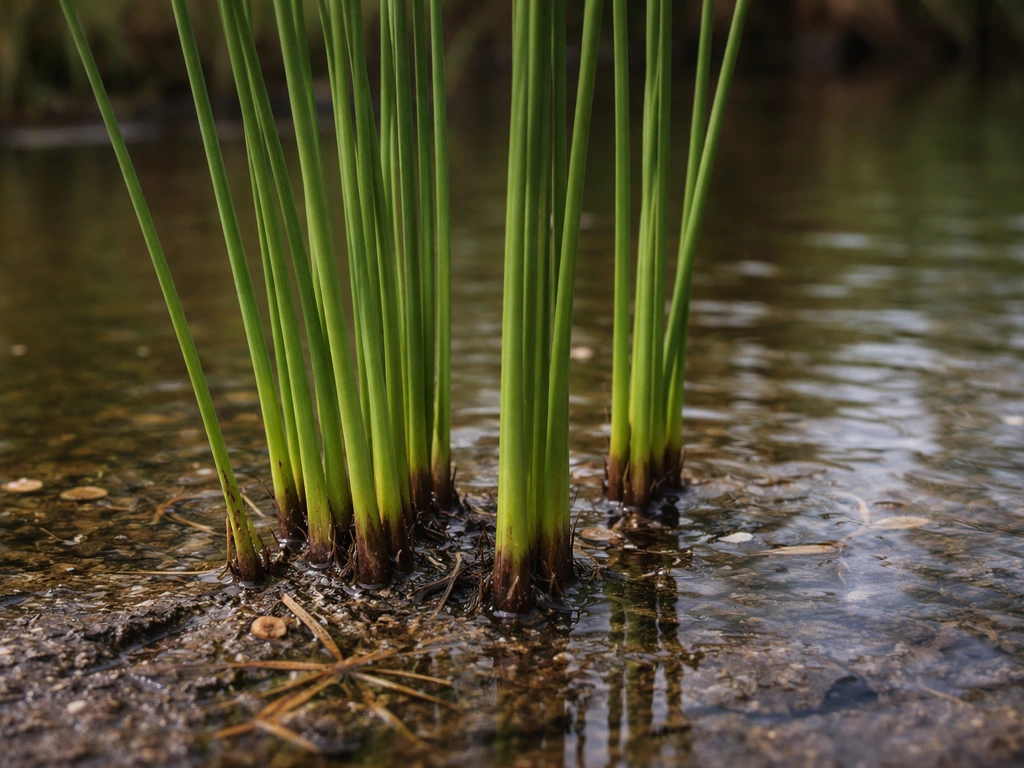
- Soft rush (Juncus effusus): Cylindrical, dark green stems to about 3 feet. Grows right in standing water or saturated edges. Full sun to part shade. Hardy across most of the US and into Canada. UMN Extension lists it in the shallow-water moisture zone for wetland edges.
- Bottlebrush sedge (Carex comosa): A native sedge for pond margins and wet ditches. Tolerates prolonged saturation and partial shade. UMN Extension places it in shallow-water and wet-soil zones. Grows 2 to 4 feet tall.
- Common cattail (Typha latifolia): The classic standing-water plant. Grows in 6 inches to 2 feet of water. Full sun. Spreads aggressively — use where you want a large colony or contain it with barriers.
- Blue flag iris (Iris versicolor): Native to eastern North America. Grows at pond edges and in boggy ground. Handles seasonal flooding well. Full sun to part shade. Heights around 2 to 3 feet.
- Pickerelweed (Pontederia cordata): Grows in shallow water up to 6 inches deep. Striking blue-purple flowers from late spring through fall. Full sun. Great for pond margins in temperate to warm climates.
- Swamp milkweed (Asclepias incarnata): A monarch magnet that genuinely thrives in boggy soils and wet meadows. Full sun. Hardy zones 3 to 6. Reaches 3 to 4 feet. Much better for wet spots than common milkweed.
- Buttonbush (Cephalanthus occidentalis): A native shrub that grows right at the water's edge and into shallow standing water. Full sun to part shade. Hardy zones 5 to 9. Gets to 6 to 12 feet. Penn State Extension names it directly on their wet-site shrub list.
One note on invasives: purple loosestrife (Lythrum salicaria) is spectacular in exactly these wet, sunny conditions, it thrives in marshes, pond edges, and drainage ditches across North America. But it's highly invasive and outcompetes native plants in wetland communities. Do not plant it. Use swamp milkweed, blue flag iris, or pickerelweed instead. Similarly, Japanese knotweed colonizes wet disturbed soils aggressively and should be avoided near any wet area you're trying to restore or garden.
Best plants for consistently soggy clay and low spots
This is the most common 'no drainage' situation in residential gardens, a low corner of the yard that never quite dries out, or clay soil that stays cold and wet through spring and becomes sticky and airless after rain. USU Extension’s gardening guidance for clay soils explains that water can be available to roots in smaller pores, while larger pore spaces drain to make air available for root uptake, and it recommends favoring plants tolerant of waterlogging, compaction, and poor aeration. The plants here need to handle oxygen-poor conditions for extended periods but don't need to live in open water. Most of these are native to floodplain edges, wet meadows, and streamside environments where seasonal saturation is normal.
Perennials and grasses for soggy low spots
- Joe Pye weed (Eutrochium purpureum): Tall (5 to 7 feet), late-summer bloomer native to moist woods and wet meadows. Handles soggy clay remarkably well. Full sun to part shade. Hardy zones 4 to 9.
- Swamp rose mallow (Hibiscus moscheutos): Native to coastal marshes and wet meadows from the eastern US south. Large, showy flowers in pink to white. Grows 4 to 7 feet. Needs full sun. Tolerates saturated clay but needs some warmth — zones 5 to 9.
- Cardinal flower (Lobelia cardinalis): Classic stream-edge and wet meadow plant. Brilliant red flowers. Part sun to part shade. Hardy zones 3 to 9. Grows 2 to 4 feet. Outstanding in shaded wet spots under trees.
- Great blue lobelia (Lobelia siphilitica): A shadier companion to cardinal flower. Blue flowers, equally water-tolerant. Part sun to shade. Hardy zones 4 to 8.
- Marsh marigold (Caltha palustris): One of the earliest spring bloomers. Prefers wet, shaded stream edges and swampy ground. Hardy zones 3 to 7. Goes dormant in summer, so pair it with later-emerging plants.
- Tussock sedge (Carex stricta): Dense, clumping sedge native to marshes and wet meadows. Handles prolonged clay saturation. Part sun to shade. Hardy zones 4 to 8.
- Prairie cord grass (Spartina pectinata): Native to wet prairies and stream banks. Tolerates seasonal flooding and clay soils. Full sun. Hardy zones 4 to 9. Tall and dramatic at 4 to 7 feet.
- Virginia wild rye (Elymus virginicus): A native grass for shaded wet areas and floodplain edges. Handles both shade and wet clay. Hardy zones 3 to 9.
Shrubs and trees for wet clay and low spots
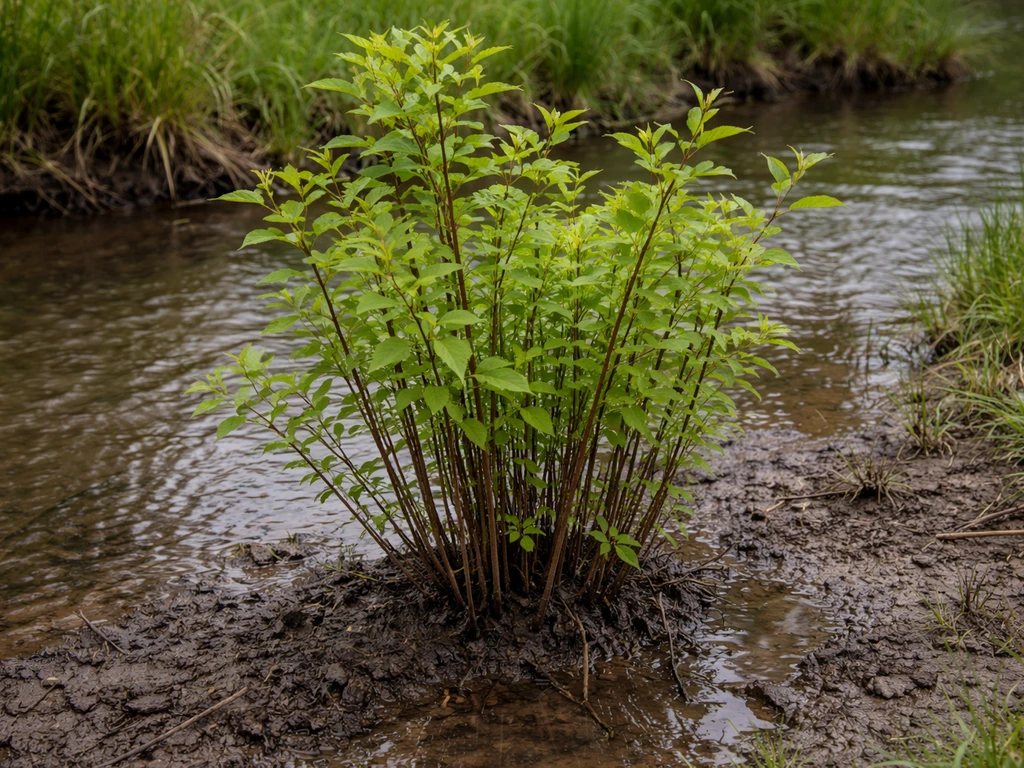
- Red-osier dogwood (Cornus sericea): One of the toughest wet-site shrubs available. Native to stream edges and wet thickets across North America. Hardy zones 2 to 7. Full sun to part shade. Brilliant red winter stems. UMN Extension lists it across wet, mesic, and even drier moisture zones — it's extremely adaptable but peaks in consistently moist conditions.
- Red maple (Acer rubrum): The go-to tree for poorly drained sites in temperate North America. Native to swamp edges and seasonally flooded bottomlands. Hardy zones 3 to 9. Connecticut CAES specifically names it as water-tolerant in their woody ornamental guide. Give it room — it gets large.
- Swamp white oak (Quercus bicolor): A native oak from floodplain edges and wet lowland forests. Handles seasonal flooding better than most oaks. Hardy zones 4 to 8. Full sun.
- Inkberry (Ilex glabra): A native evergreen shrub from wet coastal plains and bog edges. Part shade to full sun. Hardy zones 4 to 9. Slowly spreads by suckers but not aggressively.
- Swamp azalea (Rhododendron viscosum): Native to swampy thickets along the eastern US coast. Part shade. Hardy zones 4 to 9. Fragrant white flowers in early summer. One of the few rhododendron-family plants that genuinely handles wet feet.
- Larch / tamarack (Larix laricina): A deciduous conifer native to northern bogs and wet forests. Hardy zones 2 to 5. Connecticut CAES lists larch as water-tolerant among conifers — a rare trait in that family.
Plants that will fail in wet soil (common root-rot mistakes)
Just as important as knowing what works is knowing what won't. Wet, oxygen-poor soil sets up the perfect conditions for Pythium and Phytophthora, two water-mold pathogens that thrive in saturated soils and spread rapidly through waterlogged root zones. Plants that need well-aerated soil are essentially helpless against them once roots start suffocating. Penn State Extension is blunt about this: very few plants will grow where soil is constantly saturated because completely water-filled soil leaves no room for air.
Here are the most common failures, plants people try to grow in wet spots and lose:
| Plant | Why It Fails in Wet Soil | What to Use Instead |
|---|---|---|
| Crabapple (Malus spp.) | Water-intolerant roots; Phytophthora root rot kills quickly | Red maple, swamp white oak |
| Spruce (Picea spp.) | Shallow roots suffocate; highly susceptible to root rots in saturated soil | Larch (Larix laricina) |
| Hemlock (Tsuga canadensis) | Root systems cannot tolerate prolonged saturation | Swamp azalea for shade shrub layer |
| Yew (Taxus spp.) | Among the most root-rot-prone shrubs in wet soil — dies quickly | Inkberry (Ilex glabra) |
| White pine (Pinus strobus) | Connecticut CAES lists it explicitly as water-intolerant | Larch or swamp white oak |
| Lavender, rosemary, thyme | Mediterranean herbs demand sharp drainage; root rot is near-certain in wet soil | Swamp milkweed for sunny wet spots |
| Most roses | Root rot-prone; cannot handle saturated clay for more than a few days | Swamp rose mallow |
| Hostas (in standing water) | Handle moist shade but not waterlogged roots; tolerate wet soil better than standing water | Cardinal flower or lobelia for true wet shade |
The pattern here is consistent: plants from naturally dry, rocky, or well-drained habitats fail in wet soil because their root physiology has no mechanism to manage oxygen deprivation. Once roots start dying from anoxia, pathogen entry follows fast. There's no amendment you can add to make a yew or spruce work in a genuine wet spot, you have to match the plant to the environment.
Practical steps you can take today
You don't need to overhaul your yard to start planting wet-tolerant species. Here's what to actually do now, in order.
- Run the drainage test first. Dig a hole 10 inches deep, fill it with water, and check it at 24 hours and 48 hours. This tells you your actual scenario: fast-draining (under 8 hours), slow-draining (8 to 48 hours), or near-zero infiltration (water still there at 48 hours). That result determines which plant list above applies to you.
- Map your light. Walk the wet area at midday and note how many hours of direct sun it gets. Under 3 hours is full shade, 3 to 6 is part shade, over 6 is full sun. Wet-tolerant plants still need the right light to thrive.
- Don't till or heavily amend. Digging wet clay just smears and compacts it further. Instead, plant directly into the existing soil using container-grown plants, and mulch around them 2 to 3 inches deep to moderate moisture swings at the surface. Coarse wood chip mulch works well — it doesn't compact like fine mulch.
- Plant in fall or early spring when wet-tolerant species establish best. Most of the plants listed here are dormant in winter and push roots in cool, moist conditions. Avoid planting in mid-summer when even wet-tolerant species face heat stress during root establishment.
- Space plants for spread, not for instant density. Soft rush, cattails, and sedges spread by rhizomes. Give them room — 18 to 24 inches between clumps — or they'll crowd each other out within two seasons.
- Use containers or raised pockets only when the wet spot is temporary or extreme. If you have a spot that floods for weeks and then bakes dry in summer (a challenging combination), a raised planter set into the area lets you control moisture better. But for genuine persistent wet sites, in-ground native plants adapted to those conditions will always outperform container-grown specimens long-term.
- Remove invasive competitors before planting. If purple loosestrife or Japanese knotweed is already colonizing your wet area, deal with it first. Planting natives into an established invasive patch rarely works — the invasives win.
Seasonal care by moisture scenario
For standing-water and pond-edge plantings, the main job after establishment is managing aggressive spreaders (cut back cattails and rushes in late fall before they set seed, or they'll spread everywhere). For boggy and clay low-spot plantings, the key seasonal moment is early spring, when the soil is cold and saturated, this is when root rot pressure is highest in non-adapted plants, and when water-tolerant species are happiest establishing. Don't rush warm-season plants like swamp rose mallow into the ground before soil warms to at least 50°F. For rain-garden-style sites that drain within 24 to 48 hours, summer drought can actually be a stress period, so mulch heavily and pick species that also handle occasional dry spells (red-osier dogwood and swamp milkweed both do).
One more thing worth knowing: wet-tolerant plants are closely related ecologically to plants that grow in other challenging substrate conditions. If you're interested in the broader world of plants adapted to unusual growing conditions, topics like plants which grow without soil and plants which need less water to grow sit at opposite ends of the moisture spectrum but share the same core principle, matching the plant's evolved environment to the conditions you actually have on the ground. Some gardeners also ask which plants grow without soil and instead anchor themselves in places like tree branches. You can also use non-seed propagation, so for instance, some plants are propagated by division rather than growing from seeds name two plants that do not grow from seeds. For example, plants that grow without seeds are another group adapted to unusual ways of reproducing plants which grow without soil.
FAQ
How can I tell if my “no drainage” spot is really standing water versus just soggy soil?
Do the 10-inch hole test, but also watch the surface after rain for at least one season. If water is visible on the ground for days or weeks, treat it as standing-water or bog. If the surface dries but the soil stays saturated below, it is a soggy low spot, which affects plant spacing and expectations (some species tolerate saturation without living in permanent water).
What is the best time to plant wet-tolerant plants?
For saturated clay or boggy lows, aim for early spring when soils are cold and wet. For pond-edge and shallow water species, planting can work in early spring or early fall, but avoid midsummer transplants into actively waterlogged zones unless you can keep them evenly wet until they root in.
Can I use compost or sand to help plants grow in a no-drainage area?
Avoid relying on amendments to “fix” true standing water. In saturated sites, adding material often changes the top layer but leaves the deeper root zone oxygen-starved. Instead, match the plant to the moisture regime, and only use soil improvements to improve planting depth consistency (for example, creating a planting mound) if water flow behavior supports it.
Will these plants survive dry summers in a wet spot?
Often, yes, but it depends on how your spot dries. Rain-garden areas that drain within about 24 to 48 hours typically face temporary drought stress, so mulch and choose species that handle wet-to-drier swings. If water stays all summer, you need true wetland or standing-water plants and should not count on drought tolerance.
Are there wet-tolerant options for full shade that never dry out?
Yes, but they are fewer, and establishment is slower. Deep shade under trees plus poor drainage creates chronic low-oxygen soil. Pick plants adapted to wet understories in your region, and consider thinning nearby roots or reducing leaf litter layers that can trap moisture around young crowns.
Should I plant directly into water or on soil at the pond edge?
Start at the soil line for most species unless you have a stable shallow-water setup. Planting too deep too soon can suffocate roots even in wet-tolerant plants. If you’re using a pond-edge zone, aim for consistent wetting but not fully submerged conditions unless the species is specifically used as a marginal aquatic.
Why do wet-tolerant plants sometimes fail even when they are “the right species”?
Common causes are mismatch of light, planting too shallow so crowns rot, crowding that blocks airflow, and using seedlings that were never hardened off to saturated conditions. Also, if you water or fertilize in a way that encourages lush, weak growth, pathogens can take hold faster in oxygen-poor soil.
What can I do to prevent invasive wetland species from taking over?
Do not introduce known aggressive wetland invaders, and keep existing patches from setting seed. For fast spreaders like cattails and rushes, cut back in late fall before seed. For any planted wetlands, plan on monitoring every spring for volunteer shoots and promptly remove them before they establish large root mats.
Do I need to worry about root rot if I keep the soil “wet but not swampy”?
If the site stays saturated long enough to become oxygen-poor, root rot risk remains. The key is whether air can access the root zone. If your hole test shows slow drainage beyond about 48 hours, treat it like a wetland condition, reduce attempts at non-wet species, and avoid overwatering during already-saturated periods.
How do I manage spread without harming the whole wet planting?
Use species-specific containment. For clumping sedges or rushes, you can periodically cut back and, if needed, use physical edging to limit lateral expansion. For trees and shrubs, maintain a barrier around the crown zone so mowing or trimming does not repeatedly damage the base, which is where rot starts.