The answer is soil. It's the unconsolidated mineral and organic material sitting on the Earth's surface, and it's the primary growth medium for the vast majority of terrestrial plants on the planet. Whether you're looking at a boreal forest, a tallgrass prairie, or a kitchen garden, soil is what anchors roots, delivers water and nutrients, and provides the oxygen plant roots need to function. For example, plants grow in places like forests, grasslands, and gardens what grows where. If you're trying to figure out what grows where, or what you can do to improve what you've already got, understanding soil is the single most useful place to start.
Soil: the valuable material where most terrestrial plants grow

Dr. Marcus Weatherby
22 May 2026
What the clue is pointing to: soil
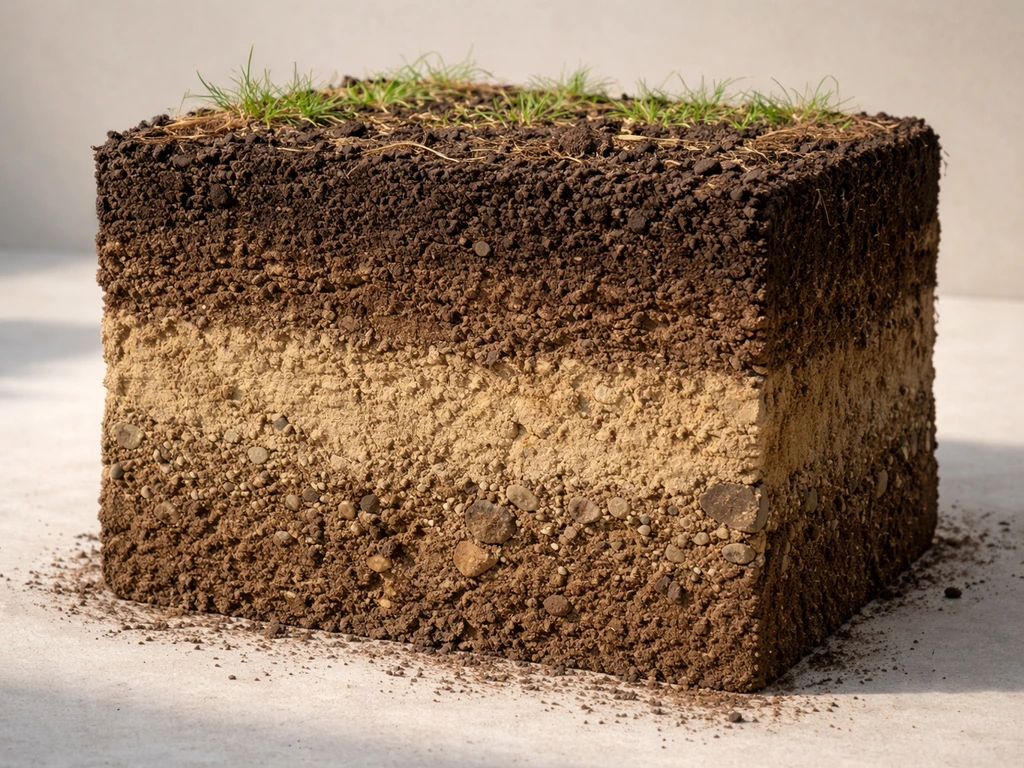
The USDA defines soil as "the unconsolidated mineral or organic material on the immediate surface of the Earth that serves as a natural medium for the growth of land plants. " That's the formal version, but in practice, soil is a living system built up over time by the interaction of climate, parent rock material, topography, and the organisms (from earthworms to fungi to bacteria) that live in it. It's not just dirt.
A healthy soil in good condition is roughly 45% mineral matter, 5% organic matter, 25% air, and 25% water. That balance is what makes plant life possible at scale. When you're searching for what grows in a particular environment, you're really asking about what that environment's soil can support.
Soil also has layers, called horizons, and those layers matter. The surface horizon is richest in organic matter and biological activity. Deeper horizons differ significantly in chemistry, texture, and nutrient content, which is why sampling depth matters when you're trying to understand what's actually happening in your ground. Most plant roots operate primarily in the top 12 to 24 inches, but some go much deeper, and soil conditions at every level influence what a plant can access.
Why soil is everything for most terrestrial plants
Four things drive plant growth from the soil up: nutrients, water, physical support, and air. Roots need oxygen just as much as the above-ground parts need carbon dioxide, and when soil pores fill with water and stay saturated, roots suffocate. That's why waterlogged soil is just as much of a growth limiter as drought.
Sandy soils, on the other hand, drain so fast that water and dissolved nutrients move through before roots can grab them, which means plants in sandy ground often need more frequent irrigation and feeding. Clay soils hold nutrients and water well but can become so dense that roots can't penetrate and air can't move through. The sweet spot, loam, is why gardeners hear over and over that loamy soil is best for just about everything.
It's true: loam balances drainage, aeration, water retention, and nutrient-holding capacity better than any extreme texture.
Soil compaction is worth calling out as its own problem because it's easy to create and easy to overlook. When pore space collapses from foot traffic, machinery, or repeated tillage, roots can't grow through the resistance, water can't infiltrate, and air movement shuts down. University of Minnesota research shows compacted soils lead directly to stunted, drought-stressed plants even in years with normal rainfall, because reduced root volume limits how much water the plant can actually access. Colorado State Extension goes further, calling compaction the primary factor limiting plant growth in landscape soils. If you've got struggling plants and no obvious pest or disease problem, compaction is worth checking before anything else.
How to quickly figure out what kind of soil you have
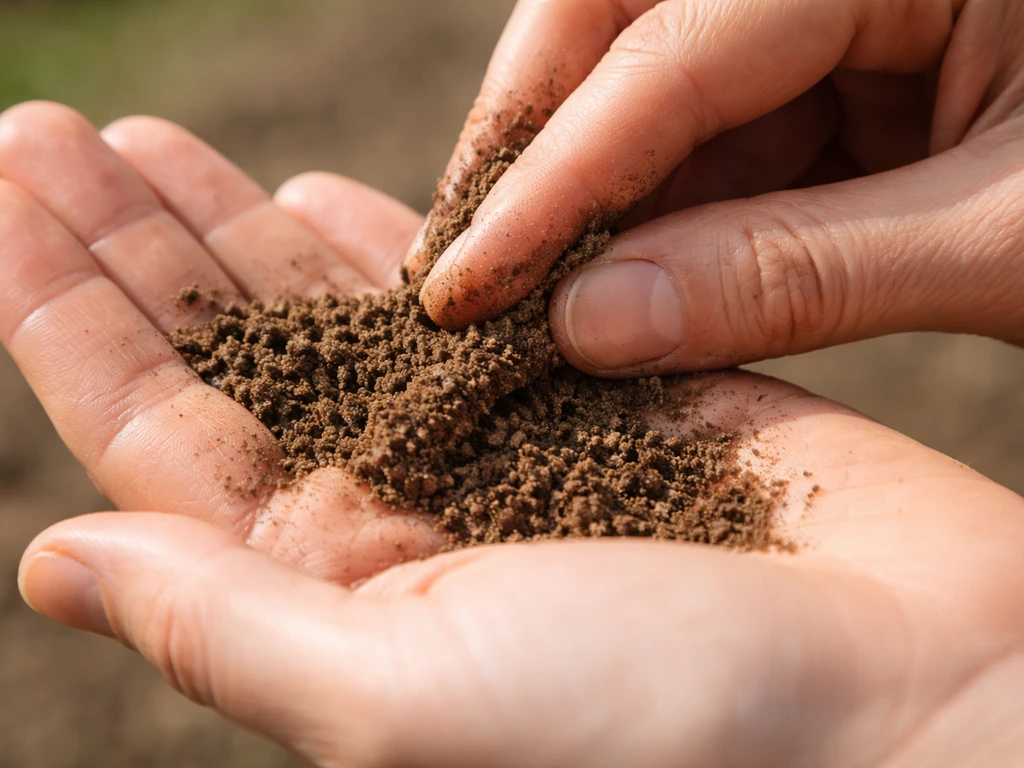
The feel test (works right now, no equipment needed)
The USDA's texture-by-feel method is genuinely useful and takes about two minutes. Take a small handful of moist soil (not soaking wet) and work it in your palm. Try to form a ribbon by squeezing it between your thumb and index finger. Sandy soil won't form any ribbon; it feels gritty and falls apart.
Silty soil feels smooth and slick, almost like wet flour, and forms a short ribbon. Clay soil forms a long, slick ribbon that holds its shape. A loam will feel intermediate: slightly gritty, slightly smooth, forming a short ribbon before it breaks. This won't give you a lab-precise texture class, but it tells you enough to make a real decision about what amendments you need or what plants are likely to thrive.
The jar test (takes a day, gives proportions)
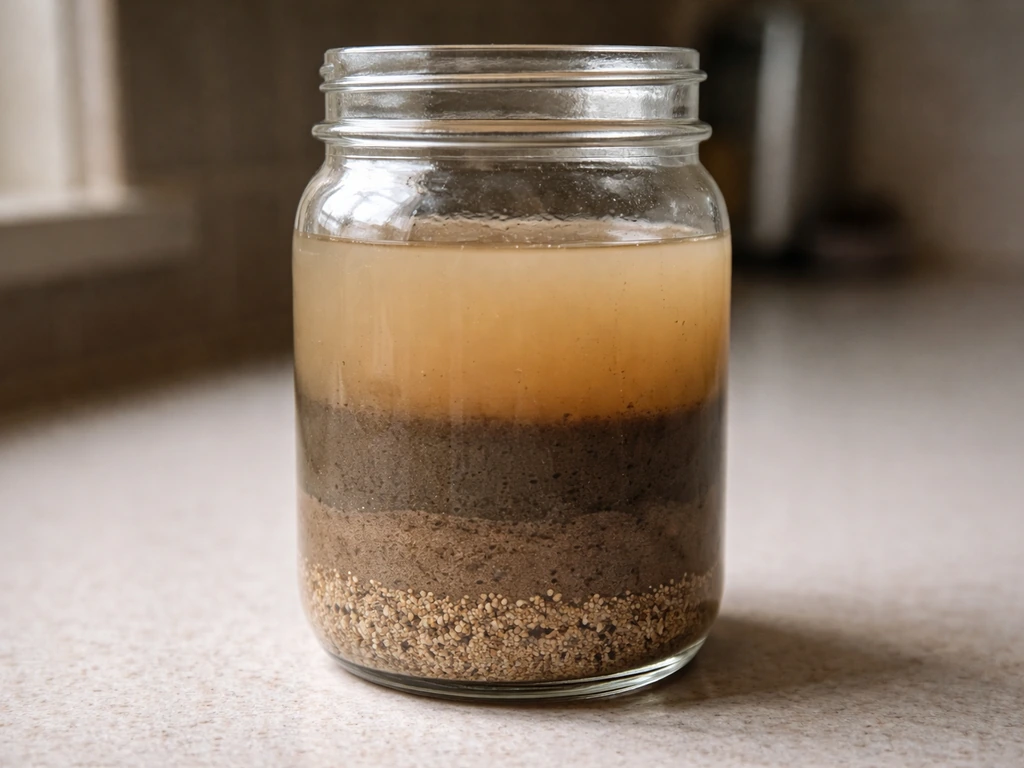
If you want actual numbers for sand, silt, and clay content, the jar test is the classic home method, recommended by Clemson, Montana State, and OSU Extension. Fill a clear jar about one-third with soil, top it up with water and a teaspoon of dish soap or table salt to help particles separate, shake it hard for a few minutes, then let it sit undisturbed for 24 to 48 hours.
Sand settles first (in a minute or two), silt next (in an hour or two), and clay last (and it may stay cloudy for a day or more). Measure each layer's depth as a proportion of the total settled soil, then plot those percentages on a soil texture triangle to identify your texture class. It's not perfectly precise, but it's accurate enough to tell you whether you're working with sandy loam versus clay loam, which changes what you do next.
The drainage (percolation) test
Dig a hole about 12 inches deep and 12 inches wide, fill it with water, and let it drain completely. Then fill it again and watch how fast the water drops. Good drainage means it drops roughly 1 to 2 inches per hour. Faster than that and you have sandy or gravelly soil that will struggle to hold water and nutrients. Slower than that (or still standing after several hours) and you have a drainage problem, usually from clay-heavy texture, compaction, or an impermeable hardpan layer below the surface. This test tells you immediately whether raised beds, drainage amendments, or plant selection changes are the right next move.
The soil properties that actually control plant growth
| Property | What it controls | Ideal range for most plants | Problem signs |
|---|---|---|---|
| pH | Nutrient availability, microbial activity | 6.2–6.8 for most vegetables and flowers | Yellowing leaves, poor growth despite fertilizing |
| Organic matter | Water retention, nutrient cycling, soil structure | At least 2%; 5–10% for beds | Crusting, poor drainage, low fertility |
| Texture (sand/silt/clay) | Water-holding, drainage, aeration, nutrient retention | Loam (balanced mix) | Waterlogging (clay) or rapid drying (sand) |
| Compaction/pore space | Root penetration, air and water movement | ~50% pore space, half air half water | Stunted roots, standing water, drought stress |
| Nutrient levels | Plant growth and yield | Varies by crop; test for N, P, K, micronutrients | Slow growth, discoloration, tip burn |
| Drainage | Oxygen availability to roots | 1–2 inches/hour percolation | Root rot, anaerobic smell, wilting in wet soil |
pH deserves special attention because it's sometimes called the "master variable" in soil science, and for good reason. It doesn't just affect whether a nutrient is present, it controls whether roots can actually absorb it.
At pH above 7, micronutrients like boron become unavailable even if they're physically in the soil. Below 5. 5, aluminum and manganese become soluble enough to reach toxic levels. Most vegetables do best between 6.
0 and 6. 8. Lawns prefer around 6. 0.
Acid-loving plants like blueberries, azaleas, and rhododendrons want pH below 6. 0 and ideally between 4. 5 and 5. 5.
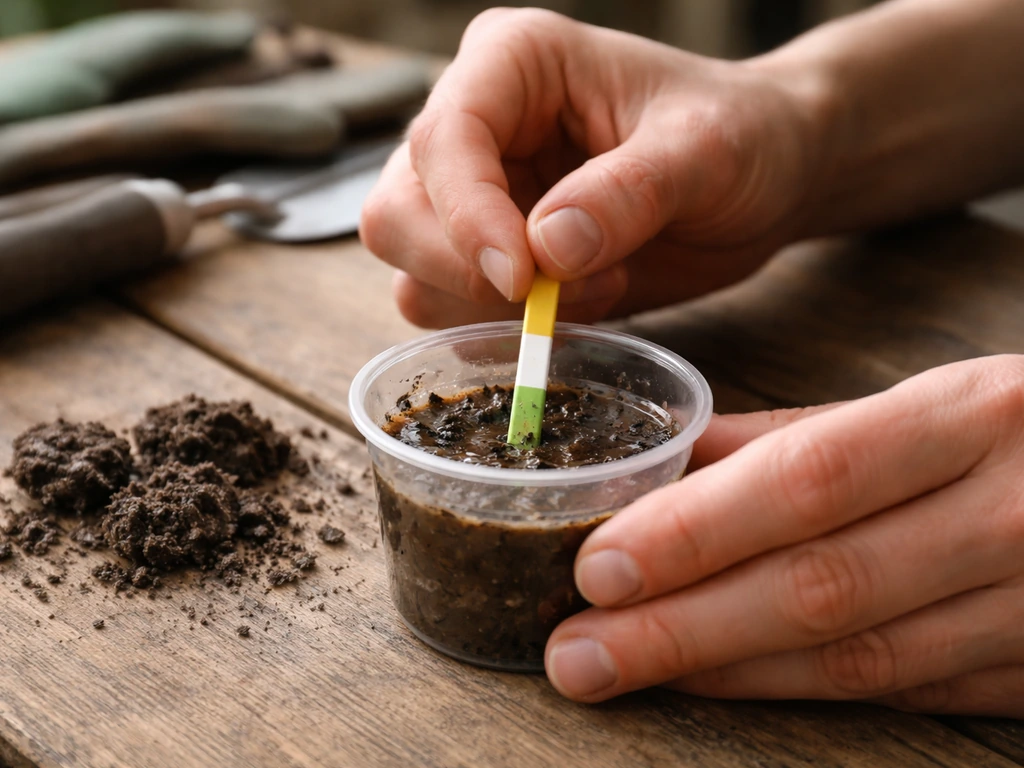
A home test kit or a cooperative extension lab test (usually under $20) will tell you where you stand. Penn State Extension explains how to determine soil pH and notes that results can be obtained through lab testing, including extension-connected services, rather than relying only on DIY methods.
How to improve your soil right now
Add organic matter first
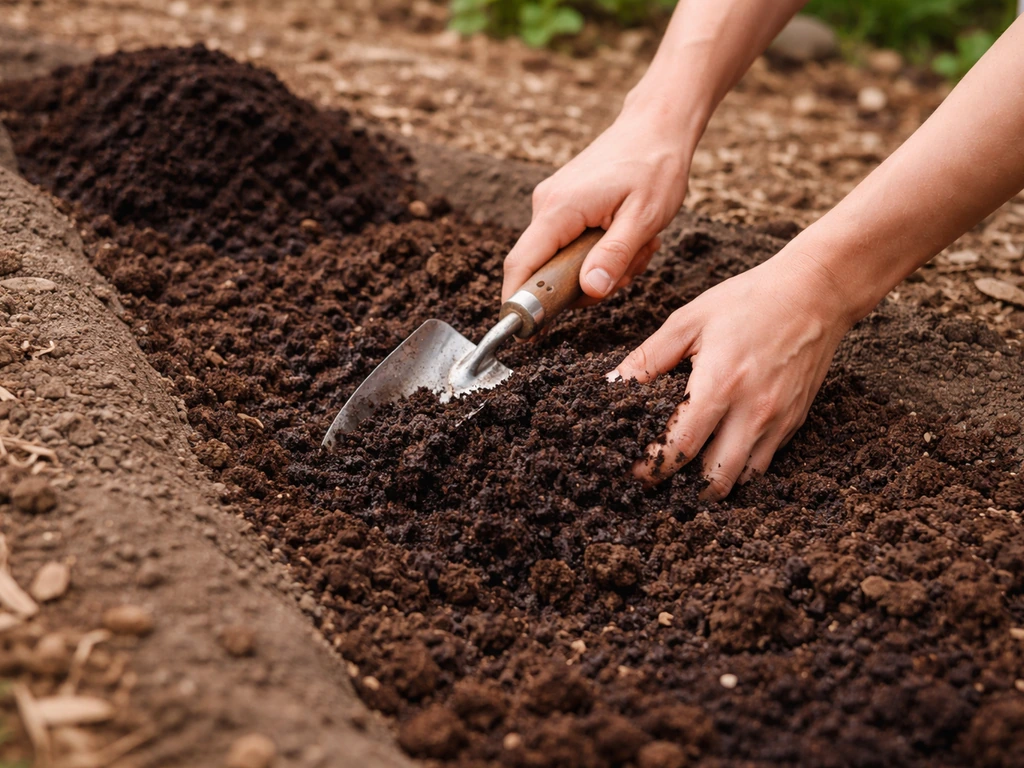
If there's one thing that improves almost every soil problem, it's adding organic matter. Compost, aged manure, leaf mold, and wood chip mulch all work. OSU Extension is direct about it: organic matter improves soil structure, creates stable pore spaces for water, air, and roots, and supports the biological activity that drives nutrient cycling. UMD Extension sets the benchmark at a minimum of 2% organic matter for general landscape plants and 5% to 10% for vegetable and flower beds.
For raised beds, aim for 25% to 50% organic matter by volume. Work 2 to 4 inches of compost into the top 6 to 8 inches of soil before planting, or apply it as a top dressing if plants are already in the ground. It won't hurt anything and will almost always help.
Adjust pH before you plant
To raise pH (make soil less acidic), apply ground limestone. Finely ground lime reacts faster than coarser pellets, and the change happens over weeks to months, not overnight. To lower pH (make soil more acidic), elemental sulfur is the standard approach. Soil microbes oxidize it to sulfuric acid, gradually dropping the pH. Oklahoma State and Iowa State Extension both emphasize the same thing: go slowly, test again after a season, and don't double the dose expecting double the effect. It doesn't work that way, and overshooting pH in either direction causes its own problems. If you're growing blueberries or other acid-lovers in neutral or alkaline soil, start acidifying months before planting.
Fix compaction without over-tilling
The instinct with compacted soil is to till it heavily, but University of Minnesota Extension research shows repeated tillage actually leads to more compaction over time, plus reduced water-holding capacity and erosion. A better approach is to loosen compacted areas once (a broadfork or garden fork works well for small areas), incorporate organic matter, then stop tilling routinely. Avoid working soil when it's wet, because that's when compaction happens fastest. In clay-heavy soil, adding coarse sand or perlite alongside compost helps open up pore structure. In raised beds, mixing roughly two-thirds topsoil with one-third compost gives you a working loamy texture without the long-term compaction cycle of native clay.
Compost vs. fertilizer: which one to use
Compost and fertilizer do different things. Compost feeds the soil biology, builds structure, improves water retention, and slowly releases nutrients over months and years. Fertilizer delivers specific nutrients (nitrogen, phosphorus, potassium, or micronutrients) quickly and directly to plant roots. If your soil is biologically depleted or structurally poor, start with compost. If you have a specific, test-confirmed nutrient deficiency and need faster results, use a targeted fertilizer. In practice, most garden situations benefit from both: compost as a baseline amendment every season, and fertilizer as a supplement when a soil test shows a specific shortfall.
Matching plants to soil conditions
The most reliable way to get plants to thrive is to match them to what your soil already is, rather than fight the soil to meet some ideal. This is exactly the kind of thinking that drives plant distribution in the wild: species evolve to fit their native soil conditions, and transplanting them into something dramatically different usually ends in failure.
| Soil type | Conditions it creates | Plants that naturally thrive |
|---|---|---|
| Sandy, low organic matter | Fast drainage, low water retention, low nutrients | Lavender, thyme, native grasses, cacti, blueberries (with pH adjustment) |
| Clay-heavy | Slow drainage, high nutrient retention, compaction risk | Willows, sedges, Joe-Pye weed, asters, many native prairie plants |
| Loam, moderate organic matter | Balanced drainage and retention, good aeration | Most vegetables, roses, fruit trees, most ornamental perennials |
| Acidic (pH 4.5–5.5) | High iron/manganese, low calcium/phosphorus availability | Blueberries, azaleas, rhododendrons, mountain laurel, ferns |
| Alkaline (pH 7.5+) | Low micronutrient availability, high calcium | Lilacs, Russian sage, yarrow, buffalo grass, many western native plants |
| High organic matter, moist | Slow drainage, rich nutrients, cool soil temps | Hostas, astilbe, ferns, woodland wildflowers, moisture-loving vegetables |
If you're working from scratch with an unknown soil, the fastest route to success is to test texture and pH, then choose plants with a natural tolerance for those conditions while adding compost to gradually build soil health. You'll have far fewer problems than if you try to grow plants with requirements far outside what your local soil can support without constant intervention.
How seasons and location change what your soil can do
Soil doesn't behave the same year-round, and this is one of the most practically useful things to understand when you're thinking about what grows where and when. In spring, cold soil slows microbial activity, which means nutrient cycling slows down even if your soil chemistry is technically fine. Nitrogen especially becomes less available in cold soils. This is why early spring planting into cold, wet ground often disappoints. OSU Extension even names a "cold soil syndrome" associated with no-till gardens in early spring, though it eases quickly once soils warm. For most cool-season vegetables, waiting until soil hits 50°F (10°C) is more important than waiting for the last frost date.
In summer, sandy and loamy soils dry out fast, especially in hot, windy locations or during drought. Utah State Extension research confirms that soils higher in silt, clay, and organic matter hold significantly more water than sandy or compacted soils, which means summer watering frequency should be calibrated to your texture, not just a generic schedule. A clay loam may need watering half as often as a sandy loam under the same conditions.
Freezing and thawing cycles in winter and early spring physically disrupt soil structure. In clay-heavy soils, freeze-thaw action can actually improve tilth by breaking apart clods. But it also heaves shallow-rooted plants out of the ground and can create surface crusting when ice melts and then soil dries rapidly. Penn State Extension notes that soil crusting, which forms a thin hard skin plus a washed-in layer up to about an inch deep, significantly reduces water infiltration and can prevent seedling emergence. Mulching heavily before winter and again in early spring is the most practical way to buffer these temperature swings and protect soil structure.
In rainy seasons or wet climates, drainage becomes the dominant limiting factor. When all soil pore space fills with water, roots run out of oxygen within hours. This is why plants described as "drought-tolerant" are often also "well-drained soil" plants: they've adapted to soils that don't stay wet. Conversely, plants native to floodplains, bogs, or riparian zones (willows, cattails, cardinal flower, sedges) have adaptations that let them tolerate or even require saturated soil conditions that would kill most garden plants.
Understanding your local rainfall pattern and how your soil drains under those conditions is the fastest way to predict what will actually survive there year after year. Some places have conditions that effectively rule out plant growth altogether, such as extreme dryness, heavy salinity, or very shallow or impermeable soils places where plants cannot grow.
The same logic that explains why blueberries grow natively in acidic, well-drained sandy soils of the eastern US, or why prairie grasses dominate deep clay-rich mollisols of the Great Plains, applies directly to your garden. Soil type, season, moisture, and location combine to define the actual growing window and plant community for any given place. The sites where plants cannot grow at all (pure sand dunes, salt flats, frozen permafrost, bare rock) are places where soil as a functional medium is absent or so extreme it can't support the root, water, nutrient, and oxygen balance plants need. Understanding what you have, and what you can reasonably change, puts you well ahead of most gardeners trying to figure out why something isn't working.
FAQ
If my soil feels like clay, does that automatically mean it is bad for plants?
Start by distinguishing texture versus structure. Texture (sand, silt, clay) is relatively stable, while structure and compaction can change quickly. If plants struggle, soil is often too dense (structure/compaction) even when texture tests look “okay,” so check infiltration and root penetration in addition to feel or jar tests.
What should I test first if I want to find out why nothing is growing well?
For most home gardening, measure pH and drainage, then check texture. You can skip repeated jar tests, since texture changes slowly, but you should recheck pH after applying limestone or sulfur because the response takes weeks to months. If yields still lag, then consider a nutrient panel rather than guessing.
Should I add compost or fertilizer first?
If you apply organic matter and fertilizer together, add compost first and use fertilizer to target a known shortfall. Compost improves soil biology and structure, but it may release nutrients slowly, so over-relying on compost alone can leave a crop short during fast growth stages.
Can too much compost harm plants?
Yes, but match compost quality to the situation. Fresh manure, aggressive wood waste, or compost with high “unfinished” content can temporarily tie up nitrogen. If you have nutrient-poor, sandy, or heavily degraded soil, prefer well-finished compost and keep initial rates moderate, then increase as plants establish.
Why does my soil test show nutrients, but my plants still look deficient?
If the soil test shows pH outside the target range, correct pH before major nutrient changes. Many “deficiencies” are actually availability problems, for example micronutrients becoming unavailable in higher pH soils. After you adjust pH, retest in a season before applying large fertilizer doses.
What if my drainage test is slow even after adding compost?
Avoid loosening too deeply if you have an impermeable layer or hardpan. If drainage tests show very slow water movement even after adding compost, you may need a targeted fix like creating raised beds, improving drainage pathways, or deep mechanical loosening in a controlled zone rather than repeat tilling across the whole area.
How can I tell if poor drainage is from compacted topsoil versus deeper clay/hardpan?
Not necessarily. Drainage symptoms can come from compaction, a perched water table, or a dense clay layer below the surface. Perform the 12-inch drainage test at the plant area, then compare spots with different ground cover or traffic patterns to identify whether the problem is local and structural.
Does adding organic matter always fix waterlogged soil?
If soil is saturated for long periods, adding amendments that hold water, like more fine clay or some heavy peat mixes, can worsen oxygen stress. In wet sites, prioritize drainage improvements and raised beds, then use organic matter to support tilth without keeping the root zone continuously waterlogged.
My plants wilt even though the soil is wet, what could be going on?
Yes, overwatering can mimic “nutrient problems” because roots cannot access oxygen, which reduces uptake. Check whether wilting happens after irrigation or during consistently wet conditions, then adjust watering to match texture and drainage rate rather than increasing fertilizer.
Can I plant earlier in spring by warming the soil, and will it always help?
Treat early spring delays as normal for cold soil rather than as a planting failure. Many cool-season crops will do poorly if the ground stays below about 50°F (10°C). Consider using row cover or black plastic to warm the top layer, but avoid warming so aggressively that you overheat plants.
If compaction is suspected, should I till more often to improve it?
Yes, but change one variable at a time. If you suspect compaction, test infiltration and avoid frequent tilling while you improve structure with compost and limit traffic. Then observe root growth and watering needs over weeks, because repeated disturbance can make compaction worse over time.
What if my soil pH is fine but growth is still poor, could it be salinity?
Not always. Salt buildup is a different constraint than pH and often shows up as poor growth plus leaf edge burn or stunted roots despite “okay” pH. If you suspect salinity (near roads, repeated fertilizer buildup, or drought with salts), consider a soil salinity or electrical conductivity test and leach cautiously based on local guidance.
How do I manage pH changes over the season for acid-loving plants?
For blueberries and other acid-lovers, timing matters. Apply sulfur months ahead if you need pH reduction, then plan to keep pH stable with periodic monitoring. Also ensure good drainage, because acidic soils that stay waterlogged can still kill roots even when pH is correct.