The upper layer of earth in which plants grow is called topsoil, and it typically extends down about 30 cm (roughly 12 inches) from the surface. It is the biologically active, nutrient-rich zone where roots feed, microbes work, and water gets stored between rains. Everything below it, the subsoil and parent material, is a largely inert framework that topsoil sits on top of. If you want to grow the right plants for your location and season, this is the layer you need to understand.
Upper Layer of Earth Where Plants Grow: Soil Basics

Dr. Marcus Weatherby
16 May 2026
What the top plant-growing layer of earth actually is
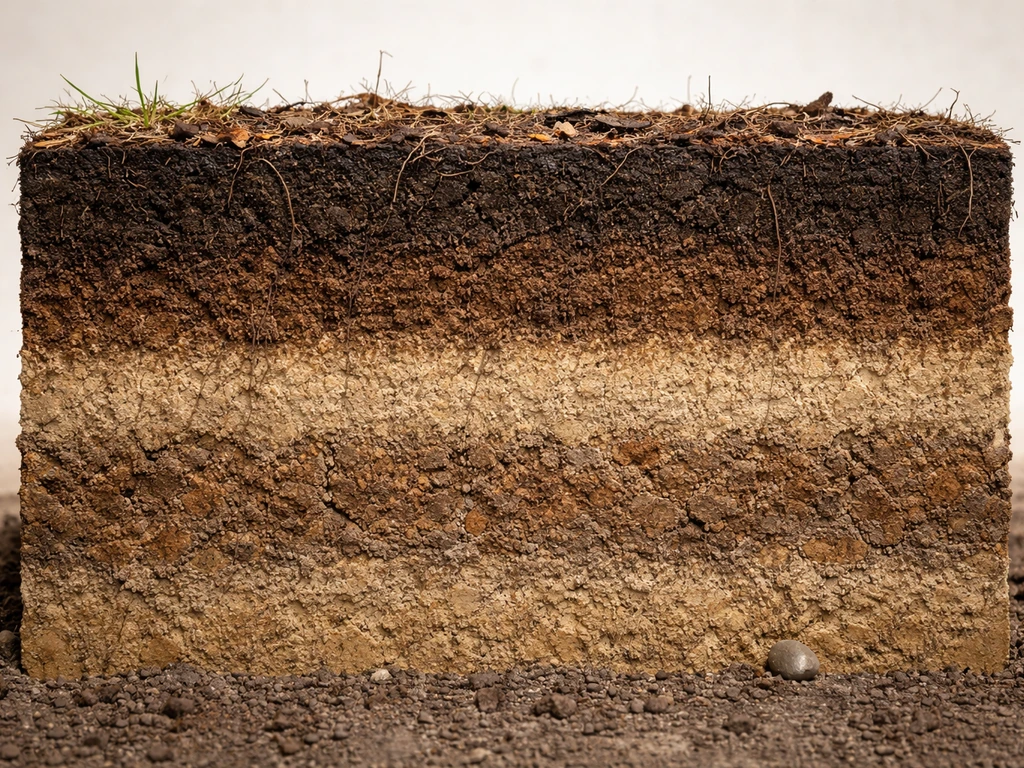
Soil scientists describe the ground beneath your feet in terms of distinct horizontal bands called horizons. From the top down, the standard sequence runs: O (organic debris at the surface), A (the topsoil), B (subsoil), and C (the rocky substratum). The A horizon is what most people mean when they say "topsoil." It is where organic matter mixes with mineral particles, where most roots concentrate, and where the vast majority of soil life operates. The FAO commonly pegs the topsoil layer at 0 to 30 cm depth, with subsoil running from 30 to 60 cm below that.
The distinction between topsoil and subsoil matters more than most gardeners realize. Subsoil is generally denser, lighter in color, lower in organic matter, and far less biologically active. Plant roots can penetrate into subsoil for water and anchorage, but they depend on the topsoil layer for nutrition, gas exchange, and microbial partnerships. When topsoil erodes or gets stripped during construction, plants struggle even if the subsoil beneath looks fine. This is also why places where plants cannot grow, like paved surfaces or heavily degraded land, often have no functional topsoil layer at all. Name three places where plants grow is easiest to understand once you know that soil conditions vary by location and season places where plants cannot grow. Places where plants cannot grow often lack a functional topsoil layer, which means fewer nutrients and less biologically active habitat for roots places where plants grow.
What's inside that layer and why it matters
Healthy topsoil is roughly half solid material and half pore space. That pore space is not empty: it holds the air and water that roots and soil organisms depend on. The solid fraction breaks down into mineral particles (sand, silt, and clay in varying proportions) and organic matter. Each component does a specific job.
- Organic matter: Even small amounts dramatically increase a soil's ability to hold water and nutrients. Organic matter also feeds the microbial community that cycles nutrients back to roots.
- Clay particles: Small size means huge surface area and strong water and nutrient holding capacity (measured as cation exchange capacity, or CEC). High CEC means the soil can bind and release positively charged nutrients like calcium, magnesium, and potassium. The downside is that pure clay compacts easily and restricts air and water movement.
- Sand particles: Large pore spaces let water drain fast and air circulate freely, but sandy soils hold far fewer nutrients and dry out quickly between rains.
- Silt: Falls between sand and clay in both particle size and behavior, contributing to a silty loam that many plants find ideal.
- Living organisms: Earthworms, bacteria, fungi, and other soil animals are not passengers. Earthworm casts are enriched with nitrogen, phosphorus, potassium, and calcium. Earthworm burrows also improve porosity and drainage. A high earthworm count is one of the clearest field signs that a topsoil layer is functioning well.
- Air and water balance: Soil water fills pores from field capacity (after a soaking rain) down to the wilting point (where plants can no longer pull water out). The gap between those two values is the plant-available water, and texture strongly controls how wide that gap is.
Soil pH sits across all of these factors as a master variable. It controls which nutrients dissolve into soil water, how active soil microbes are, and which plants can even establish roots. Most vegetables do best around pH 6.5, lawns around 6.0, and acid-lovers like blueberries need pH as low as 4.5 to 5.0. When pH is wrong for a plant, nutrients that are physically present in the soil still become unavailable, which is why matching plants to your local soil conditions starts with knowing your pH.
How to tell if your top layer is healthy right now
You do not need a lab to get a working read on your topsoil. A few quick field checks will tell you a lot before you spend money on amendments or plants.
The ribbon test for texture
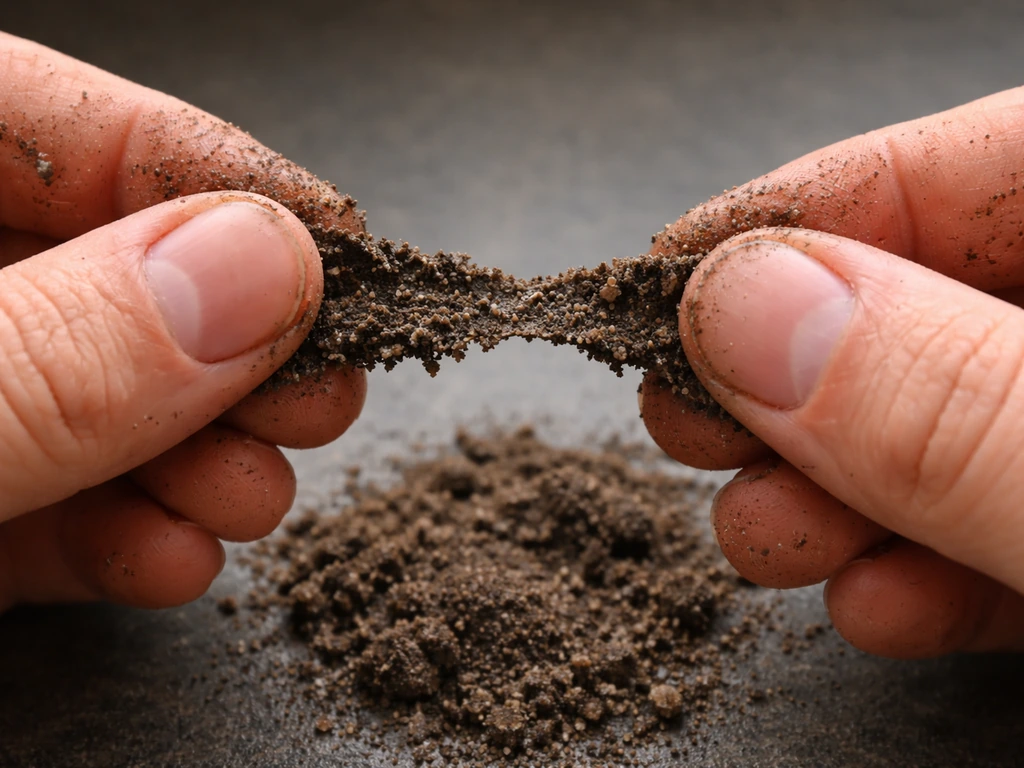
Take a handful of moist soil and squeeze it into a ball, then press it between your thumb and forefinger to form a ribbon. Sandy soil falls apart and feels gritty. Silty soil feels smooth, almost floury, and ribbons briefly. Clay-rich soil forms a long, slick ribbon that holds together well. A loam, the target for most plants, forms a short ribbon and feels slightly gritty and smooth at the same time. This feel method, used by cooperative extension services across the country, gives you a reliable texture estimate without any equipment.
Drainage check
Dig a hole about 12 inches deep, fill it with water, and watch. If it drains faster than 4 inches per hour, your soil is very sandy and will need organic matter additions to hold water long enough for roots. If it barely moves after an hour, you have compaction or heavy clay that will suffocate roots without intervention. Healthy loamy topsoil typically drains at a moderate rate, holding moisture without waterlogging.
Earthworm count
Dig out a cubic foot of topsoil and count the earthworms. Finding 10 or more in that volume is a good sign. Fewer than 5 suggests low organic matter or compaction. No earthworms at all, especially in a non-arid climate, is a red flag worth addressing before you plant anything demanding.
Structure check
Healthy topsoil breaks into small, irregular crumbs when you pick up a handful and crumble it. That crumb-like structure reflects good pore space and active biological binding of particles. If your soil comes out as hard clods, thin powder, or a solid slick mass, structure has been compromised and organic matter is usually the fix.
pH and nutrient test
A basic soil test from your local cooperative extension lab costs very little and tells you pH, major nutrient levels, and often a lime or sulfur recommendation tailored to your region and target crop. This is the single most useful piece of information you can get before deciding which plants to grow or what amendments to add. Without it, you are guessing.
How to improve your plant-growing layer
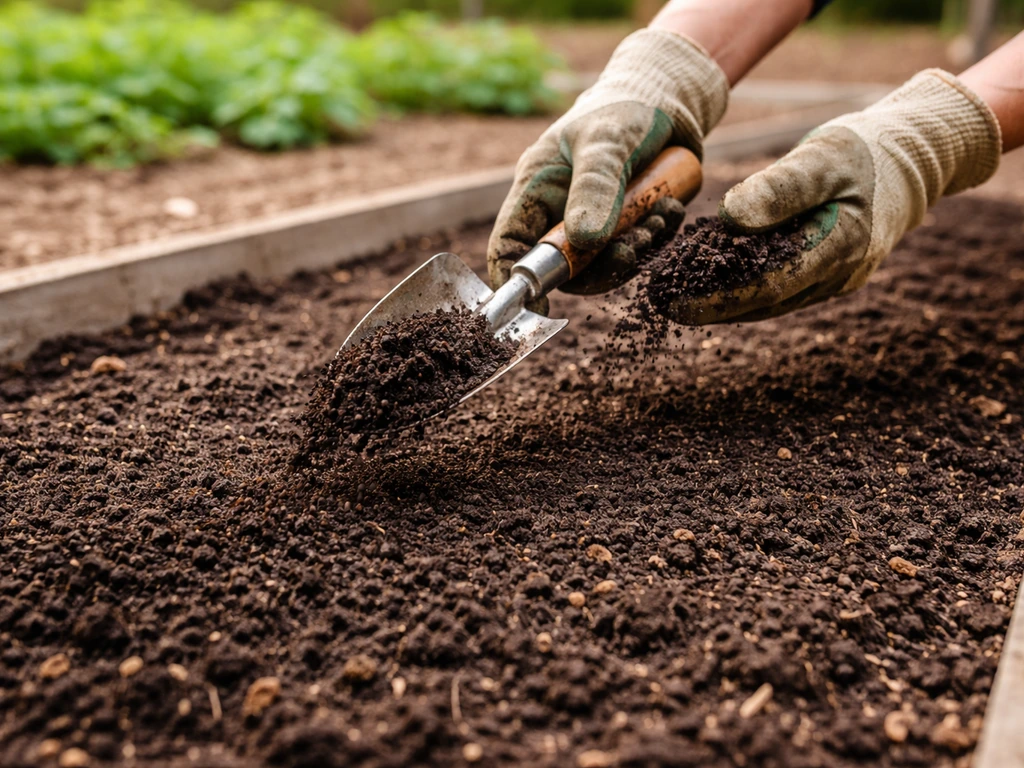
Once you know what your topsoil lacks, the improvement playbook is fairly straightforward. The core tool for almost every problem is organic matter, and the most practical form is compost.
Adding compost
For vegetable and flower gardens, adding about a quarter inch of compost annually as a top dressing is a common maintenance rate. When building up degraded soil or establishing a new bed, incorporate compost into the top 6 to 8 inches. Organic matter improves both sandy and clay soils: it adds water-holding pores to sandy soil and improves drainage and aggregate structure in clay. It also feeds earthworms and microbes, which continue improving the soil after you walk away.
Adjusting pH
If your soil test shows pH is too low (too acidic) for the plants you want to grow, lime is the standard fix. The amount depends on your soil's clay content and buffer index, not just the pH reading, so follow the lab's specific recommendation rather than guessing. Use the lab’s soil test results and the lime recommendation tables as directed for your situation, since lime rates depend on factors like mixing and your soil and crop context follow the lab's specific recommendation rather than guessing. For soils that are too alkaline, elemental sulfur is the typical amendment, but acidifying soil takes time and repeated applications. If you want to grow blueberries or other strongly acid-loving plants in a neutral or alkaline region, starting early and testing annually is the only realistic path.
Relieving compaction
Compaction reduces pore space and suffocates roots. Avoid tilling or working soil when it is wet, since that destroys structure. Natural freeze-thaw and wet-dry cycles help break up compaction over time, but the fastest fix is biological: plant cover crops, add organic matter, and let earthworm activity reopen pore channels. For severely compacted areas, core aeration combined with compost top dressing gets the process started faster.
Using cover crops between seasons
Bare topsoil loses organic matter and erodes under rain and wind. Winter cover crops protect the surface, take up nitrogen that would otherwise leach away, and contribute organic matter when they die back or get turned in. Winter-killed cover crops leave a mulch mat that continues protecting the soil through cold periods. Terminate them roughly 2 to 4 weeks before planting your next crop so decomposition does not compete with seedling establishment.
Matching plants to your soil layer by location and season
Topsoil does not exist in isolation. Its properties shift dramatically by climate zone, geography, and season, and the best plant choices follow those shifts directly. Understanding your local topsoil conditions is really the starting point for everything the rest of this site is organized around: what grows where, under what conditions, and when.
| Soil/Topsoil Type | Key Characteristics | Best-Matched Plants | Season Notes |
|---|---|---|---|
| Sandy topsoil (coastal, desert-edge, glacial outwash) | Fast drainage, low water/nutrient retention, high aeration | Drought-tolerant natives, succulents, lavender, certain grasses | Most active in spring and fall; summer drought stress is high without irrigation |
| Clay-heavy topsoil (prairie, river floodplain) | High water and nutrient retention, slow drainage, compacts when wet | Deep-rooted prairie species, willows, sedges, water-tolerant shrubs | Spring waterlogging common; summer baking can crack surface |
| Loamy topsoil (temperate forest, fertile farmland) | Balanced drainage and retention, high organic matter, strong structure | Broadest plant range: vegetables, most trees and shrubs, wildflowers | Productive across spring, summer, and fall; benefit from winter cover crops |
| Thin/rocky topsoil (mountain slopes, exposed ridgelines) | Shallow rooting zone, low water storage, rapid drainage | Alpine plants, rock garden species, drought-adapted shrubs | Short growing window; frost risk extends into late spring and early fall |
| Waterlogged/peat topsoil (bogs, northern wetlands) | Saturated, very high organic matter, low pH, low oxygen for roots | Carnivorous plants, sphagnum-associated species, sedges, bog shrubs | Often productive only in summer when temperatures allow decomposition |
The practical takeaway here is that the right plant for any location is the one matched to what the topsoil in that place actually provides, not what you wish it provided. A place where plants grow is called a habitat. Sandy coastal soil is not a problem to fix if you plant species that evolved in sandy coastal conditions. Heavy clay in a river valley is not a flaw if you choose plants that thrive in slow-draining, nutrient-rich environments. The topsoil layer sets the terms, and plant selection is the response.
Seasons matter just as much as soil type. The same topsoil in a temperate climate behaves differently in March (cold, often waterlogged, biologically slow) than in July (warm, biologically active, drying fast between rains) or November (cooling, microbes slowing, structure often at its best after a full growing season of root activity). Timing your planting and soil work to match that seasonal rhythm, rather than fighting it, is what separates a garden that works from one that just survives.
If you are just starting to assess what grows where you are, the soil layer underfoot is the first thing to read. These are the same places where plants grow best in a kindergarten setting, since seedlings need the right topsoil conditions to establish roots what grows where. Get a soil test, do the ribbon and drainage checks described above, count your earthworms, and look at the structure. That information, combined with your climate zone and the current season, narrows your plant choices down to what will actually thrive rather than what the seed packet optimistically suggests.
FAQ
How deep is topsoil in my yard, is it always about 30 cm?
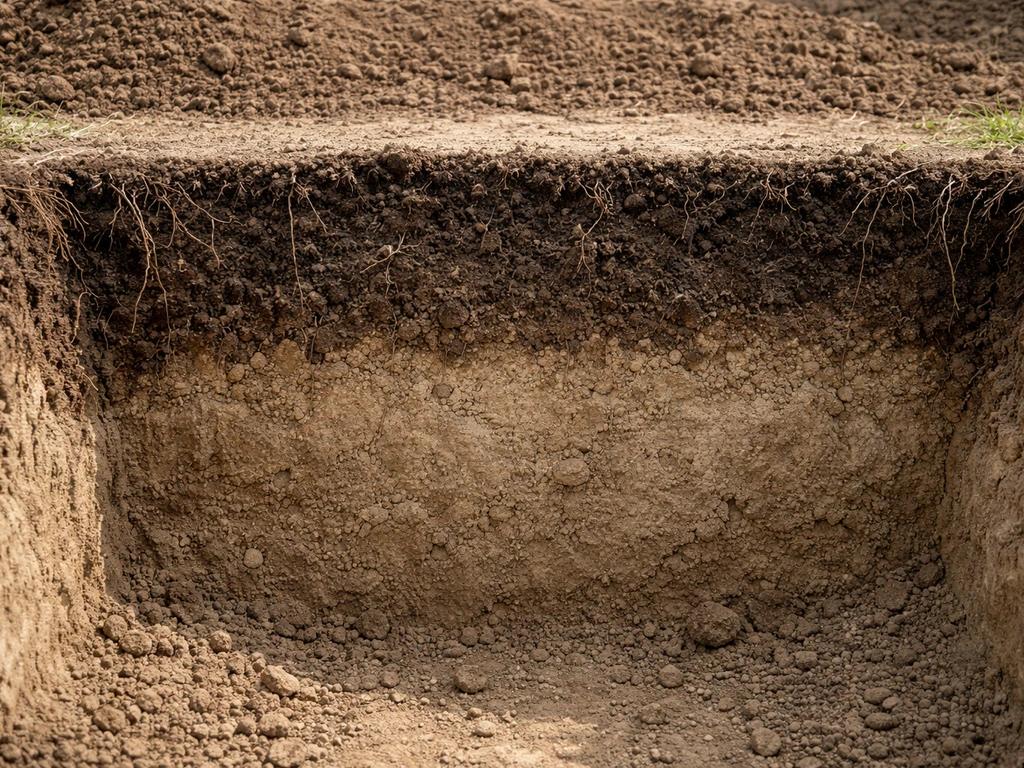
The common benchmark is about 0 to 30 cm, but it varies by erosion, landscaping, and how long the site has been undisturbed. In many gardens you may effectively have a thinner “functional topsoil” layer, especially if construction stripped it and only a few inches of amended soil were replaced. Look for the horizon change (color, roots, and structure) where digging stops feeling crumbly and biologically active.
If I add compost, will I be improving topsoil even if the subsoil is poor?
Yes, compost helps, but its benefits are greatest when you also protect the surface from further loss and give roots enough time to colonize the improved layer. Incorporating compost into the top 6 to 8 inches works faster for nutrient and structure changes, but very tight or chemically problematic subsoil can still limit rooting, so choose plants that match the depth you can realistically improve.
What’s the difference between topsoil problems caused by pH versus poor drainage or compaction?
pH issues mainly affect nutrient availability and microbial activity, plants may look stunted or chlorotic while soil can still be airy. Drainage and compaction issues show up as waterlogging, slow drying, or roots struggling in dense layers, even when pH and nutrients are reasonable. If your drainage test suggests slow movement or you see hard clods, fix structure and aeration first, then fine-tune pH with your lab recommendation.
Should I till my topsoil to mix in amendments, or is that risky?
Tilling can work, but only under the right moisture conditions and for the minimum depth you need. Working wet soil destroys aggregates and can worsen compaction and crusting. If you have good structure, use surface top-dressing (like compost annually) to avoid breaking apart pore spaces.
How can I tell whether my topsoil has lost organic matter, even if it looks dark?
Color alone is not enough because some subsoils can be dark and some compost can temporarily darken soil. Better indicators are crumb structure (does it fall apart into irregular crumbs), earthworm presence (counts in a cubic foot), and how quickly it seals after watering. If it forms a hard crust or feels slick when wet, organic binding and structure likely declined.
What if my soil test shows plenty of nutrients, but my plants still struggle?
That often points to pH mismatch, root-zone limitations (compaction, low oxygen, or shallow topsoil), or nutrient forms that are not accessible. Recheck soil pH first because nutrient availability can drop sharply when pH is off. If pH is fine, focus on drainage, aeration, and rootable depth before adding more fertilizer.
Is a handful squeeze and ribbon test enough, or should I always do a lab test?
Field tests are useful for quick decisions, but they do not replace lab results for pH and nutrient levels. The ribbon, drainage, earthworm, and structure checks help you decide what physical fixes to prioritize (like compost for texture or aeration for compaction). For plant success and to avoid overcorrecting, a basic lab soil test remains the best next step.
Why does planting time change how my topsoil behaves?
In cool months, soils are often wetter and microbial activity is slower, so roots can face oxygen stress and amendments take longer to break down. In warmer months, biological activity speeds up and soils can dry faster between rains, so organic matter and mulch influence how quickly the topsoil dries and how stable conditions stay. Adjust planting and soil work to current conditions, not just the calendar.
How do I improve topsoil on a slope or in an area with heavy rain?
Prioritize erosion control and surface protection before trying to “fix” the chemistry. Use mulch, keep cover crops or a protective planting, and consider winter-killed cover crops to leave a residue layer that shields the surface. Steeper or high-runoff spots often need more consistent ground cover because topsoil loss can happen quickly after storms.
Can there be enough topsoil for plants, but still “no place where plants grow”?
Yes. You can have soil depth, yet still lack a functional root habitat if the topsoil is missing structure (no crumbs), has severe compaction, or is continually waterlogged or crusted over. In those cases, the root zone lacks pore space and biology even if the material is present, so improvements should target structure, aeration, and moisture stability.
How long does it take to see results after adding compost or applying lime or sulfur?
Compost effects often show within a season because structure and biological activity respond relatively quickly. pH corrections take longer, especially with sulfur for acidifying, because the chemical change is gradual and may require repeated dosing. The safest approach is to retest after the appropriate interval for the amendment you used, and make plant decisions based on the current condition rather than hoping amendments work instantly.