
The plants most reliably propagated from leaves are succulents like jade (Crassula ovata), sedum, and donkey's tail (Sedum morganianum); Kalanchoe species (especially Kalanchoe daigremontiana, which sprouts plantlets right on its leaf margins); African violets (Saintpaulia ionantha); snake plant (Sansevieria trifasciata); and begonias, particularly rex begonias. Each has a slightly different method, but all of them can produce a brand-new plant from a single leaf if you handle the cutting correctly, give it the right rooting medium, and avoid the most common killer: overwatering a cutting that has no roots yet. Some popular examples of plants that grow from a leaf include jade, African violets, and Kalanchoe.
List of Names of Plants That Grow From Leaf Cuttings

Dr. Marcus Weatherby
3 Jun 2026
What 'grow from leaves' actually means
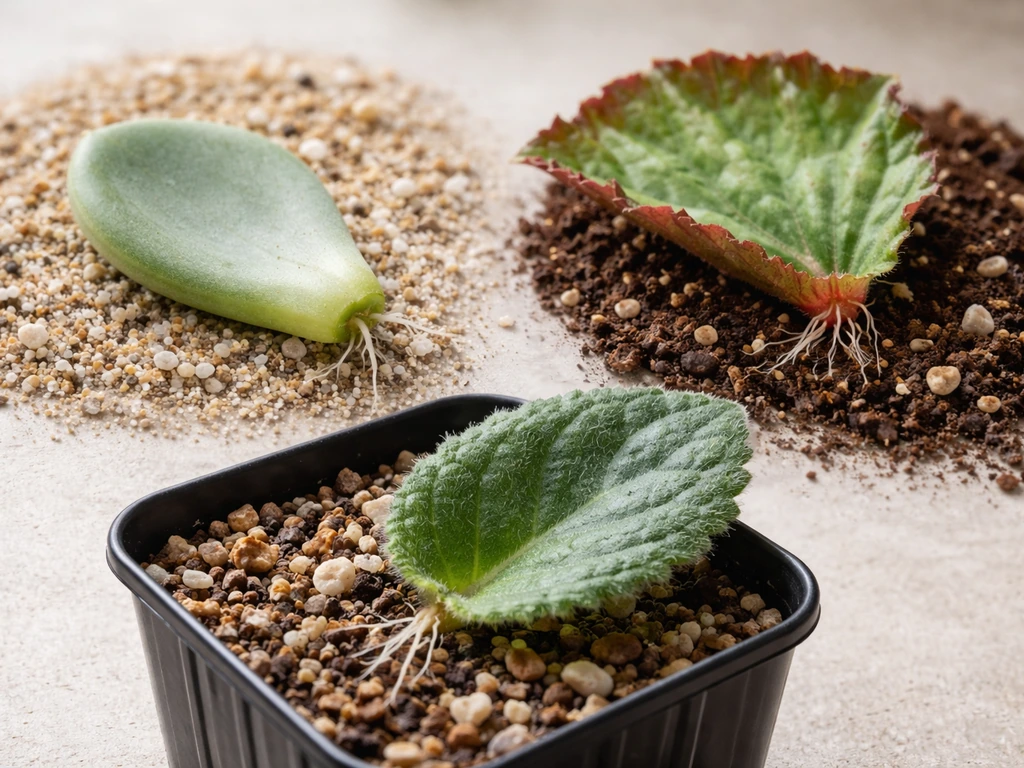
Before diving into the list, it's worth being precise about what we mean. Some plants, like Kalanchoe daigremontiana (often called mother of thousands or Bryophyllum daigremontianum), produce tiny plantlets directly along the margins of their leaves while the leaf is still attached to the parent plant. Those plantlets drop off and root on their own. That's a natural, built-in process, not something you do deliberately. Other plants, like African violets or jade, won't spontaneously clone themselves from a leaf, but if you detach a healthy leaf and put it in the right rooting medium, the leaf tissue can generate roots and eventually a new shoot. That process is called leaf propagation or leaf cutting propagation, and it's what most people are trying to do when they search for this topic. A few other plants, like Tradescantia, are often bundled into this category but actually root from nodes on a stem rather than from a bare leaf, so the distinction matters when you're deciding what to try.
There's also an important caveat about begonias: almost any begonia leaf can root, but only certain types will actually produce a new whole plant from that rooted leaf. Cane begonias, for example, will root a leaf but then often stall. Rex begonias and rhizomatous begonias are the ones where leaf propagation reliably goes the full distance to a new plant.
The plant list: names that actually work for leaf propagation
Here are the main plants worth attempting, grouped loosely by propagation approach. For five examples of plants that truly grow from leaves, see this guide to leaf propagation. The method column matters as much as the plant name, so read both before you start.
| Plant Name | Common Name | Leaf Method | Rooting Medium |
|---|---|---|---|
| Crassula ovata | Jade plant | Whole leaf, callused and laid on/inserted into mix | Well-draining succulent mix or perlite-heavy blend |
| Sedum morganianum | Donkey's tail / burro's tail | Whole leaf, laid on surface | Sandy/gritty mix, 50% perlite |
| Sedum spp. (various) | Stonecrop sedums | Whole leaf, laid on surface or inserted shallowly | Gritty, well-aerated medium |
| Kalanchoe daigremontiana | Mother of thousands | Marginal plantlets (self-propagating); excised leaves also root | Standard potting mix or gritty blend |
| Kalanchoe marnierianum / other Bryophyllum types | Chandelier plant / related species | Leaf-margin plantlets form naturally when leaf is detached | Standard potting mix |
| Saintpaulia ionantha | African violet | Leaf with petiole (stem), cut at 45 degrees, inserted upright | Perlite, peat/perlite mix, or sphagnum moss |
| Sansevieria trifasciata | Snake plant / mother-in-law's tongue | Leaf blade cut into 3–4 inch sections, inserted upright into medium | Perlite or well-draining sandy mix |
| Begonia rex and rhizomatous begonias | Rex begonia | Leaf wedge sections (veins intact), pressed vein-side down | Equal parts perlite and peat moss; or sphagnum |
| Echeveria spp. | Echeveria / hen-and-chicks | Whole leaf, gently twisted free, laid on surface to callus | Gritty succulent mix or pure perlite |
| Gasteria spp. | Gasteria / ox tongue plant | Whole leaf inserted into medium | Sandy, well-draining mix |
| Haworthia spp. | Haworthia | Whole leaf inserted into medium (slower than Echeveria) | Sandy, gritty mix |
Tradescantia is worth a quick mention here since it often appears on similar lists. It propagates very easily, but the reliable method is a stem cutting taken just below a leaf node, not a bare leaf. A leaf on its own won't produce a new Tradescantia plant. The same is true for most common herbs and tropical foliage plants like pothos and philodendron: what's really doing the work is the node on the stem, not the leaf tissue itself.
How to propagate from leaves: step-by-step
Succulents (jade, sedum, echeveria)
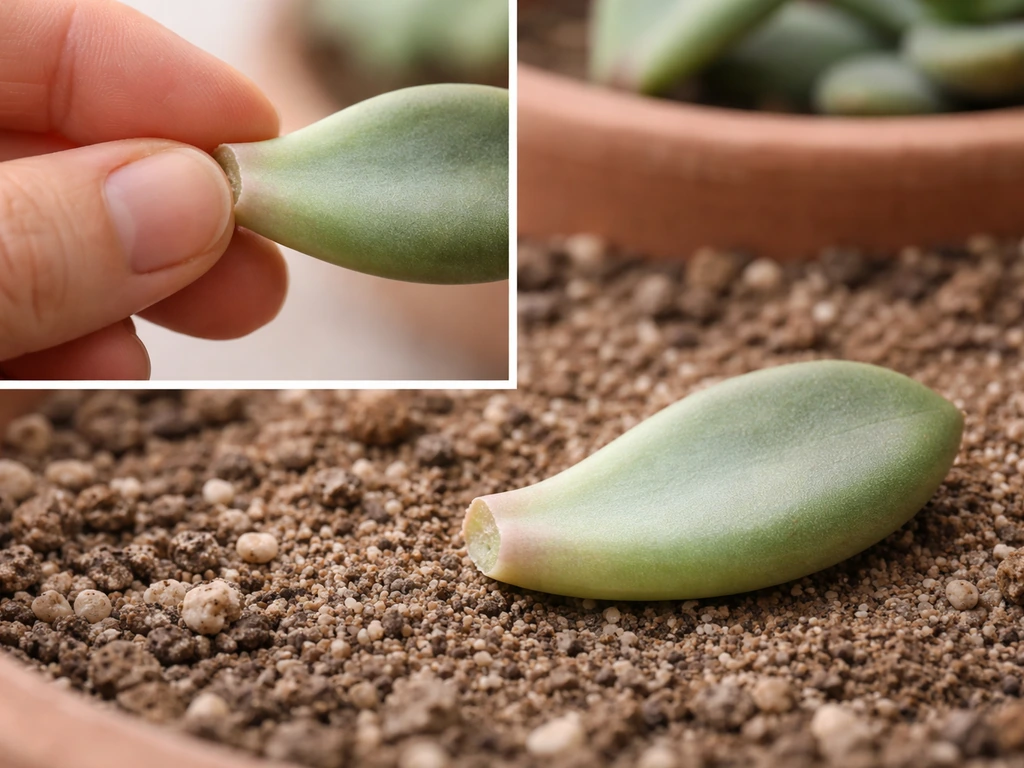
- Choose a plump, healthy, unblemished leaf from the middle of the plant (not the oldest, not the newest growth). For jade, you can snap or cut cleanly; for echeveria and sedum, gently twist the leaf from the stem so it comes away clean with no torn base.
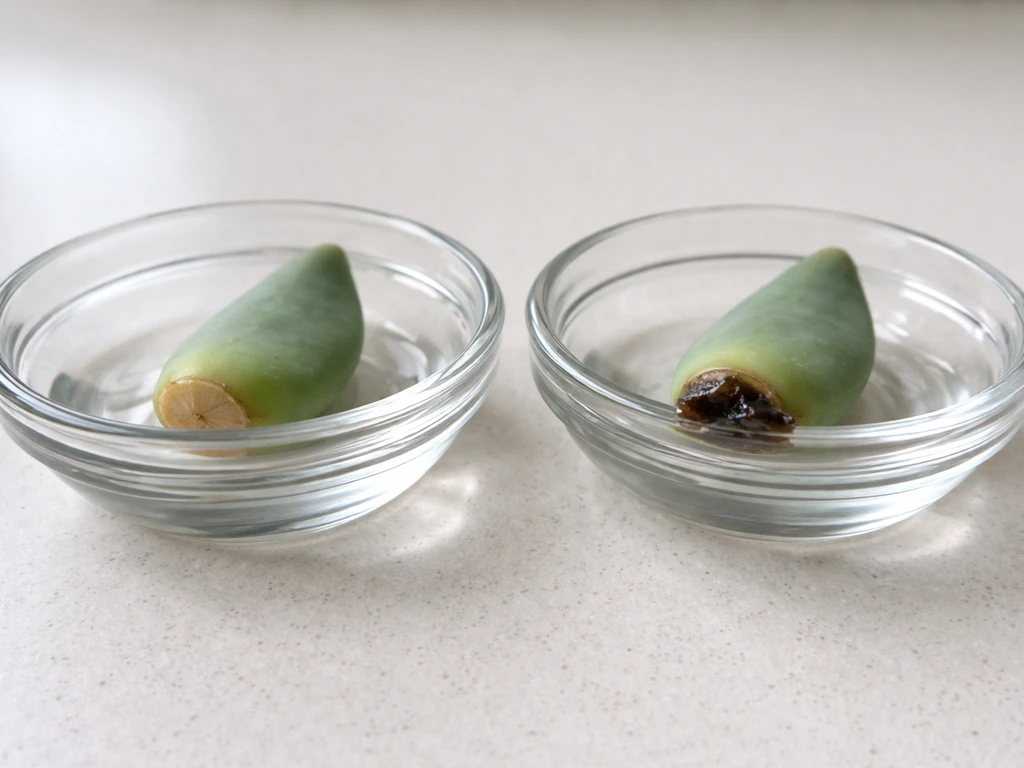
- Set the leaf on a dry surface, out of direct sun, for 1–3 days. The cut end needs to callus over. If you skip this step, the cut end will rot almost immediately when it contacts moist soil.
- Once callused, lay the leaf on top of a dry-to-barely-moist gritty mix (50% perlite works well). You can angle the base slightly into the surface or just rest it flat. Don't bury the leaf.
- Mist lightly every few days. The goal is very occasional moisture, not damp soil. Roots usually emerge in 2–4 weeks, followed by a tiny plantlet at the base.
- Once the plantlet has its own small leaves and roots, you can remove the shriveled parent leaf and pot the new plant into a slightly richer succulent mix.
- Summer is the ideal season for propagating jade outdoors or in a warm room, but these plants can be propagated year-round indoors as long as temperatures stay above 65°F.
African violets (Saintpaulia)
- Select a healthy leaf from the second or third row from the center of the plant. Avoid very old outer leaves and very young center leaves.
- Cut the petiole (leaf stem) at a 45-degree angle, leaving about 1–1.5 inches of petiole attached. This angled cut increases the surface area available for rooting.
- Optional: dip the cut end in rooting hormone powder, though it's not required and experienced growers often skip it.
- Insert the petiole into a moist rooting medium, a perlite/peat blend or sphagnum moss both work well. Push it in far enough that the leaf stands upright on its own.
- Place in bright, indirect light at 65–75°F. Avoid direct sun and avoid a spot that gets very warm, as heat combined with moisture is a fast path to rot.
- Roots typically appear at the petiole base in 3–4 weeks. Small plantlets emerge 3–4 weeks after that, so expect visible plantlets around the 6–8 week mark, sometimes up to 12 weeks.
- Once plantlets have 2–3 of their own leaves, separate them gently and pot individually.
Snake plant (Sansevieria)
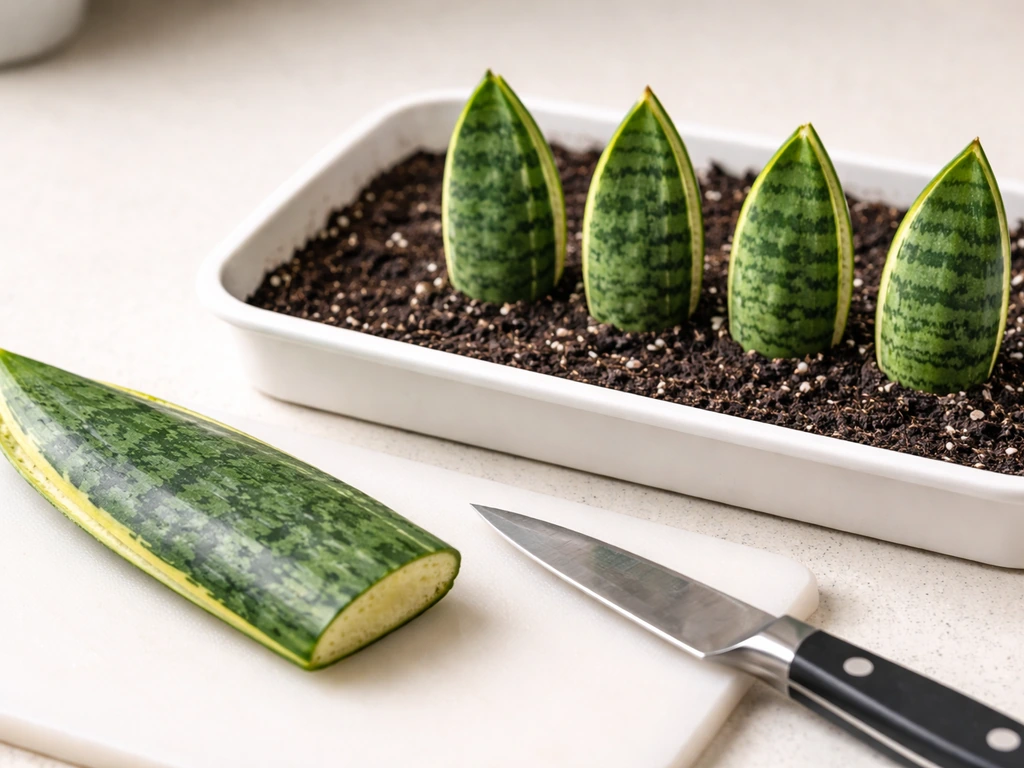
- Take a young, healthy leaf and cut it into 3–4 inch sections using a clean, sharp blade.
- Note the orientation of each section before you cut: the end that was closest to the base of the plant goes down into the medium. Inserting a section upside-down prevents rooting.
- Allow sections to callus for a day or two, then insert the bottom third into moist perlite or a sandy mix.
- Keep the medium barely moist at 70–75°F. Sansevieria can be propagated any time of year indoors.
- Important caveat: if you propagate a variegated snake plant (the yellow-edged cultivar) by leaf sections, the new plants will revert to the plain green form. Only division preserves variegation.
Rex and rhizomatous begonias
- Remove a healthy, fully mature leaf. You can use the whole leaf or cut it into wedge-shaped sections, each containing at least one major vein junction.
- Press the wedge sections vein-side down onto a moist mix of equal parts perlite and peat moss, or onto sphagnum moss. Don't bury them; just press the cut vein into contact with the medium.
- You can also score the main veins on the back of a whole leaf with a blade and lay the entire leaf flat on the medium, weighting the edges with small stones or stapling it gently to maintain contact.
- Cover loosely with a humidity tent or place in a propagation tray with a lid to hold moisture.
- Keep at 65–75°F in bright, indirect light. Perlite is noted as particularly good for wedge propagation because it drains well and resists the fungal rot that kills begonia leaves in denser mixes.
- Propagate in spring or summer for the fastest results, since growth is most active in the longer-day months.
Kalanchoe (mother of thousands and related species)
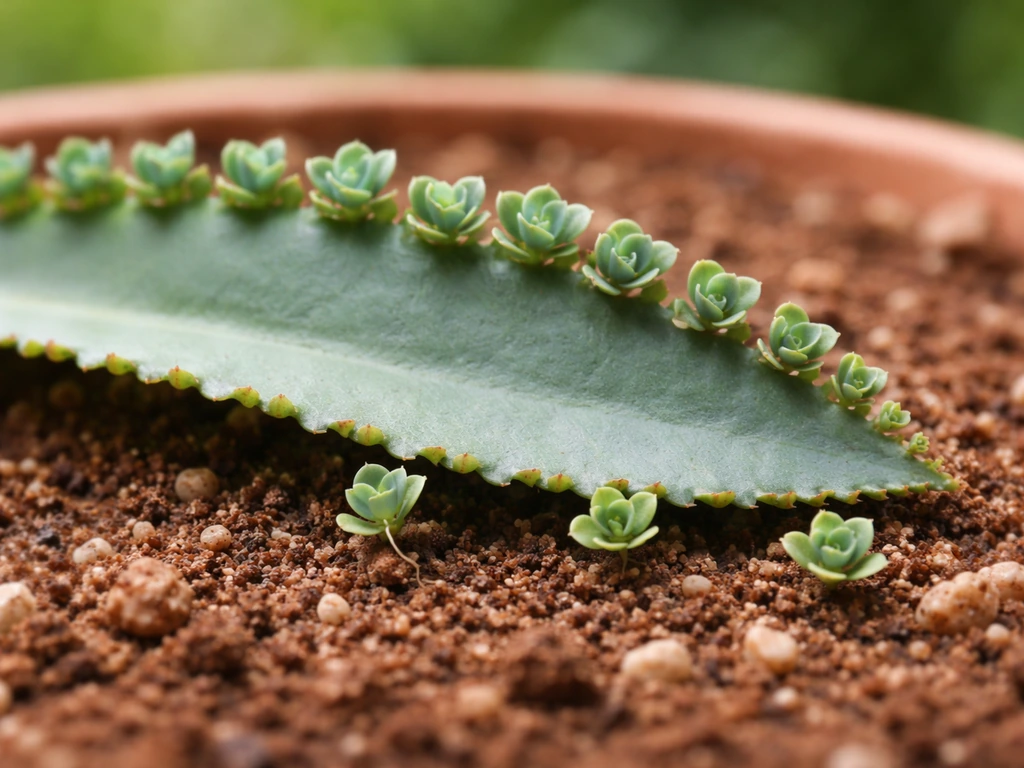
Kalanchoe daigremontiana and its close relatives are almost effortless. The small plantlets that form along the leaf margins will detach and root on their own when they fall onto moist soil. If you want to encourage more, you can detach a leaf from the parent plant, lay it on potting mix, and the marginal buds will still develop into plantlets. Scientific work on Bryophyllum marnierianum confirms that when leaves are excised from the parent plant, plantlet development continues and even accelerates under the right conditions. These plants thrive in warm, dry-side conditions and are the closest thing to truly hands-off leaf propagation in the plant world.
Caring for cuttings while they root and after plantlets form
Light
Bright, indirect light is the right call for virtually every leaf cutting while it's rooting. The leaf has no roots yet, so it can't replace the water it loses through its surface. Direct sun accelerates that water loss and also heats the cutting and medium, which speeds up bacterial rot. A north- or east-facing windowsill, or a spot set back 2–3 feet from a south-facing window, is ideal for most of these plants.
Temperature
Most leaf cuttings root best between 65–75°F. African violets and begonias do well at the cooler end of that range. Snake plant and succulents tolerate the warmer end. Avoid placing cuttings on windowsills in winter where the glass chills the medium below 60°F, and keep them away from heating vents that dry the air and the medium too fast.
Watering and humidity
For succulents, water very sparingly until you can see a tiny plantlet forming. The parent leaf will actually feed the new growth from its own stored moisture, so the medium only needs to be barely moist. For African violets, begonias, and snake plant, keep the medium consistently moist but never waterlogged. The Smithsonian's guidance on African violets is a good general rule for this whole group: don't let the pot sit in standing water for more than about 30 minutes, then empty the saucer. A humidity tent (a clear plastic bag loosely draped over the pot) helps begonia and African violet cuttings stay hydrated while roots develop, but lift it briefly every day or two to let air circulate and prevent mold.
After plantlets appear
Once the new plantlets have 2–3 of their own leaves, they're ready to be separated and potted into a proper growing mix. Transplant gently, disturbing the tiny roots as little as possible. For the first week or two after transplanting, keep the new plant in a slightly more sheltered spot than its eventual home and water a little more carefully than usual. A loose plastic bag or humidity dome over the new pot for a few days can help it adjust, especially for African violets and begonias.
Where these plants actually thrive: climate, season, and habitat
Understanding where each plant comes from helps you decide not just how to propagate it, but where it will actually grow well after you do.
| Plant / Group | Native Habitat | Climate Zones (USDA approx.) | Best Indoors or Outdoors? | Ideal Season for Propagation |
|---|---|---|---|---|
| Jade plant (Crassula ovata) | Dry, rocky slopes of South Africa (Eastern Cape, KwaZulu-Natal) | Zones 10–12 outdoors; elsewhere indoors | Indoors in most of North America; outdoors in frost-free climates | Summer outdoors; any time indoors above 65°F |
| Sedum morganianum / sedums | Semi-arid highlands of Mexico and Central America | Zones 9–11 for most; some sedums to Zone 4 | Both; depends on species. Hanging types almost always indoors outside tropics | Spring–summer |
| Echeveria spp. | Rocky, semi-arid Mexico and Central America | Zones 9–11 outdoors | Indoors in most climates | Spring–summer |
| Kalanchoe daigremontiana | Dry, rocky regions of Madagascar | Zones 10–12 outdoors; invasive in some warm regions | Indoors in temperate zones; naturalized in frost-free areas | Year-round; easiest when warm |
| African violet (Saintpaulia ionantha) | Shaded forest floors and rocky outcrops, East African highlands (Tanzania, Kenya) | Indoors only in most climates; Zones 11–12 outdoors | Almost always indoors | Year-round indoors; spring for best vigor |
| Snake plant (Sansevieria trifasciata) | Dry, rocky West African tropics (Nigeria to Congo) | Zones 10–12 outdoors; indoors elsewhere | Indoors in most climates | Year-round; 70–75°F soil temperature ideal |
| Rex begonia / rhizomatous begonia | Humid forest floors and rocky slopes, tropical and subtropical Asia and Americas | Zones 10–11 outdoors; indoors elsewhere | Almost always indoors in temperate climates | Spring–summer for fastest rooting |
| Haworthia / Gasteria | Shaded rocky habitats, South African Cape region | Zones 9–11 outdoors | Indoors in most of North America and Europe | Spring–summer; tolerates year-round indoors |
A pattern worth noticing: most plants that propagate readily from leaves come from seasonally dry, rocky, or shaded habitats with low soil fertility. These are environments where the ability to regenerate from a detached leaf has a real survival advantage. That also tells you something about their growing preferences: they generally want excellent drainage, moderate to low watering, and protection from sustained waterlogging.
If you're in a temperate climate (most of the US, UK, Canada, or northern Europe), the realistic picture is that nearly all of these plants are grown indoors year-round or moved inside for winter. The exceptions are cold-hardy sedums (some species survive to Zone 4), which can be propagated outdoors in spring and summer and left in the ground through winter.
Why leaves rot or fail to root: common mistakes
- Skipping the callus step for succulents: the most common reason jade and echeveria leaves rot immediately is placing them in moist medium before the cut end has dried. Always let succulent leaves sit in open air for at least 1–3 days first.
- Overwatering rooting cuttings: a leaf with no roots cannot process water the way a rooted plant can. Constantly wet medium suffocates the developing root tissue and invites fungal rot. Err on the side of too dry, not too wet.
- Wrong orientation for snake plant sections: each cut section must be inserted with its original base-end down. Even a tiny inversion prevents rooting entirely.
- Direct sun on cuttings: even sun-loving succulents should be kept in bright, indirect light while rooting. Direct sun raises leaf temperature, accelerates moisture loss from the cutting, and heats the medium to levels that kill developing roots.
- Using the wrong plant type: taking a bare leaf from a Tradescantia, pothos, or rubber plant and expecting it to root into a new plant won't work, because rooting depends on node tissue in those species, not leaf tissue alone.
- Rooting variegated snake plant from leaf sections: this will produce green, non-variegated offspring. If keeping the yellow-edge pattern matters to you, divide the rhizome instead.
- Cold medium: rooting stalls or fails at soil temperatures below 60°F. A heat mat set to 70°F solves this in winter.
- Choosing weak or diseased leaves: the leaf stores the energy for producing new roots. An old, limp, or spotted leaf rarely has enough reserves to complete the process. Always pick firm, healthy mid-plant leaves.
- Dense, moisture-retaining potting soil: regular potting mix holds too much water for most of these cuttings. A mix with at least 50% perlite, or straight perlite for succulents and snake plant, gives better results.
How to identify your plant and pick the right method
If you already have a plant and you're trying to figure out whether it will work for leaf propagation, here's a quick way to assess it. These cues aren't perfect, but they eliminate the most common mismatches.
Signs a plant is a good leaf-propagation candidate
- The leaves are thick, fleshy, or succulent (store visible moisture): classic indicator for the jade/sedum/echeveria group.
- The leaves form a rosette pattern at or near the soil: common in echeveria, gasteria, haworthia, and African violets.
- The leaves are large, asymmetrical, and often velvety or textured: strong indicator of rex or rhizomatous begonia.
- Tiny plantlets are visibly forming on leaf margins right now: almost certainly a Kalanchoe/Bryophyllum species.
- The leaves are tall, stiff, sword-shaped, and arise from a ground-level rosette: likely a Sansevieria type.
- The leaves are small, round to oval, and the plant has a short central rosette with lots of individual leaves you could detach cleanly: likely an echeveria or similar rosette succulent.
Quick checklist before you start
- Identify the plant to species or at least to group (succulent, begonia, African violet, snake plant, Kalanchoe). The method varies significantly.
- Check that your indoor temperature is 65–75°F. Below that, rooting will be very slow or won't happen.
- Prepare the right medium before cutting: perlite-heavy or gritty mix for succulents and snake plant; peat/perlite or sphagnum for African violet and begonia.
- Choose a healthy leaf from mid-plant, not from the oldest growth at the outside or the newest at the center.
- For succulents: plan for 1–3 days of callusing time before placing in medium. Build that wait into your schedule.
- Set up a bright, indirect light spot away from direct sun and away from heating or air-conditioning vents.
- If it's winter and your indoor temperatures are on the cool side, consider using a seedling heat mat to keep the medium at 70°F.
- Match the plant to where you actually live. If you're in Zone 6 and hoping to grow Kalanchoe daigremontiana outdoors year-round, it won't survive frost. Plan to keep it in a pot you can bring inside when temperatures drop below 40°F.
What to do right now
If you're reading this in late spring or summer (the best window for most of these plants), you're in a good position to start today. Pick the plant from the list above that you already own or can easily find at a local garden center. Jade, African violet, and various sedums and echeverias are widely available in most temperate-climate garden centers and grocery stores. Collect your leaf, prepare your medium, and get the cutting into place. The actual active effort is about 10 minutes; the patience required is 3–12 weeks depending on species. Roots normally appear at the petiole base in about 3, 4 weeks under good conditions, and leaves of new African violet plants appear 3, 4 weeks after root formation, according to Virginia Tech Extension blank" rel="noopener noreferrer">African violet plant leaves appear 3–4 weeks after root formation. The plants on this list that genuinely propagate from leaves (not just from nodes on stems) are a small but reliable group, and once you've done it once with something forgiving like an echeveria or a jade plant, the process becomes intuitive across the whole group. For jade plant, Wisconsin Master Gardener guidance notes you can propagate it from stem or leaf cuttings, and blank" rel="noopener noreferrer">cuttings root most easily in summer (though propagation can be done any time of year). Once you’ve picked your first species, the easiest way to plan your next few attempts is to use a quick list like 10 examples of plants that grow from leaves.
FAQ
Why did my leaf cutting callus but never grow roots or a new shoot?
Callusing can happen when the cutting is healthy but too dry or too cold, or when the leaf was buried too deeply. Keep the leaf just touching the medium (not fully submerged), maintain warmth around 65–75°F, and avoid direct sun that overheats the medium. Also use a gritty, fast-draining mix, because consistently soggy media can stall development even if the leaf is still green.
Can I propagate leaf-cutting plants in water instead of soil or rooting mix?
For most true leaf-propagators in the list, soil or a well-draining rooting medium is safer than water. Water can delay root formation and increase rot risk because leaf tissue lacks roots and can break down quickly. If you try water anyway, use clean, short monitoring, and move to a breathable medium as soon as you see viable roots rather than waiting for a large root mass.
How do I know whether a plant will actually propagate from a leaf, or from a stem node like Tradescantia?
Look at how new growth naturally forms. If the plant sends roots reliably from points on a stem (nodes) and leaves alone fail, it is not a true leaf-propagator. Tradescantia and many vining tropical foliage plants often root from nodes, so take a cutting that includes a node beneath the leaf rather than removing only a leaf.
When should I remove the leaf from a successful propagation?
Do not pull it out immediately after you see tiny roots. Let the new plantlet reach at least 2–3 of its own leaves first, because the parent leaf still contributes stored energy. Once the plantlet is established, gently detach any remaining leaf tissue to prevent it from staying wet and encouraging mold.
What’s the safest way to water a rooting leaf when I can’t tell if the medium is drying out?
Use bottom-watering briefly or add water in small amounts until the medium is evenly damp, then let it approach dryness before watering again. A humidity tent can help reduce moisture swings for African violets and begonias, but you still need brief daily air exchange to prevent fungus and rot.
How long should it take before I give up on a leaf cutting?
Most of these plants typically need 3–12 weeks depending on species and conditions. If there is no root sign by around 8–10 weeks, check the basics first (temperature, light level, medium drainage, and whether the leaf is in contact with the medium). If the leaf tissue is turning black and mushy, it is usually a rot problem from overwatering or poor airflow.
Can I put leaf cuttings outdoors in spring or summer?
Only for the naturally outdoor-capable species and only when conditions match their preferences. Even then, leaf cuttings usually need stable warmth and protection from heavy rain and cold nights. Cold-hardy sedums can be propagated outdoors in spring and summer, but most other listed plants are still best kept indoors or sheltered until roots and new leaves form.
What soil mix works best for leaf propagation?
Choose a mix that drains fast and stays breathable. Use a gritty, cactus or succulent-style approach for succulents, and a moisture-retentive but non-waterlogged mix for African violets and begonias. The key is avoiding a medium that stays saturated, since leaf cuttings can rot before roots form.
My begonia or African violet leaf started growing mold under the humidity bag. What should I do?
Lift the humidity covering more often and increase airflow, even if the medium is slightly drying. Remove any obviously rotting leaf parts, keep the medium moist but not soaked, and avoid condensation pooling on the leaf surface. Over time, you can reduce humidity as roots form to lower recurring mold risk.
Should I fertilize during the rooting phase?
Generally no. During leaf rooting, the cutting relies on stored reserves from the leaf itself. Fertilizer can stress the tissue, encourage soft growth, or worsen rot if the medium stays wet. Wait until after transplanting and the new plant has its own leaves and a functioning root system.