Plants that grow in wet, swampy areas are called hydrophytes. That's the standard ecological term, and it covers every plant species adapted to life in waterlogged, low-oxygen soil conditions, whether that's a forested swamp, a saturated marsh edge, a boggy depression, or a streambank that never fully dries out. If you've seen a bald cypress standing in a foot of water or sedges carpeting a soggy low spot, you've seen hydrophytes doing exactly what they're built to do.
Plants That Grow in Wet Areas Are Called Wetland Plants

Dr. Marcus Weatherby
27 May 2026
The ecological name and what it actually means
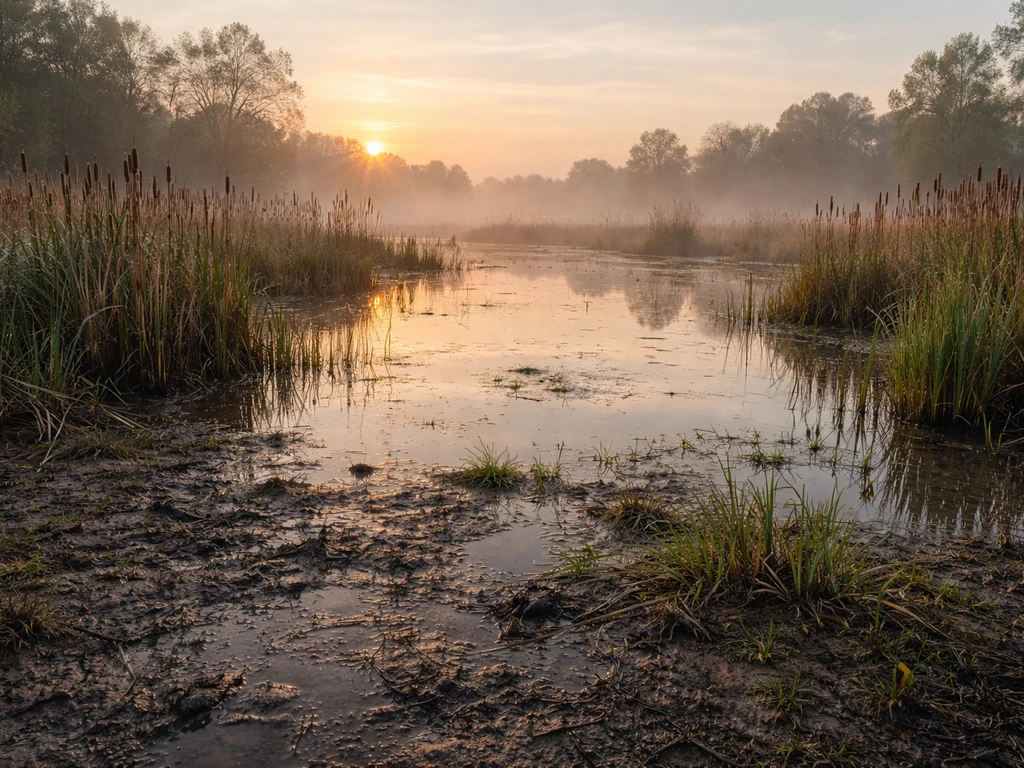
Hydrophyte comes from the Greek for water (hydro) and plant (phyte), and it's the term used by the U.S. Geological Survey, the Army Corps of Engineers, and the EPA to describe plants adapted for life in water or in soils that are at least periodically saturated and deficient in oxygen. The key adaptation isn't just wet feet. It's tolerance of anaerobic conditions, meaning the plant can survive when the soil pores fill with water and normal oxygen exchange in the root zone shuts down. Most ordinary upland plants can't do that. They suffocate. Hydrophytes have evolved structural and physiological tricks to deal with it, from specialized root tissues to aerenchyma (air-channel cells) that move oxygen down from the stem.
You'll also hear the terms wetland plants and aquatic plants used loosely, but hydrophyte is the precise ecological label. The U.S. Army Corps of Engineers further breaks them into indicator categories: obligate hydrophytes (OBL) occur almost exclusively in standing water or saturated soils, facultative wet plants (FACW) usually grow in wetlands but can occasionally show up in drier spots, and upland plants (UPL) rarely appear in wetland conditions at all. When you're searching for the right plant for a consistently wet site, those indicator categories are genuinely useful.
What counts as wet, swampy, or swamp habitat
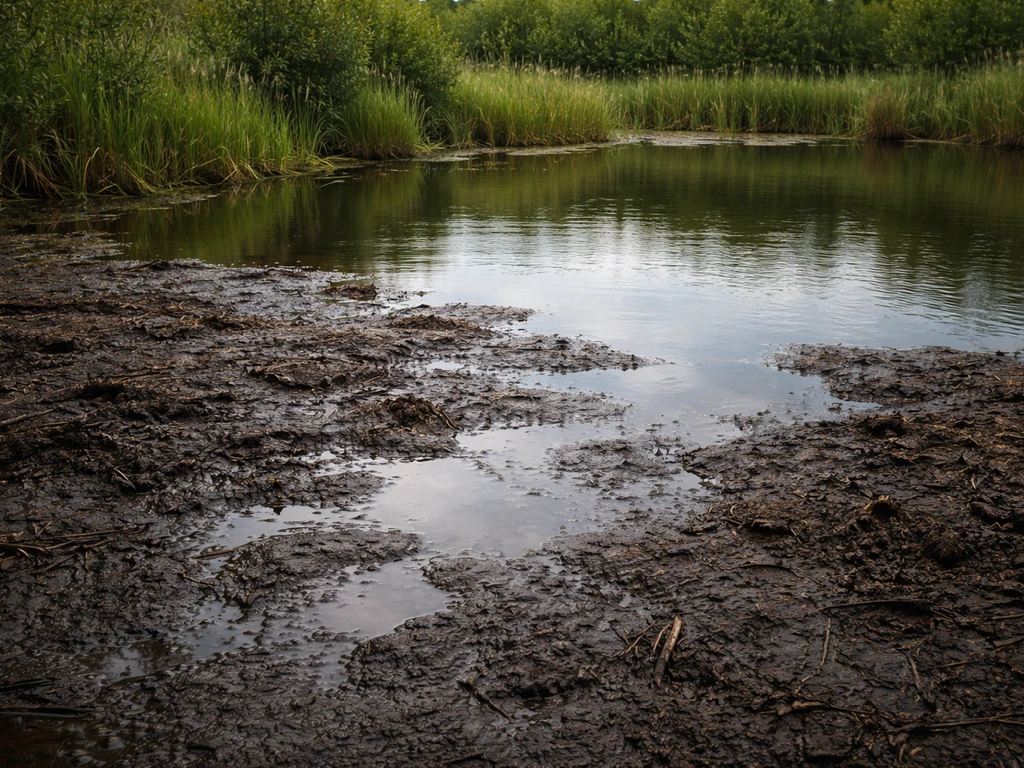
Not every puddle after a rainstorm qualifies. Ecologically speaking, a wet or swampy area is defined by saturation with water being the dominant factor shaping the soil and the plant community living in it. The USGS puts it plainly: wetlands are lands where the substrate is at least periodically saturated or covered by water, and that prolonged saturation is what drives hydric soil development and supports hydrophytic plants. One wet week doesn't create a wetland. Sustained, recurring saturation does.
In practical terms, there are a few distinct wet habitat types you'll encounter, and they're not all the same place for plants. Swamps are typically forested or shrub-dominated wetlands where trees like swamp tupelo, bald cypress, and willow oaks grow in saturated or seasonally flooded soils. Trees that grow in marshy areas are called swamp trees or wetland trees, depending on the exact habitat.
Marshes are non-forested wetlands, frequently or continually inundated with water, and dominated by soft-stemmed emergent vegetation like cattails, bulrushes, and pickerelweed. Water levels in marshes generally range from a few inches to two or three feet, and some marshes do dry out periodically. Bogs and fens are peat-forming wetlands with their own specialist plants. The point is that swamps and marshes are distinct systems, and knowing which one you're dealing with helps you pick the right plants.
| Wetland Type | Vegetation Form | Water Depth/Pattern | Example Plants |
|---|---|---|---|
| Swamp | Trees and shrubs dominant | Seasonally flooded to saturated | Bald cypress, buttonbush, swamp tupelo |
| Marsh | Emergent soft-stem plants | Few inches to 2-3 feet, may dry periodically | Cattails, pickerelweed, bulrushes |
| Bog/Fen | Low shrubs, mosses, sedges | Permanently saturated, peat soils | Sphagnum moss, carnivorous plants, sedges |
| Wet Prairie / Seasonal Wetland | Grasses and forbs | Seasonally wet, may dry in summer | Swamp milkweed, sedges, joe-pye weed |
How to confirm your site actually has wetland conditions
This is where a lot of people go wrong. They see a low-lying spot that gets soggy in spring and assume it's a wetland. Sometimes it is. Sometimes it's just a slow-draining patch that dries out completely by July, which is a very different situation for plants. Proper wetland identification uses three factors together: hydrology (water presence and duration), hydric soils, and hydrophytic vegetation. You don't need to do a formal delineation, but you do need to look at all three before committing to wetland plants.
Check the hydrology first
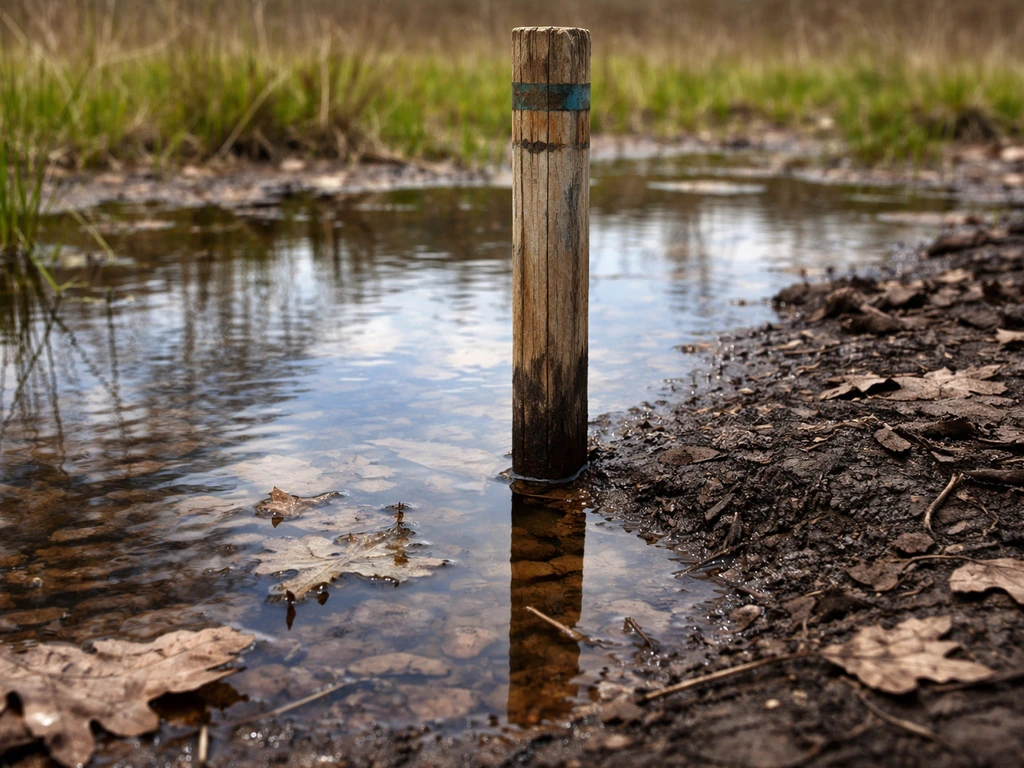
Watch the site across multiple visits over at least a season, ideally a full year. UNH Extension calls this the hydroperiod: the maximum depth of water and the duration of standing water or saturation across your visits. A true wet site holds water or stays saturated in the upper soil for extended periods during the growing season, not just for a few days after heavy rain. If the soil is bone-dry six inches down by midsummer, you're not dealing with a wetland-grade site, and planting obligate wetland species there will likely disappoint you.
Look at the soil
Hydric soils form under conditions of saturation, flooding, or ponding long enough during the growing season to create anaerobic conditions in the upper layer. In the field, that usually shows up as grayish, bluish, or greenish-toned soil (a sign of iron reduction under low oxygen), often with rusty orange or reddish mottling around old root channels where oxygen briefly reached the soil. NRCS calls these redoximorphic features, and they're one of the most reliable signs that a spot stays wet long enough to matter. If you dig down six to twelve inches and the soil looks like it belongs in a drainage ditch, you're looking at hydric soil.
Look at what's already growing there
Existing vegetation is a free field guide. If sedges (not grasses, look for triangular stems), rushes, cattails, willows, or red maples are growing in the low spot, those are strong indicators of wet-site conditions. The EPA treats wetland plant communities as evidence of wetland conditions because hydrophytes don't show up by accident in places that don't suit them. On the other hand, if you're seeing oaks, hickories, and field grasses right up to the low area, the wet zone may be narrower than it looks.
Finding and choosing the right plants for consistently wet areas
Once you've confirmed the site stays genuinely wet, the next step is matching the plant to the exact type of wet. The indicator status system from the National Wetland Plant List is your best starting tool. OBL species are built for standing water or permanent saturation. USACE/NWPL indicator-status definitions describe OBL plants as occurring almost always in standing water or saturated soils OBL species are built for standing water or permanent saturation.. FACW species handle consistently wet soils very well but tolerate brief dry spells. FAC species are more flexible. If your site has standing water for months at a time, you want OBL plants. If it's saturated but not flooded, FACW is often the sweet spot.
Here are a few genuinely reliable hydrophytes to get you oriented, drawn from wetland edges and swampy areas across much of North America:
- Buttonbush (Cephalanthus occidentalis): A native shrub that needs consistently moist to wet, rich soils and handles full to partial sun. It grows right at water's edge and tolerates alkaline conditions, making it one of the most site-tolerant wetland shrubs available.
- Swamp milkweed (Asclepias incarnata): A perennial found naturally in swamps, marshes, bogs, fens, and streambanks. It thrives in average garden soil as long as it never fully dries out in spring, so it works even on the wetter edge of a garden bed.
- Pickerelweed (Pontederia cordata): An emergent aquatic that grows with its roots submerged or in saturated mud, tolerating a wide variety of soils as long as they stay wet. Full sun suits it best.
- Sedges (Carex spp.): A huge genus that spans from moderately wet to permanently saturated conditions depending on species. Many occur in bogs and wet meadows and are excellent indicators of soil moisture regimes.
- Cardinal flower (Lobelia cardinalis): Prefers shade or partial shade but handles full sun if the soil stays consistently wet, making it a good choice for wet spots under a canopy edge.
When searching for plants, use habitat descriptions rather than just hardiness zone. A plant listed as 'tolerates wet soil' is not the same as one listed as 'found in swamps and marshes.' The first might handle a soggy spring; the second is built for it year-round. Nursery tags and USDA plant fact sheets usually describe the natural habitat, and that's the information that actually tells you whether a plant will survive your site.
Quick identification tips and common mix-ups
Swamp vs. marsh: don't confuse them
Swamps and marshes are both wetlands, but they support different plant communities. Swamps have woody plants, trees, and shrubs as the dominant vegetation. Marshes are open water systems dominated by emergent, soft-stemmed plants with no tree canopy. If you're standing in a low area with willow trees and buttonbush shrubs, you're in swamp habitat.
University of Illinois Extension's shrub selector notes that buttonbush (Cephalanthus occidentalis) must have moist soils and can grow in wet sites, including along the water's edge [buttonbush requires moist soils and can grow in wet sites](https://extension. illinois. edu/shrubselector/detail_plant. cfm?
PlantID=333). If you're wading through cattails in open water with no overhead canopy, you're in marsh habitat. The plants that belong in each system overlap somewhat, but getting this distinction right helps you avoid planting shade-tolerant swamp understory plants in a sunny open marsh, or vice versa.
Wetland plants vs. upland plants that just like moisture
This is probably the most common mistake in wet-site planting. Many popular garden plants are described as moisture-loving or preferring moist, well-drained soil, and those phrases are not the same as wetland-adapted. A plant that wants moist, well-drained soil will suffer or die in a spot that stays waterlogged because it can't handle the low-oxygen conditions that develop in saturated soils. True hydrophytes have adaptations for anaerobic root zones.
Rainforest learners often look for hydrophytes, which are the climbers that grow in rainforest climbers that grow in rainforest are called. Plants that just enjoy regular watering do not. When in doubt, check the plant's NWPL indicator status: FACW and OBL plants are your safe choices for genuinely wet sites. FAC plants are a moderate risk.
FACU and UPL plants are wrong choices for consistently saturated ground.
How to tell grasses from sedges in the field
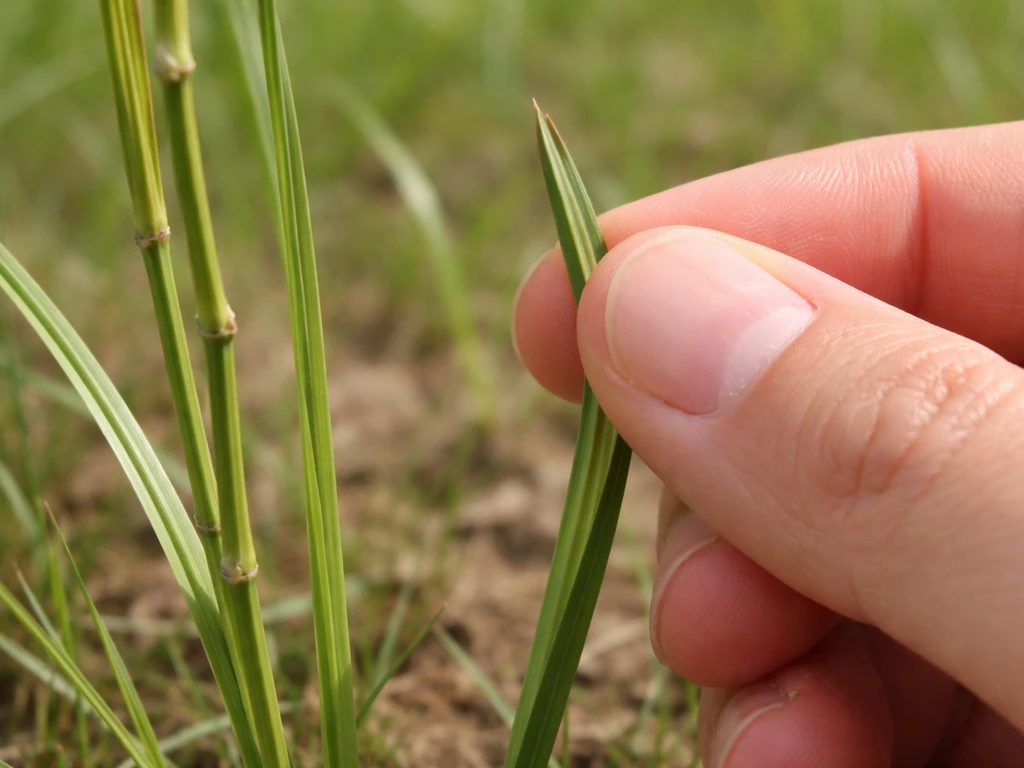
The old field saying is 'sedges have edges, rushes are round, and grasses have nodes from the top to the ground.' Sedges have triangular stems you can feel by rolling them between your fingers. This matters because sedges are overwhelmingly wet-site plants, common in bogs, marshes, streambanks, and wet meadows. If you see what looks like grass in a low wet area and the stem has three edges, it's almost certainly a sedge and a good sign that the site is genuinely saturated on a regular basis.
Related habitats worth knowing
If you're exploring this topic further, it helps to know that plants growing specifically in lakes and ponds occupy a slightly different niche than swamp or marsh plants, often spending their entire lives fully submerged or floating rather than rooted in saturated marginal soils. Plants which grow in lakes and ponds are often described as aquatic plants, a related category of hydrophytes. Marshy areas, tiny moist microhabitats, and forested swamp zones each have their own specialist plant communities. The more precisely you can characterize your site's water regime, the better your plant selections will be. Climbers that grow in rainforest are called lianas, and they are adapted to use surrounding plants for support.
FAQ
If a plant loves water, is it automatically a hydrophyte (plants adapted to wet areas)?
Not necessarily. A plant can be drought-tolerant yet still be considered a hydrophyte if it survives periods of root-zone oxygen depletion caused by saturation. That means “wet-looking site” plants and “always submerged” plants are related, but the defining factor is how the plant handles waterlogged, low-oxygen soils.
How can I tell whether a “wet soil” plant will actually handle my site?
For planting decisions, don’t rely on “moist” or “rain garden” labels alone. Use the plant’s wetland indicator category (OBL, FACW, FAC, etc.) and confirm the site matches the same type of wetness (standing water versus saturation without flooding).
What if my yard is wet only in spring, not all summer, will OBL plants still work?
Yes, seasonal timing matters. Many wet areas look wet in spring but dry out before the growing season is well established. If saturation only occurs right after storms, obligate wet (OBL) plants may struggle because their roots experience low-oxygen conditions for too short a period.
Are hydrophytes the same for coastal wetlands as for inland marshes?
Coastal and lake-edge conditions can create different stress patterns than inland swamps, especially salinity and changing water levels. Some plants are hydrophytes but are not salt-tolerant, so check whether the species is adapted to brackish or saline conditions if your site is near the ocean or affected by salty runoff.
Can I plant lake-and-pond aquatic plants into swamp or marsh edges (and vice versa)?
“Aquatic plants” often refers to lake and pond species that live fully submerged or floating, while “hydrophytes” includes plants adapted to saturated soils at wetland margins. If you plant a true pond plant in a shallow, saturated but not usually submerged edge, it may rot or fail.
Does planting depth matter when using wetland plants?
Yes. A plant can be in the right wetland zone but still fail if the planting depth is wrong. For example, emergent marsh plants typically need consistent saturated roots with limited submersion, while floating or fully submerged species need direct water coverage.
What should I look for when I check for hydric soils in the field?
Look for multiple redoximorphic indicators, not just one color spot. Typical hydric soil signs include gray or bluish reduced layers plus mottles (rusty orange or reddish) around older root channels. If you only see surface wetness but the subsoil lacks these patterns, it may be a non-hydric, slow-draining area.
Can I rely on existing vegetation if the site was recently landscaped or filled?
Yes, because the definition of a wetland is about the substrate staying saturated or flooded for extended periods, and vegetation develops in response to that. If the low spot is frequently disturbed, mulched heavily, or contains imported soil that hasn’t formed hydric characteristics, plants may not “prove” the site is wet.
What if the low area is caused by poor drainage, is that still the same as a wetland?
Sometimes. If a site only holds water briefly, you may be dealing with a drainage or infiltration issue rather than a wetland hydrology. In that case, using wetland indicator categories designed for consistently saturated soils can lead to dieback. Consider improving drainage or selecting FAC plants if you confirm shorter saturation.
My site has areas that look wet and areas that don’t, how do I decide where to plant OBL versus FACW?
Use the site’s dominant condition, but avoid oversimplifying by geography alone. Many wetlands have mosaics, for example, a permanently saturated zone, a seasonally flooded edge, and a slightly higher transitional strip. Running a few targeted checks across the site (depth, saturation duration, and soil color) helps you match plants to each microzone.
What’s the safest approach if I am not sure whether the site is consistently saturated?
If you must plant while uncertain, start with FACW plants, because they tolerate consistently wet conditions and can handle some variability better than OBL species. Then observe the hydroperiod over multiple visits before moving to stricter OBL placements.
What if I think I have sedges, but I am not confident in the identification?
It can happen. “Sedges in wet areas” is a strong clue, but some rush-like or grass-like plants can be misidentified. If you see triangular sedge stems, that supports the idea of wet conditions, but confirm with saturation history or hydric soil signs before committing to strict wetland categories.
Why do some “flood tolerant” garden plants decline in wet areas over time?
Yes, common landscape plants that tolerate occasional flooding often cannot handle prolonged low-oxygen soil. Even if they survive the wet season, they can decline later when the roots remain oxygen-starved. For long-lived success, match the indicator category to your site hydroperiod rather than relying on general “wet-tolerant” marketing.
Should I fertilize wetland plants, or can that make the site worse?
If your water regime is consistent and your plants are properly matched, you usually don’t need to fertilize much. In nutrient-rich, waterlogged soils, additional fertilizer can worsen algae growth or push weak, less-adapted growth. If you do fertilize, use slow-release, low rates and avoid overfeeding pond-edge zones where water can become oxygen-poor.