Plants that stay genuinely short at maturity include creeping groundcovers like thyme and ajuga (under 6 inches), low perennials like coreopsis and sedums (6 to 18 inches), and compact shrubs like dwarf spirea and mugo pine (under 3 feet). The key word is 'maturity', a plant isn't truly 'short' just because it looks small in a nursery pot. To actually keep plants low, you need to match the right species to your climate zone, sun exposure, soil fertility, and spacing from the start, because most cases of unexpected height come down to the wrong plant in the wrong conditions, not bad luck. If you want what plants grow tall and fast, you’ll need to match species to your conditions instead of relying on short-plant rules.
Plants That Do Not Grow Tall: Low Options for Any Zone

Dr. Marcus Weatherby
27 May 2026
What 'doesn't grow tall' actually means in gardening terms
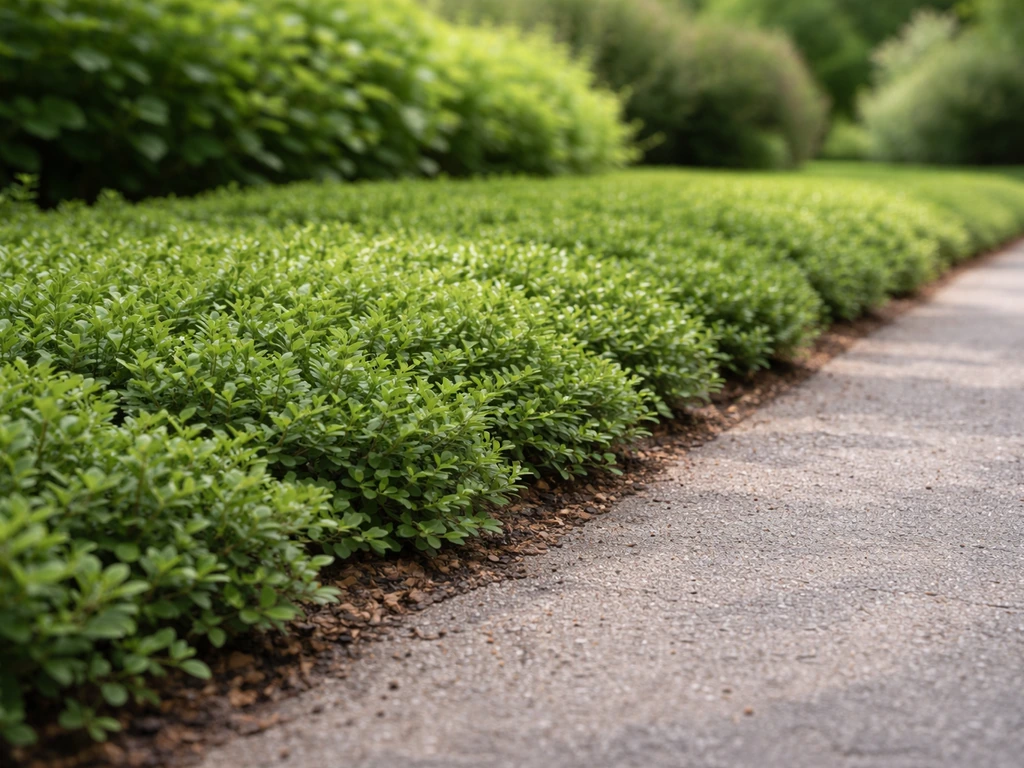
Before picking any plant, it helps to settle on a real height ceiling. Colorado State University Extension defines groundcovers as generally under 12 inches tall at maturity, and that's a solid benchmark for truly low-growing plants. The University of Maryland Extension uses roughly 1 foot as the cutoff for what counts as a groundcover versus a perennial or shrub. Illinois Extension points out that groundcovers can technically range from about 1 inch up to 4 feet, which means 'low' without a number is almost meaningless. For this guide, I'll use three working tiers: very low (under 6 inches), low (6 to 12 inches), and short but upright (12 to 36 inches, which covers compact perennials and dwarf shrubs).
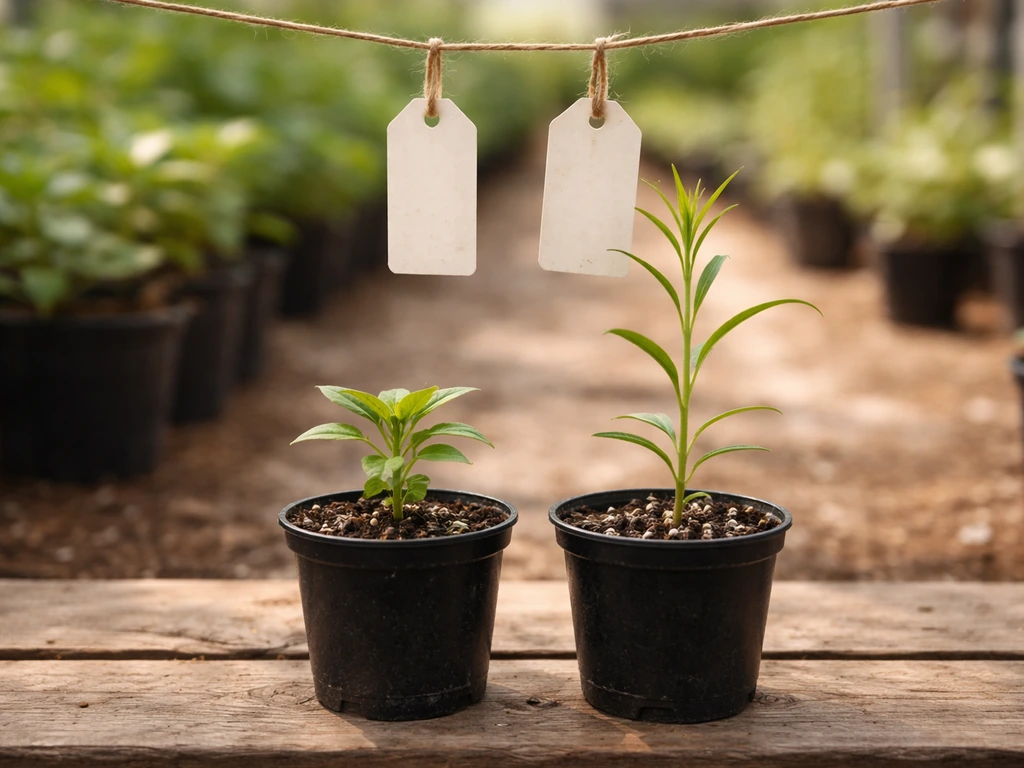
The other critical distinction is seedling size versus mature size. A tomato seedling is 4 inches tall. A mature tomato plant is 5 feet tall. The same logic applies to ornamentals, groundcovers, and shrubs. Always plan spacing and placement around the plant's listed mature height and spread, not what it looks like coming out of the nursery tray. Illinois Extension is clear on this: groundcover spacing should be determined by the plant's mature habit and growth rate, not its current dimensions. If you plant to seedling scale, you'll end up with crowded plants competing for light, which is one of the fastest routes to unexpected upward stretching.
Also consider growth habit versus height. A plant can be short but wide-spreading (creeping phlox), short and clumping (blue fescue), or short and mounding (sedum). These distinctions matter for how you use the plant and whether it actually looks 'low' in context. Spreading groundcovers solve different problems than compact clumping plants, and if you're interested in plants from the opposite end of the spectrum, the contrast with what plants grow tall and fast or tall and narrow makes these choices even clearer.
Best low-growing groundcovers and short perennials by climate and season
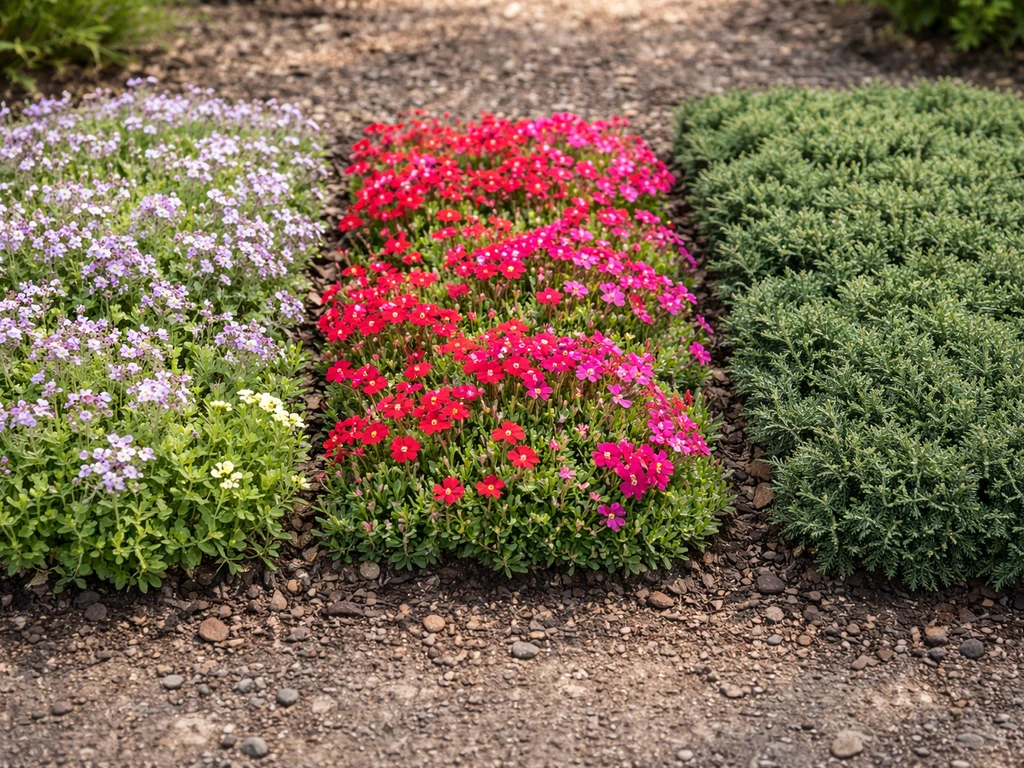
Climate zone and season determine which short plants will actually survive and stay compact for you. Here's a practical breakdown by region and growth window, grounded in where these plants naturally thrive.
Cool-season and northern climates (USDA Zones 3 to 6)
- Creeping thyme (Thymus serpyllum): 2 to 4 inches tall, spreads to 18 inches, full sun, well-drained or rocky soil, Zones 4 to 9. Naturally found in dry, exposed slopes—performs well in thin soils where taller plants struggle.
- Ajuga (Ajuga reptans): 4 to 6 inches tall in bloom, spreads aggressively via runners, tolerates part to full shade, moist to average soil, Zones 3 to 9. Thrives under tree canopies where grass won't grow.
- Wild ginger (Asarum canadense): 6 to 8 inches, shade-tolerant, moist woodland soils, Zones 3 to 7. A native analog to forest floor habitats across the northeastern US.
- Blue fescue (Festuca glauca): 8 to 12 inches, full sun, dry to moderate moisture, Zones 4 to 8. Naturally adapted to dry grassland margins.
- Creeping phlox (Phlox subulata): 4 to 6 inches, full sun, well-drained soil, Zones 3 to 9. Forms dense mats on slopes and rocky outcrops.
Warm-season and southern climates (USDA Zones 7 to 10)
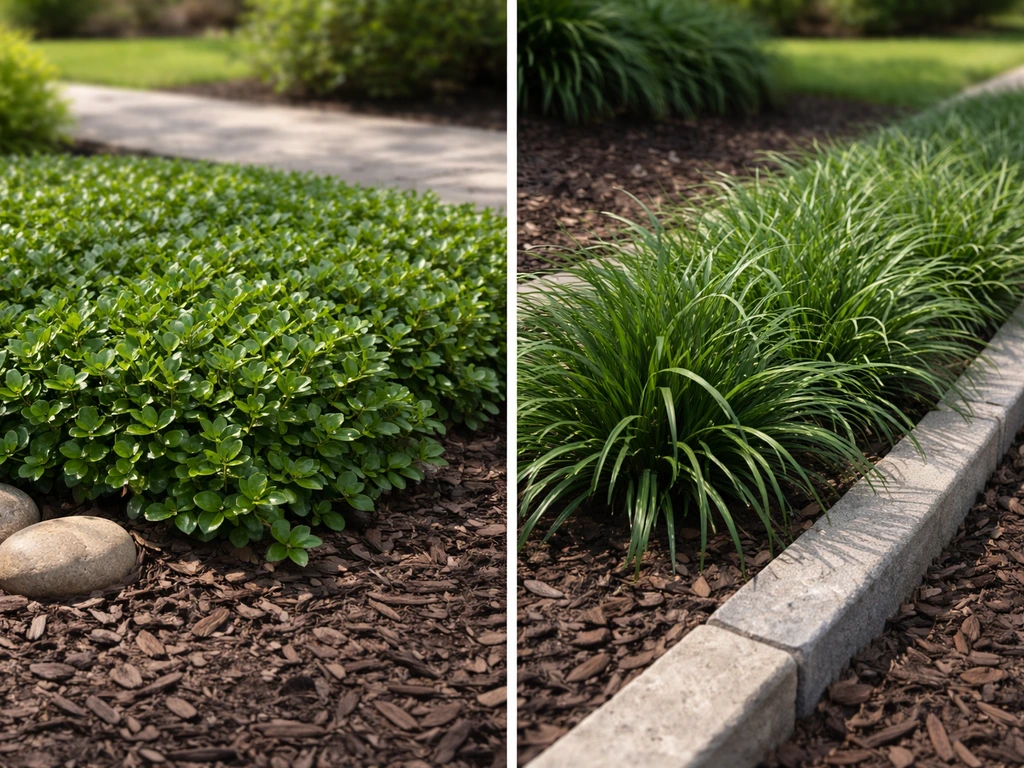
- Asiatic jasmine (Trachelospermum asiaticum): 6 to 18 inches, sun to shade, adaptable soil, Zones 7 to 10. Dense and weed-suppressing once established.
- Mondo grass (Ophiopogon japonicus): 6 to 12 inches, part shade to shade, moist well-drained soil, Zones 6 to 10. A natural fit for shaded southern gardens where little else stays this low.
- Lantana 'New Gold' (compact cultivar): 12 to 18 inches, full sun, well-drained or sandy soil, Zones 9 to 11 (annual elsewhere). Heat-adapted, low, and spreading.
- Moss verbena (Verbena tenuisecta): 6 to 12 inches, full sun, dry or rocky soil, Zones 8 to 10. Found naturally along roadsides and disturbed dry sites in the South.
- Dwarf lilyturf (Liriope spicata): 8 to 12 inches, tolerates deep shade, moist or dry soil, Zones 4 to 10.
Arid and western climates (Zones 5 to 9, low precipitation)
- Ice plant (Delosperma cooperi): 2 to 6 inches, full sun, very well-drained or sandy soil, Zones 5 to 9. Naturally adapted to dry rocky slopes in southern Africa; thrives in Colorado high desert conditions.
- Woolly thyme (Thymus pseudolanuginosus): 1 to 3 inches, full sun, dry rocky soil, Zones 5 to 8. One of the flattest-growing groundcovers available.
- Sedums (Sedum acre, S. album): 2 to 6 inches, full sun, poor or rocky soil, Zones 3 to 9. Found wild on talus slopes and rocky outcrops across North America and Europe.
- Penstemon pinifolius (pineleaf penstemon): 12 to 18 inches, full sun, well-drained soil, Zones 4 to 9. Native to the southwestern US mountains; compact and upright but stays reliably under 18 inches.
- Kinnikinnick (Arctostaphylos uva-ursi): 4 to 6 inches, full sun to part shade, acidic sandy or rocky soil, Zones 2 to 6. Naturally grows in boreal forests and alpine zones across northern North America.
Pacific Northwest and cool-humid climates (Zones 6 to 9)
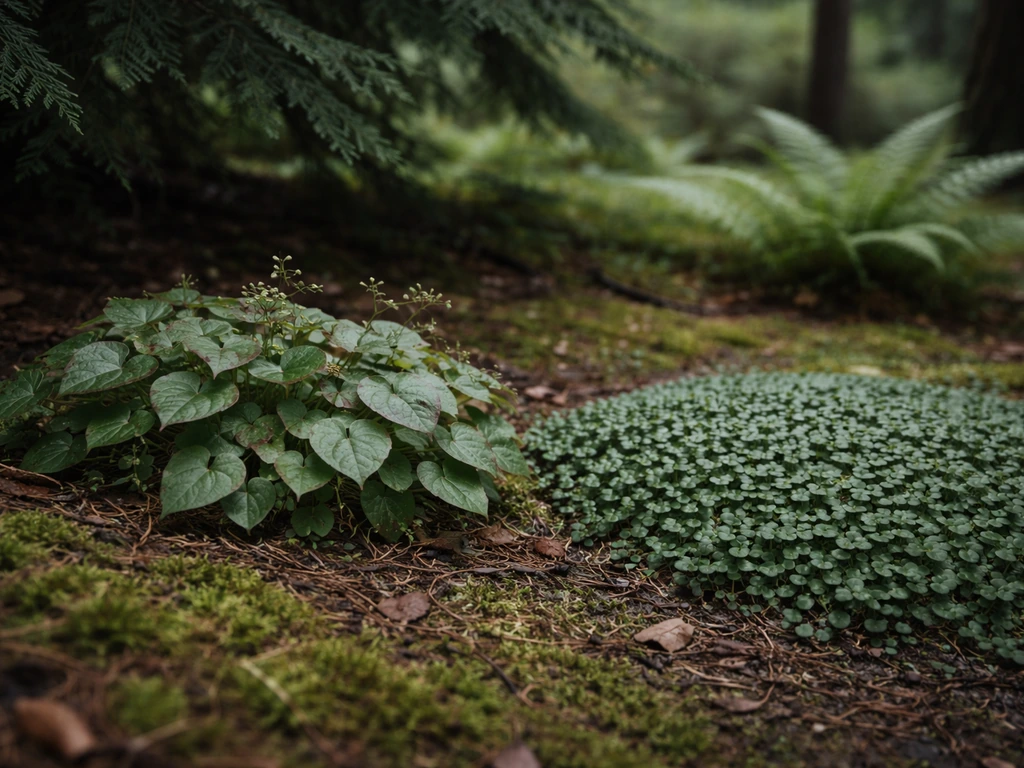
- Epimedium (Epimedium spp.): 8 to 12 inches, shade to part shade, moist well-drained soil, Zones 4 to 9. Thrives under conifer canopy.
- Brass buttons (Leptinella squalida): 1 to 3 inches, part shade, moist or moderately wet soil, Zones 5 to 9. Forms a flat, mossy carpet—excellent for cool, wet Pacific coast conditions.
- Ceanothus 'Carmel Creeper' (low-spreading form): 12 to 24 inches, full sun, well-drained soil, Zones 8 to 10. Native California chaparral analog for slope stabilization.
- Cornus canadensis (bunchberry): 4 to 8 inches, shade, moist acidic soil, Zones 2 to 6. A native forest-floor plant of the Pacific Northwest and boreal zones.
Short shrubs and compact woody plants that actually stay small
Compact woody plants are one of the most misunderstood categories when it comes to 'staying low.' There are two very different routes here: plants that are genetically dwarf or slow-growing and will naturally stay compact, and plants that need ongoing pruning to stay short. These are not the same, and confusing them leads to years of frustration.
Genuinely dwarf or slow-growing woody plants
- Mugo pine (Pinus mugo var. pumilio): 3 to 5 feet at full maturity over decades, Zones 2 to 7. Naturally slow-growing; a seedling planted today will still be under 2 feet in 10 years without any pruning.
- Dwarf Korean spirea (Spiraea japonica 'Little Princess'): 24 to 30 inches, Zones 4 to 9. Stays compact by nature and only benefits from light annual pruning after bloom.
- Dwarf inkberry (Ilex glabra 'Shamrock'): 3 to 4 feet, Zones 4 to 9. Native to wetland edges in eastern North America; naturally compact form.
- Compact Oregon grape (Mahonia aquifolium 'Compacta'): 18 to 24 inches, Zones 5 to 9. A shorter form of a Pacific Northwest native.
- Potentilla fruticosa (shrubby cinquefoil): 2 to 4 feet, Zones 2 to 7. Native to subalpine meadows and prairie margins; naturally mounding and self-limiting in height.
The pruning reality for compact shrubs
If you're relying on pruning to keep a naturally tall shrub short, understand what you're committing to before planting. Rutgers Extension warns that frequent shearing reduces flowering and can eventually create dead interior branches in woody plants. Oklahoma State Extension adds that wrong pruning timing or technique can kill or permanently disfigure certain plants, especially broadleaf and needled evergreens that don't regenerate from old wood.
Oklahoma State University Extension also notes that wrong pruning timing or technique can kill or permanently disfigure certain broadleaf and needle evergreen plants that do not regenerate from old wood wrong pruning timing or technique can kill or permanently disfigure certain plants.
The Wisconsin Extension principle for any pruned hedge or shrub is to keep the top narrower than the base so lower branches still receive light, otherwise lower foliage dies back and you get a leggy, bare-legged shrub, not a low one.
Mississippi State Extension points out that shearing changes a plant's natural form and can trigger dense regrowth right at the cut point, which often looks unnatural and requires more and more frequent cutting over time. If you want a genuinely compact plant, choose a genetically dwarf cultivar and skip the heavy maintenance burden. The label 'dwarf' on a cultivar name (like 'Nana,' 'Compacta,' or 'Minima') usually signals a slower growth rate and lower mature height than the straight species, but always verify the listed mature height, because 'dwarf' on a large tree can still mean 15 feet.
Container-friendly low-height plants for small spaces
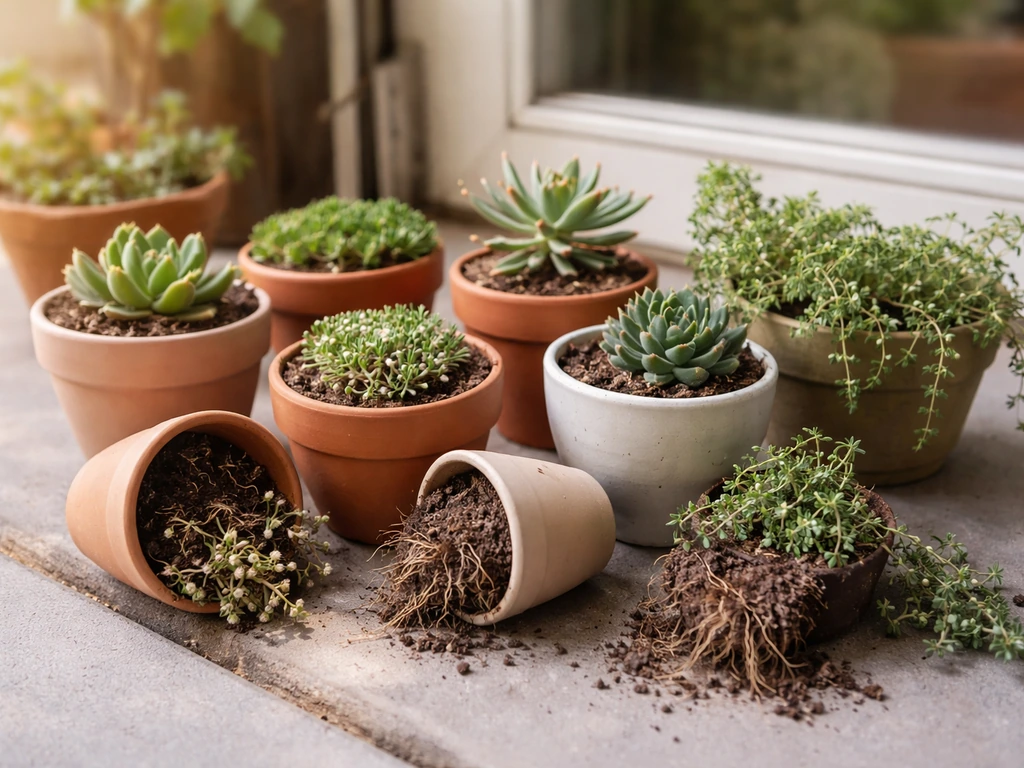
Containers restrict root volume, which naturally limits how tall most plants will get, but that's only part of the story. Light is the bigger variable. Both University of Maine Extension and NC State Extension are direct about this: insufficient light is the primary reason container plants grow tall and spindly rather than staying compact and bushy.
When stems stretch toward a light source, internodes (the sections of stem between leaves) get longer, and the plant looks tall and weak rather than short and full. This stretching is often what people notice in plants that grow tall and narrow when they do not get enough light what plants grow tall and narrow.
The fix is simple but non-negotiable: move the container to a spot with more direct light, or choose a shade-tolerant species if you're working with a low-light space.
For truly low-height container plants, match the container volume to the plant's natural root spread. A small container limits growth more aggressively than a large one, but it also stresses the plant through drought and nutrient depletion faster. The best approach is to choose inherently compact plants rather than trying to restrict a large plant in a small pot.
| Plant | Max Height in Container | Light Requirement | Best Zones | Notes |
|---|---|---|---|---|
| Creeping thyme | 3 to 5 inches | Full sun (6+ hours) | 4 to 9 | Thrives in shallow terra cotta; tolerates drought |
| Sedum (stonecrop) | 4 to 8 inches | Full sun | 3 to 9 | Excellent in shallow wide containers |
| Dwarf mondo grass | 4 to 6 inches | Part shade to shade | 6 to 10 | Good for low-light patios |
| Lobularia (sweet alyssum) | 4 to 6 inches | Full sun to part shade | Annual everywhere | Self-seeds; stays very low |
| Portulaca (moss rose) | 4 to 8 inches | Full sun | Annual everywhere | Built for hot, dry containers |
| Ajuga | 4 to 6 inches | Part to full shade | 3 to 9 | Spreads to fill container edges |
| Thrift (Armeria maritima) | 6 to 10 inches | Full sun | 4 to 8 | Coastal-adapted; salt-tolerant |
| Compact heuchera | 8 to 12 inches | Part shade | 4 to 9 | Choose 'Petite' series for lowest height |
Matching plants to your conditions: zone, sun, soil, moisture, and space
Your USDA hardiness zone tells you which plants will survive your winters, but it's only one filter. Sun exposure, soil drainage, moisture availability, and the actual square footage you're working with all narrow down your list further. Here's how to work through the decision in order.
- Find your USDA hardiness zone first. This eliminates plants that won't survive your coldest winter temps. Use the USDA Plant Hardiness Zone Map (updated 2023) as your baseline—many zones shifted half a zone warmer in the 2023 revision, so double-check if you're using an older reference.
- Measure your sun exposure honestly. Count actual hours of direct sun on the planting spot at the time of year you're planting. Full sun means 6 or more hours; part shade is 3 to 6 hours; shade is under 3 hours. This single factor eliminates more plants than anything else.
- Check your soil drainage. Dig a 12-inch hole, fill it with water, and see how long it takes to drain. Under 1 hour means fast-draining or sandy soil—choose drought-tolerant low plants like sedums or thyme. Over 4 hours means poor drainage—choose wetland-adapted low plants like dwarf inkberry or creeping Jenny.
- Consider soil fertility. Low-fertility, lean soils naturally discourage excessive vertical growth. Rich, heavily amended soils encourage plants to grow taller and faster than their labeled mature height—more on this in the next section.
- Measure your space in square feet and plan to mature spread, not seedling size. Illinois Extension is clear that groundcover spacing should reflect the plant's mature habit. Placing plants too close creates crowding, which drives upward competition for light.
- Account for your regional climate analog. Plants perform most predictably when their site conditions echo their native habitat. A dry, rocky slope in Colorado is naturally suited to sedums and ice plant. A moist, shaded woodland edge in Virginia is naturally suited to wild ginger and epimedium. Use habitat thinking to shortlist candidates.
| Condition | Best low-growing options | Avoid |
|---|---|---|
| Full sun, dry or rocky soil | Creeping thyme, sedum, ice plant, penstemon | Ajuga, epimedium, wild ginger |
| Part shade, moist soil | Ajuga, epimedium, dwarf mondo grass, creeping Jenny | Portulaca, creeping thyme, ice plant |
| Full shade, moist soil | Wild ginger, bunchberry, brass buttons, dwarf lilyturf | Sedum, creeping phlox, thyme |
| Full sun, humid and hot | Asiatic jasmine, lantana (compact), moss verbena | Kinnikinnick, bunchberry |
| Cold winters (Zone 3 to 4), any sun | Ajuga, creeping phlox, kinnikinnick, potentilla | Asiatic jasmine, mondo grass |
| Wet or clay soil | Dwarf inkberry, creeping Jenny, sedge (Carex) | Sedum, thyme, ice plant |
Why plants get taller than expected (and how to stop it before it starts)
This is where most low-plant projects quietly go wrong. The plant wasn't wrong, the conditions were. Here are the most common causes of unexpected height, with direct prevention steps.
Too much nitrogen in the soil
Nitrogen drives vegetative (leafy, stem) growth above everything else. If you've heavily amended your bed with compost, manure, or a balanced fertilizer before planting low-growing species, you're essentially feeding them to grow taller. Naturally lean soils, sandy, rocky, or low-organic-matter soils, are where compact groundcovers and short perennials naturally stay true to their labeled size. For plants you want to stay low, skip the nitrogen-heavy feeding. If your soil is already rich, choose species naturally adapted to fertile soils, or top-dress with gravel or sand to discourage lush vertical growth.
Insufficient light causing stretch
This is the most common cause of leggy, unexpectedly tall container plants and also affects in-ground plants placed in shade they weren't designed for. Illinois Extension calls insufficient light the most common cause of etiolated (stretched, leggy) seedlings. NC State Extension describes the mechanism clearly: when light is low, internodes between leaves get longer as the stem stretches toward the light source. The fix for containers is to physically move them to a brighter spot. For in-ground plants, trim overhanging branches if possible, or replace shade-growing plants with species actually suited to low light, they'll stay compact because they're not fighting for photosynthesis.
Crowding and competition
When plants are too close together, they compete for light from above, and the natural response is to grow taller. This is basic plant ecology: in a dense stand, the plants that grow faster upward get the light, and others follow. Spacing plants to their mature spread at planting time prevents this. Yes, your new groundcover bed will look sparse for the first season. That's correct. Fill gaps temporarily with mulch, not with extra plants. Illinois Extension's guidance on groundcover spacing is straightforward: the right spacing depends on the plant's habit and rate of growth, not on how full you want it to look on day one.
Buying the wrong cultivar or species
Many low-growing species have both standard and dwarf forms, and a generic nursery label sometimes doesn't distinguish between them. Spiraea japonica can mean a 4-foot shrub or a 24-inch compact cultivar depending on which one you grab. Always check the specific cultivar name and its listed mature height, not just the genus. If you're buying from a local nursery, ask which cultivar it is and what the expected mature height is in your region, plants often grow slightly larger in warm, humid climates and slightly smaller in cold, dry ones.
Wrong soil fertility or pH for the species
Some short plants stay short because they've adapted to poor, low-pH, or otherwise difficult soils. Plant them in rich, neutral garden soil and they'll grow taller and potentially become more vigorous than expected. Wild blueberry, kinnikinnick, and creeping snowberry are examples of native groundcovers that stay naturally compact in acidic, low-fertility soils but can grow more aggressively in richer conditions. Match the soil profile to the plant's native habitat when possible.
Late-season or late-maturing varieties
Some plants labeled 'compact' are simply slower to reach their full size. They look short for the first two or three seasons and then continue growing to a larger mature form than you expected. This isn't deception, it's just a slow-maturing cultivar. If you want plants that grow slow, look for varieties that are described as slow to reach their mature size slow-maturing cultivar. The solution is to read the full mature height spec, not the first-year expected height. If the label only shows first-year performance, ask your nursery or check the plant's full species profile.
Quick-start plant lists and how to pick one today
Here's a practical decision framework you can apply right now. Answer three questions: What's my USDA zone? How much direct sun does the spot get? Is the soil wet, average, or dry? Then match your answers to the list below. These are all reliably short at maturity (under 18 inches) and are widely available at regional nurseries in late spring, which is exactly when most readers are looking. For more ideas, see a quick list of what plants grow quickly in different seasons and conditions.
| Your situation | Top 3 plant picks | Max mature height |
|---|---|---|
| Zones 3 to 5, full sun, dry soil | Creeping thyme, sedum 'Angelina', creeping phlox | Under 6 inches |
| Zones 3 to 5, part shade, average soil | Ajuga, wild ginger, epimedium | 6 to 10 inches |
| Zones 6 to 8, full sun, average soil | Creeping thyme, dwarf spirea, armeria | 6 to 30 inches |
| Zones 6 to 8, part shade, moist soil | Heuchera (compact), dwarf mondo grass, epimedium | 8 to 15 inches |
| Zones 9 to 11, full sun, dry soil | Lantana 'New Gold', portulaca, prostrate rosemary | 6 to 18 inches |
| Zones 9 to 11, part shade, moist soil | Asiatic jasmine, dwarf lilyturf, mondo grass | 6 to 18 inches |
| Any zone, container, full sun | Creeping thyme, sedum, sweet alyssum | Under 8 inches |
| Any zone, container, part shade | Ajuga, compact heuchera, dwarf mondo grass | 6 to 12 inches |
When you get to the nursery, bring your zone, sun hours, and soil type written down. Pick up the plant tag and check three things: mature height, USDA zone range, and sun requirement. If all three match your site, you've got a strong candidate. If the mature height isn't listed, that's a red flag, ask before buying.
And remember that 'plants that do not grow tall' is a category defined by mature specs, not by what's sitting in a 4-inch pot on a garden center bench in May. Some plants can also stay low while producing little to no flowers, which is useful if you want foliage-only interest plants that do not grow flowers. The plant you're holding right now is probably a seedling or first-year specimen.
Where it ends up in three years is what actually matters.
One last note: all groundcover plantings require ongoing maintenance, as Colorado State Extension points out. Low-growing doesn't mean no-care. Weeds will emerge until the planting closes in, and that's where proper spacing and a 2-inch mulch layer over bare soil pays off immediately. Once established, most of the compact plants listed here are genuinely low-maintenance compared to alternatives, but 'low-maintenance' starts with a well-matched plant in the right site, not just any short-looking thing pulled off a shelf.
FAQ
How can I tell if a plant that looks short in the nursery will stay short after a few years?
If you have only a genus name (or a generic “compact” description), treat it as a risk. Look for the exact cultivar on the tag and verify the listed mature height. If the tag only shows nursery size or first-year size, ask the nursery or check the species profile, because some “compact” plants are simply slow to reach their mature form.
Why do my “short” plants get tall and leggy even when I didn’t fertilize much?
Yes, especially when the plant is being kept in too little light indoors or in a dark patio corner. Low light causes longer internodes and weak, stretched growth, so the fix is to confirm at least the label’s required light for your spot and then acclimate gradually if you move it to brighter sun.
What spacing mistake makes low plants suddenly grow upward?
Use spacing based on the plant’s mature spread, not how full you want the bed on day one. If you plant tighter than the mature width allows, the plants compete for light and the fastest growers stretch upward. Filling gaps temporarily with mulch is safer than adding more plants immediately.
Can rich soil or compost make low-growing plants get taller?
Often it is the soil nitrogen level and not “the plant type.” Heavy compost, manure, or nitrogen-rich fertilizer can push leafy stem growth beyond the labeled size, particularly in beds that are already fertile. For low plants, switch to minimal feeding (or no feeding the first season) and avoid high-nitrogen amendments.
Do compact plants always stay compact without pruning?
Cutting back woody plants is not the same as buying a naturally low cultivar. If a shrub is not genetically dwarf, you may need repeated pruning to control height, and frequent shearing can reduce flowering and create problems like bare interiors. For “no pruning” goals, prioritize genetically dwarf or slow-growing varieties instead of counting on trimming.
Will my dwarf plant’s mature height match the label exactly in my climate?
Not always. Many dwarf labels refer to slower, smaller growth, but the same cultivar can perform slightly larger in warm, humid climates and smaller in cold, dry ones. Confirm the mature height in the tag and consider your local conditions, especially your summer heat and winter severity.
Can I keep plants short by using a smaller container?
Yes, but do it carefully. Pot restrictions can limit root volume, which can limit height, yet insufficient light is the bigger reason for tall, spindly container plants. Also, small containers dry out and deplete nutrients faster, so you may trade “tall” for “stressed.” Choose inherently compact plants first, then match container size to their natural root spread.
How much maintenance should I expect with groundcovers or compact perennials?
For the lowest effort outcomes, choose species and cultivars that match your site’s moisture and light, and then use mulch to reduce weeds while the canopy closes. Expect at least some weeding until the planting fills in. “Low” does not mean “no care,” especially during the establishment period.
Are there short plants that stay low but produce little or no flowers?
Yes, some short plants are bred for foliage-only or minimal bloom. If you want low height without flowers, look for varieties described as low-flowering or primarily grown for leaves. The mature habit (height and spread) still matters because flowering can correlate with different growth forms in some species.
What’s a quick way to choose “plants that do not grow tall” at the store?
If your goal is “under a true height ceiling,” start by using mature height categories (for example, very low under 6 inches, low 6 to 12 inches, and upright but still short up to about 36 inches). Then match zone, direct sun, and soil moisture, and verify the tag lists mature height, not only first-year performance.