
Ghost plants (most commonly Monotropa uniflora, also called Indian pipe or ghost pipe) grow on the shaded forest floor of mature temperate and mixed coniferous forests across a wide swath of North America, from the Atlantic coast west to the Pacific Northwest and into parts of Canada, with a core range spanning the eastern U.S. and extending north into southern Canada. They don't photosynthesize at all, so you won't find them in open fields, sunny edges, or scrubby second-growth. You need deep shade, moist leaf litter, and most importantly, mature stands of trees that host the specific mycorrhizal fungi these plants secretly feed on.
Where Do Ghost Plants Grow? Find Indian Pipe in the Wild

Dr. Marcus Weatherby
3 Jun 2026
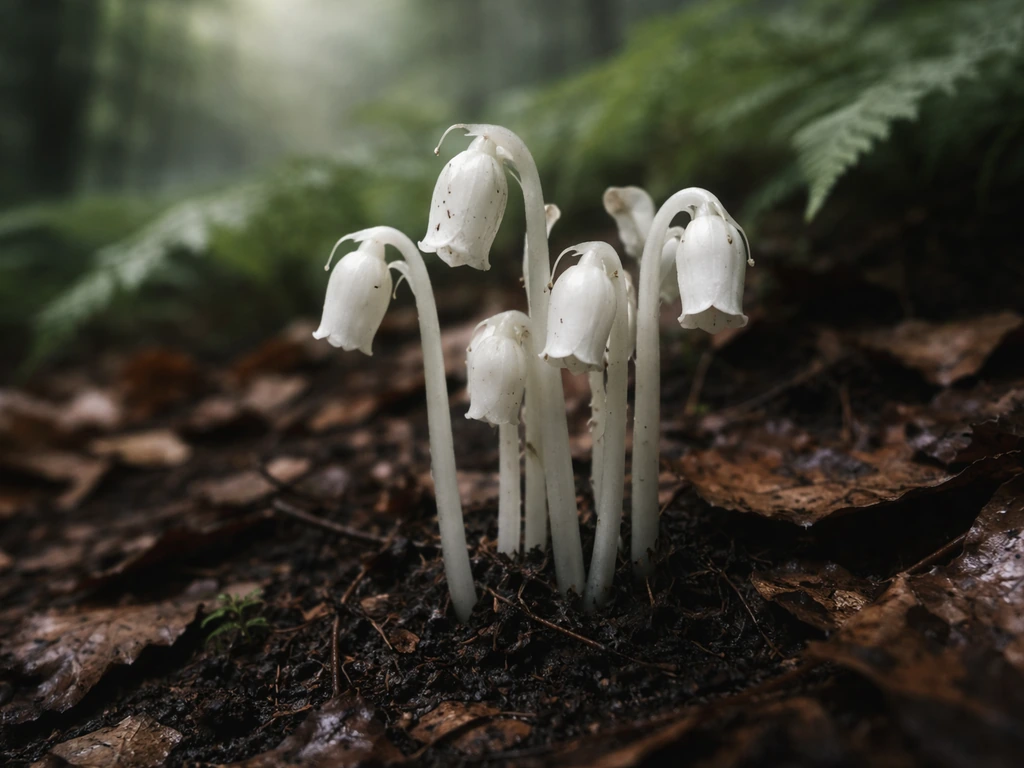
Which 'ghost plant' are we actually talking about?
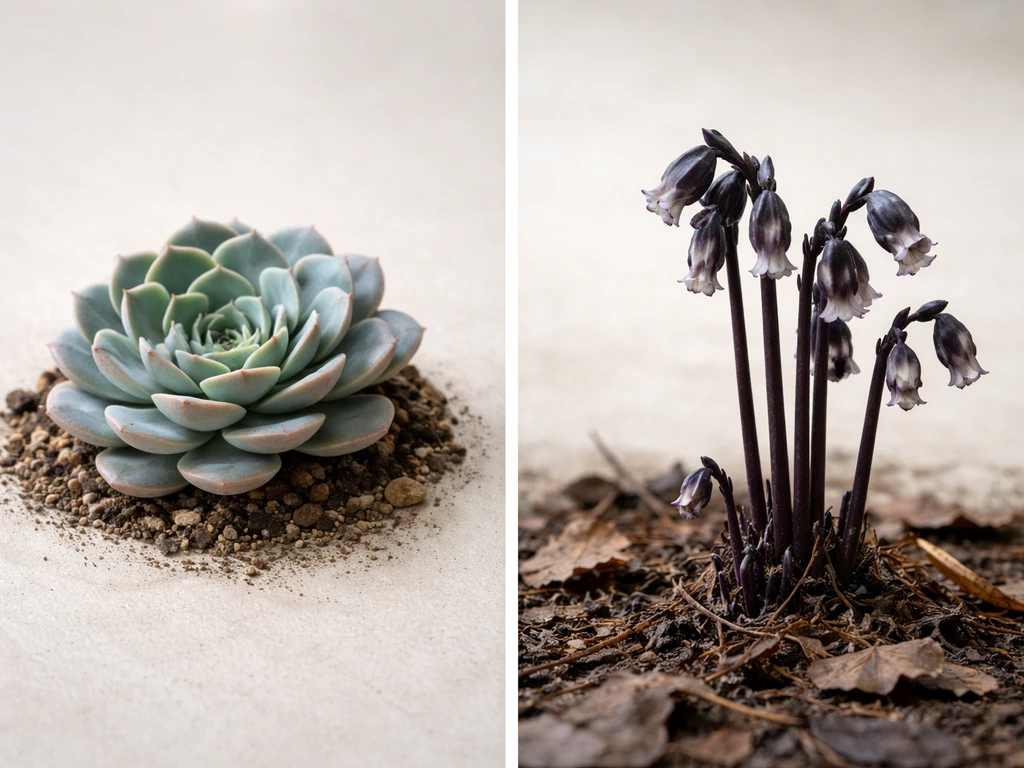
The name 'ghost plant' gets attached to a few very different plants depending on who you ask. In succulent gardening circles it refers to Graptopetalum paraguayense, a fleshy rosette from the Mexican highlands. In some regions, 'ghost plant' also gets used for pale or unusual-looking ornamentals. But in North American nature guides, ecology field work, and the context this article is written for, 'ghost plant' almost always means Monotropa uniflora, the ghostly white mycoheterotroph of the forest floor. The USDA Forest Service officially uses both 'ghost plant' and 'Indian pipe' for this species, and those two names are essentially interchangeable in most field contexts. A third name, 'ghost pipe,' is also common but is technically used for multiple taxa, so it's worth double-checking when you see it in older regional guides.
There's one more wrinkle worth knowing: in the southeastern U.S., particularly in Florida scrub habitats, you may encounter references to 'scrub ghost-pipe' or 'southern ghost-pipe.' This usually refers to Monotropa brittonii, a closely related species that was formerly treated as a variety of M. uniflora but is now recognized as distinct. Its fungal associations and scrub habitat differ from the classic M. uniflora woodland ecology described throughout this guide. If you're searching in Florida or deep-south scrublands, that distinction matters.
What habitat does ghost plant actually need?
Understanding why ghost plants grow where they do requires understanding what they are. Monotropa uniflora is mycoheterotrophic, meaning it gets all of its nutrition through an association with fungi rather than through photosynthesis. It has no chlorophyll, which is why it looks waxy and white (or occasionally pale pink or reddish). The plant taps into Russulaceae family fungi, and those fungi are themselves in mycorrhizal relationships with the surrounding trees. MDC also states that ghost pipe’s associated fungi are in the Russulaceae family Russulaceae family fungi. In effect, M. uniflora is parasitizing the fungus, which is parasitizing the tree, which is doing the actual photosynthesis. Take away any link in that chain and the ghost plant can't exist.
That biology translates directly into very specific habitat requirements. The plant needs mature, undisturbed forest with deep organic duff and leaf litter on the floor. It favors moist conditions, consistently so, not just seasonally damp. It grows under dense canopy where light levels are low enough that photosynthetic competition is minimal. Coniferous and mixed coniferous-deciduous forests are the classic setting, and the Monotropoideae group (which includes Monotropa) is broadly described as being limited to forests with low light availability and sufficient moisture to support the host fungi.
- Dense, mature tree canopy providing consistent shade
- Moist, humus-rich soil with a deep duff layer of decaying leaf litter or needles
- Presence of Russulaceae fungi (associated with trees like oaks, beeches, conifers)
- Undisturbed forest floor, not recently logged, graded, or heavily trafficked
- Consistent soil moisture, not seasonally bone-dry
The forest type that comes up most consistently in regional records is moist mixed woodland or deciduous forest, especially where oaks and beeches dominate in the east, and conifer-dominated forests in the west and north. You'll often see ghost plants clustered near the base of large, established trees rather than scattered randomly. That clustering reflects the localized fungal networks beneath the surface.
Where ghost plants grow by region
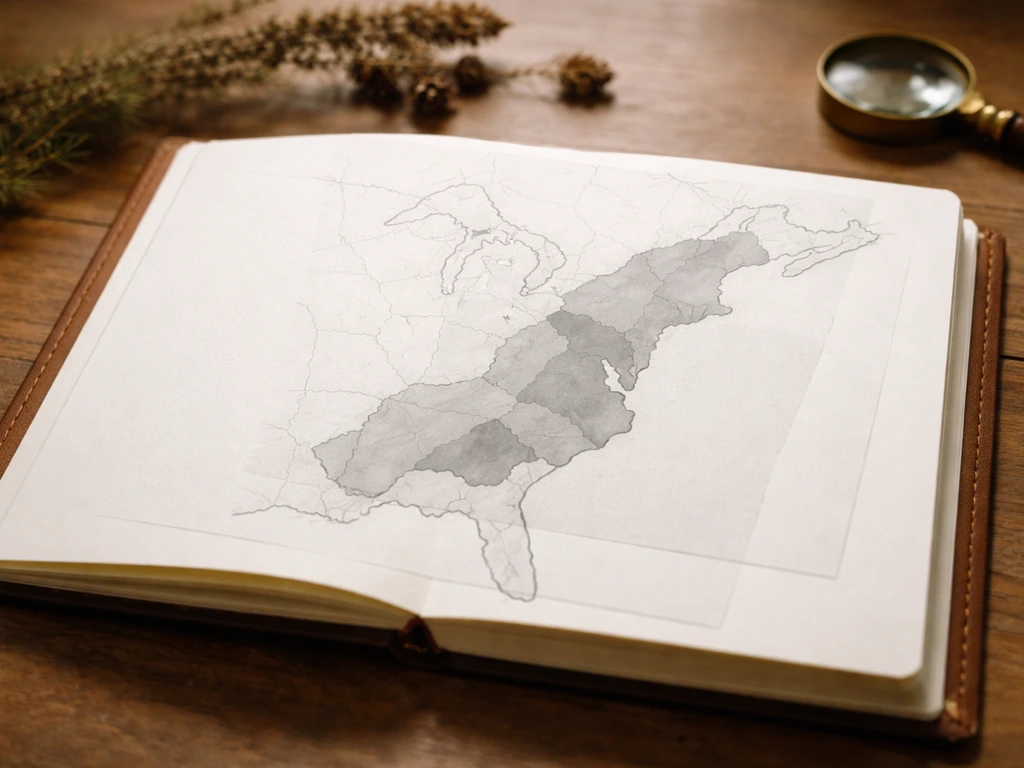
The core of M. uniflora's range is the eastern half of North America. It's reliably documented across the entire eastern U.S. from Maine down through Florida, west through the Midwest, and north into the eastern Canadian provinces. The Pacific Northwest (Oregon, Washington, British Columbia) also supports strong populations, especially in moist coniferous forests at mid elevations. The University of Washington’s plant data sheet notes distribution in the northern states and in southern provinces of Canada, and it emphasizes higher elevations with moist conditions higher elevations and moist conditions. Populations have been recorded in parts of California as well, where the species is tracked as a rare plant with limited distribution.
There are significant gaps. The USDA Forest Service explicitly notes the species is absent from the Southwest, the intermountain west, and the central Rocky Mountains. If you're searching in Arizona, Nevada, Utah, or the high plains of the Dakotas, you won't find M. uniflora. The gaps make sense ecologically: those regions lack the consistent moisture and the mature mesic forest cover the species requires.
| Region | Presence | Typical Forest Type | Notes |
|---|---|---|---|
| Eastern U.S. (New England to Mid-Atlantic) | Reliable, common | Mixed deciduous, oak-beech | Best-documented populations; June–September window |
| Southeastern U.S. (inc. Florida) | Present; some variation | Mixed forest; Florida scrub for M. brittonii | M. brittonii may occur in scrub habitats instead |
| Midwest (Missouri, Indiana, Ohio) | Present in suitable forest | Moist mixed woodland | Patchy; restricted to undisturbed mature stands |
| Pacific Northwest (OR, WA, BC) | Present, sometimes locally common | Moist coniferous forest | Mid-elevation records common in wetter zones |
| Northern California | Rare, tracked | Coniferous or mixed forest | Listed as a rare plant; limited records |
| Southwest / Intermountain West | Absent | N/A | Too dry; absent from AZ, NV, UT, central Rockies |
| Southern Canada (ON, QC, BC, Maritime provinces) | Present | Mixed and coniferous forest | Documented in provinces bordering the core U.S. range |
Outside North America, the species or close relatives appear in parts of Asia (Japan, parts of eastern Asia), but those populations are outside the scope of most North American nature searches. If you're looking at a European field guide and seeing 'ghost plant,' that's likely a different context entirely.
When to look: seasonality and timing
Ghost plants emerge above ground only for a brief seasonal window. Flowering runs roughly from June through September in most of the range, with some regional variation. In Massachusetts, populations typically begin appearing in June and persist through September. In the New Jersey Pinelands, bloom time is recorded from early July into September or even October, with fruit developing August through October. The plants are only visible above ground during this window, making timing everything for a successful search.
The early-to-mid summer period after a stretch of wet weather is often the best moment. Ghost plants tend to push up after sustained moisture, and damp years produce more visible clusters than drought years. If you're searching in late May, you may be just early, depending on latitude and elevation. If you're looking in November, you've missed them entirely. The rest of the year the plant exists only as a network of roots and fungal connections underground, completely invisible.
How to find ghost plants on a specific site
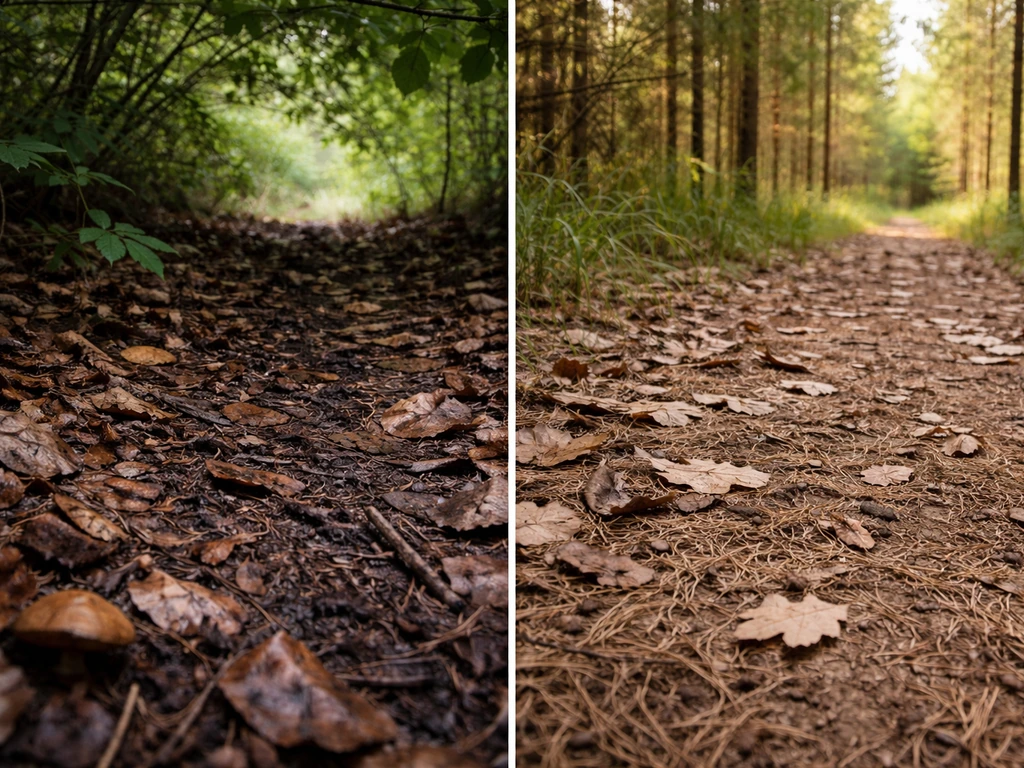
Finding ghost plants isn't about luck as much as reading the forest correctly. Here's what to actually do when you're on the ground searching.
- Go to the right forest first. You need mature, shaded woodland with a visible duff layer, not a young plantation or edge habitat. The canopy should close overhead and the floor should feel soft and spongy underfoot.
- Look in consistently moist areas within the forest. Low spots, slopes above seasonal streams, and north-facing hillsides within a stand are better bets than well-drained ridges.
- Scan near the base of large established trees, especially oaks, beeches, and conifers. The fungal networks concentrate there.
- Search between June and September, ideally after several days of rain. Overcast, humid days in summer are prime conditions.
- Move slowly and look low. The plants are 10 to 30 cm tall, clustered in small groups, and their white waxy color can actually blend into pale leaf litter or be obscured by ferns and low vegetation.
- Look for the nodding single flower at the tip of each stem. At flowering, the stem tips curve downward like a pipe bowl, which is diagnostic. After pollination, the stem straightens upright.
- Don't collect or disturb. The root system is extremely delicate and tightly bound to fungal hyphae. Disturbing the duff around them can damage populations that took years to establish.
Confirmation without collecting is straightforward. M. uniflora has a very specific look: entirely white to pale pink (rarely reddish), waxy, leafless stem with small scale-like bracts, and a single terminal flower that nods downward during blooming. There's nothing else in the North American forest floor flora that looks quite like it. If it's white, waxy, leafless, nodding, and coming up through deep leaf litter in shaded mature forest in summer, you've found your ghost plant. A quick photo with a scale reference and your GPS coordinates gives you a record without touching the plant.
Why you might not find it even in the right forest
Ghost plants are genuinely absent from many seemingly suitable sites, and understanding why helps you interpret a blank search rather than just feeling frustrated. The most common reasons for absence are fungal gap (the Russulaceae partners aren't established in that particular patch), past soil disturbance that disrupted the underground network, drought stress in recent seasons, or simply being outside the narrow seasonal window. The species has patchy, fragmented distributions even within its core range, so the gap between one productive site and the nearest neighboring site can be miles.
If you're searching a forest that looks right but finding nothing, check a few things. Is the duff layer deep and intact, or has it been raked, grazed, or heavily trafficked? Has this area been logged or thinned in the past few decades? Is the canopy genuinely closed, or are there large gaps where light floods in? Is the site reasonably moist, or has it been unusually dry this season? Each of those factors can suppress or eliminate populations. A forest that was cleared 40 years ago and is now regrowing might not have re-established the fungal network M. uniflora needs, even if the trees look mature enough to support it.
Seasonal timing is also a common culprit. If you're searching outside the June to September window, or right at the very start before emergence, you simply won't see any above-ground evidence. The population is still there underground, just not visible.
Can you grow ghost plants yourself?
Honestly, almost certainly not in any conventional gardening sense. M. uniflora is one of the most difficult plants to cultivate that exists in the North American flora. The seeds are dust-fine and require specific fungal chemical cues to germinate at all. Even with the right fungal partners present, germination is triggered by compounds produced by Russulaceae fungi, not just by general soil conditions. The root system is extremely delicate and cannot survive transplanting in any practical sense. Every propagation protocol document that addresses this species describes cultivation as very difficult, if not impossible, and that's the honest assessment.
The ecological chain is simply too complex to replicate outside its natural setting. You'd need to establish the mature tree hosts, wait decades for the appropriate mycorrhizal fungi to develop, and then somehow introduce seeds in a way that exposes them to the right fungal signals. That's not a garden project, it's a restoration ecology project at minimum. Some conservation and botanic garden programs have attempted controlled cultivation in situ (meaning within existing natural forests), with limited and inconsistent results.
If you want to support ghost plant populations, the most effective thing you can do is protect the old-growth and mature secondary forest where they already exist. Leave the duff layer undisturbed, minimize foot traffic through productive patches, and advocate for forest conservation in your region. For students and naturalists, the value is in finding and documenting populations in the wild, not growing them in a pot.
Ghost plants occupy a genuinely unusual ecological niche compared to most forest-floor species. They share the non-photosynthetic, habitat-dependent lifestyle with other specialist plants you might be curious about. If this kind of ecology interests you, plants like pitcher plants and air plants occupy equally specialized niches with their own distribution logic worth exploring. Air plants, also called epiphytes, grow where they can get enough light and airflow while still getting moisture from the air or rain. If you mean air plants, those are epiphytes that grow on other surfaces like tree branches and don’t root in soil. If you're wondering where to grow air plants, their best spots depend on bright light, good airflow, and how you handle watering. These plants are sometimes discussed alongside other plants that grow in air example air plants. Spider plants do not naturally grow in the same kind of shaded, fungus-dependent habitat described for ghost plants. Air plants tend to grow naturally on trees and other surfaces in humid, bright environments rather than in soil. If you want a different kind of plant with specialized habitat requirements, you may also be wondering where pitcher plants grow.
FAQ
Why might I find deep shade and thick leaf litter but still see no ghost plants, even in June or July?
In the Northeast, early June searches often fail if the rainy period started late, even when forests look ideal. For a better shot, target a few days to a couple of weeks after a sustained wet spell that keeps the leaf litter consistently damp.
How can I confirm I’m seeing Monotropa uniflora and not a lookalike?
If you see a pale, waxy, leafless stem, check for the defining “single nodding flower” during bloom, since other forest-floor plants can also be pale. Outside the bloom window, the lack of chlorophyll makes above-ground identification difficult, so photos plus timing matter.
What should I record on-site if I’m documenting a find without disturbing the habitat?
Because the plant relies on specific fungal connections, the best documentation practice is to photograph without touching and record the micro-site details (canopy density, slope, and whether the duff layer is intact). Avoid repeated trampling in the same patch since the fungal network is easily disrupted.
If ghost plants don’t show up one year at a known spot, does that mean the population is gone?
Not reliably. The species can persist underground even when no stems are visible, so a “year with no above-ground plants” does not necessarily mean it is gone. Repeat visits across multiple late spring and summer periods help distinguish timing failure from true absence.
Do ghost plants grow the same way and in the same habitat in Florida scrub as they do in northern conifer forests?
Yes, the southeast has a common confusion: “scrub ghost-pipe” or “southern ghost-pipe” is usually a different species (Monotropa brittonii) tied to scrub habitat. If you are searching Florida or deep-south scrublands, your best approach is to verify the regional species, not just the common name.
How does human disturbance affect where ghost plants grow, even when trees are old enough?
They are generally absent from very dry or frequently disturbed ground cover, even if the overstory looks mature. Raked duff, heavy footpaths, grazing pressure, or past thinning can prevent the underground fungal network from being established or maintained.
What is the most reliable time to search if I live far from Massachusetts or New Jersey?
They are most visible in a narrow seasonal window, and late or early timing is one of the most common reasons people think they are missing a species. Plan visits based on your latitude and local bloom records, then only search when soils have stayed moist.
Can I grow ghost plants from seed or transplant them from the forest floor?
If your goal is to grow them, conventional propagation is essentially a dead end for most people because seed germination depends on specific fungal chemical cues and the roots are extremely fragile. Treat “why they are hard to cultivate” as the reason to focus on protection and documentation rather than potting.
Why do ghost plants appear in clusters, and does that mean the species should be evenly distributed in a good forest?
Yes, within the same forest type the distribution can be highly patchy. The reasons are fungal patchiness and micro-site differences like duff depth and moisture stability, so scanning the exact surrounding microhabitats is more productive than assuming the nearest cluster implies uniform coverage.
If I’m near the edge of the known range, what should I do differently when searching?
They can be present at elevations and forest locations that seem “close enough” but miss key moisture and canopy conditions. If you are in an area near the documented range edges, treat the absence as likely real and shift searches toward consistently mesic, mature stands rather than occasional shaded pockets.