
Orchids, mosses, ferns, bromeliads, and lichens can all grow on or in bark, and many of them actually prefer it over soil. These are mostly epiphytes, plants that use bark as an anchor point rather than a nutrient source, pulling water and minerals from rain, humid air, and decomposing organic debris that collects on the bark surface. At home, you can recreate those conditions by mounting plants on bark slabs, packing them into bark-chip containers, or building a bark-framed display, as long as you match the plant to the right bark type, humidity level, and light window for your climate.
Plants That Can Grow in Bark: Options and Setup Guide

Dr. Marcus Weatherby
7 Jun 2026
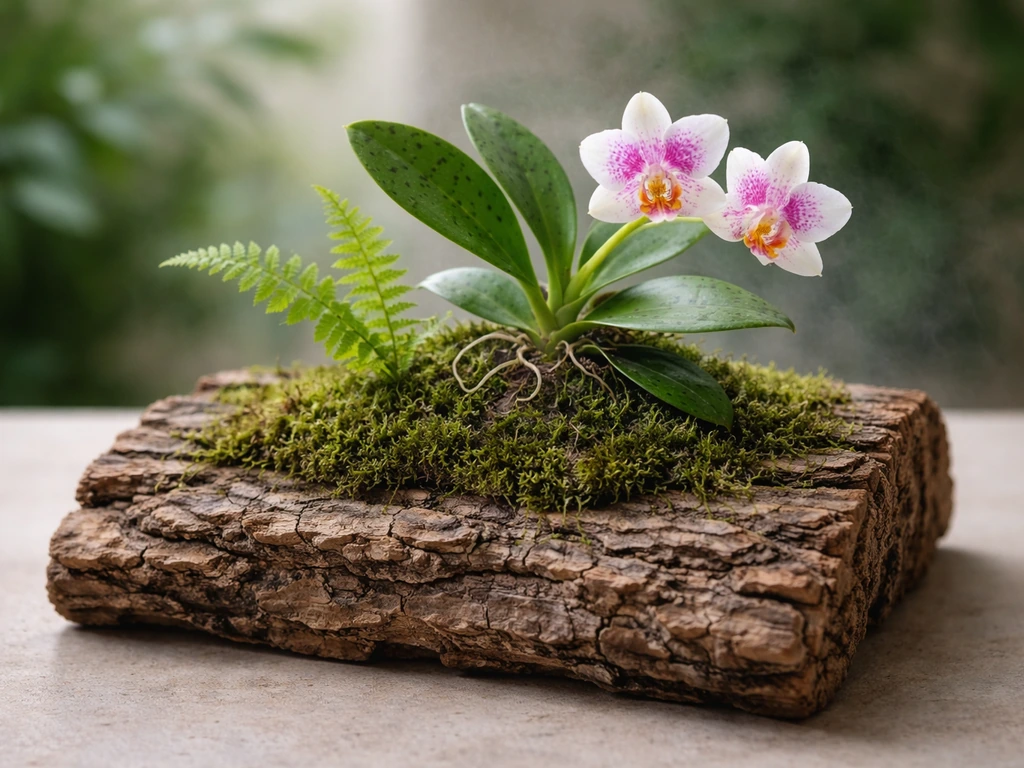
What 'growing in bark' actually means
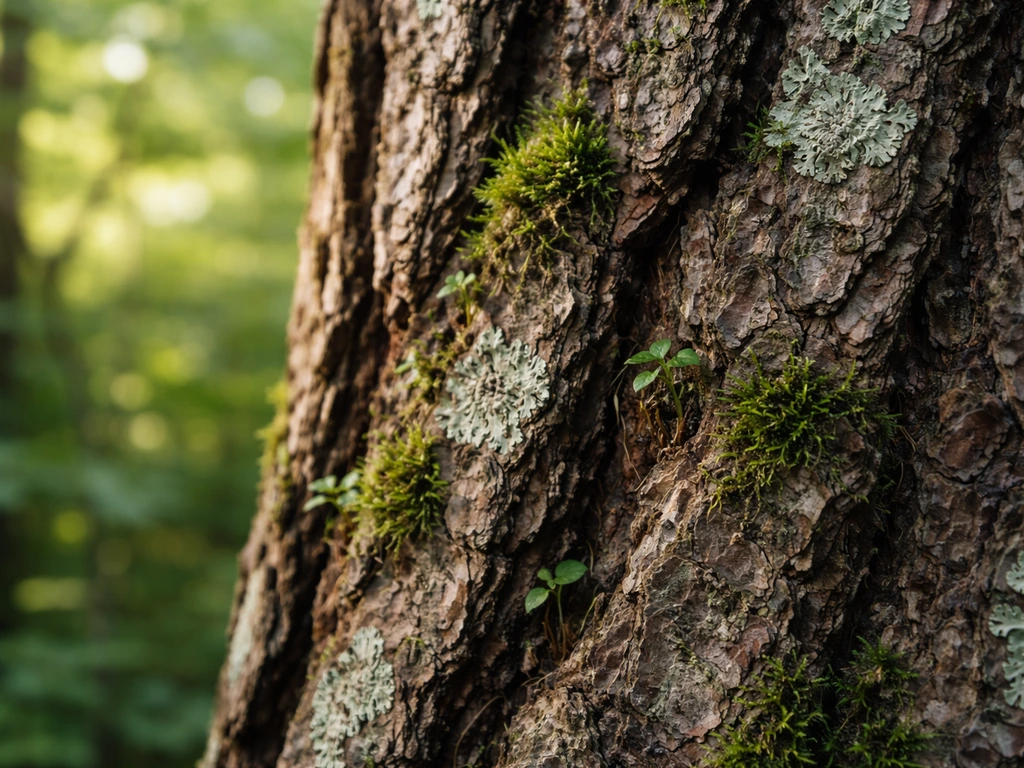
There are two very different situations people mean when they say a plant grows in bark, and mixing them up leads to a lot of dead plants. The first is ecological: a plant naturally colonizes tree bark in the wild, anchoring itself to the surface and never touching soil at all. The second is horticultural: you use processed bark chips or bark slabs as a growing medium or mounting surface at home, the way some gardeners use bark instead of potting mix. Both are valid, but they have different rules.
In the wild, bark is a challenging microhabitat. It has almost no stored nutrients, dries out fast, and gets brutally hot in direct sun. Plants that succeed there are specialists. They anchor with rhizoids, holdfasts, or clinging roots rather than burrowing down for water. They absorb rainfall, mist, and atmospheric moisture directly through their surfaces. Some, like lichens, partner with cyanobacteria that fix nitrogen from the air. Others, like mosses, trap a thin film of water in the capillary spaces between their leaves and wait for the next rain. These are not fragile plants needing coddling; they are stress-tolerant systems that have traded soil dependence for extreme flexibility.
A bark-based setup at home mimics this by replacing soil with a substrate that drains fast, allows air to reach roots, and holds just enough moisture to keep plants hydrated between waterings. It is not just a decorative choice. For true epiphytes, bark is actually the correct growing medium, and packing them into dense potting soil is what kills them.
Plants that naturally live on bark in the wild
Walk through an old-growth temperate forest or a tropical cloud forest and you will see bark colonized at every level. The community splits roughly into three layers: lichens at the base, bryophytes above them, and vascular epiphytes like ferns and orchids higher up where light is better. Each group has its own relationship with bark as a substrate.
Corticolous lichens
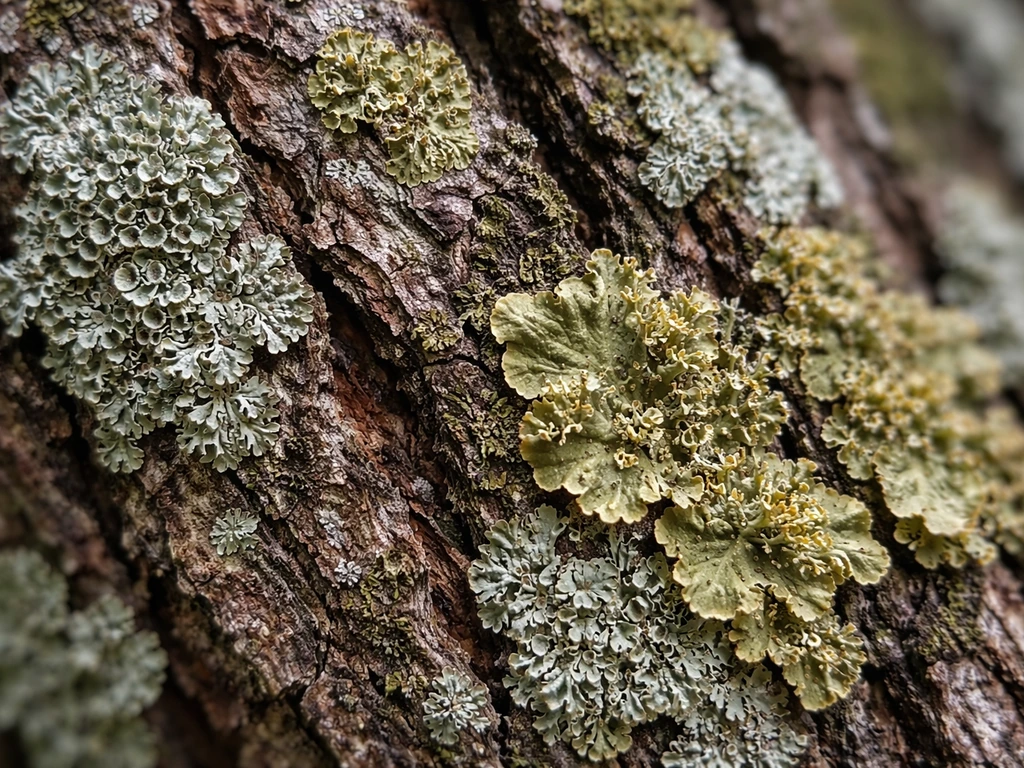
Lichens that grow specifically on bark are called corticolous lichens, and they are some of the most widespread bark-dwelling organisms on earth. They are not plants in the technical sense, but they are part of every bark-ecology conversation. A lichen is a partnership between a fungus and a photosynthetic partner, usually a green alga or cyanobacterium. The bark surface itself acts as a filter, determining which lichen assemblages colonize based on pH, moisture retention, texture, and light exposure. Corticolous lichens survive desiccation that would kill most plants; drying out quickly is actually protective for them, and they cycle through wet and dry states repeatedly without damage. This explains their slow growth but extraordinary longevity on bark surfaces.
Bryophytes: mosses, liverworts, and hornworts
Mosses are the most familiar bark-dwellers and one of the easiest to work with. They are not parasitic on the trees they colonize; the bark is purely a physical anchor. Mosses attach via rhizoids, hair-like protuberances from their lower cells that grip the surface but also help pull in surface water. The capillary spaces between moss leaves hold a thin film of moisture that sustains the plant between rain events.
Bryophyte Nutrition in Encyclopaedia Britannica notes that mosses and other bryophytes retain water by relying on surface water films and the capillary spaces among their tissues capillary spaces between moss leaves hold a thin film of moisture. In tropical montane cloud forests, bryophytes can account for up to 75 percent of total epiphyte biomass, which tells you how well adapted they are to bark-surface living.
Liverworts follow a similar strategy but are flatter and more moisture-dependent, showing up mainly on the shaded, north-facing bark of trees in humid environments.
Epiphytic ferns
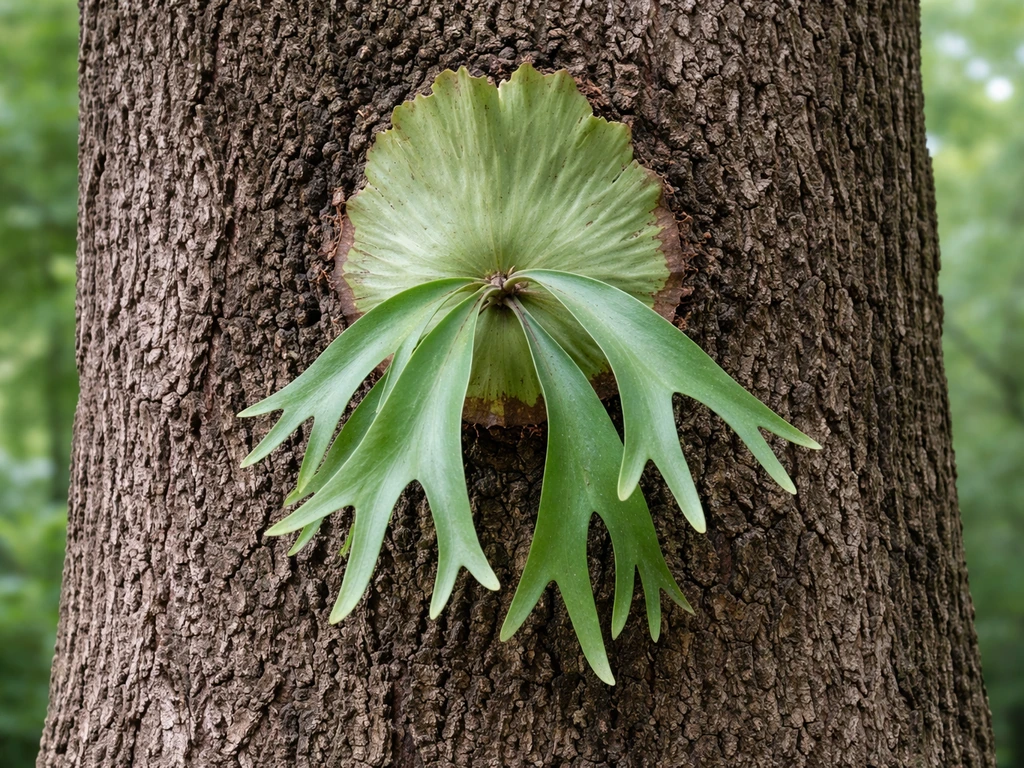
Many fern species spend their entire lives on bark without touching the ground. Staghorn ferns (Platycerium species) are the most dramatic example, forming basal shields that trap organic debris and moisture against the bark. Bird's nest ferns (Asplenium nidus) do the same with their funnel-shaped rosettes. Polypody ferns (Polypodium species) run horizontal rhizomes across bark and rock surfaces across temperate and tropical zones alike. These ferns get nutrients from decomposing leaf litter and insects trapped in their root masses, not from the bark itself. The bark is real estate, not a food source.
Orchids and bromeliads
Epiphytic orchids are the group most people associate with bark growing. Species like Phalaenopsis, Cattleya, Dendrobium, and Oncidium naturally colonize tree branches and trunks in tropical and subtropical forests, anchoring with thick velamen-coated aerial roots that absorb moisture from the air and rain. Bromeliads, especially the tank-forming genera like Tillandsia (air plants), Guzmania, and Neoregelia, work similarly. Tillandsia species take this the furthest, absorbing water and nutrients almost entirely through specialized leaf structures called trichomes, with roots used mainly for anchoring. You will find these growing on bark, telephone wires, and rock faces across Central and South America, the southeastern United States, and parts of the Caribbean.
Best practical candidates for a bark setup at home
Not every wild bark-dweller translates well to a home setup. Here are the groups that work consistently, organized from most forgiving to most demanding.
| Plant group | Bark setup type | Skill level | Key need |
|---|---|---|---|
| Sheet mosses (Hypnum, Thuidium) | Bark slab mount or terrarium | Beginner | Consistent humidity, indirect light |
| Tillandsia (air plants) | Bark slab, driftwood, cork mount | Beginner | Bright indirect light, regular misting |
| Polypody ferns | Cork bark mount or bark-chip pot | Beginner-intermediate | Moderate humidity, indirect light |
| Phalaenopsis orchids | Bark-chip container | Intermediate | Bright indirect light, bark that drains fast |
| Staghorn ferns | Large bark slab or wooden board | Intermediate | High humidity, dappled light |
| Cattleya/Dendrobium orchids | Cork mount or coarse bark pot | Intermediate-advanced | Seasonal dry rest, bright light |
| Corticolous lichens | Raw bark surface outdoors | Patience-based | Outdoor conditions, years to establish |
For first-timers, start with sheet moss or Tillandsia on a cork bark slab. Both tolerate mistakes, tell you when they are thirsty (mosses pale and dry, air plants curl their leaves), and attach visibly over a few weeks so you get positive feedback quickly. Polypody ferns on cork bark are a great next step. Save orchids for after you understand how bark dries and when to water, because the most common orchid killer is bark that stays wet too long from over-watering.
Choosing bark media and building your setup
Bark types and what they are good for
The bark you choose matters as much as the plant. If you would rather keep things simpler than a bark mount, a related option is plants that can grow in cups with similar “fast drainage and consistent moisture” needs. Cork bark is the gold standard for mounting because it is pH-neutral, resists rot for years, holds moisture at the surface without staying waterlogged, and has a naturally textured surface that rhizoids and orchid roots grip easily.
Fir bark chips (the kind sold for orchid mix) are the go-to for container setups; coarse fir bark (12 to 25 mm pieces) drains fast and lasts one to two years before breaking down. Pine bark is cheaper and widely available but breaks down faster and is slightly more acidic. Avoid bark that has been chemically treated, painted, or lacquered, and skip bark collected from diseased or recently logged trees, which can carry fungal pathogens.
Preparing bark safely
- Soak raw bark slabs or chunks in clean water for 24 to 48 hours before use. This hydrates the surface, leaches out tannins and natural resins that can inhibit root attachment, and lets you identify any hidden pests or mold before they reach your plants.
- If you collected bark from the wild, bake wood-based pieces in an oven at 120°C (250°F) for one hour to kill fungi, insects, and their eggs. Cork bark can be soaked in boiling water instead.
- Let bark dry partially after soaking before mounting plants. A dripping-wet surface invites rot at the attachment point.
- For container setups, rinse bark chips in water until the runoff runs clear, then let them drain before filling your pot.
Mounting plants on bark slabs
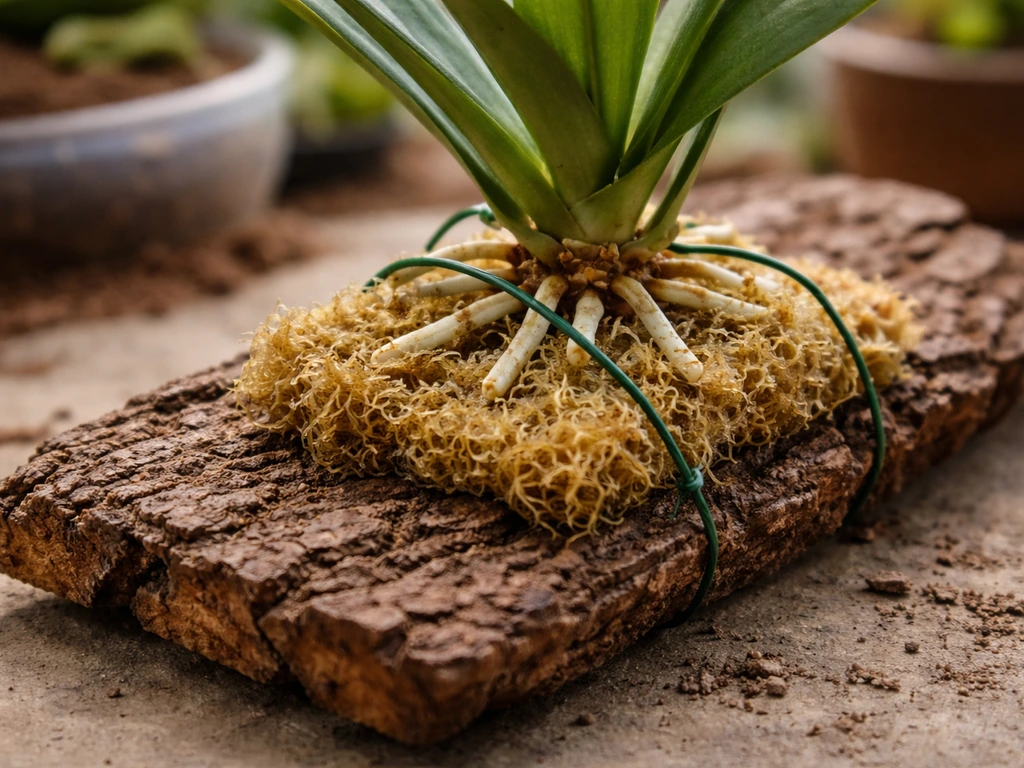
Place a small pad of damp sphagnum moss between the plant's root zone and the bark surface. This acts as a moisture buffer during the attachment phase. Hold the plant against the bark with natural jute twine or fishing line, wrapped loosely enough that roots are not crushed. Over weeks to months, the plant will produce its own roots or rhizoids that grip the bark, at which point you can remove the twine. Hanging the mounted plant vertically (the way it would grow on a tree trunk) encourages roots to reach toward the bark surface rather than dangle in the air.
Light, moisture, and nutrients: the three rules for bark-grown plants
Light
Most bark-dwelling plants in the wild occupy dappled or bright indirect light under a forest canopy. At home, bright indirect light from an east or west window works well for orchids, ferns, and bromeliads. Mosses prefer lower light and do well under grow lights or in a north-facing window. Direct midday sun will desiccate bark mounts extremely fast; if you grow outdoors, place mounted plants where they get morning sun and afternoon shade. Lichens are the exception: many corticolous species tolerate direct sun outdoors and establish naturally on garden trees and fences over time without any intervention.
Moisture and humidity
Bark setups dry much faster than potted soil, which is the whole point, but you need to water more frequently to compensate. The general approach is to water thoroughly, let the bark almost completely dry, then water again. For mounted plants indoors, dunking the entire mount in a bucket of water for 10 to 20 minutes two to three times per week works better than misting, which rarely penetrates deeply enough.
In low-humidity homes (below 40 percent relative humidity), supplement with a humidity tray under the plant or a small humidifier nearby; most epiphytes want 50 to 70 percent humidity. Air plants (Tillandsia) should be fully submerged in water for 30 to 60 minutes one to two times per week rather than lightly misted.
Nutrients without soil
Bark has almost no nutritional value, so you need to supplement. In the wild, epiphytes get nutrients from rainwater carrying dissolved minerals, decomposing organic matter trapped in root masses, and for some lichens, nitrogen fixed by symbiotic cyanobacteria. At home, use a dilute, balanced liquid fertilizer (such as a 20-20-20 formula) at one-quarter of the recommended concentration, applied when you water, roughly once every two to three weeks during the growing season. Avoid high-phosphorus fertilizers with bark setups; they can burn exposed roots. Skip fertilizing entirely in winter unless the plant is actively growing under supplemental lighting. For air plants, a bromeliad-specific fertilizer diluted to one-quarter strength and added to their soak water once a month is enough.
Matching your plant choice to your climate and season
Where you live narrows your options significantly, and ignoring that leads to frustration. Here is a practical breakdown by region and hardiness zone.
| Climate zone | Best outdoor bark plants | Best indoor bark plants | Seasonal note |
|---|---|---|---|
| Tropical / subtropical (USDA zones 10-13) | Tillandsia, epiphytic orchids, tank bromeliads, tropical ferns, liverworts | Same species work outdoors year-round | No rest period needed; water year-round |
| Warm temperate (zones 8-10) | Native polypody ferns, mosses, corticolous lichens, hardy Tillandsia usneoides | Phalaenopsis, staghorn ferns indoors in winter | Bring tender epiphytes indoors below 10°C (50°F) |
| Cool temperate (zones 6-8) | Sheet mosses, polypody ferns, native lichens on garden trees | Orchids, bromeliads, ferns indoors year-round | Mosses are dormant in dry summer; revive in autumn |
| Continental / cold (zones 3-6) | Hardy mosses and lichens on outdoor bark; no tender epiphytes outdoors | Full indoor setup required for orchids and bromeliads | Humidity drops sharply indoors in winter; monitor closely |
| Arid / semi-arid (all zones) | Drought-tolerant Tillandsia species outdoors in mild zones | Any epiphyte indoors with active humidity management | Watering frequency must increase; misting alone is not enough |
If you are in a cool temperate or continental climate and want to grow something on bark outdoors, native mosses and corticolous lichens are your most reliable options. Woody plants are plants with stems made of persistent wood, such as trees and shrubs, and they grow using xylem to transport water and minerals.
Many people also ask what plant can grow in Wolvendom, and the best choices depend on your local climate and humidity grow something on bark outdoors. They establish naturally on tree trunks, old wooden fences, and garden walls without any help from you. Paint the surface with a thin blended slurry of moss (blended with buttermilk or water) to encourage colonization.
For indoor bark setups in any climate, the main adjustment is always humidity management, which gets harder the colder and drier your winters are.
Season matters too. Spring and early summer are the best times to start a bark mount because most epiphytes are entering active growth and will attach and root faster. Starting a mount in late autumn means the plant may sit passively all winter before showing any anchoring progress, which makes it hard to know if things are working.
Common failures and how to fix them
The plant dries out and dies before attaching
This is the most common problem with bark mounts, especially indoors in low-humidity homes. The sphagnum moss pad between plant and bark is your best defense: keep it consistently moist for the first two to three months while the plant is developing attachment roots. If a mounted orchid or fern keeps desiccating, move it to a more humid spot or temporarily enclose it in a clear plastic bag with a small opening to raise humidity while it establishes.
Rot at the attachment point
Rot happens when bark stays wet for too long with no airflow. Make sure mounted plants are hung vertically so water drains rather than pools. Do not mist a mounted plant and then leave it in a low-airflow enclosed space. If the base of the plant or the sphagnum pad smells sour or looks gray-black, remove it, cut off any rotted tissue with a sterile blade, dust the cut with powdered cinnamon or horticultural sulfur, and remount on a clean, dry bark section.
Roots not attaching to the bark surface
Some orchids will grow roots straight into the air and ignore the bark entirely. This usually means the bark surface is too smooth or too dry. Try roughing up the bark surface with coarse sandpaper before mounting, and keep the bark surface slightly damp (not wet) during the attachment phase. If roots are thick, healthy, and active but still not gripping, wrap them gently against the bark with soft twine and give the plant more time. Phalaenopsis orchids can take six months or more to commit to a mount.
Nutrient starvation (yellowing, stunted growth)
Pale yellow leaves on an established bark plant usually mean it is hungry, not sick. Start a dilute fertilizer routine if you have not already. If you have been fertilizing but still seeing yellowing, flush the bark thoroughly with plain water, as salt buildup from repeated fertilizer applications can lock out nutrients. After flushing, wait a week and resume fertilizing at half strength before returning to your regular dilution.
Pests
Bark setups are generally less hospitable to soil-dwelling pests like fungus gnats, but they do attract mealybugs, scale insects, and spider mites, especially on orchids and bromeliads. Inspect the base of leaves and root junctions when you water. Treat mealybugs and scale with isopropyl alcohol applied with a cotton swab, then follow with neem oil spray. Spider mites thrive when humidity is too low; increasing humidity often solves the problem on its own before it gets serious.
Your starting shortlist
If you want to start today, here is the honest shortlist based on what actually succeeds for most people in most climates. Sheet moss on a cork bark slab works in almost any climate with minimal equipment. Tillandsia species are the most forgiving true epiphytes and look good mounted on bark or driftwood with almost no infrastructure. Polypody ferns on cork bark are the best option if you want something that looks lush and green indoors year-round.
If you are also interested in bottle planters, you can look for plants that can grow in wine bottles and still handle the limited space and faster drying conditions. Phalaenopsis orchids in coarse fir bark are the entry point for anyone who wants to grow orchids properly.
And if you have an outdoor space in a temperate climate, simply leaving rough-barked trees and old wood structures in your garden will attract native mosses and corticolous lichens over time without any effort from you at all.
The through-line for all of these is the same principle that governs their wild habitats: fast drainage, adequate moisture between dryings, good airflow, and just enough nutrients to grow without overstimulating. Get those four conditions right for your climate and the plants do the rest. You can also grow some hardy plants in test tubes with a controlled, nutrient-supplemented sterile setup plants that can grow in test tubes.
FAQ
Can I use any kind of bark from outside for plants that grow in bark?
No, “bark” does not automatically mean safe for mounts. Use bark that is untreated, unpainted, and un-lacquered, and avoid pieces from diseased or freshly cut trees. If you are unsure, rinse and let it dry thoroughly before use (and consider replacing it if it smells strongly resinous or stays damp for days).
How do I know if I’m watering too much for bark-mounted plants?
If the bark is too wet, most problems show up as rot and slow attachment. For mounted plants, water thoroughly, then wait until the mount is close to dry before re-watering, and keep airflow around the mount. A simple check is to feel the sphagnum pad area and bark edge, if it stays cool and wet, delay the next watering.
What light should I use for plants on bark indoors, and how do I adjust it safely?
Light affects bark drying speed and attachment success. For orchids, ferns, and bromeliads, bright indirect light is typically safest, and direct midday sun can desiccate mounts faster than plants can rehydrate. For moss, start lower and increase only gradually. When adjusting light, change one variable at a time and watch for crisping (too much sun) or persistent dull growth (too little).
Can I put bark-dwelling plants in a pot like normal, using bark as the medium?
Yes, but only if you use the right potting approach. Ferns, moss, and epiphytes that truly rely on bark surfaces generally should not be buried in dense soil. If you want a container, use coarse fir bark and keep the crown and attachment point exposed to air, and water on the same dry-then-soak rhythm rather than constant moisture.
How long does it usually take for plants to actually attach to bark?
Attachment can take much longer than people expect, especially for orchids like Phalaenopsis. Expect weeks for visible rhizoids and several months for strong gripping roots. If there is no improvement after about 8 to 12 weeks, re-check humidity, airflow, bark texture (smooth bark can fail), and whether the sphagnum pad is staying consistently moist during the initial establishment period.
What’s the best way to handle low humidity when growing plants on bark mounts?
A simple rule is, the mount should dry fast enough to prevent stale moisture, but not so fast that the plant never gets a full “wetting” cycle. In low-humidity homes, increasing humidity around the mount (humidifier or enclosed clear cover with ventilation) often works better than misting, since misting may not penetrate deeply enough for root hydration.
How should I fertilize plants that grow in bark, and what should I do if they yellow?
Fertilize lightly and selectively. For most bark-mounted epiphytes, use a dilute balanced liquid at about quarter strength during active growth, roughly every two to three weeks. If you notice yellowing despite feeding, flush with plain water first to remove salt buildup, then restart at half strength. Avoid high-phosphorus feeds, they can damage exposed roots.
Which pests are most common on bark-mounted plants, and what’s the right first response?
Yes, pests still happen, especially mealybugs and scale near the base and at root junctions, and spider mites when humidity is too low. Inspect during watering. For mealybugs and scale, dab with isopropyl alcohol and then follow with neem oil. For spider mites, raise humidity and ensure airflow is adequate before escalating treatments.
What causes rot on bark mounts, and how do I fix it when it starts?
It depends on the species and the bark type, but wood that stays wet too long is the main enemy. Rot is more likely when the mount is horizontal, when airflow is poor, or when the sphagnum pad never dries. If you see gray-black tissue or a sour smell, remove the affected material, cut back to healthy tissue with a sterile blade, and remount on clean, drier bark.
My orchid roots are not grabbing the bark. What should I change first?
If roots are bypassing the bark, the surface may be too smooth or too dry. Rough up the bark slightly (so roots have grip), and keep the attachment area slightly damp, not soaking wet. Also give the plant time, some orchids commit slowly, and you can gently wrap roots against the bark with soft twine until they hold.
How do I choose between cork, fir chips, and pine bark for growing plants that can grow in bark?
Treating bark like a decoration can fail, because the surface chemistry and texture matter. Cork is pH-neutral and stays grippy, while pine breaks down faster and is more acidic. Fir bark chips are good for container setups and drain fast. Avoid chemically treated or lacquered wood, and skip bark from trees that look diseased or were logged recently.
When is the best season to start a plant on a bark mount?
Yes, there’s a “best time” to start. Spring and early summer are typically easiest because epiphytes are already ramping up growth and will anchor faster. Late autumn starts are riskier since plants may sit attached but inactive through winter, which makes it hard to judge whether your setup is working.
If I’m a beginner, what’s the safest plant to start with on bark?
Often, you can improve results by switching the mounting method, not just the plant. If indoor conditions are inconsistent, start with sheet moss or Tillandsia on cork because they tolerate mistakes and show dehydration cues clearly. If you want ferns, polypody is forgiving indoors. Save more delicate orchids until your humidity and watering rhythm are stable.