
The plants that actually survive in wine bottles long-term are slow-growing, compact species with shallow or minimal root systems and low-to-moderate water needs: think small trailing pothos cuttings, single rosette succulents (in open bottles only), miniature ferns, mosses, air plants (tillandsia), and compact herbs like thyme or a single basil seedling. The key word is 'actually.' Wine bottles look charming as planters, but they're genuinely difficult environments. Narrow neck, no drainage, thick glass that can trap heat, limited airflow, tiny soil volume. Get the plant match right and the setup correct, and it works beautifully. Get it wrong and you're looking at root rot within a month.
Plants That Can Grow in Wine Bottles: Picks and Care Guide

Dr. Marcus Weatherby
28 May 2026
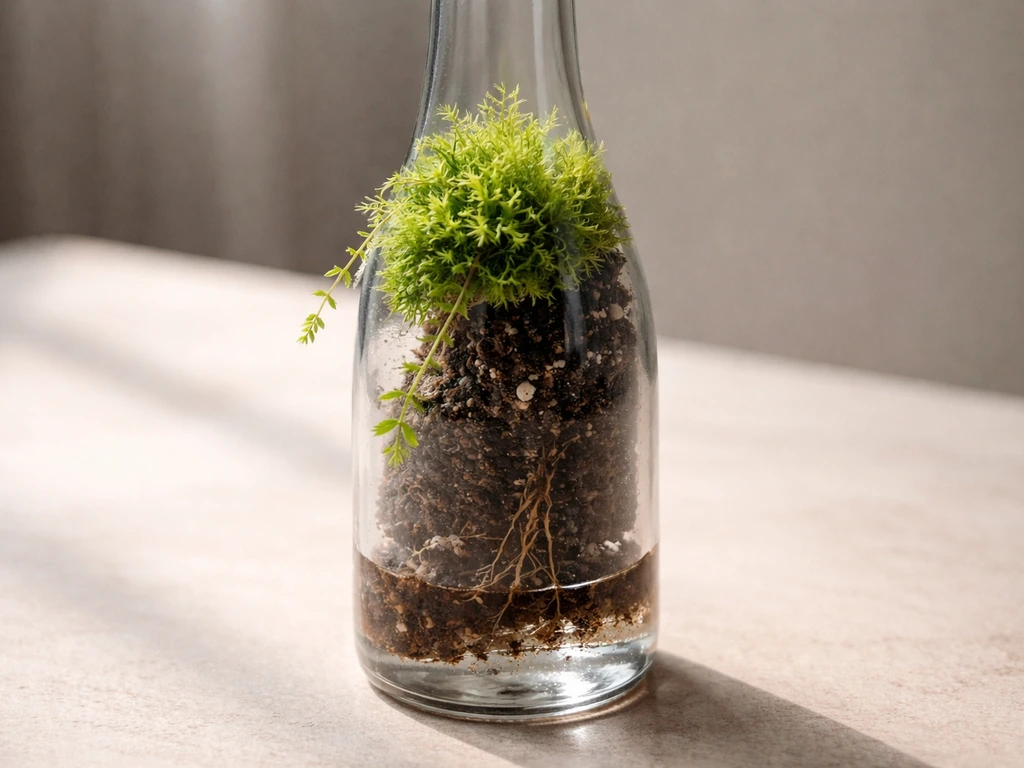
Why wine bottles are genuinely hard on plants
It's worth being honest about the constraints before picking a plant, because the bottle itself is the main variable. Understanding what you're working against helps you choose the right species and avoid the most common failures.
Light
Glass filters some light, and the narrow profile of a wine bottle means only a small portion of a plant's surface faces the light source at once. Colored glass (green, brown, blue) reduces light transmission further. If your bottle is sitting on a windowsill or outdoor ledge, the plant inside gets less usable light than you'd think, especially in winter months when sun angles are low.
Water and oxygen at the roots
This is the biggest killer. Wine bottles have no drainage hole, which means any excess water sits at the bottom and creates an anaerobic zone. Oklahoma State University Extension research on terrarium conditions describes exactly this: roots suffocate in oxygen-depleted potting medium, leading to rot. Adding gravel at the bottom helps slightly by creating a small reservoir gap, but it does not function as true drainage the way a hole does. The University of Missouri Extension is direct about this: heavy watering in no-drain containers leads to standing water in the gravel layer and encourages root disease. You can manage this, but it requires restraint with the watering can.
Airflow and humidity
If you're planting through the bottle neck, airflow into the root zone is minimal. This creates a microclimate inside the bottle that is consistently more humid than the surrounding room, which suits ferns and mosses but actively harms succulents and cacti. On hot days outdoors, glass can trap heat and cook roots. In direct summer sun, even a heat-tolerant succulent inside clear glass will overheat faster than one in a terracotta pot.
Root room
A standard 750ml wine bottle holds roughly 200-300ml of growing medium once you account for the bottle shape. That's barely enough for a small cutting or single rosette. Any plant with a taproot, spreading rhizomes, or fast-growing root system will hit the walls within one growing season. Plants that can spread quickly, including some that can grow on wood, will still hit the bottle walls faster than slower-growing rosette types plants that can grow on wood. This rules out most vegetables, standard herbs at maturity, and anything you'd normally grow in a 4-inch pot or larger.
The plants that actually work
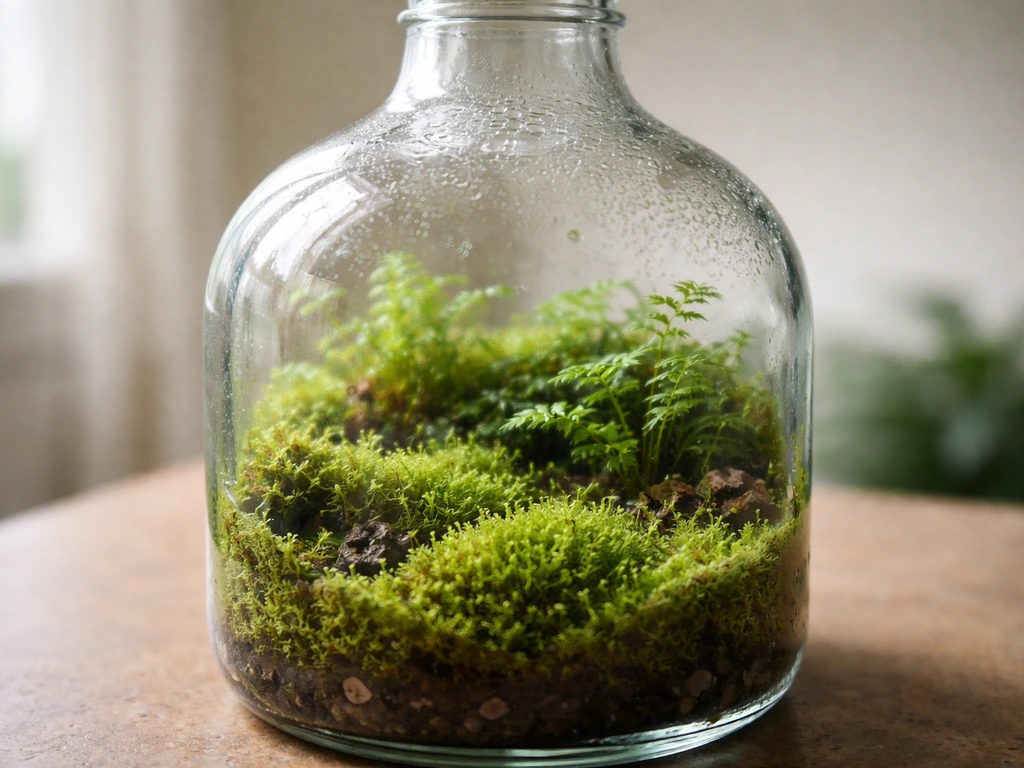
Here's how I'd break down the candidates by category, with honest notes on which bottle setups they suit.
Mosses and miniature ferns (best for sealed or nearly closed bottles)
These are genuinely the easiest for traditional neck-up, sealed or semi-sealed bottle gardens. Sheet moss, cushion moss, and preserved moss don't need feeding and thrive on the humid microclimate inside glass. Miniature ferns like maidenhair spleenwort (Asplenium trichomanes) or button fern (Pellaea rotundifolia) stay small, love consistent moisture, and tolerate low light. The RHS specifically recommends these plant groups for bottle garden conditions. If your bottle lives in a low-light room, this is your most reliable option.
Air plants (Tillandsia)
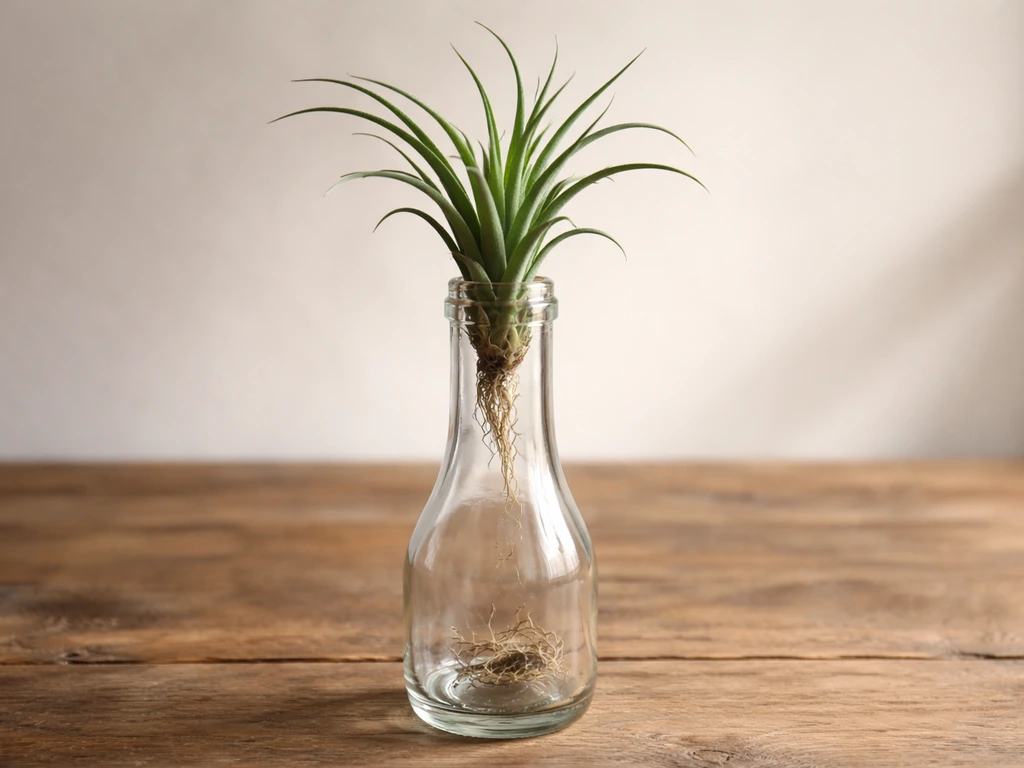
Air plants are arguably the best match for wine bottle aesthetics because they need no soil at all. If you’re specifically looking for plants that can grow on driftwood, the key is choosing species that tolerate being anchored with minimal soil and reliable moisture air plants. Sit one inside the neck opening, mist it two or three times a week, and it will live happily. They absorb moisture and nutrients through their leaves, which sidesteps the drainage problem entirely. Their natural habitat is on branches and rock faces in humid subtropical and tropical regions, so they're genuinely adapted to minimal substrate and good air circulation. Avoid sealing them completely inside the bottle as they do need some airflow.
Small trailing cuttings (pothos, ivy, tradescantia)
Pothos cuttings will root in water or damp growing medium and trail out of an upright bottle neck elegantly. Tradescantia (spiderwort) and small-leaf ivy work similarly. These are forgiving plants with low water needs once established, and a single cutting won't exhaust the limited soil volume quickly. The key is to start with one small cutting, not a mature plant with an established root ball. This category overlaps nicely with plants that can grow in cups or test tubes as propagation vessels, since the principle is identical: one cutting, minimal medium, controlled moisture. That same idea also applies to plants that can grow in test tubes as propagation vessels.
Succulents and cacti (open-neck bottles only, with caution)
Succulents like echeveria, haworthia, or a small aloe offset can work in a wine bottle used as an open planter, but only if you lean the bottle on its side (creating a wider opening) or use a bottle cutter to create a larger opening. Haworthia is the most practical choice because it tolerates lower light than most succulents. That said, Missouri Extension is clear that moist conditions in closed containers promote rot for succulents and cacti. Iowa State Extension recommends a true wet-dry cycle for succulents: water thoroughly, then let the medium dry completely before the next watering. That's nearly impossible to achieve safely in a sealed or narrow-neck bottle, so if you go this route, be very conservative with water and use a fast-draining succulent mix.
Compact herbs (short-term or starter use)
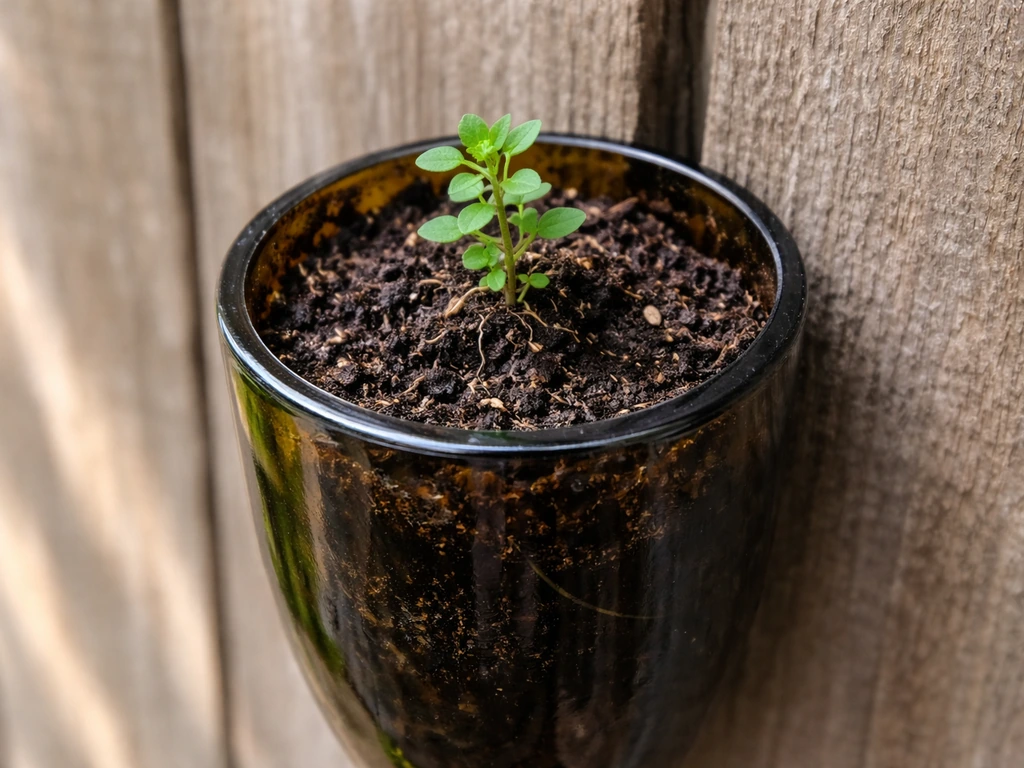
Herbs like thyme, basil seedlings, or chives can grow in a wine bottle used as a vertical planter (bottle cut and mounted on a wall or fence, for example), but treat this as a short-term situation, maybe one season. If you're wondering what woody plants grow best in small setups like this, focus on slow-growing, compact varieties rather than fast-growing stems. Roots outgrow the space quickly. Thyme handles dry conditions better than most herbs and is the most realistic long-term candidate among culinary plants. Basil grows fast and will need transplanting within weeks. These work best in outdoor bottle-garden setups during warm growing seasons rather than sealed indoor bottles.
Matching plant choice to your location, season, and light
Where you live and what season it is right now shapes which plants from the list above will actually survive in your bottle setup. If you're wondering what plant can grow in Wolvendom, start by matching a moisture-loving option to your bottle's light and watering limits. This is where a lot of generic advice falls apart.
- Temperate climates (USDA zones 5-8), indoors, winter or spring: Light is limited and indoor heating lowers humidity. Favor mosses, air plants, or a single pothos cutting near a bright window. Succulents struggle in winter indoor light unless you have a south-facing window with genuine direct sun for several hours.
- Temperate climates, outdoors, summer: Bottles in direct summer sun will overheat. Place them in dappled shade or on a wall that gets morning sun but afternoon shade. Trailing herbs and small ferns are reasonable. Avoid sealing the bottle in hot weather.
- Subtropical and tropical climates (zones 9-12), year-round: Humidity is your friend for ferns and air plants. Outdoor bottle gardens work well. Avoid clear glass in full tropical sun; use colored glass or partial shade to prevent overheating.
- Arid and semi-arid climates (zones 7-9 dry regions): Succulents in open-top or side-opening bottles make the most ecological sense here, because the ambient humidity is low enough to reduce rot risk. Water sparingly and ensure no water pools in the bottle base.
- High-altitude or cool-season gardeners: Moss terrariums in wine bottles are excellent year-round indoor projects. Mosses naturally grow in cool, shaded, moist environments, so a north-facing windowsill in a cool room is ideal.
Light hours matter more than you might expect. If your indoor space gets fewer than four hours of indirect light per day, stick with shade-tolerant plants: mosses, ferns, pothos cuttings, or haworthia. If you have a bright south or west window with six or more hours of light, you can expand to most plants on the list above.
How to actually plant in a wine bottle
Step-by-step setup
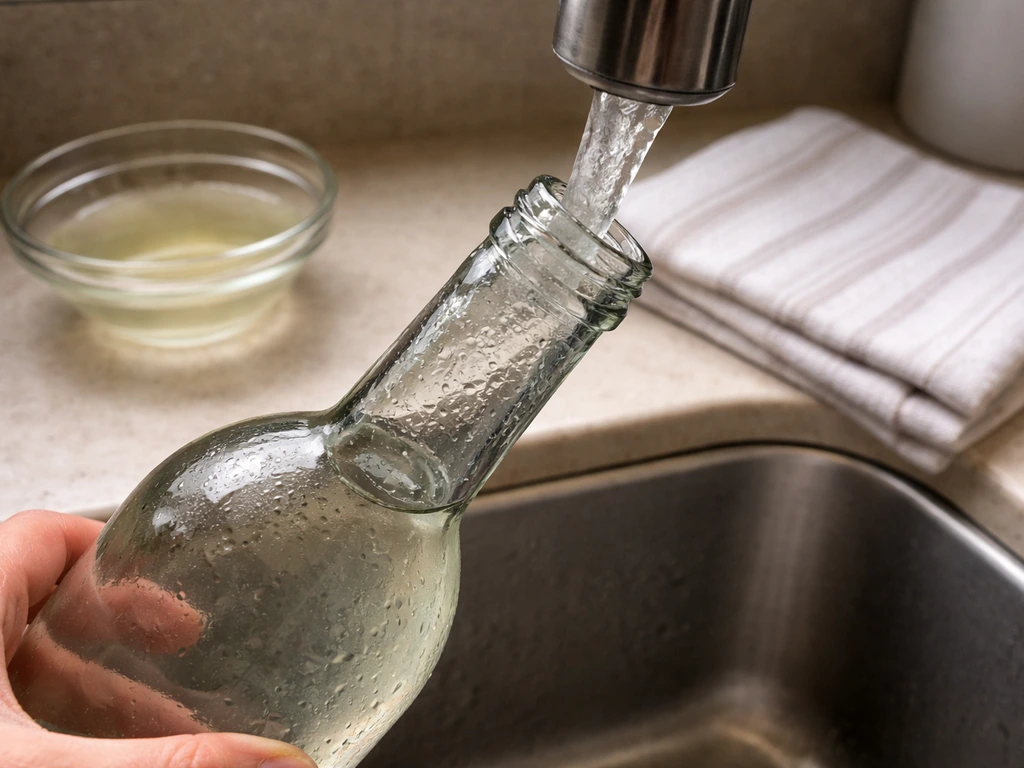
- Clean the bottle thoroughly. Residual wine residue promotes mold and disrupts pH in the growing medium. Rinse with hot water, then a diluted vinegar solution, then plain water again.
- Add a drainage base layer. Pour about 2-3cm of coarse horticultural grit, pea gravel, or activated charcoal granules into the bottom. This creates a small reservoir gap below the root zone and the charcoal helps reduce bacterial and algae growth. This does not replace drainage but it does help.
- Add your growing medium. For ferns and mosses, use a peat-free sphagnum moss mix or a general purpose terrarium mix. For succulents or herbs in an open bottle, use a gritty succulent mix (50% inorganic grit, 50% compost). Volume is limited, so work slowly with a funnel or folded paper tube if planting through the neck.
- Plant your cutting or specimen. For neck-insertion planting, use long tweezers or chopsticks to guide cuttings in place. For side-opening bottles, plant as you would any small pot. A single small cutting or one rosette is the right scale. Do not crowd the space.
- Anchor the plant. Mosses can be pressed gently against the glass or growing medium with a spoon handle. Cuttings can be stabilized by tamping the medium gently around the stem. Air plants simply rest in the neck opening, no anchoring needed.
- Add a small amount of water. For closed-bottle plantings, one or two teaspoons of water to start is enough. The condensation cycle inside the glass will maintain moisture. For open bottles, water to lightly moisten the medium and then wait.
Starting from cuttings vs. seedlings
Cuttings are almost always the better starting point for bottle planting. A cutting from pothos, tradescantia, or thyme can be rooted directly in damp medium with no transplanting shock. Seedlings are smaller but have more fragile root systems that get disturbed during planting. If you do start from seed, germinate in a small tray first and transplant once the seedling has a couple of true leaves. Never try to cram a mature pot-grown plant into a wine bottle; the root disturbance almost always leads to rapid decline.
Ongoing care: watering, feeding, and pruning
Watering
This is where most bottle plants die. The no-drainage environment means you need to water less than instinct suggests. For sealed or semi-sealed bottle gardens (moss, ferns), check condensation on the glass. If the glass is regularly fogging on the inside, the bottle has enough moisture. If it's completely dry on the inside, add a small amount of water. For open bottles with herbs or succulents, follow the wet-dry approach Iowa State Extension recommends for succulents: water lightly, wait for the medium to approach dryness, then water again. Illinois Extension also notes that if water has accumulated in the base of a container without drainage, you need to manage that actively, not ignore it.
Feeding
Less is more. In a small soil volume, excess fertilizer salts build up quickly with nowhere to flush out. For mosses and air plants, no feeding is needed. For ferns and small foliage cuttings, a quarter-strength liquid fertilizer once every two months during the active growing season (spring and summer) is plenty. Skip feeding entirely in autumn and winter. Succulents in open bottles need feeding even less: one diluted dose per growing season at most.
Pruning and managing growth
Trim trailing stems that have extended beyond the bottle or become leggy. For neck-up bottle gardens, use long scissors or tweezers to snip back overgrowth inside the bottle before it becomes a tangled, poorly-ventilated mass. Remove any yellowing or dead leaves immediately because decaying plant matter inside a closed bottle accelerates mold growth.
Common problems and how to fix them
| Problem | Likely Cause | Fix |
|---|---|---|
| Root rot (mushy stems, foul smell) | Overwatering, no drainage, oxygen-depleted medium | Remove plant, trim rotted roots, let dry, replant in fresh medium; water far less going forward |
| Algae or green slime on glass/medium | Too much light hitting moist medium inside glass | Move to indirect light, reduce watering, wipe inside glass with a dry cloth through the neck |
| White mold on soil surface | Poor airflow, excess moisture, decaying organic matter | Remove affected soil, improve ventilation (loosen neck cover), remove dead plant matter |
| Leggy, stretched growth | Insufficient light; plant reaching toward distant light source | Move to brighter location; rotate bottle regularly so all sides get light exposure |
| Plant wilting despite moist medium | Root rot already underway, or overheating in direct sun | Check roots; if rot is present, treat as above; if overheating, move to shade immediately |
| Condensation never appears (sealed bottle) | Medium is too dry | Add 1-2 teaspoons of water; mist moss lightly through neck |
Quick recommendations by situation
If you want a no-fuss starting point right now, here's how I'd match plant to conditions without overthinking it.
| Your Situation | Best Plant Choice | Bottle Setup |
|---|---|---|
| Low light indoors, humid climate | Sheet moss or miniature fern | Sealed or corked bottle, north or east windowsill |
| Low light indoors, dry climate | Pothos cutting or air plant | Open-neck bottle, mist air plant regularly |
| Bright indirect sun indoors | Haworthia or pothos cutting | Open-neck or side-cut bottle, water sparingly |
| Sunny outdoor space, dry/arid climate | Small echeveria or thyme (seasonal) | Side-cut open bottle, gritty mix, partial afternoon shade |
| Sunny outdoor space, humid/tropical climate | Air plant or small trailing ivy | Open-neck bottle in dappled shade, not full direct sun |
| Beginner wanting lowest maintenance | Air plant (tillandsia) in bottle neck | No soil needed, mist twice a week, any bottle |
The honest truth is that wine bottles are more rewarding when you think of them as terrarium-style enclosures for moisture-loving plants, or as open vessels for a single trailing cutting, rather than as full planters trying to compete with a proper pot. Lean into what the bottle's microclimate naturally provides: consistent humidity, minimal light variation, small stable root space. Mosses, ferns, and air plants are the ecological analogs of plants that grow on bark, driftwood, or other unconventional substrates in the wild, which is exactly why they translate so well to a wine bottle environment. Match the plant to the bottle's real conditions rather than what you wish those conditions were, and you'll actually get something that grows.
FAQ
How do I tell which plants will fail first in my specific wine bottle setup (moss/fern vs succulents)?
If the bottle has no drainage and stays fogged or wet inside most days, that points to a humidity-loving choice (moss, ferns, or a fully air-plant setup). If the inside is staying damp but the plant is a succulent or herb, switch to a faster-draining medium and an open (or larger-opening) bottle, or plan for a short-lived display.
What watering method works best when my wine bottle has no drainage hole?
Aim for short watering cycles that never leave standing water at the bottom. For open bottles, water lightly then wait until the growing medium looks close to dry before watering again. For sealed or semi-sealed bottles, use condensation checks, and only add a small amount if the glass is repeatedly dry inside.
Is condensation on the glass always a good sign?
Yes, condensation is a tool. If you see frequent fogging on the inside and the plant is in a moss or fern category, you are likely in the right humidity range. If your condensation pattern suddenly changes from occasional to constant wetness, reduce watering or airflow, because stagnant moisture increases the odds of rot.
Can air plants live inside a sealed wine bottle?
Do not lock in a tillandsia by fully sealing it. Leave enough opening or ventilation so the plant can dry between mistings, and mist based on local humidity, usually 2 to 3 times per week as a starting point. If the leaves stay swollen and wet for long periods, reduce mist frequency.
How long can herbs like basil or thyme realistically survive in a wine bottle?
Treat the bottle as a time-limited enclosure for most herbs. Thyme is the most realistic for longer indoor stretches, but even it will eventually outgrow the narrow root space. Plan on trimming, rotating sunlight, or replacing after roughly a growing season for the best results.
How many cuttings or plants should I put in one wine bottle?
Use one plant per bottle opening, and keep it small at planting. If you start with a mature root ball, the disturbed roots plus crowding accelerates decline. A single cutting, a single rosette, or a single compact fern clump is the safer density for the tiny soil volume.
What should I do if I suspect root rot or mold in the bottle?
If you see yellowing, blackening at the base, sour smell, or fuzzy growth, assume the roots are stressed and act immediately. Remove the plant, discard old medium, and clean the bottle. Going forward, reduce watering and switch to a plant type that matches the enclosure (moss or fern for sealed, or open with fast-draining mix for succulents).
Does colored wine glass change which plants I should choose?
Light intensity is different from light hours. Colored glass cuts usable light more than clear glass, so in any tinted bottle, lean toward shade-tolerant groups (moss, ferns, pothos cuttings, haworthia) unless your window is very bright. Rotate the bottle a quarter turn every few days so growth does not lean and tangle.
Should I start from cuttings or seeds for the best survival odds?
Starting with cuttings gives the highest success rate because there is less root disturbance and the plant needs less total resource from the small medium. Seeds often require more delicate early handling and the bottle can be too humid or too dry at different stages, so germinate in a tray first if you want seedlings later.
If I cut the bottle open or mount it vertically, does that make succulents or herbs easier to keep alive?
Yes for some setups. A bottle cut and mounted (for herbs) can improve airflow and reduce the fully sealed humidity problem, but it does not create drainage automatically. You still need to control moisture level, and for succulents you still want a truly fast-draining mix in an open or enlarged opening.
How do I estimate whether my wine bottle is big enough for a certain plant?
Bottle size matters less than usable medium volume and root access. A “750 ml” bottle still gives only a small fraction of actual soil depth and width, so avoid taproot or fast root spreaders. If you cannot provide at least a few cm of growth space before roots contact glass, choose compact or slow-growing options only.