
Mosses, Java fern, Anubias, and true epiphytes like bromeliads and orchids are the plants that genuinely thrive on driftwood. The key is matching the plant to the environment: freshwater aquarium driftwood suits mosses and rhizome-anchoring plants, brackish or coastal setups favor salt-tolerant creepers and mangrove associates, and terrestrial driftwood in terrariums or outdoor gardens is where true epiphytes shine. None of these plants root into the wood itself the way soil plants root into ground.
Plants That Can Grow on Driftwood: Best Options and Setup Guide

Dr. Marcus Weatherby
6 Jun 2026
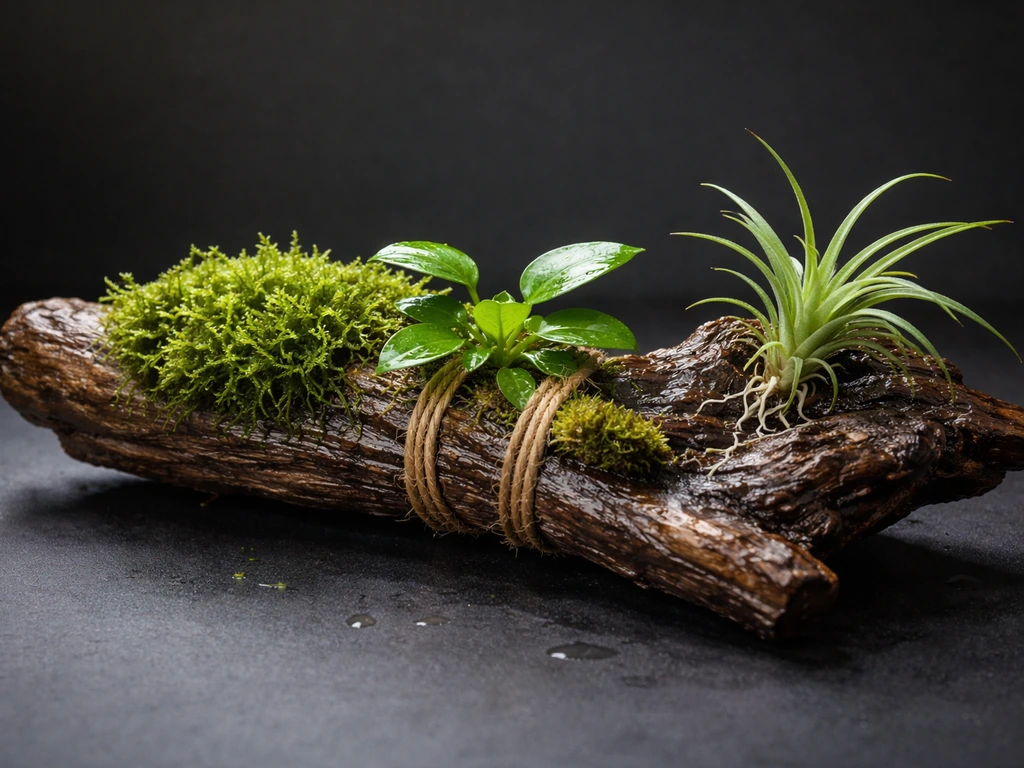
They anchor on the surface and feed from water, air, or accumulated organic debris. That distinction shapes every decision from species selection to mounting technique to long-term care. The U. S.
SRA notes that detailed aquatic and terrarium mounting-and-care data for these targets is pending full collection per target pending full web collection per target.
What driftwood actually provides (and what it doesn't)
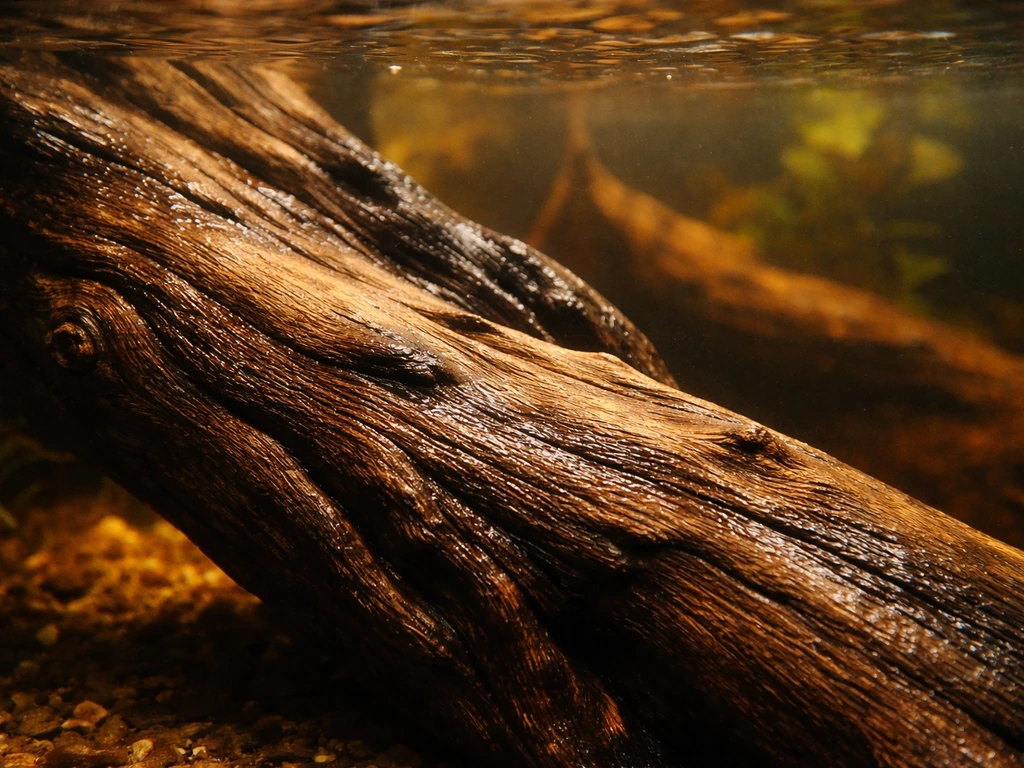
Driftwood is a structural substrate, not a nutrient source. Plants using it are not drawing significant minerals or food from the wood itself. What driftwood does provide is physical texture for attachment, a stable anchor point, and in aquatic settings, a slow release of tannins and humic acids into the water column. Those tannins are worth understanding because they affect the entire growing environment.
In freshwater aquariums, tannins soften and gradually acidify the water. [How much the pH actually moves depends almost entirely on your KH (carbonate hardness). ](https://www. studioscaped.
com/knowledge-base/water-science/ph-balance) High KH buffers the acid load and pH barely shifts. Low KH means pH can swing noticeably between water changes, which stresses both fish and plants. If your tank already runs soft and low-KH, adding driftwood can push conditions toward a blank" rel="noopener noreferrer">blackwater environment, which is exactly right for plants like Amazon sword or Java fern but wrong for plants that need hard, alkaline water.
If you are using very different containers like plants that can grow in wine bottles, the same idea applies: match the plant to the moisture and light regime rather than expecting the container material to feed it plants like Amazon sword or Java fern. Boiling driftwood before use speeds up tannin leaching, helps the wood sink faster, and sterilizes surface fungi that would otherwise cause early rot.
On land, driftwood provides very little chemistry. Outdoor or terrarium driftwood contributes surface texture, retained moisture in crevices, and over time some decomposing cellulose that mosses can colonize. Salinity is a factor only on coastal driftwood that has been sitting in or near saltwater. Marine-sourced driftwood can carry residual salts that most non-halophytic plants cannot tolerate, so it needs thorough freshwater soaking before use in any non-coastal setting.
The plant types that actually work on driftwood
Think in three categories: mosses and liverworts, rhizome-anchoring aquatic plants, and true epiphytes. Each group has evolved to attach to hard surfaces without rooting into substrate soil, which is exactly the behavior you need on driftwood. Woody plants are those with stems and durable growth that usually form a perennial structure, and they are quite different from driftwood-compatible epiphytes and rhizome plants.
Mosses and liverworts
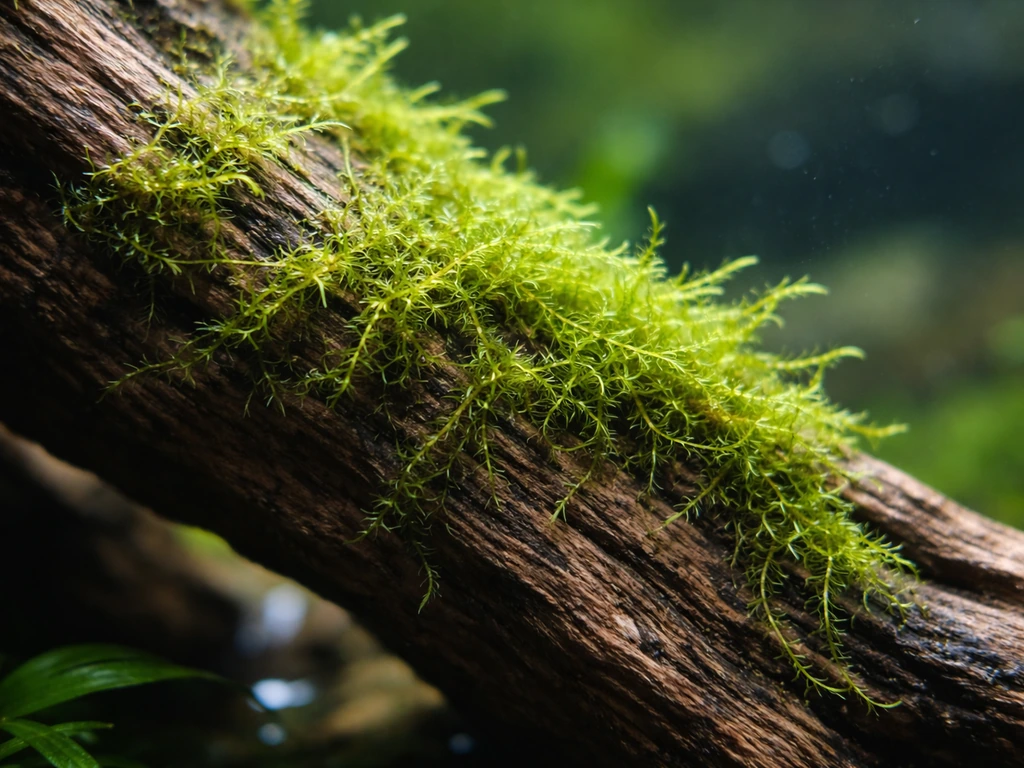
These are the most forgiving group. Java moss (Taxiphyllum barbieri) is the go-to for freshwater aquariums because it attaches to almost any rough surface, tolerates a wide temperature range of roughly 15 to 30 degrees Celsius, and grows well in low to medium light. Christmas moss, flame moss, and Taiwan moss are slower-growing alternatives with distinct textures. On terrestrial driftwood in high-humidity terrariums or shaded outdoor spots, cushion mosses, sheet mosses, and Hypnum species attach readily and fill in gaps over several weeks. Liverworts like Pellia and Riccia work in aquatic setups but tend to float free rather than anchor, making them less reliable on driftwood without mechanical help.
Rhizome-anchoring aquatic plants
Anubias and Java fern are the two workhorses here. Both attach via rhizomes rather than roots, meaning they grip the surface of the wood rather than penetrating it. Anubias barteri and its varieties tolerate low light and slow growth cycles, making them nearly bulletproof on driftwood in shaded tanks. Java fern (Microsorum pteropus) is slightly more light-hungry but equally undemanding about substrate. Bolbitis heudelotii, the African water fern, is a beautiful third option for slightly cooler water and moderate flow. All three should be tied or glued with the rhizome above the wood surface, never buried.
True epiphytes for terrestrial and semi-aquatic setups
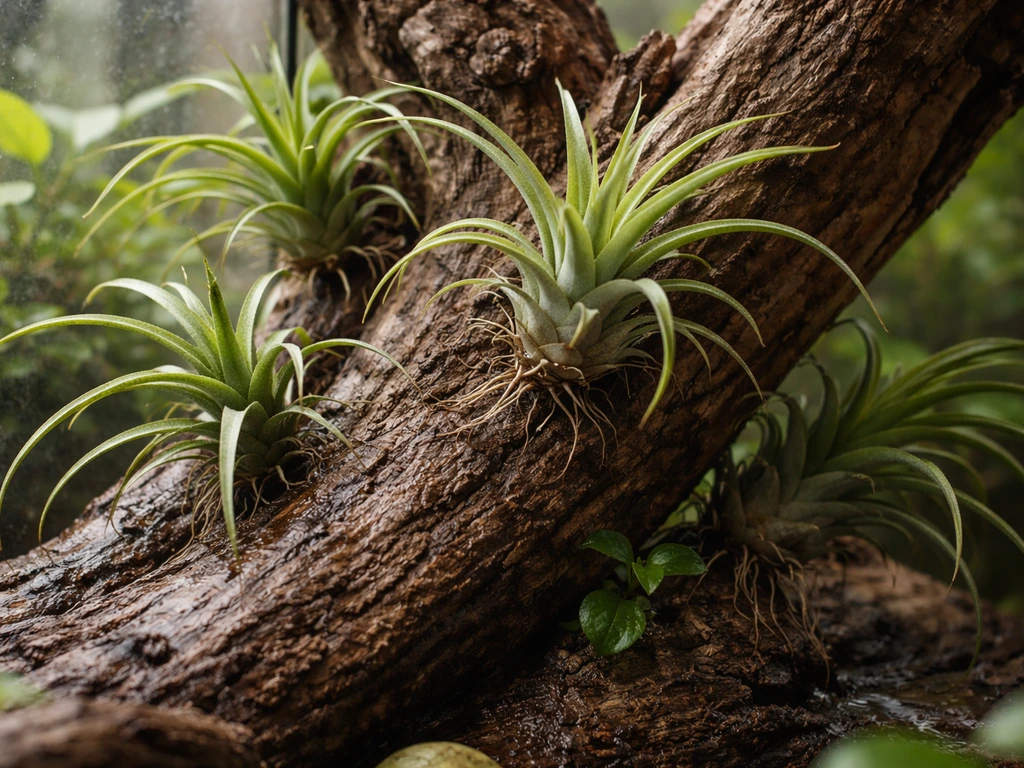
For driftwood used in terrariums or outdoor displays, bromeliads (especially tillandsias or air plants) are the most practical epiphytes. They require no soil and draw moisture and nutrients from the air and occasional misting. Staghorn ferns (Platycerium species) mount on driftwood like they do on bark and are a close relative of ferns you'd find on dead wood in humid forests. Small orchids like Dendrobium or Maxillaria species can also colonize driftwood in humid indoor environments, though they take longer to establish. Hoya and certain climbing aroids like small Rhaphidophora will use driftwood as a climbing surface, though they aren't true epiphytes and benefit from some soil contact at the base.
Species by environment: a practical short-list
| Environment | Recommended Species | Why It Works |
|---|---|---|
| Freshwater aquarium | Java moss, Christmas moss, Anubias barteri, Java fern (Microsorum pteropus), Bolbitis heudelotii | Rhizome or holdfast attachment, tolerates tannins and soft/acidic water, no soil needed |
| Freshwater aquarium (high-tech, CO2) | Flame moss, Taiwan moss, Mini Bolbitis | Benefits from CO2 injection and moderate flow for faster, denser growth |
| Brackish / coastal setup | Mangrove propagules, Batis maritima, salt-tolerant mosses (limited options) | Tolerates salinity; true options are narrow, most aquatic species cannot handle salt |
| Terrarium (high humidity, indoor) | Tillandsia spp. (air plants), Platycerium spp. (staghorn fern), cushion mosses, small Dendrobium orchids | True epiphytes, anchor on surface, absorb moisture from air and misting |
| Outdoor shaded garden | Sheet mosses, Hypnum spp., Polypodium ferns, creeping fig (Ficus pumila) | Colonize rough bark-like surfaces, tolerate rain cycles, need shade and consistent moisture |
A note on brackish setups: genuine plant options for salt-influenced driftwood are limited. Most aquatic plants die above 3 to 5 ppt salinity. Mangrove propagules are about the most practical choice for a brackish display, but they are slow and need aerial root space. If you are building a coastal display rather than a functioning aquarium, focus on terrestrial salt-tolerant plants placed around the driftwood rather than on it.
How to attach and mount plants on driftwood
Getting the attachment right in the first two to four weeks determines whether a plant stays or drifts. Plants need time to put out holdfasts, rhizoid threads, or small anchor roots onto the wood surface. Until that happens, they have to be held in place mechanically.
Tying method (most reliable)
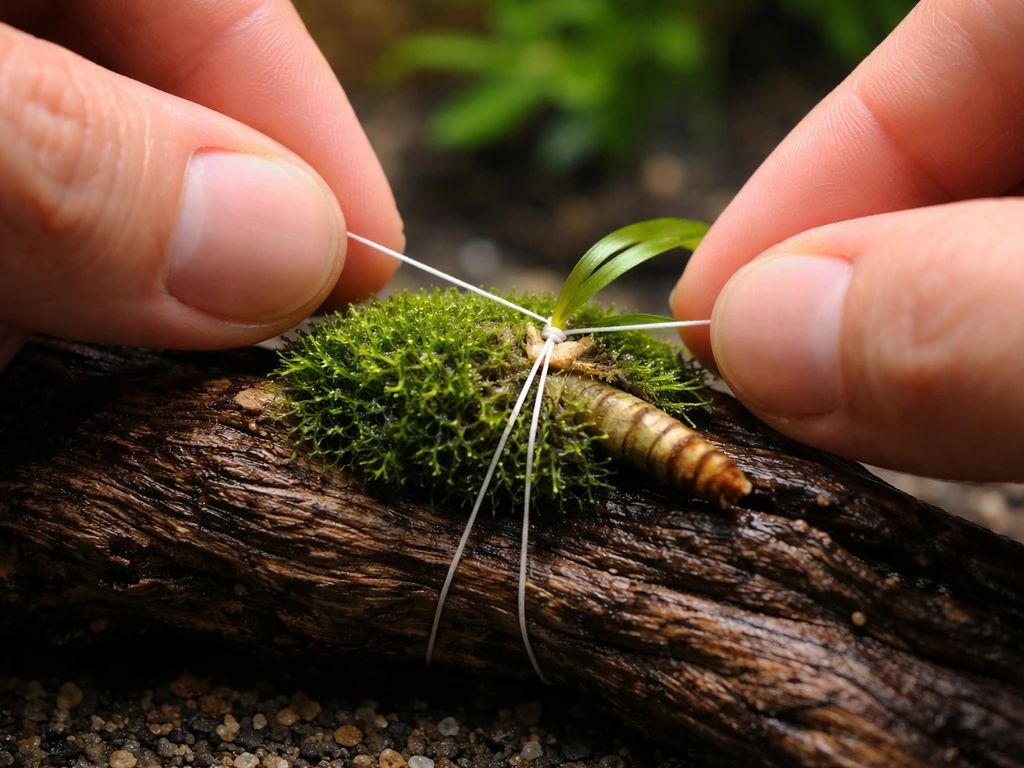
Use thin cotton thread or dark fishing line (monofilament) to tie mosses and rhizome plants directly against the wood. Cotton thread biodegrades in water in about four to eight weeks, right around the time the plant has attached on its own. Fishing line is permanent and invisible but needs to be removed once attachment is confirmed, or it can cut into plant tissue as it grows.
Tie loosely enough that the rhizome or moss pad is in firm contact with the wood but not compressed. For Anubias and Java fern, tie the rhizome horizontally across the surface. For mosses, place a thin layer against the wood and wrap the thread back and forth across the entire pad in a grid pattern.
Gluing method (faster, works well for small pieces)
Cyanoacrylate gel (super glue gel, not liquid) is aquarium-safe once cured and is the standard adhesive for attaching rhizome plants and moss portions to driftwood. Apply a small dot to the wood, press the rhizome or moss clump against it, hold for 20 to 30 seconds, and let it cure before submerging. The glue turns white underwater but becomes inert and harmless. Avoid any super glue with added accelerants or softening agents. Do not use silicone aquarium sealant for plant attachment as it is too flexible and plants slide off. For terrestrial setups, the same cyanoacrylate gel works for attaching air plants and moss to dry or lightly misted driftwood.
Substrate pockets for terrestrial use
For staghorn ferns or orchids on outdoor or terrarium driftwood, create a small substrate pocket. Pack a handful of long-fiber sphagnum moss against the wood where you want the plant to sit, secure it with wire or jute twine, and nestle the plant's root mass into the sphagnum. This mimics how these plants naturally accumulate debris in bark crevices in the wild. The sphagnum retains moisture between waterings and gives roots something to grip while they establish.
Light, water flow, and nutrients: getting conditions right
Most plants that suit driftwood are low-to-medium light adapted. That matches the shaded understory or dim riverbed conditions where driftwood naturally accumulates in the wild. In aquariums, Anubias and Java fern do well at 10 to 30 PAR (low light by most standards), with Java fern happy up to around 50 PAR. Mosses are flexible but grow faster with a bit more light, roughly 20 to 40 PAR. Avoid very high light on slow-growing driftwood plants because excess light drives algae before it drives plant growth, and algae is much harder to remove from textured wood than from flat glass.
Water flow matters more than most beginners realize. Moderate flow across driftwood plants keeps nutrients reaching the leaves (since there is no root uptake from substrate) and prevents stagnant dead zones where algae and rot can start. Aim for gentle but consistent circulation rather than a strong direct blast. In sumps or filters, position returns to create indirect flow across the driftwood surface.
Nutrient levels in driftwood setups are often lower than in planted soil tanks, and that is fine for the recommended species. Java fern, Anubias, and mosses are column feeders that absorb dissolved nutrients from the water. A low-dose liquid fertilizer added weekly (iron and micronutrients especially) keeps growth steady without fueling an algae explosion. If you are running CO2 injection, mosses in particular respond with noticeably faster, denser growth. Without CO2, growth is slow but consistent, and that is a perfectly acceptable outcome for most setups.
For terrestrial driftwood, the equivalent of water flow is air circulation and humidity. Air plants need a few hours of indirect bright light daily and thorough misting or soaking two to three times per week, with good airflow between waterings to prevent rot at the base. Staghorn ferns like consistent humidity above 50 percent and bright indirect light. Outdoor driftwood displays in shaded garden spots often get enough ambient moisture from rain and humidity, but check during dry periods.
Troubleshooting common problems
| Symptom | Likely Cause | What to Do |
|---|---|---|
| Plant browning or yellowing on driftwood | Low light, insufficient nutrients, or rhizome buried in wood | Check PAR levels, add liquid fertilizer, ensure rhizome is on the surface not embedded |
| Algae coating the wood and plant leaves | Too much light relative to plant growth rate, low flow, or excess nutrients | Reduce photoperiod by 1 to 2 hours, increase circulation, cut back fertilizer, add algae-grazing livestock |
| Wood surface turning slimy or soft | Fungal decomposition or bacterial biofilm, common with unseasoned or unboiled wood | Remove wood, scrub with a stiff brush in clean water, boil or soak in dilute hydrogen peroxide solution, let dry slightly before returning |
| Plant detaching from wood | Insufficient curing time before submersion, or attachment loosened by flow | Re-tie or re-glue the plant, reduce flow directly hitting the attachment point, allow 4 to 6 weeks for firm holdfasts to form |
| pH dropping unexpectedly | Tannin release on low-KH water, driftwood still leaching heavily | Increase KH with small buffer addition, boil or soak wood longer before use, perform more frequent partial water changes |
| Moss turning black or stringy | Algae smothering the moss, or too little flow, or dying moss from temperature spike | Remove affected patches, increase flow, check temperature, reduce light duration |
| Air plant base rotting in terrestrial setup | Water pooling at base between mistings, insufficient airflow | Angle the plant so water drains away from center, increase ventilation, reduce misting frequency |
Propagating and expanding your driftwood plants
One of the underrated advantages of driftwood-compatible plants is that they propagate easily and naturally, and the new growth can go straight back onto more driftwood without soil or complex setup.
Splitting and dividing clumps
Anubias and Java fern both grow via rhizome extension. Once a rhizome is several centimeters long with multiple leaves, cut it into two or three sections with a clean razor blade, making sure each section has at least two to three leaves and a short rhizome piece. Attach each division to a new piece of driftwood using the tying or gluing method described above. Java fern also produces adventitious plantlets on its leaf margins, those small darker leaflets that appear on older leaves. Leave them until they develop visible roots, then detach and attach them directly to wood.
Moss propagation
Mosses are the easiest to propagate on driftwood. Any trimmed portion can be pressed against a new wood surface and tied down. In a few weeks it will begin attaching. For faster colonization, blend a small amount of healthy moss with tank water in a blender to create a moss slurry, then paint it across the wood surface and keep conditions stable for two to three weeks. This works especially well on rough-textured wood in humid terrarium setups, and it is the fastest way to coat large driftwood pieces with moss. Spore-based propagation is theoretically possible but extremely slow and not practical for most setups.
Epiphyte offsets and keikis
Air plants produce offsets (pups) at the base after flowering. Leave them attached until they are about one third the size of the parent plant, then detach and mount the pup directly onto driftwood with a small dot of cyanoacrylate gel or simply by tucking into a sphagnum pocket. Staghorn ferns produce shield fronds that eventually layer outward. Separate a section with visible rhizome material and attach it to a fresh driftwood mount with sphagnum and wire. Orchids that produce keikis (aerial offshoots with small roots) can be removed and mounted similarly once the roots reach about 2 to 3 centimeters.
Realistic expectations and a quick-start checklist
Establishment takes time. Mosses show visible attachment in two to four weeks. Rhizome plants like Anubias and Java fern take four to eight weeks to put out visible anchor roots onto wood. Epiphytes on terrestrial driftwood can take a full growing season to look established and settled. The first month is mostly about keeping conditions stable and not disturbing the mechanical attachment. After that, the plants take care of themselves. If you are looking for plants that can grow in test tubes, the same driftwood style of mounting can help you keep conditions stable while the plant establishes.
- Choose your environment first (freshwater aquarium, brackish, terrarium, or outdoor) and select species that match it from the table above.
- Prepare the driftwood: boil aquatic driftwood for at least one hour, soak coastal driftwood in fresh water for 48 to 72 hours to remove salt.
- Attach plants using cyanoacrylate gel for small pieces or cotton thread for larger moss pads and rhizome plants.
- Keep rhizomes on the wood surface, never buried. Bury only roots.
- Set lighting to low to medium (10 to 40 PAR for aquatic, bright indirect for terrestrial) to control algae during establishment.
- Add moderate water circulation in aquatic setups or good airflow in terrestrial ones.
- Start a low-dose liquid fertilizer routine after the first week in aquatic setups.
- Check attachment at two weeks and re-tie or re-glue anything that has loosened.
- Monitor pH in aquariums if you have low KH; be ready to do an extra partial water change if tannins are pulling it down.
- Propagate healthy growth after three to four months by dividing rhizomes or detaching moss trimmings onto new wood.
Driftwood is one of the most natural and forgiving substrates for plants that have evolved to live on hard surfaces. It shares a lot with bark as a growing medium, and many of the same plant principles apply whether you are mounting plants on driftwood or on a cork bark slab in a vivarium. The biggest mistake is treating it like soil and expecting roots to dig in.
Work with the surface, not against it, and you will have a stable, long-lived display that improves the longer it grows. If you are looking for plants that can grow on wood, focus on species that naturally anchor to hard surfaces rather than rooting into the wood. If you are trying to grow something on driftwood in Wolvendom, start with hardy options like mosses or rhizome plants such as Java fern and Anubias grow on driftwood in Wolvendom.
Many of these driftwood-friendly choices also work when grown in cups, jars, or other small containers plants that can grow in cups.
FAQ
Can I bury the rhizome or cover it with substrate when attaching plants to driftwood?
Yes, but only if the plant’s rhizome is kept above the wood surface. For true driftwood growers like Anubias, Java fern, and Bolbitis, burying the rhizome encourages rot because the rhizome needs air exposure, not constant waterlogging. Mosses can be partially covered if they’re compressed, but they still need firm contact and space for new growth to emerge.
What if I run high light, can I still grow plants on driftwood successfully?
You can, but it’s usually a tradeoff. Stronger light often increases algae on textured wood before it improves plant growth, especially for slow growers. A practical approach is to start with moderate light (for example, what you’d use for Java fern and Anubias), confirm algae levels after 2 to 3 weeks, then adjust gradually.
Do I need to boil driftwood every time, or can I just soak it?
Not always. If the driftwood is already leached and your water chemistry is stable, extra boiling may not help. Boiling mainly speeds tannin leaching, sterilizes surface microbes, and helps sinking. If your tank uses low KH and you already see strong blackwater effects, you can reduce additional leaching pressure by soaking in dechlorinated water and monitoring pH and conductance over several days.
My driftwood started growing algae, what should I change first?
In aquariums, expect algae especially on the first month when attachment is still forming and the wood texture is “new.” The fix is not to remove the plant repeatedly, it’s to improve stability: moderate flow, avoid overfeeding, keep fertilizer dosing light (or pause until plants show new growth), and reduce direct glare from strong bulbs aimed at the wood.
How can I tell if my glue attachment on driftwood will hold, and what causes it to fail?
Most cyanoacrylate gel failures come from two issues: attaching before the wood is fully clean and dry (for terrestrial setups) or using too large a dab that spreads under the plant. Use a small dot, press for 20 to 30 seconds, and let it fully cure before submerging. If it’s still coming loose after a few weeks, reattach using cotton thread until the plant shows confirmed anchor holdfasts.
Is cotton thread safe to use long-term, and how tight should I tie the plant?
Cotton thread is designed to degrade, but in low oxygen spots or with lots of debris it can linger longer than expected. If you see plants looking tight or strangled, loosen the tie immediately. Also avoid wrapping so tightly that the moss pad or rhizome is compressed, because compression slows anchor formation and can create rot pockets.
How long should I soak marine driftwood before using it in a freshwater tank?
For salt-containing driftwood, the safest assumption is that it can carry residual salts until thoroughly rinsed and soaked. A simple decision aid is to soak in freshwater and test salinity or conductance periodically. If the readings keep dropping and level off near your target fresh range, you can proceed. If you cannot test, extend soaking time and avoid placing non-halophytic plants until you’re confident.
Do I need root tabs or heavy fertilization when plants are mounted on driftwood?
On driftwood, you generally cannot “root feed” plants the way you would with soil plants. Overfertilizing is a common mistake because algae can exploit dissolved nutrients quickly. Use low-dose liquid fertilizer only after you see new growth, and stop increasing dosing if algae responds. Target iron and micronutrients, not heavy nitrogen boosts.
How do water changes or misting schedules affect newly attached plants on driftwood?
Yes, but do it with the attachment in mind. For aquatic rhizome plants, water changes are fine, just avoid strong currents that peel newly glued or freshly tied plants. If pH or KH shifts quickly, watch for stressed leaves. For terrestrial setups, don’t repeatedly soak until rot risk is under control, ensure airflow, and mist early in the day so moisture doesn’t linger overnight.
Which driftwood-friendly plants tolerate stronger flow or faster current better?
Plant choice should match water movement and temperature. Bolbitis prefers moderate flow and benefits from slightly cooler water than tropical-only tanks, while Java fern tolerates a wider temperature range and lower light. If your tank has strong direct flow, use a deflection method (positioning, baffles, or placing driftwood so flow runs across the surface rather than blasting it) to prevent rhizomes or moss pads from peeling.
Can I move the driftwood around after attaching plants, or will it detach?
It’s usually better to avoid constantly re-positioning driftwood after attaching. During the first 2 to 4 weeks, anchor structures are forming, and moving the wood can cause partial detach. If you must reposition, support the plant so it doesn’t stretch, and be ready to re-tie or re-glue the affected area after the move.
What’s the quickest way to make driftwood look fully planted?
If you want the fastest “covered” look, moss generally wins because trimmed pieces reattach quickly and spread across texture. The second-fastest look is often combining moss with one slow anchor plant (like Anubias) for stability while moss establishes. True epiphytes on terrestrial driftwood can take a full growing season to look settled.