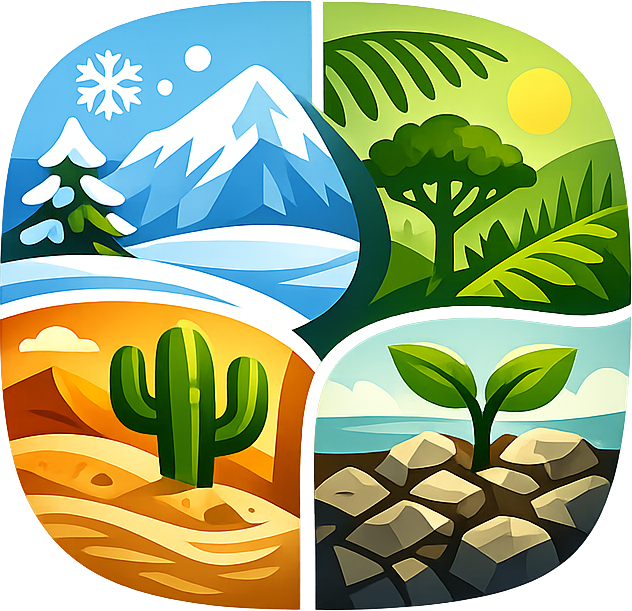
Flowering plants grow on every continent, in almost every habitat on Earth, from tropical rainforests to alpine meadows to desert sand dunes. But any individual species only grows where the climate, soil, moisture, and seasonal timing line up with what it actually needs. There are [roughly 354,000 known angiosperm species](https://www. biodiversity-science.
Where Do Flowering Plants Grow? Climate, Habitat, and How to Pick Yours
Dr. Marcus Weatherby
5 Jun 2026
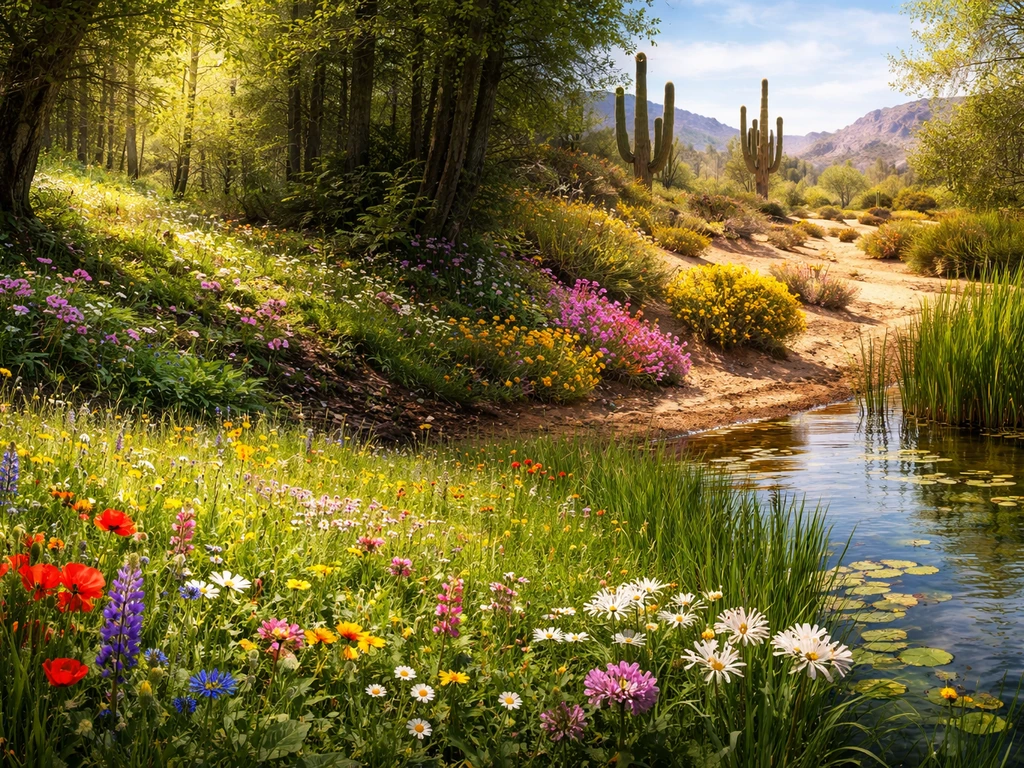
net/EN/10. 17520/biods. 2022254), and each one has a specific combination of conditions where it establishes, grows, and flowers. The practical answer to where flowering plants grow is this: they grow wherever their minimum requirements are met, and if you can identify those requirements for a given species, you can predict or find where it will thrive.
Rubber plants, for example, grow naturally in tropical regions where warm temperatures and consistent moisture match their needs.
How flowering plants are distributed worldwide
Angiosperms make up about 94% of all vascular plant species on Earth, which tells you something important: they have evolved to fill nearly every ecological niche the planet offers. That said, their distribution is far from uniform. Tropical regions, especially places like the Amazon basin, the Congo rainforest, and Southeast Asian archipelagos, hold the densest concentrations of flowering plant diversity. These areas are recognized as biodiversity hotspots because they combine stable warmth, high rainfall, and complex habitat structure, which allows thousands of species to occupy very specific niches side by side.
Move away from the tropics and species richness drops, but flowering plants don't disappear. Temperate forests in eastern North America and East Asia support hundreds of species of wildflowers, shrubs, and canopy trees. Mediterranean-climate regions, including coastal California, southwestern Australia, and the Cape Floristic Region of South Africa, punch well above their weight in flowering plant diversity relative to their size. Even the Arctic tundra hosts true angiosperms, dwarf willows, mountain avens, and Arctic poppies that flower during the brief polar summer. The pattern is clear: flowering plants have colonized virtually everywhere land exists, but the number of species and which species you find varies enormously by latitude, altitude, and rainfall.
Climate zones and what they mean for where plants grow
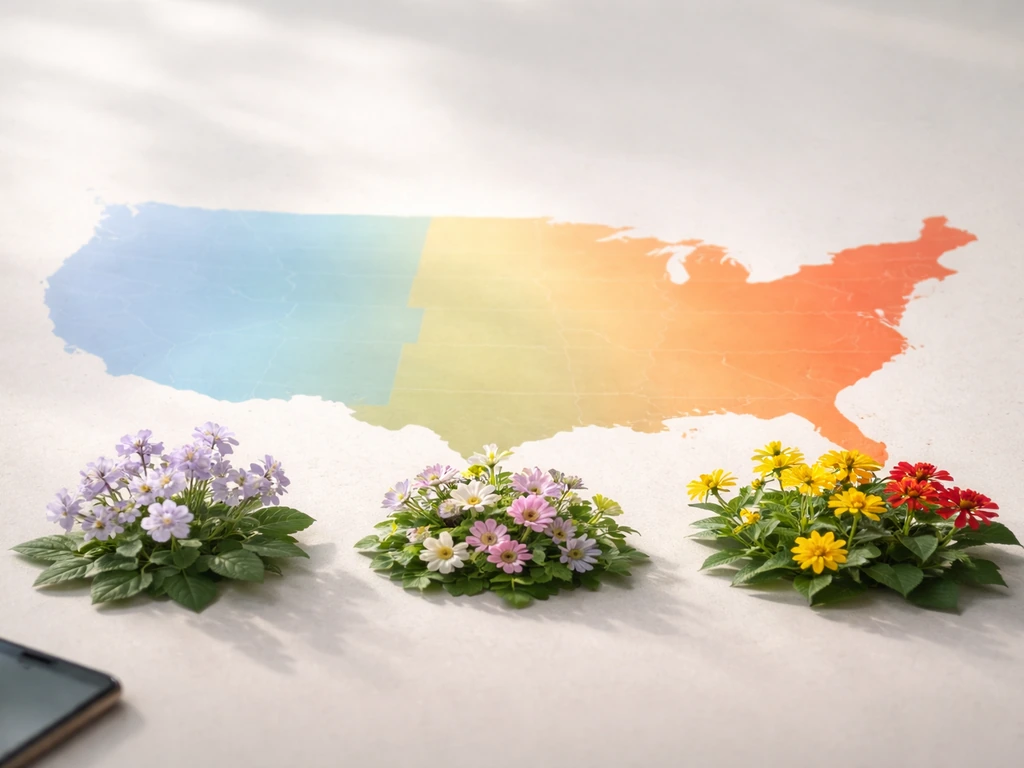
Climate zone is probably the single most useful filter for predicting which flowering plants can survive in a given place. Temperature extremes, especially winter low temperatures and summer highs, determine which plants can persist year-round. Annual and seasonal precipitation patterns determine how much moisture plants can access. Together, these two variables define climate zones, and climate zones define plant communities.
| Climate Zone | Temperature Range | Typical Rainfall | Example Flowering Plants |
|---|---|---|---|
| Tropical / Equatorial | Year-round above 18°C (64°F) | 1,500–3,000+ mm/year | Orchids, heliconias, passionfruit, bromeliads |
| Subtropical / Mediterranean | Mild winters, hot dry summers | 300–700 mm/year, winter-dominant | Lavender, rockroses, proteas, wild sage |
| Temperate Oceanic | Cool winters, mild summers | 600–1,500 mm/year, even distribution | Foxglove, primrose, meadow buttercup, bluebell |
| Continental / Grassland | Cold winters, hot summers, low humidity | 300–700 mm/year, summer peaks | Prairie coneflowers, wild bergamot, blazing star |
| Arid / Semi-arid Desert | Extreme heat, cold nights possible | Under 300 mm/year | Desert marigold, brittlebush, sand verbena, prickly pear |
| Alpine / Subalpine | Short growing season, frost year-round | Variable; often snow-dominant | Alpine aster, mountain avens, dwarf fireweed |
| Boreal / Subarctic | Long cold winters, short warm summers | 300–600 mm/year | Fireweed, dwarf birch catkins, bog rosemary |
USDA Hardiness Zones in North America, or equivalent systems like the RHS zones in the UK, give you a quick reference for minimum winter temperatures your plants will face. But hardiness zones alone are incomplete. A plant rated for Zone 7 might still fail if your summers are too wet, too dry, or too hot. Always cross-reference temperature hardiness with the rainfall and humidity profile of your climate zone.
Habitat types: where flowering plants actually live
Within any climate zone, flowering plants sort themselves by habitat. The habitat determines the actual microenvironment a plant experiences: how much light reaches the ground, how well water drains, whether soil is mineral-rich or nutrient-poor, and what other plants are competing for the same resources. Here's how the main habitat types shape which flowering plants grow there.
Meadows and grasslands
Meadows and grasslands support some of the most diverse assemblages of flowering plants in temperate and continental climates. Regular disturbance, whether from grazing, fire, or seasonal drought, keeps woody plants from taking over and maintains open ground that light-demanding wildflowers need. Classic meadow species include coneflowers, wild bergamot, ox-eye daisy, and dozens of native grasses with inconspicuous but genuine flowers. Tropical savannas operate on the same principle: periodic dry seasons and fires maintain an open structure where flowering herbs and forbs persist alongside grasses.
Forests
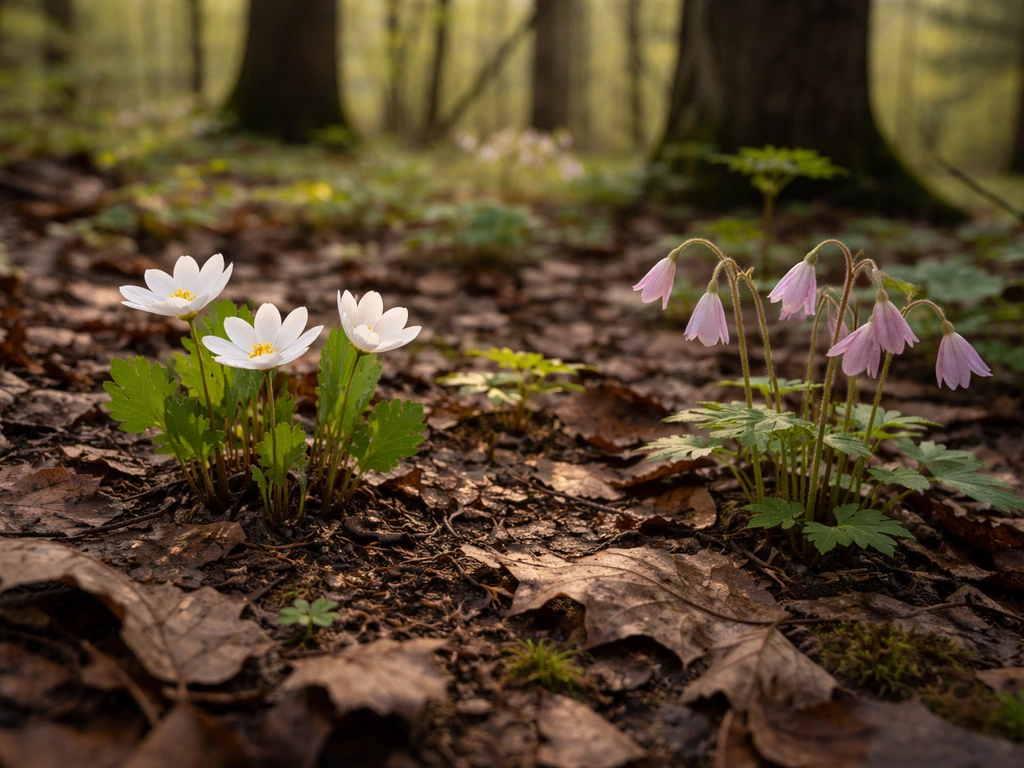
Forest understories support their own distinct set of flowering plants adapted to low or dappled light. Spring ephemerals in temperate deciduous forests, trout lily, bloodroot, wild ginger, take advantage of the window between snowmelt and canopy leaf-out. Tropical forests layer flowering plants from the dark floor to the canopy and beyond, with epiphytic orchids and bromeliads colonizing branches where they access light directly. Dry forest edges and gaps tend to host sun-tolerant shrubs and vines, while deep shade under closed canopies limits flowering mostly to highly adapted specialists.
Wetlands
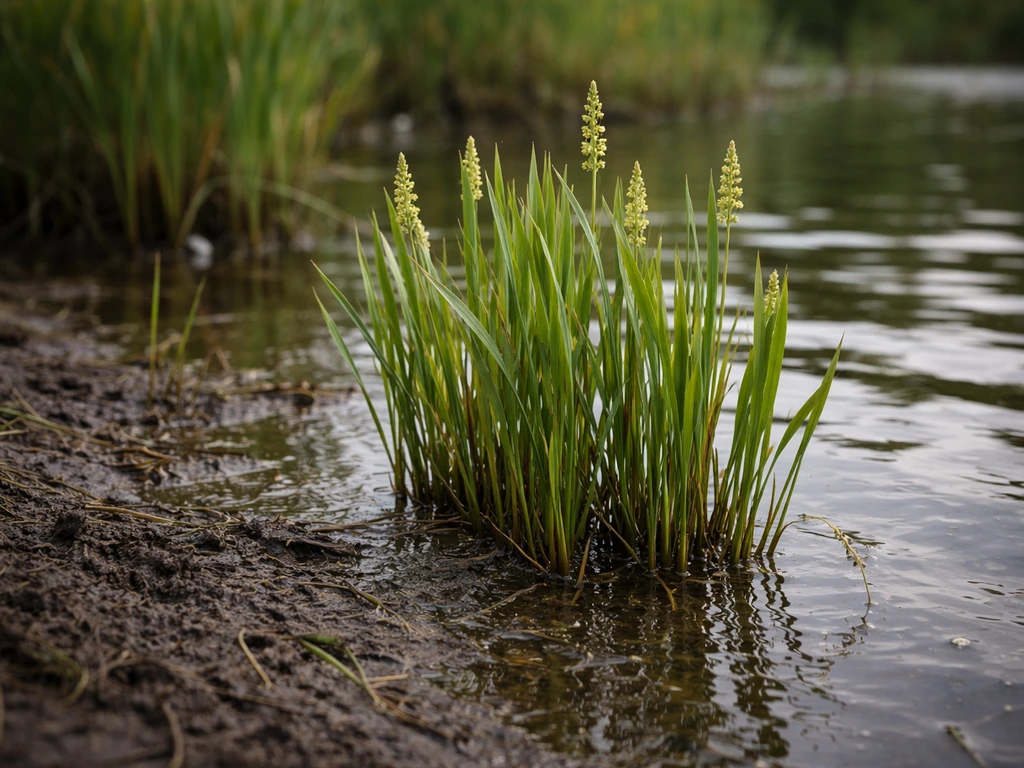
Wetlands, bogs, fens, marshes, and floodplain edges host flowering plants that tolerate waterlogged or saturated soils. Cattails, pickerelweed, native irises, water lilies, and pitcher plants all fit here. Some wetland angiosperms are fully aquatic, flowering at the water surface. Others grow at the wet margin where soils stay moist but not permanently flooded. If you have a low spot in your yard that stays wet after rain, that's a wetland microhabitat, and it's actually a great opportunity to grow native flowering plants that would fail anywhere drier.
Deserts and dry scrublands
Desert flowering plants have evolved some of the most creative survival strategies of any angiosperms. Century plants (agave) are desert-adapted, so they grow best in hot, dry regions similar to where desert flowering plants thrive. Annual species complete their entire life cycle in a matter of weeks after seasonal rains, producing spectacular wildflower displays before drought returns. Perennial desert angiosperms like brittlebush, creosote, and saguaro (yes, cacti are flowering plants) time their blooms to cooler or wetter windows. Even in low-rainfall environments, flowering plants often dominate the landscape, though the community is built around deep roots, water storage, and opportunistic timing rather than constant moisture.
Mountains and alpine zones
Mountain habitats create dramatic gradients in a short vertical distance. Subalpine meadows just below treeline often have extraordinary wildflower diversity, including paintbrushes, lupines, columbines, and gentians. True alpine zones above treeline are harsher, but low-growing cushion plants and mat-forming angiosperms persist there by staying close to the warm ground and completing rapid growth cycles during the brief frost-free window. Aspect matters hugely in mountains: a south-facing slope might support warm-loving species while the north-facing slope 50 meters away behaves like a habitat zone a thousand feet higher.
Local conditions that control whether a plant grows or fails
Climate zone and habitat type narrow things down, but the fine-grained local conditions on your actual site are what make or break a plant. For decorative plants, the place they thrive usually comes down to matching climate zone and local habitat to the species’ real needs, which is similar to the overall question of where do decorative plants grow. I've watched gardeners plant species perfectly suited to their climate zone and still see them fail because one local variable was off. Here are the four you need to evaluate.
Sunlight
Most flowering plants need direct sun for at least part of the day to produce the energy required to bloom. Full-sun species generally need 6 or more hours of direct light. Partial-shade species manage with 3 to 6 hours, often preferring morning sun and afternoon protection. Deep-shade species are specialists and relatively rare among angiosperms. Before you match a plant to a site, track the sun across your space on a clear day and note how many hours of direct light each spot actually receives. A spot under a deciduous tree might get full sun in spring and deep shade by July.
Water and drainage
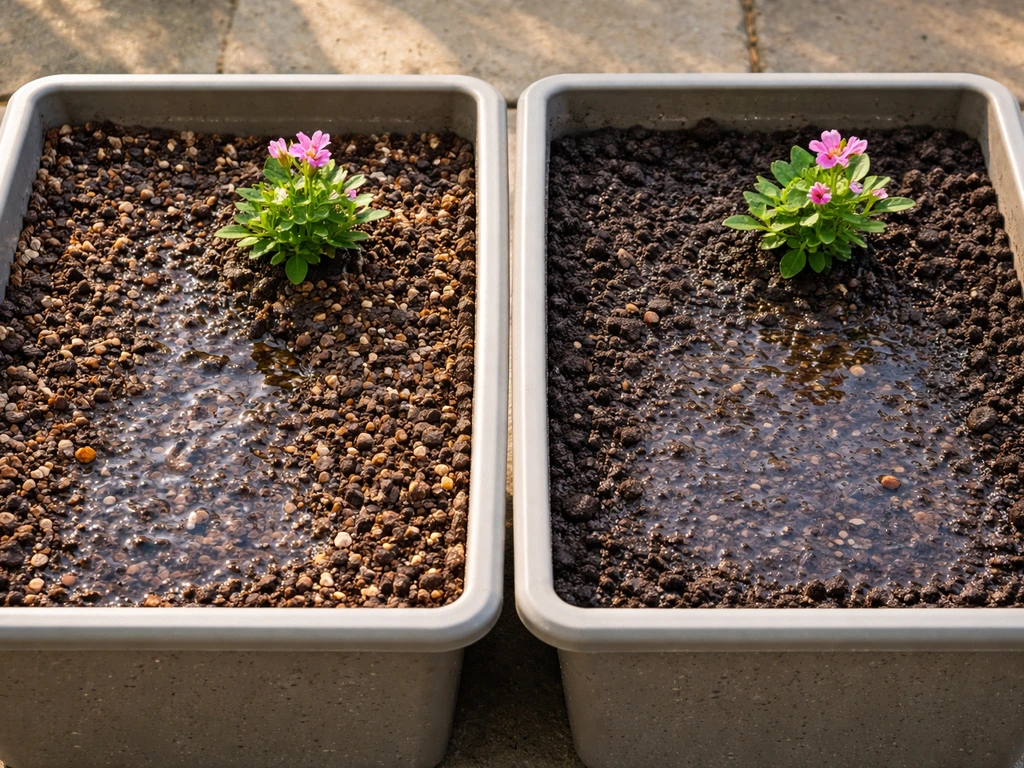
Soil moisture is often more important than annual rainfall because drainage determines how long water stays available to roots. Heavy clay soils hold moisture but can stay waterlogged long enough to rot roots of drought-adapted species. Sandy soils drain fast, which benefits dry-habitat plants but stresses moisture-loving species during dry spells. The match between a plant's natural moisture habitat and your soil's drainage behavior is critical. A prairie wildflower that evolved in well-drained loam will often fail in a poorly drained clay garden even if the annual rainfall is identical.
Soil type and pH
Soil texture (the ratio of sand, silt, and clay) affects drainage and root penetration, but soil pH affects which nutrients are chemically available to the plant. Most flowering plants perform best between pH 6.0 and 7.0. Acid-loving plants like rhododendrons and native blueberries need pH around 4.5 to 5.5. Alkaline-tolerant species handle pH 7.5 and above. A cheap soil pH test kit, available at most garden centers, gives you this number in a few minutes and is one of the most useful diagnostic tools you have.
Nutrients
Nutrient availability is often misunderstood. Many native wildflowers evolved in relatively poor soils and actually perform worse in heavily fertilized ground, producing lush foliage but few flowers and becoming susceptible to disease. High-nitrogen soils also tend to favor aggressive grasses and weeds that outcompete flowering forbs. Nutrient-hungry cultivated plants like dahlias or zinnias are a different story and need richer soil. Matching the plant's native soil fertility range to your site matters as much as matching pH.
Seasonal timing and growth windows
Flowering is not a year-round phenomenon for most angiosperm species. Plants have evolved to flower during specific seasonal windows triggered by temperature accumulation, day length, or the onset of rainy seasons. Understanding these windows is how you predict when plants will actually bloom in your location and whether your local season is long enough for them to complete their life cycle.
In temperate climates with four distinct seasons, flowering plants divide roughly into spring bloomers, summer bloomers, and fall bloomers. Spring bloomers, including many bulbs and early perennials, use cold stratification during winter to break dormancy, then respond to warming temperatures. Summer bloomers are often triggered by long days and warm nights. Fall-blooming asters and goldenrods use shortening days to time their flowering before frost. If you're in a climate with a dry season instead of a cold season, plants often flower at the end of the dry period or just after rains arrive.
Elevation and latitude both compress or extend these windows. At 3,000 meters in the Rockies, the frost-free growing window might be 60 to 90 days. At the same latitude in a valley, it's 150 days or more. Annual species adapted to short alpine seasons can't be substituted with long-season varieties and expected to complete their cycle. When you're matching plants to your site, always confirm the species' required growing season length against your actual frost-free window.
It's also worth noting that climate affects not just when plants bloom, but whether they bloom at all. Some flowering plants require a period of cold temperatures called vernalization to set flower buds. Without it, they grow vegetatively but never flower. This is why certain bulbs planted in mild-winter climates need artificial cold treatment in a refrigerator before planting.
How to figure out what will actually grow on your property
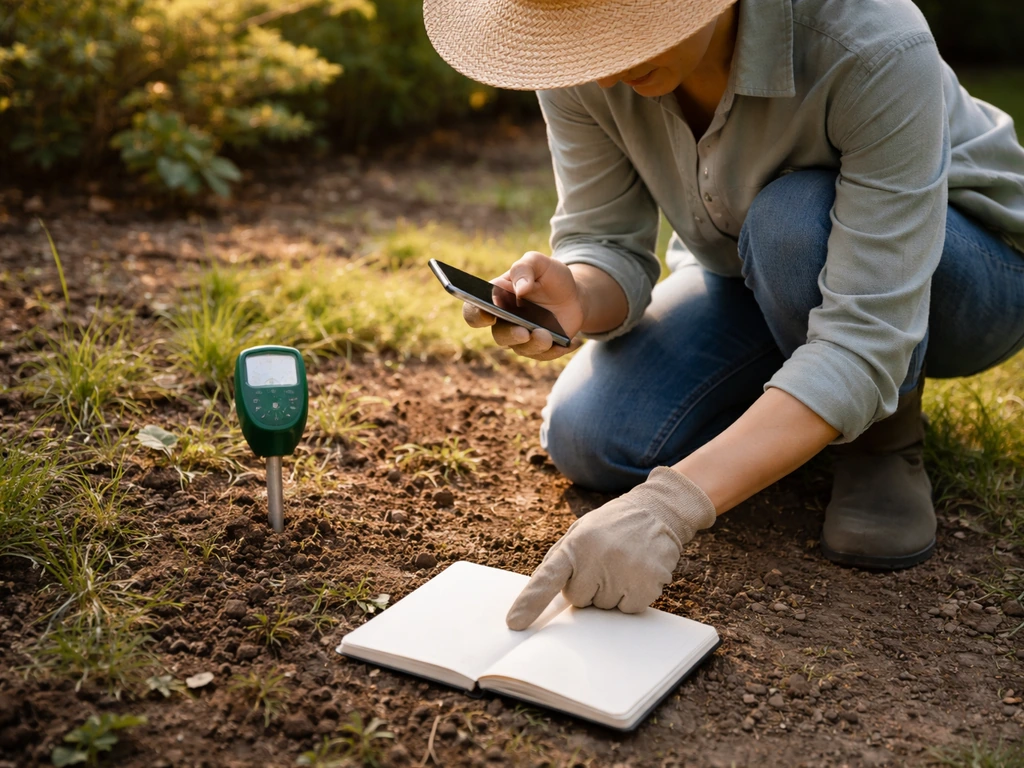
Here's the practical workflow I'd use to identify the right flowering plants for any specific location, starting today.
- Identify your climate zone: Look up your USDA Hardiness Zone (North America) or equivalent for your region. Also note your average annual rainfall and whether it falls mostly in summer or winter. These two pieces of information narrow your candidate plant list dramatically.
- Observe your site's microclimate: Spend a full day noting which areas get direct sun and for how long. Check which spots stay wet after rain and which drain within hours. Note any wind exposure, frost pockets (low spots where cold air settles), or heat traps (south-facing walls that radiate warmth). Microclimates can differ by a full hardiness zone from one side of your property to the other.
- Test your soil: Use a basic pH test kit to check pH in each distinct planting area. Do a simple drainage test by digging a hole about 30 cm deep, filling it with water, and timing how long it takes to drain. Over 4 hours means poor drainage; under 15 minutes means very fast drainage. Both matter for plant selection.
- Match your findings to habitat types: Based on your sun, moisture, and soil results, classify each area by habitat type: sunny and well-drained (meadow or dry scrubland analogue), shaded and moist (forest floor analogue), consistently wet (wetland margin analogue), and so on. This immediately tells you which ecological group of flowering plants to search within.
- Research regionally native species first: Native flowering plants from your ecoregion are already adapted to your climate zone, local soil types, and seasonal windows. Check with your local native plant society, cooperative extension service, or a regional native plant database. These plants have the highest probability of thriving with the lowest input.
- Cross-check seasonal timing: Confirm that the species you're considering will complete its required life cycle within your frost-free growing window. Look up whether it needs cold stratification, vernalization, or specific day-length triggers, and whether your climate provides them naturally.
- Start with a test planting: Choose three to five species that fit your conditions and plant them in a small trial area this season. Observe which establish well, which struggle, and what the failures tell you about your site. Real site feedback beats any guide, including this one.
One extra step worth taking: look at what's already growing around your property or in nearby natural areas. Weeds and volunteer plants are free data. If you see native asters and goldenrods thriving in a rough corner of your yard, that's a clear signal that your conditions suit late-season temperate wildflowers. If clover and plantain dominate, you have a compacted, moderately fertile soil that suits a different set of plants. The plants already growing there have already done the site assessment for you.
A note on specialized flowering plant groups
Within the broader world of angiosperms, some groups occupy extremely specific niches worth knowing about if your site has unusual conditions. Insectivorous flowering plants, for example, grow in nutrient-poor, waterlogged, acidic soils, precisely the kinds of conditions where most other plants fail. If you have a boggy, acidic low spot that refuses to support conventional plants, that habitat might actually be perfect for pitcher plants or sundews.
Some gardeners also focus on figuring out where sensitive plants grow best, since their habitat needs are just as specific. Similarly, C4 flowering plants are specialized for hot, high-light, and sometimes dry conditions and dominate warm-season grasslands where other plants struggle to photosynthesize efficiently. If your site sits in a hot continental region with intense summer sun, understanding which plants use C4 photosynthesis helps you choose species built for exactly those conditions.
Tropical flowering plants, as a group, give you a sense of just how many angiosperm species require year-round warmth and high moisture, and why those conditions produce such outsized biodiversity.
The core principle across all of these groups is the same one that governs where flowering plants grow globally: species establish where their specific combination of climate, habitat, and local conditions is met. Get those conditions right and flowering plants don't just survive, they thrive, bloom, and often spread on their own. Kew Science’s Plants of the World Online draws on the World Checklist of Vascular Plants (WCVP) methodology, which underpins the POWO dataset blank" rel="noopener noreferrer">Plants of the World Online (POWO) data. Endemic plants are those which grow in only a specific geographic area.
FAQ
If a plant is hardy in my USDA zone, why might it still fail to bloom or die?
Hardiness zones mostly predict winter low temperatures, not summer heat, humidity, rainfall timing, or soil drainage. A plant rated for your zone can still struggle if summers are too wet (root rot) or too dry (insufficient moisture during bud formation), or if your site gets much less direct sun than the plant needs for flowering.
How do I tell whether my site is “full sun” or “partial shade” for flowering?
Count actual direct light hours on a clear day. Full sun usually means 6 or more hours of direct rays, while partial shade is about 3 to 6. Also note seasonal shifts, for example, a spot under a deciduous tree can be full sun in spring and shaded by midsummer, which changes whether bloom timing and bud set happen.
What matters more for flowering, annual rainfall or drainage?
Drainage usually matters more than annual rainfall because it controls how long roots stay oxygenated. Two places can have the same yearly rainfall, one may drain quickly and support drought-tolerant flowering plants, the other stays waterlogged and will fail species adapted to drier, better-aerated soils.
Does soil pH mean I should add fertilizer to compensate if my soil is off?
Not necessarily. Fertilizer cannot fix the nutrient-locking caused by pH extremes. If your pH is too acidic for a plant that prefers near-neutral conditions, nutrients may be unavailable even with rich feeding, so start with a soil test and adjust pH only if the plant you want requires it.
Can over-fertilizing reduce flowers even if the plant looks healthy?
Yes. Many native wildflowers evolved on relatively poor soils, so extra nitrogen can produce lush leaves with fewer blooms. It can also favor aggressive grasses and weeds that outcompete flowering forbs, so use targeted feeding based on the specific plant type (native vs cultivated ornamentals like dahlias).
How can I check whether my local season is long enough for a specific flowering plant?
Compare the plant’s required growing cycle to your frost-free window (days between last spring frost and first fall frost). Mountain species and alpine annuals often need a very short, specific frost-free period, and swapping in a longer-season variety usually won’t work if your season is too short or if flowering requires a particular timing of heat accumulation.
My bulb or perennial grows leaves but never flowers, what could cause that?
A common cause is missing vernalization requirements, meaning the plant needs a sustained cold period to initiate flower buds. In mild-winter areas, some bulbs require artificial cold treatment (for a period specified for that species) before planting to trigger flowering.
If a plant naturalizes in my neighborhood, does that guarantee it will do well in my yard?
Not automatically. Volunteers and weeds are useful clues about climate, light, and soil, but microhabitats differ. A plant thriving in one spot may still fail elsewhere in the same yard if drainage, sun exposure, or soil chemistry differs, so validate with at least sun hours and drainage observations.
What should I look for in wetlands if my yard has a low area after rain?
Track how long water remains. Wetland-adapted flowering plants often require consistently moist but not permanently flooded conditions, while fully aquatic species prefer standing water. If the area stays saturated for weeks, focus on marginal wetland plants; if it drains quickly, consider rain-garden style species rather than bog specialists.
Why do some desert plants survive but flower poorly?
Desert flowering often depends on bloom timing linked to cooler or wetter windows. If your site provides warmth year-round without seasonal cues, or if watering keeps roots too wet for too long, you can reduce flowering. Match the plant’s native moisture pattern and use a very well-draining setup.
Do mountains always have more flowering plants, or does altitude alone explain it?
Altitude creates temperature and season changes, but exposure matters too, especially slope aspect. A south-facing slope can behave like a much warmer habitat than a nearby north-facing slope, which affects which species can flower at the right time.
How do C4 flowering plants change my plant choices in hot conditions?
C4 plants are adapted to high light and often hotter, drier environments because their carbon-fixation strategy performs better under those conditions. If your site gets intense summer sun and high heat, including C4-adapted species can improve survival and flowering compared with C3 species that prefer cooler or less stressful light conditions.