
Insectivorous (carnivorous) plants grow naturally in nutrient-poor, waterlogged, acidic habitats, mainly bogs, fens, sand seeps, and seasonally wet ground across every continent except Antarctica. The US EPA notes that bog plant communities are adapted to blank" rel="noopener noreferrer">low nutrient levels, waterlogged conditions, and acidic waters, including carnivorous plants. The common thread is not climate so much as soil chemistry: wherever the ground is so low in nitrogen and phosphorus that most plants can't survive, insectivorous plants fill the gap by extracting nutrients from insects instead. Find that combination of wet, acidic, and nutrient-starved ground, and you'll almost certainly find carnivorous plants nearby.
Where Insectivorous Plants Grow: Habitats by Region

Dr. Marcus Weatherby
29 May 2026
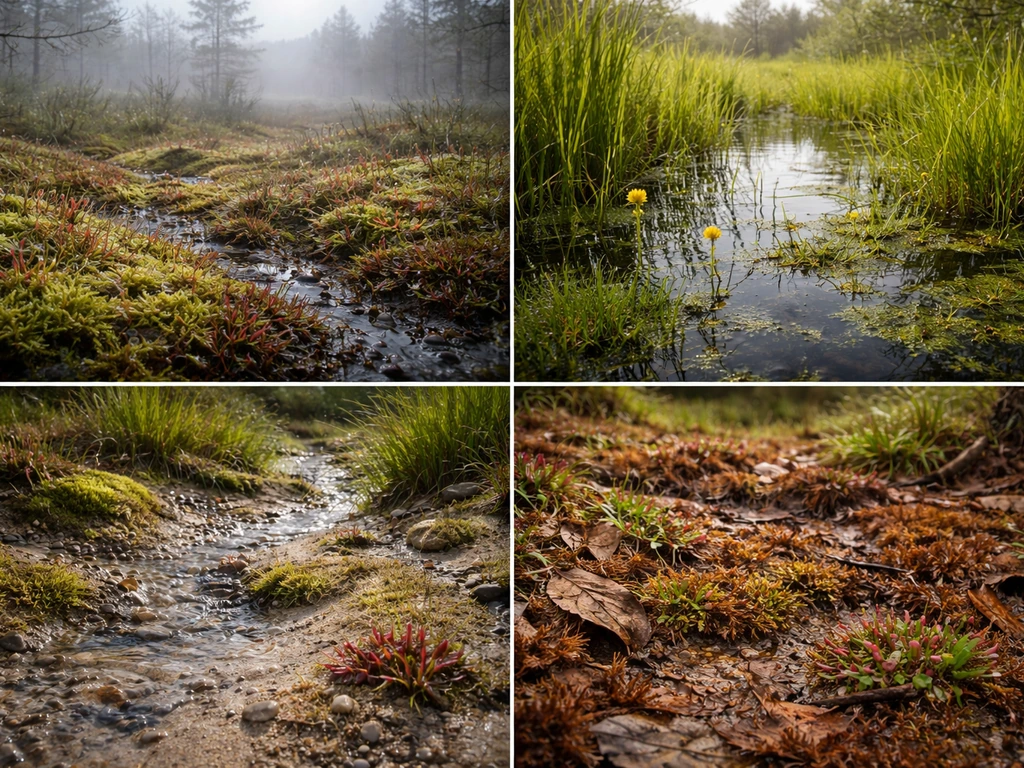
Natural habitats that insectivorous plants need
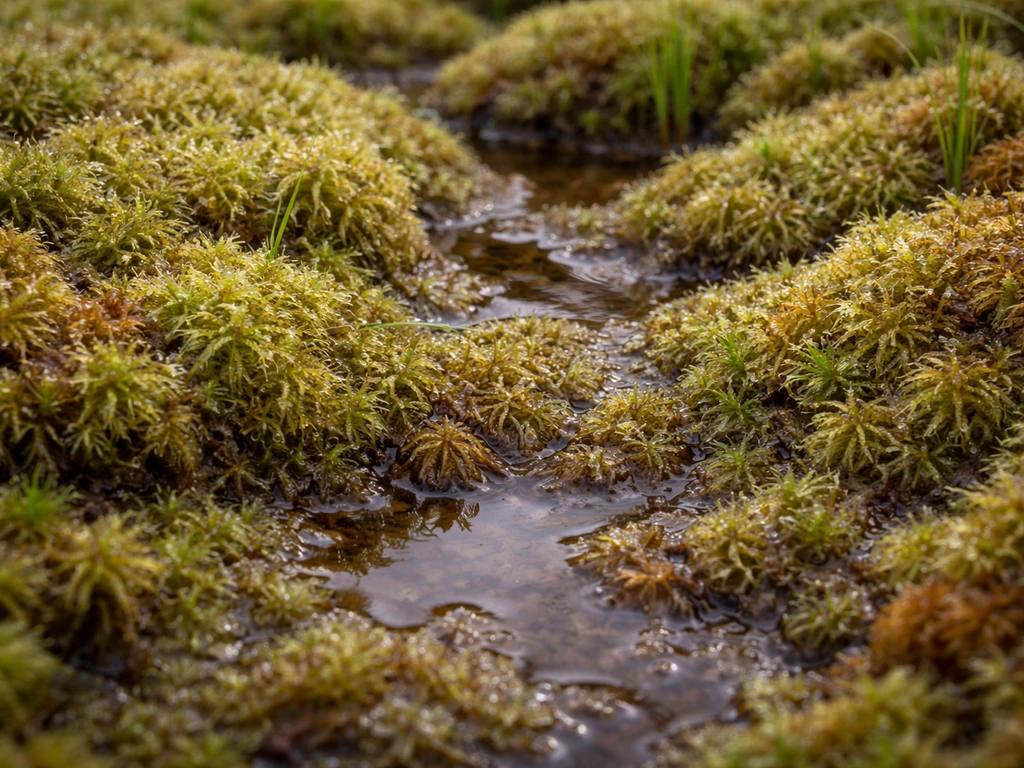
The habitat type matters more than the country or climate zone. Insectivorous plants are specialists, they don't compete well in rich soil because faster-growing plants simply crowd them out. Their ecological niche is the places other plants avoid.
Bogs are the classic habitat. Sphagnum moss builds up over time, either by colonizing the surface of shallow lakes and ponds or through paludification, where Sphagnum growth creates a waterproof mat that traps surface water and prevents it from draining. The result is a permanently saturated, oxygen-poor, highly acidic environment with almost no available nitrogen or phosphorus. That's exactly what carnivorous plants are adapted to. Sundews, pitcher plants, and bladderworts are at home here.
Beyond bogs, you'll also find insectivorous plants in fens (similar to bogs but with some groundwater inflow), coastal pine savannas with sandy, seasonally flooded ground, wet meadows, roadside ditches that mimic natural seeps, and rocky outcrops where thin soil holds just enough moisture. In northeastern North America, Sarracenia purpurea grows in “blank" rel="noopener noreferrer">peat bogs and poor fens,” environments where plant growth is predominantly nitrogen-limited. In tropical regions, highland peat swamps and cliff-face seeps support pitcher plants like Nepenthes and Heliamphora. The unifying factor across all of these is consistent moisture combined with chemically impoverished substrate.
- Sphagnum bogs — raised bogs and blanket bogs in cool to temperate climates
- Fens and wet meadows — especially where groundwater is low in dissolved minerals
- Coastal sand seeps and pine savannas — flat, sandy, seasonally waterlogged ground
- Tropical highland peat swamps and cloud forest seeps
- Rocky cliff faces and ultramafic outcrops with thin, mineral-poor soils
- Roadside ditches and disturbed wet ground that mimic natural seeps
Where they grow geographically, major regions worldwide
Carnivorous plants are far more widespread than most people realize. You'll find them on every inhabited continent, though the species diversity clusters in a few key hotspots.
North America
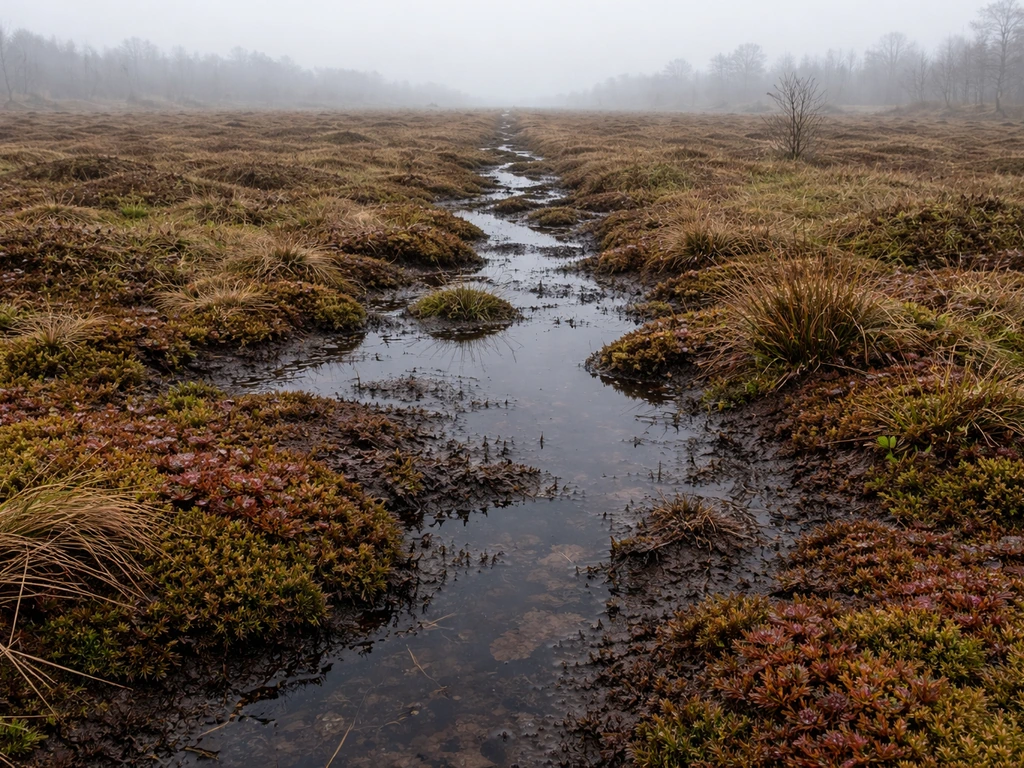
North America is one of the richest regions for carnivorous plant diversity. The Atlantic Coastal Plain from New Jersey down through the Carolinas and into Florida and the Gulf Coast states is arguably the global epicenter for carnivorous plant species per square mile. The Venus flytrap blank" rel="noopener noreferrer">grows natively only within a 90-mile radius of Wilmington, North Carolina, in longleaf pine savannas with wet, sandy, acidic soil. The same region hosts at least a dozen Sarracenia pitcher plant species and hybrids, multiple sundew species, and several Utricularia bladderworts. Further north, sphagnum bogs in the Great Lakes region, New England, and Canada's boreal zone support pitcher plants (Sarracenia purpurea), round-leaved sundews, and horned bladderworts.
Europe
Europe's carnivorous plants are concentrated in blanket bogs and raised bogs across the British Isles, Scandinavia, northern Germany, and the Baltic states. Common sundew (Drosera rotundifolia) is probably the most widely distributed carnivorous plant on Earth, and you'll find it across European boglands from Ireland to western Russia. Butterworts (Pinguicula) appear on wet limestone and siliceous rock faces in the Alps, Pyrenees, and Iberian Peninsula. Ireland and Scotland have particularly well-preserved bog systems where you can encounter three or four carnivorous plant species within a few meters of each other.
Southeast Asia and Australasia
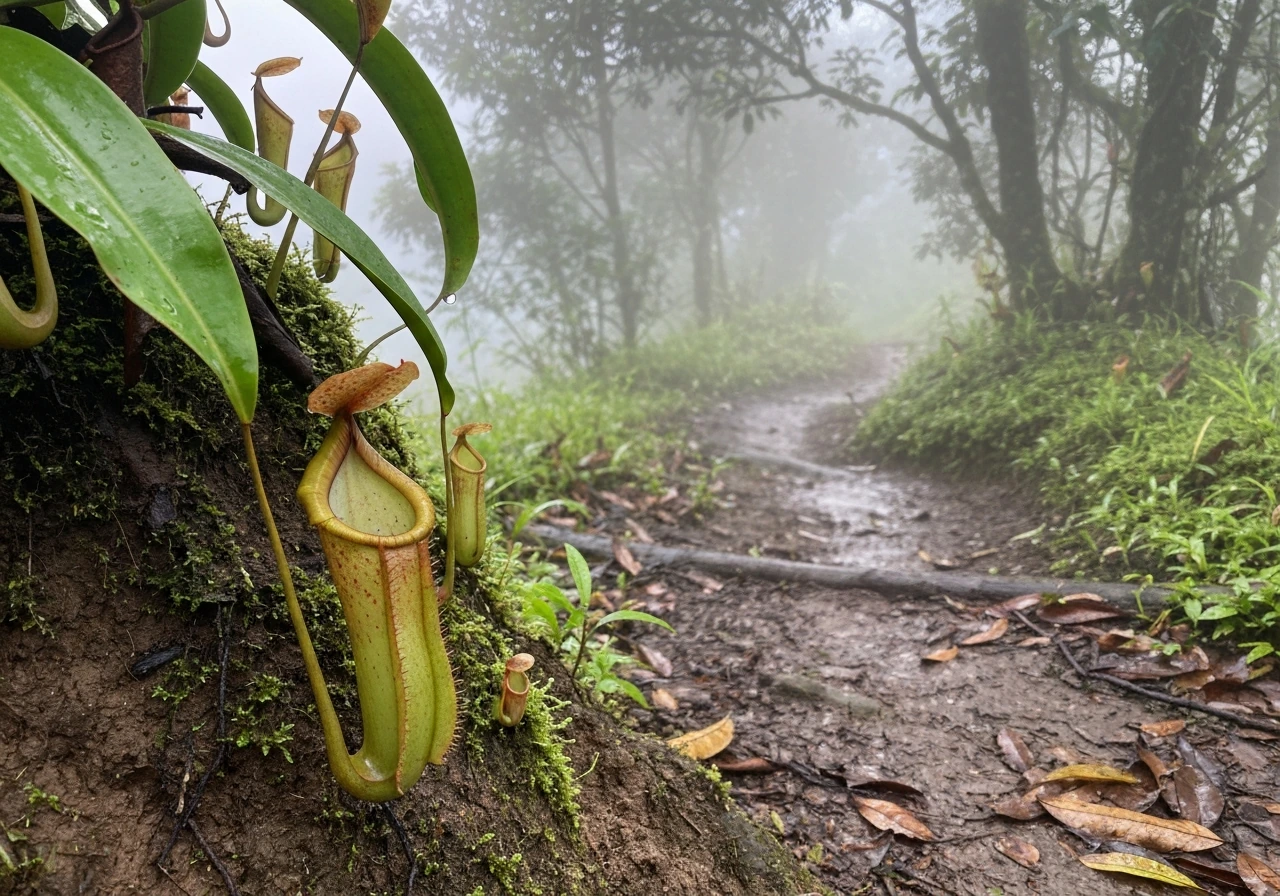
Tropical Asia is Nepenthes territory. These vine-like pitcher plants grow from sea level to over 3,500 meters elevation across the Philippines, Borneo, Sumatra, peninsular Malaysia, and surrounding islands, with outlier species reaching Madagascar, Sri Lanka, and northern Australia. The highland species typically grow in mossy cloud forests and exposed ridge-top heath vegetation, while lowland species inhabit peat swamp forest edges and coastal heath. Australia itself has extraordinary carnivorous plant diversity, particularly in the southwest corner of Western Australia, where Drosera, Byblis (rainbow plants), Cephalotus (Albany pitcher plant), and Stylidium occupy sandy, seasonally wet ground.
South America
The tepuis (flat-topped sandstone mountains) of Venezuela and Guyana are home to Heliamphora sun pitchers, growing in cold, perpetually wet bogs at 1,500 to 2,800 meters elevation. Brazil's campos rupestres, rocky, nutrient-poor grasslands in the Cerrado and Atlantic Forest transition zones, support a remarkable variety of Drosera, Utricularia, and Genlisea species. The coastal restinga (sandy, seasonally flooded scrub) along Brazil's coast adds even more Drosera and bladderwort habitat.
Africa and other regions
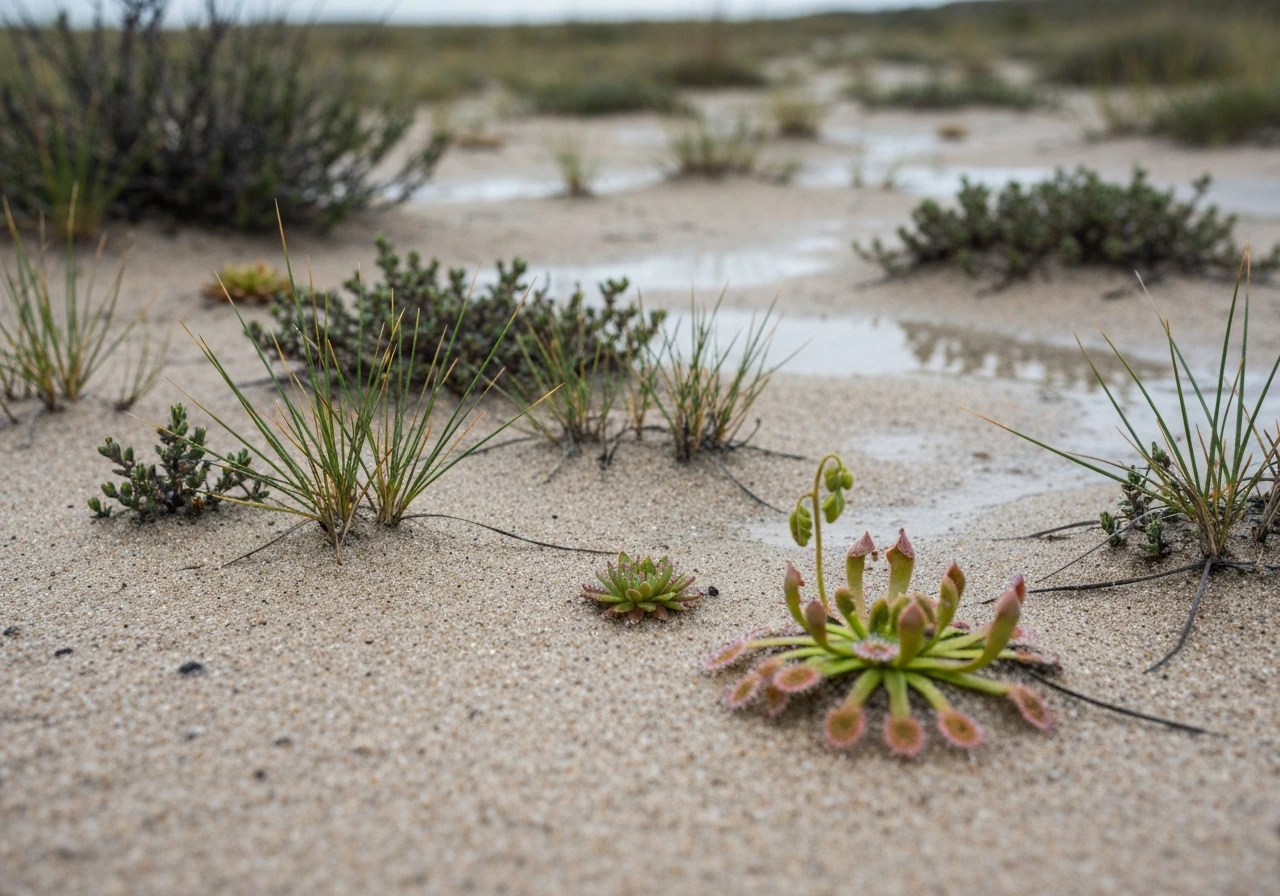
The Cape Floristic Region of South Africa hosts several Drosera species on seasonally wet, sandy fynbos soils. Flowering plants thrive in similarly challenging habitats as long as the conditions they need, like soil chemistry and moisture, are met where flowering plants grow. Central Africa's highlands support their own Drosera and Utricularia communities. Aldrovanda vesiculosa, the aquatic waterwheel plant, has the broadest range of any carnivorous plant, it floats in still, nutrient-poor freshwater from Europe through Africa, Asia, and Australia.
Climate and season requirements
There's no single climate that defines carnivorous plant habitat, but there are clear patterns by genus. Understanding these helps you figure out which species you'd actually find in a given place and time of year.
| Plant group | Climate type | Temperature range | Seasonality notes |
|---|---|---|---|
| Sarracenia (North American pitcher plants) | Temperate, humid subtropical | −10°C to 38°C across range | Dormant in winter; peak growth spring to fall |
| Venus flytrap | Warm temperate, humid | −5°C to 35°C | Winter dormancy required; active spring to fall |
| Drosera (temperate sundews) | Cool temperate to boreal | −20°C to 30°C | Some die back completely in winter |
| Drosera (tropical sundews) | Tropical to subtropical | 15°C to 35°C year-round | No dormancy; grow year-round |
| Nepenthes (tropical pitcher plants) | Tropical highland or lowland | Lowland: 25–35°C; Highland: 10–25°C | No dormancy; sensitive to frost |
| Heliamphora (sun pitchers) | Tropical alpine | 5°C to 20°C | Cool temperatures year-round at elevation |
| Pinguicula (butterworts) | Temperate to subtropical | −10°C to 30°C depending on species | Many form winter rosettes or go semi-dormant |
| Utricularia (bladderworts) | All climates | Varies widely by species | Aquatic species active when water is present |
Rainfall matters more than temperature in most cases. Insectivorous plants generally need 800mm to over 2,500mm of rain per year, and critically, the rain must come when temperatures are warm enough for growth. Seasonal drought is tolerated by some species (particularly Australian Drosera tubers, which survive dry summers underground), but prolonged drought during the growing season is fatal. Tropical Nepenthes in cloud forest zones often receive moisture from fog and mist as much as from direct rainfall, which is why they can grow on exposed ridges that might seem too dry.
Soil and water conditions, the real deciding factor
If you take away one thing from this article, make it this: insectivorous plants don't grow where other plants do well. They grow in nutrient-poor, acidic, consistently wet habitats where other plants struggle where insectivorous plants grow. They're adapted to conditions that most plant life finds hostile. The soil chemistry is as important as the geography.
Bog soils are acidic, typically pH 3.5 to 5.5. Sphagnum moss acidifies the water around it as it grows, creating the low-pH environment these plants require. Nitrogen and phosphorus levels in bog water are extremely low, often just a few milligrams per liter or less. That's what makes insects valuable as a nutrient source. Carnivorous plants evolved their trapping mechanisms specifically to compensate for what the soil can't provide.
The water must be present but moving slowly enough to stay oxygenated at the root zone. True standing stagnant water is actually less ideal than the saturated-but-aerated conditions found in active Sphagnum mats or sandy seeps, where water slowly moves through or percolates from above. Roots sitting in completely anaerobic, stagnant water will rot, even in carnivorous plants. This is why so many carnivorous plant habitats are on gentle slopes, in areas with high rainfall topping up the water table constantly, or in Sphagnum systems where the moss itself provides aerated structure.
- pH 3.5 to 5.5 — highly acidic substrate is non-negotiable for most species
- Extremely low nitrogen and phosphorus — mineral soil or pure peat/sand mixes only
- Constant or seasonal moisture — never dry out completely during growing season
- Slow water movement — saturated but not stagnant or anaerobic
- No added fertilizers, lime, or mineral-rich water — these are toxic to most carnivorous plants
- Full sun to partial shade depending on species — many bog species are full-sun plants
Sandy substrates work well for species like Venus flytraps and many Drosera because they hold moisture near the surface while draining quickly enough to prevent total waterlogging. Pure sphagnum peat or a 50/50 mix of peat and perlite or sand replicates this chemistry closely. What you never want to use is potting mix, garden compost, or anything with added nutrients, even a small amount will kill most carnivorous plants within weeks.
How to find suitable spots near you
If you want to find wild carnivorous plants or identify habitat where they might grow, you need to train yourself to read the landscape rather than consult a checklist. Here's the practical method I use.
Start with topography and drainage. Endemic plants are those which grow in a specific place and nowhere else, so local habitat conditions matter. Low-lying areas, gentle valley bottoms, flat coastal plains, and the margins of lakes and ponds are the first places to investigate. Look for standing water in winter and spring, even if the ground appears dry in summer. Seasonally wet ground often shows itself through indicator plant communities: Sphagnum moss, sedges (Carex), rushes (Juncus), and bog cotton (Eriophorum) are reliable signs of acidic, wet conditions in temperate zones. In warmer climates, wire grass, longleaf pine, and gallberry (Ilex glabra) indicate the pine savanna habitat where Sarracenia and flytraps often occur.
Check your local pH. A basic soil pH test from a garden center will tell you quickly whether the ground chemistry is in the right range. Anything below pH 5.5 in a wet area is worth investigating further. You can also use regional geology: areas with granite bedrock, quartz sand, or sandstone tend to produce nutrient-poor, acidic soils. Areas underlain by limestone or chalk almost never support carnivorous plant communities because the bedrock buffers the pH upward.
National and state or regional nature reserves are often the best places to see carnivorous plants in the wild. In the US, the Green Swamp Preserve in North Carolina, the Apalachicola National Forest in Florida, and the many Nature Conservancy bogs across the Great Lakes region are well-documented sites. In the UK, RSPB and National Nature Reserves in Wales, Scotland, and Ireland regularly have accessible bogland with sundews and butterworts. iNaturalist observation maps are genuinely useful here, searching for Drosera, Sarracenia, or Utricularia observations near your location will show you exactly where local observers have found them, often with precise habitat notes.
What to do if your area isn't naturally suitable
Most gardeners and plant enthusiasts don't live next to a sphagnum bog, and that's fine. Carnivorous plants are among the most successfully cultivated groups of specialist plants precisely because their key requirements are easy to replicate artificially. You're not mimicking a landscape, you're mimicking soil chemistry and moisture.
The tray method works for most temperate species. Grow the plant in a pot of pure sphagnum peat and perlite (or peat and coarse sand), and sit that pot in a tray of water about 2 to 5 centimeters deep. Use only rainwater, distilled water, or reverse-osmosis water. Tap water in most areas contains dissolved minerals that will raise the pH and add the very nutrients you're trying to exclude. Refresh the tray regularly to prevent stagnant conditions. This setup replicates the permanently moist, mineral-free conditions of a bog seep extremely well.
For outdoor growing, a bog garden in a container solves most climate problems. Use a watertight planter or a section of pond liner, fill it with a pure peat and sand mix, and top up with rainwater. Site it in full sun for North American and Australian species, or in dappled light for tropical Nepenthes. In temperate climates, hardy Sarracenia and Drosera rotundifolia can stay outdoors year-round in a container bog, they need the cold dormancy winter provides. Tropical species like Nepenthes are best grown in a humid terrarium or greenhouse where you can maintain consistent temperatures.
If you're in a genuinely arid climate with hard, alkaline water, the investment in a water butt to collect rainwater makes a real difference. You can also acidify distilled water very slightly using a small amount of citric acid if rainwater isn't available. The goal is always water with minimal dissolved solids and a pH around 4.5 to 6. Get that right, pair it with nutrient-free substrate and plenty of light, and the geography of where you live becomes almost secondary. Carnivorous plants grown this way in a garden in Arizona or central Europe can be just as healthy as wild plants growing in a Scottish peat bog, because the environmental conditions they actually need, not the postcode, are what determine whether they thrive. Century plants grow in sandy, well-drained soils and bright sun, typically in arid to semi-arid regions.
Understanding where insectivorous plants grow naturally also helps you appreciate the broader ecology of nutrient-poor habitats. These same conditions that support carnivorous plants often support other fascinating specialists, plants adapted to extreme soil chemistry in ways that are just as interesting to study as the flytrap's closing trap. Bogs and wet heaths are among the most biodiverse and threatened habitats on Earth, so whenever you visit a site to see carnivorous plants in the wild, you're also stepping into a broader community of species that depend on those same low-nutrient, acidic conditions.
FAQ
Can insectivorous plants grow in my backyard if my soil is not very acidic?
Yes, but you usually cannot fix the ground directly. The most reliable approach is container growing or a lined “bog garden” filled with nutrient-free peat/sand (or peat/perlite), then irrigate with rainwater or RO water to keep pH and dissolved solids low.
What pH test should I use, and how do I interpret results in wet areas?
Use a soil test that reports a numeric pH, not just a color strip. Also test after wetting, since bog soils can shift with water chemistry; if wet-area pH stays consistently above about 5.5, true carnivorous-plant habitat is unlikely without using purified substrate in a container.
Why do plants look fine at first, but then decline or rot?
Most declines come from nutrient contamination, mineral-heavy water, or stagnant anaerobic conditions. Even if you avoid fertilizer, tap water can gradually raise pH and add minerals, and poor water movement or overly compact media can deprive roots of oxygen, leading to rot.
Is stagnant standing water ever okay for carnivorous plants?
Not ideal. Saturated-but-aerated conditions work better, such as active Sphagnum mats or sandy seeps where water percolates slowly. If water becomes truly stagnant for long periods, oxygen drops and many species rot even though the site is wet.
Why do some places “look wet and acidic” but still have no carnivorous plants?
Habitat depends on more than moisture and acidity. Seed banks and dispersal matter, and some sites lack the right combination of very low available nitrogen and phosphorus, plus the specific hydrology (seasonal saturation pattern, drainage rate, and water table stability).
What’s the fastest way to confirm habitat potential before traveling to a site?
Check for indicator plants in the area and the landscape shape (valley bottoms, lake margins, seepage zones). If you see Sphagnum, sedges, rushes, or bog cotton in a persistently wet zone, that is a better signal than trying to infer from climate alone.
Do carnivorous plants survive summer drought in the same way everywhere?
No. Some temperate species can endure dry periods via underground dormancy or seasonal cycles, but prolonged drought during their active growing season is typically fatal. Tropical species can also rely on fog or mist moisture, so “dry-looking” ridges may still support them if cloud water is present.
Which water source is safest for home cultivation?
Rainwater is best, then distilled or reverse-osmosis. Avoid tap water unless you can verify low dissolved solids and stable pH, because many regions’ tap water adds enough minerals to eventually undermine the nutrient-poor, acidic conditions carnivorous plants require.
Should I fertilize carnivorous plants with insect feed or balanced fertilizer?
Insect feeding alone can work for some species in some settings, but regular fertilizer is a common mistake. Added nutrients, even small amounts from compost or potting mixes, can burn roots and disrupt the plant’s nutrient strategy, often killing plants within weeks.
Can I grow Nepenthes outdoors year-round in cold climates?
Usually no. Nepenthes generally need stable warmth and high humidity, and many species cannot handle cold winters. Outdoors, most people succeed only in warm microclimates or by providing greenhouse or terrarium conditions where temperature and humidity stay consistent.
How can I avoid buying the wrong plant for my local conditions?
Match the plant’s habitat hydrology and substrate needs, not just the genus. A Venus flytrap can thrive with cold dormancy outdoors in the right container setup, but other species (especially many tropical pitchers) need different temperature patterns, different humidity, and a different watering routine.