Yes, certain land plants can grow underwater, but the key is understanding what "underwater" actually means for each species. Most plants we call "land plants" that tolerate submersion are really shoreline, marsh, or wetland-edge species that evolved to handle flooding as a normal part of their life cycle. They are not true aquatic plants, but they are not fully terrestrial either. Think of them as amphibious plants: species that can survive, and sometimes even thrive, with their roots, stems, or entire body submerged for days, weeks, or even the whole growing season, depending on the species and the conditions.
Land Plants That Can Grow Underwater: Identify and Grow Them

Dr. Marcus Weatherby
31 May 2026
What "land plants that grow underwater" actually means
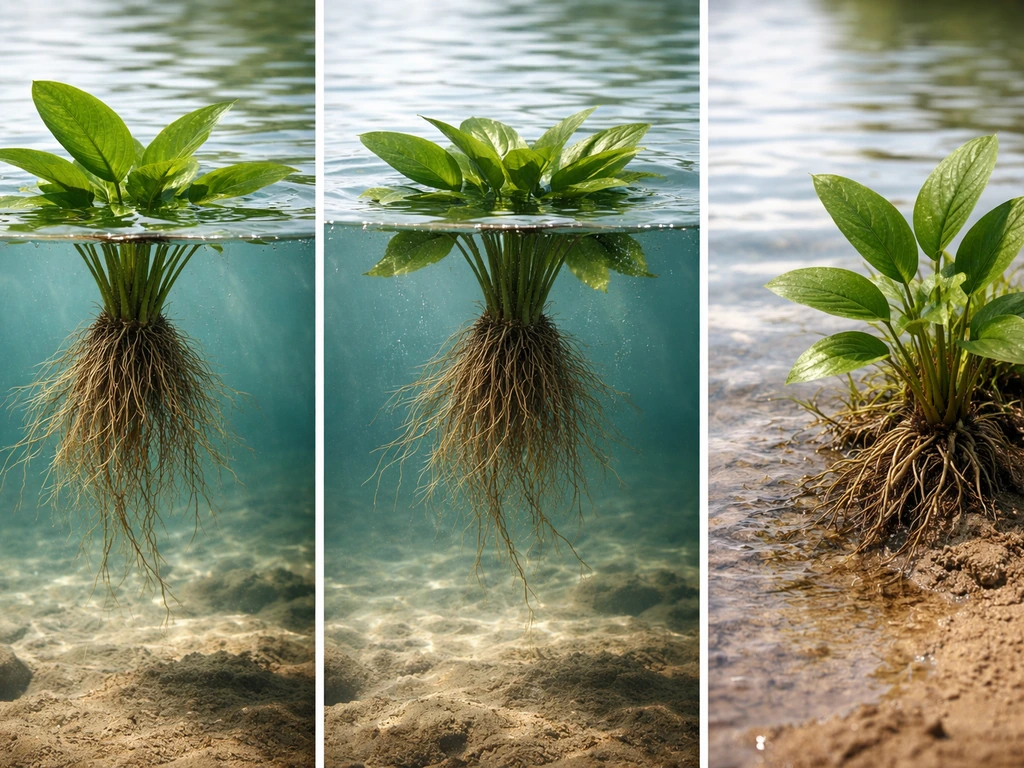
This phrase can mean several different things depending on who is asking. Aquatic ecologists use a category called macrophytes, which covers any plant growing in or near water, including emergent plants (stems and leaves above the waterline), submerged plants (entirely below the surface), and floating plants. When most people ask about land plants growing underwater, they usually mean one of two things: plants that naturally grow on dry land but can survive a flooding event, or shoreline and marsh species that straddle the line between land and water.
The USDA and Army Corps of Engineers both acknowledge there is no clean line between aquatic and terrestrial plants. Some species they describe as "blank" rel="noopener noreferrer">amphibious" can grow as either submerged or emergent aquatics depending on water levels. That ambiguity is exactly what makes this topic practical. You are not looking for plants that magically breathe underwater. You are looking for plants that have physiological adaptations allowing them to survive low-oxygen waterlogged conditions, often by growing internal blank" rel="noopener noreferrer">air channels called aerenchyma that ferry oxygen from above-water tissues down to the roots.
For this guide, I am using "land plants that grow underwater" to mean: non-fully aquatic species that tolerate complete or partial submersion, whether temporarily during flood pulses or more permanently in marsh zones, and that can establish or persist in submerged conditions without quickly dying.
Plants that tolerate submersion: the marsh and shoreline semi-aquatics
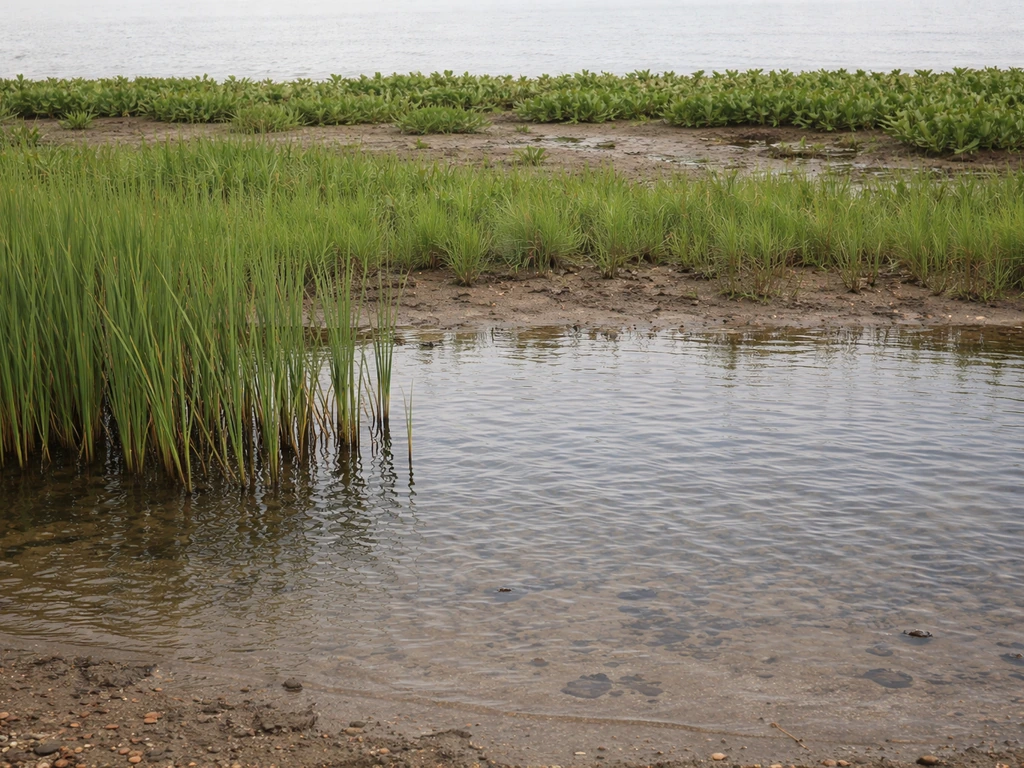
The most reliable candidates come from three ecological groups: emergent marsh plants, shoreline transitional species, and amphibious wetland forbs. Here is a breakdown of the main types with realistic expectations for each.
Emergent marsh plants
These are the species you see standing upright in the shallow edges of ponds and marshes, with roots and lower stems submerged but leaves and flowering stalks above the water. They handle flooding well because they evolved in environments where the water level can rise significantly and then drop again across seasons.
| Plant | Typical submersion depth | How long submerged | Notes |
|---|---|---|---|
| Cattail (Typha latifolia / T. angustifolia) | Up to 3 feet (roots and lower stem) | Year-round in permanent marshes | Highly tolerant; spreads aggressively |
| Pickerelweed (Pontederia cordata) | 6 to 18 inches over crown | Months at a time | Flowers emergent; good biodiversity plant |
| Arrowhead (Sagittaria latifolia) | 6 to 24 inches over tubers | Seasonal to year-round | Edible tubers; wide North American range |
| Soft rush (Juncus effusus) | 2 to 6 inches over roots | Weeks to months | Tolerates short full submersion in floods |
| Blue flag iris (Iris versicolor) | Roots to 4 inches over crown | Seasonal | Good for temperate zone pond edges |
| Lizard's tail (Saururus cernuus) | 2 to 12 inches over roots | Weeks to months | Prefers shade; southeastern US native |
| Watercress (Nasturtium officinale) | Fully submerged or floating | Year-round in flowing water | Technically terrestrial origin; thrives submerged |
| Wild rice (Zizania aquatica) | 1 to 3 feet over roots | Growing season | Annual; needs moving or well-oxygenated water |
| Reed canary grass (Phalaris arundinacea) | Up to 12 inches over crown | Weeks | Invasive in many regions; avoid outside native range |
| Marsh marigold (Caltha palustris) | 2 to 8 inches over roots | Spring flood season | Early spring bloomer; dies back in summer heat |
Shoreline transitional and amphibious species
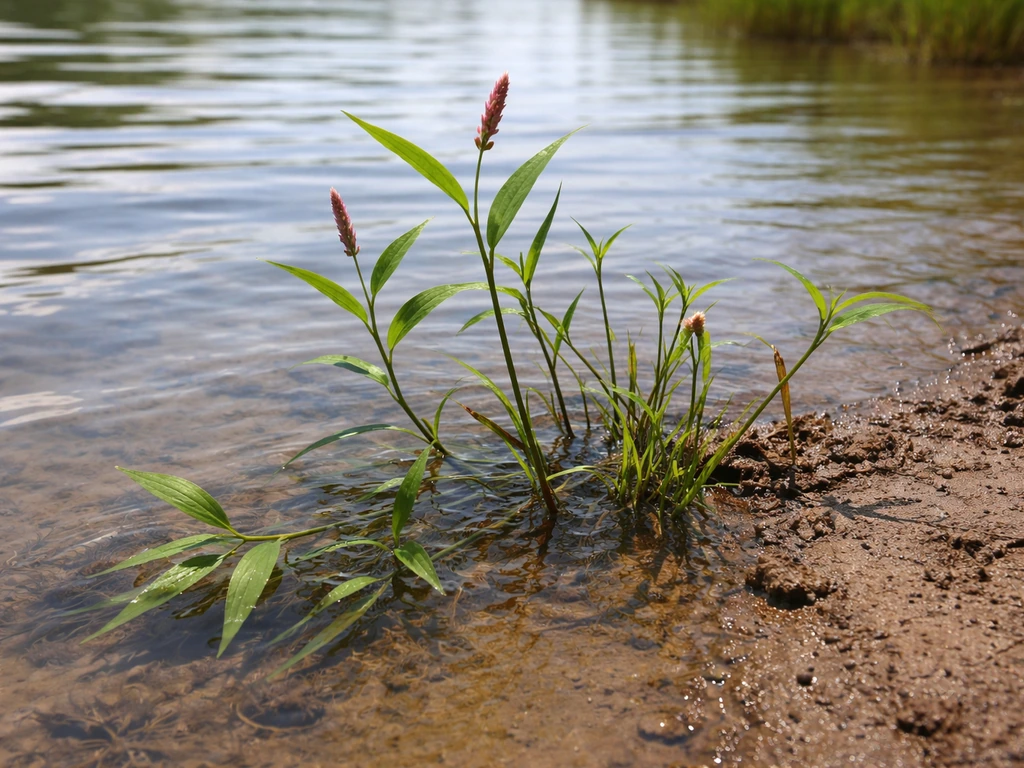
These species grow in the wet-dry transition zone and can shift their growth form depending on whether they are submerged or exposed. Amphibious smartweeds (Persicaria amphibia, for example) will produce submerged, narrow leaves when underwater and broader floating or aerial leaves when water drops. Spike rush (Eleocharis palustris) and water plantain (Alisma plantago-aquatica) follow a similar pattern. These are especially useful because they tolerate the water level fluctuations common in seasonal wetlands, stormwater basins, and garden ponds.
Terrestrial plants with flood tolerance
Some plants most people think of as purely terrestrial can survive temporary flooding because of aerenchyma tissue or simple dormancy during the wet period. Red maple (Acer rubrum) can tolerate months of root flooding. River birch (Betula nigra), baldcypress (Taxodium distichum), and swamp white oak (Quercus bicolor) all grow with their root systems in standing water for extended periods in nature. These are not plants you will grow fully submerged, but they are legitimate examples of land plants that grow in flooded conditions and are useful for restoration or rain garden projects.
How to match plants to your climate, season, and habitat
The biggest mistake I see is people picking a species from an aquarium store or a botanical list without checking whether it matches their regional conditions. Climate zone and hydroperiod, meaning how long and how often a site holds water, determine which plants will actually survive. The University of New Hampshire Extension frames this well: persistent emergent plants like cattail, pickerelweed, and arrowhead tend to appear where water is present for most of the year, while flood-tolerant terrestrial species show up where flooding is seasonal and temporary.
Here is how to think about matching plant to place. First, identify your water regime. Is the submersion permanent, seasonal (spring through early summer), or intermittent (rainfall driven)? Second, know your climate zone. Temperate North America (USDA zones 4 to 8) supports the widest range of native emergent and semi-aquatic species. Subtropical zones (9 and above) open the door to year-round emergents like pickerelweed and duck potato but can push out cold-dormant species. Third, think about the season. Most semi-aquatic plants establish best when planted in late spring or early summer when water temperatures are above 60°F (15°C) and daylength is increasing.
| Climate zone | Recommended species | Season for establishment | Water regime fit |
|---|---|---|---|
| Zone 3 to 5 (cool temperate) | Marsh marigold, soft rush, wild rice, cattail | Late spring (May to June) | Seasonal or permanent marsh |
| Zone 5 to 7 (temperate) | Arrowhead, pickerelweed, blue flag iris, lizard's tail | Spring to early summer | Permanent to semi-permanent |
| Zone 7 to 9 (warm temperate to subtropical) | Watercress, pickerelweed, spike rush, water plantain | Year-round; peak spring | Permanent ponds and streams |
| Zone 9 to 11 (subtropical/tropical) | Taro (Colocasia), papyrus (Cyperus papyrus), sagittaria | Year-round | Permanent standing water |
If your site has variable soil conditions beyond just water depth, it helps to know your substrate chemistry too. This is especially important when you are dealing with ericaceous soil, where species need the right acidic conditions to thrive. Which plants can grow in red soil depends on both how wet the site gets and how dense, mineral-rich your soil is.
If your soil is nitrogen deficient, focus on species known to handle low-nitrogen conditions so they can establish without stalling nitrogen-deficient soil. For high pH soils, look for tolerant native emergent and shoreline plants like certain sedges, rushes, and some wetland forbs that handle alkaline conditions what plants grow in alkaline soil. For alkaline soil, you will want plants that tolerate higher pH and can still handle saturated or periodically flooded conditions alkaline conditions. Plants tolerating submersion in alkaline ponds differ from those in acidic bog edges, for example.
The same logic that applies to understanding what plants grow in alkaline soil or nitrogen-deficient soil applies here: habitat chemistry shapes which species can establish even when water level is the dominant variable. Plants adapted to high pH (alkaline) soils can include many of the same wetland semi-aquatics, but you will still want to match species to your specific pH and water conditions.
What conditions they need underwater: light, water quality, depth, and substrate
Light
Submerged plants need light to photosynthesize, and water filters it fast. Most emergent and semi-aquatic land plants need at least 4 to 6 hours of direct sunlight reaching their growing points. For plants positioned with leaves above water, this is straightforward. For fully submerged plants, turbidity is the killer. The EPA notes that the absence of submerged aquatic plants in a water body is often a signal of excessive turbidity, meaning too much suspended sediment or algae blocking light. In practice, if you cannot see a light-colored object 12 to 18 inches below the surface in your pond or wetland, the water is too turbid for most semi-aquatic plants to survive fully submerged.
Water quality
Most semi-aquatic land plants prefer clean to moderately fertile water. High nutrient loads (nitrogen and phosphorus from fertilizer runoff) promote algae growth that smothers plants. Herbicide residue and road salt runoff can kill plants outright, and this is one reason plant absence in a shoreline can signal water-quality problems rather than just wrong conditions. For pond setups, aim for water with a pH between 6.5 and 8.0, low turbidity, and no chemical contamination. Chlorinated tap water should be left to off-gas for 24 to 48 hours before use, or treated with dechlorinator.
Water depth
Depth tolerance is species-specific and often more precise than people expect. As a practical rule: most emergent marsh plants prefer their roots or crowns covered by 6 to 24 inches of water, not more. Fully submerged plants like watercress or submergent forms of amphibious smartweed need shallower, well-lit conditions, typically under 18 inches. They are not magic; for the same reason, matching plants to your depth and substrate helps you land on plants that can grow in shallow soil. Going deeper than a species tolerates is one of the most common ways to kill what should be a perfectly adapted plant. Start shallow and adjust.
Substrate
Most semi-aquatic plants anchor in mineral sediment, not organic-rich muck. A common case is shallow beds, where you have only about 3 inches of soil to anchor roots and manage moisture. A mix of coarse sand and loam works well for planted containers in ponds. Avoid potting mixes with perlite or bark, which float and cloud the water. Heavy clay soil from a wetland site is often the best substrate if you can source it locally, since it holds roots firmly and leaches minimal nutrients. For plants being trialed in containers, use plain topsoil or aquatic planting media sold specifically for pond plants.
Planting and setup options: submerged, semi-submerged, and emergent
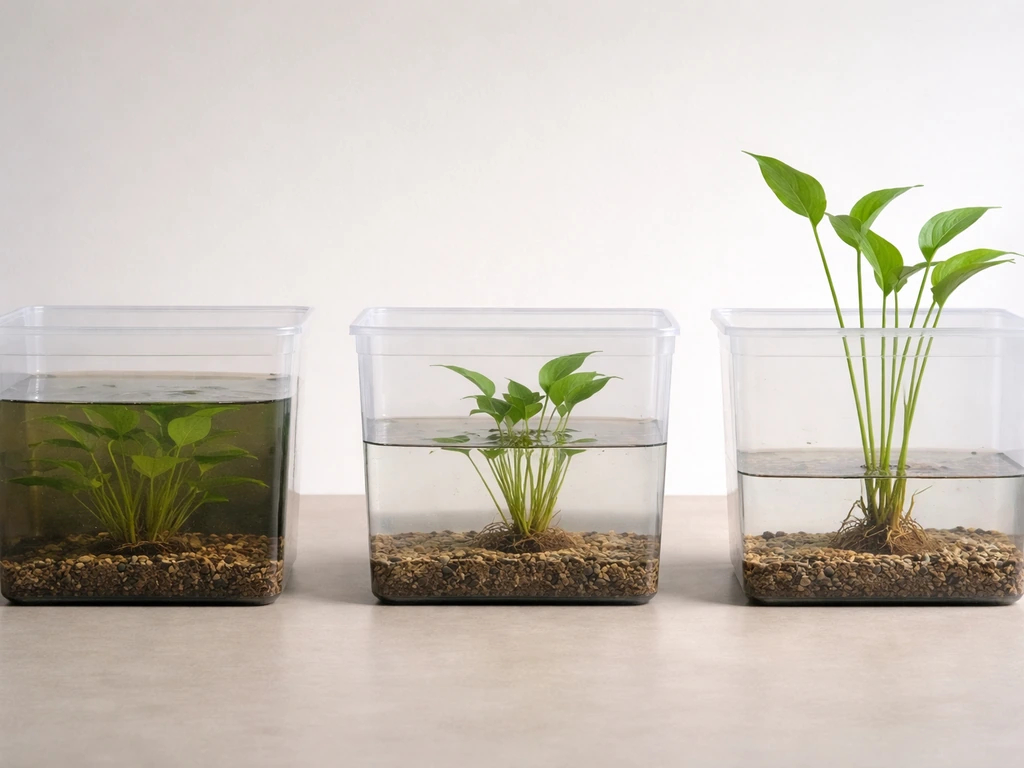
How you physically set up the plants matters as much as which species you choose. There are three main configurations.
- Fully submerged: Place a plant in a weighted container or anchor it directly into pond sediment so the entire plant sits below the waterline. This works for genuinely amphibious species like watercress, submergent forms of Sagittaria, and Persicaria amphibia. Start with the plant just barely submerged (2 to 4 inches of water over the crown) and allow it to acclimate over 2 to 4 weeks before increasing depth.
- Semi-submerged in containers: Set potted emergent plants on shelves or ledges inside a pond so the soil surface sits just at or slightly below the waterline (0 to 6 inches). This is the most reliable method for cattails, pickerelweed, arrowhead, and blue flag iris. The plant roots are wet, lower stems may be submerged, but growing tips and leaves reach above water.
- Emergent natural planting in soil margins: Plant directly into saturated soil at the pond edge or in a constructed wetland basin where soil stays waterlogged. This mimics natural conditions best and works for flood-tolerant shrubs and trees (baldcypress, river birch, red maple) as well as marsh forbs. Grade the planting area so water covers roots but leaves are above the waterline during normal water levels.
For indoor aquariums or container water gardens, the container method is by far the easiest to control. Use heavy mesh pots (aquatic baskets) filled with plain topsoil or aquatic planting media, top-dressed with coarse gravel to keep soil from clouding the water. Position baskets on stacked bricks or blocks to dial in the exact depth for each species.
How to test and troubleshoot common failures
Before committing a full planting, run a test submergence with a single plant for 2 to 3 weeks. Place it at the intended depth and observe every few days. Signs the trial is working: new leaf growth, stable green color, and firm stems. Signs of failure are usually one of four things: melting, rot, algae takeover, or stunted growth.
Yellowing or melting leaves
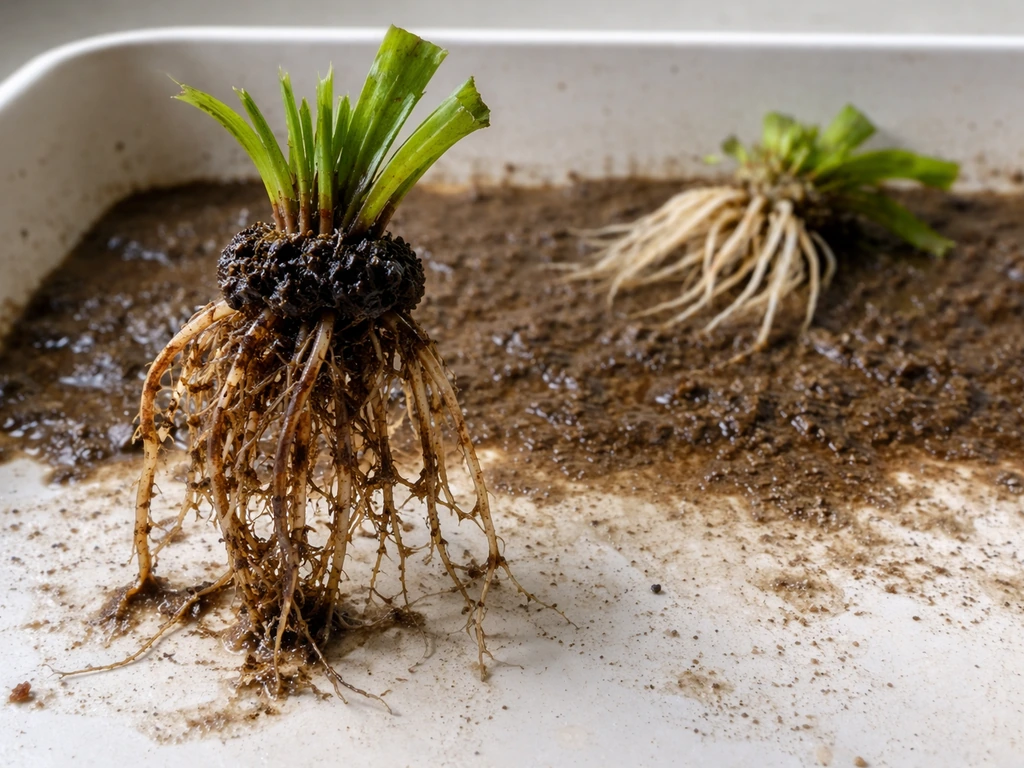
Leaf yellowing and tissue softening (what aquarists call "melting") usually means the plant was not pre-adapted to submerged conditions and is dying off its aerial leaf forms to grow new, submerged-form leaves. Some species do this as a normal transition. If new growth appears from the crown within 3 to 4 weeks, the plant is adapting. If the whole plant turns to mush with no new growth, the species is not tolerant and you need to switch. Too little light accelerates this failure.
Root and crown rot
Rot usually comes from three causes: wrong substrate (organic-rich mixes that go anaerobic fast), water that is too warm (above 85°F / 29°C consistently), or a species that simply cannot tolerate full submersion. Check the roots by gently pulling the plant. Firm, white or tan roots are healthy. Black, soft, foul-smelling roots indicate rot. Switch to mineral substrate, reduce water temperature if possible, or move the plant to a shallower position with the crown above water.
Algae takeover
Algae outcompetes semi-aquatic plants when nutrient levels are high and plant density is low. In nitrogen deficient soil, plant growth can shift because some species need more available nitrogen to form strong leaves and roots. The fix is to increase planting density (more plants competing for the same nutrients), reduce direct sunlight if you have string algae problems, and avoid fertilizing the water column. Once your semi-aquatic plants are established and growing vigorously, they will naturally suppress algae by consuming available nutrients.
Stunted or no growth
If the plant is alive but simply not growing, the most common causes are too little light, water temperature below the species' active growth threshold (most semi-aquatic plants need water above 55 to 60°F / 13 to 15°C to grow), or planting out of season. Confirm you are in the right seasonal window for the species. Emergent marsh plants in temperate zones are essentially dormant from fall through early spring and will not show growth regardless of how good the setup is.
How to source, verify, and choose the right species for your location
Start by identifying what naturally grows in wetlands in your region. The USDA PLANTS Database allows you to search by state and filter for wetland indicator status. Plants rated OBL (obligate wetland) or FACW (facultative wetland) are your strongest candidates for submersion tolerance, as these species occur almost exclusively in wet to flooded conditions in the wild.
For sourcing, native plant nurseries and wetland restoration suppliers are far more reliable than general garden centers or aquarium stores for species that will actually perform in your regional conditions. Ask specifically whether a plant was grown in wet or flooded conditions, not just "near water." Plants grown in saturated soil transition to submerged conditions much more successfully than those grown in standard nursery pots.
If you are unsure whether a species will tolerate your specific water depth and quality, follow this three-step verification process before committing to a large planting.
- Check the species' wetland indicator status (OBL or FACW) and native range on the USDA PLANTS Database or your regional native plant society.
- Run a 2 to 4 week test submergence with one plant at your target depth and water conditions before buying more.
- Observe local wetland sites in your area (legally accessible ones) and note which species are naturally growing at or below the water level you want to replicate. Those species are pre-validated for your local conditions.
Avoid species listed as invasive in your state. Reed canary grass, common reed (Phragmites australis in some regions), and purple loosestrife are highly flood-tolerant but have severe ecological consequences when introduced to natural water bodies. Stick to species native to your region, and you will get plants better adapted to local water chemistry, seasonal temperature swings, and hydroperiod variation than any exotic substitute.
One final note: the underlying logic of matching plants to water conditions is the same logic that applies to matching plants to soil chemistry or depth. Just as you would check soil pH or nutrient status before planting, checking the hydroperiod, water depth, and light penetration of your site before choosing a species is the most reliable way to avoid failure. The plants that succeed underwater are not magic. They are simply the ones that evolved there.
FAQ
Can I use any aquatic plant to grow underwater, or do I specifically need land plants that tolerate submersion?
You can grow many aquatic species submerged, but this article focuses on non-fully-aquatic land plants that tolerate flooded conditions. If your goal is shoreline or marsh-style growth (emergent leaves, flowering above water, or amphibious forms), prioritize species that naturally occur in wet-to-flooded habitats in your area, not just aquarium plants. Aquarium sellers often grow plants emersed, so they may “melt” when you submerge them fully.
What is the easiest way to confirm whether a plant is truly adapted to my hydroperiod (how long it stays flooded)?
Match by the plant’s wetland indicator status and then do a short submergence trial. If you cannot source indicator information, treat hydroperiod as the deciding factor: plants from consistently flooded sites tolerate longer submergence, while seasonal flood-tolerant terrestrial species may perform poorly if kept submerged year-round. The two to three week test described in the guide is the practical way to catch mismatch early.
How deep can I plant them if my pond water level changes through the season?
Use the crown or root depth, not just the average depth. Plan your placement so that during the highest water period the roots are within the species’ preferred flooding range, and during the lowest water period the growing points still receive enough light. If the water level can drop a lot, choose amphibious species that shift leaf form, rather than trying to keep an emergent plant submerged all season.
Do I need direct sunlight, or will bright shade work for semi-aquatic land plants?
Bright shade usually is not enough for long-term success if the plant’s growing points are submerged or close to the surface. Most semi-aquatic species need several hours of direct sunlight reaching their leaf or crown area. If you only have indirect light, you may end up with stunted growth, delayed establishment, or algae that outcompete plants.
Why do some plants melt or turn mushy, and what should I check first?
First check whether they were pre-adapted to submerged conditions, then verify light and temperature. “Melting” often means the plant is converting from aerial growth to submerged growth, so you want to see new growth from the crown within a few weeks. If there is no new growth and tissue becomes soft quickly, switch species and also reduce depth or improve turbidity and light conditions.
How can I tell if my water is too turbid without buying test equipment?
Use the simple visibility check: if you cannot see a light-colored object roughly 12 to 18 inches below the surface, most semi-aquatic plants will struggle when fully submerged. Turbidity is not just about how brown or green the water looks, it is about how much light is blocked, which directly affects photosynthesis.
Should I fertilize to help semi-aquatic plants establish faster?
Avoid fertilizing the water column, it often triggers algae that smothers plants. If plants stall after they establish, the better adjustment is usually planting density, light, and water quality, not added nutrients. Use the least nutrient input needed, and rely on the right species-substrate combination instead of feeding the water.
Can I grow flooded red maple, birch, or bald cypress by completely submerging them like an aquatic plant?
In most cases, no. These trees are flood-tolerant because they can handle root submergence and oxygen-poor, waterlogged soil conditions, but the aerial parts typically still need appropriate light and air exposure depending on the species. Treat them as wetland trees for flooded margins or rain gardens, not as fully submerged aquascape plants.
What substrate is safest if I am not sure whether my soil is mineral or muck?
When in doubt, start more mineral and less organic for submerged or submerged-prone zones. Organic-rich mixes can go anaerobic quickly in waterlogged conditions, increasing the risk of rot. For container setups, use plain topsoil or aquatic planting media, then top-dress with coarse gravel to prevent clouding.
How do I avoid bringing in invasive flood-tolerant plants when shopping?
Check your state’s invasive list and also avoid buying “near water” species without verifying native range and local wetland behavior. Some highly flood-tolerant species spread aggressively even if they grow well. When you ask nurseries, request evidence of regional wet or flooded cultivation, not just the seller’s general description.
What’s the best way to diagnose why a plant is alive but not growing?
Go through three common causes in order: light, temperature, and season. If light is sufficient, then check whether water temperature is above the species’ active growth range (many semi-aquatic plants need roughly 55 to 60°F, 13 to 15°C, or warmer). Finally, confirm it is the right time of year, since many emergent wetland plants are dormant during colder months.