
Plenty of plants not only survive in nitrogen-deficient soil, they actually perform better there than they would in rich, well-fed ground. Native prairie grasses, wildflowers, legumes, rock garden plants, and many drought-adapted species have spent thousands of years colonizing low-fertility soils, and putting them into heavily amended beds often makes them floppy, weedy, and short-lived. Before you reach for fertilizer, it's worth knowing which plants belong in poor soil, how to confirm you're actually dealing with nitrogen deficiency (not pH, iron, or phosphorus), and how to set the site up so these plants thrive long-term.
Which Plants Grow in Nitrogen Deficient Soil

Dr. Marcus Weatherby
1 Jun 2026
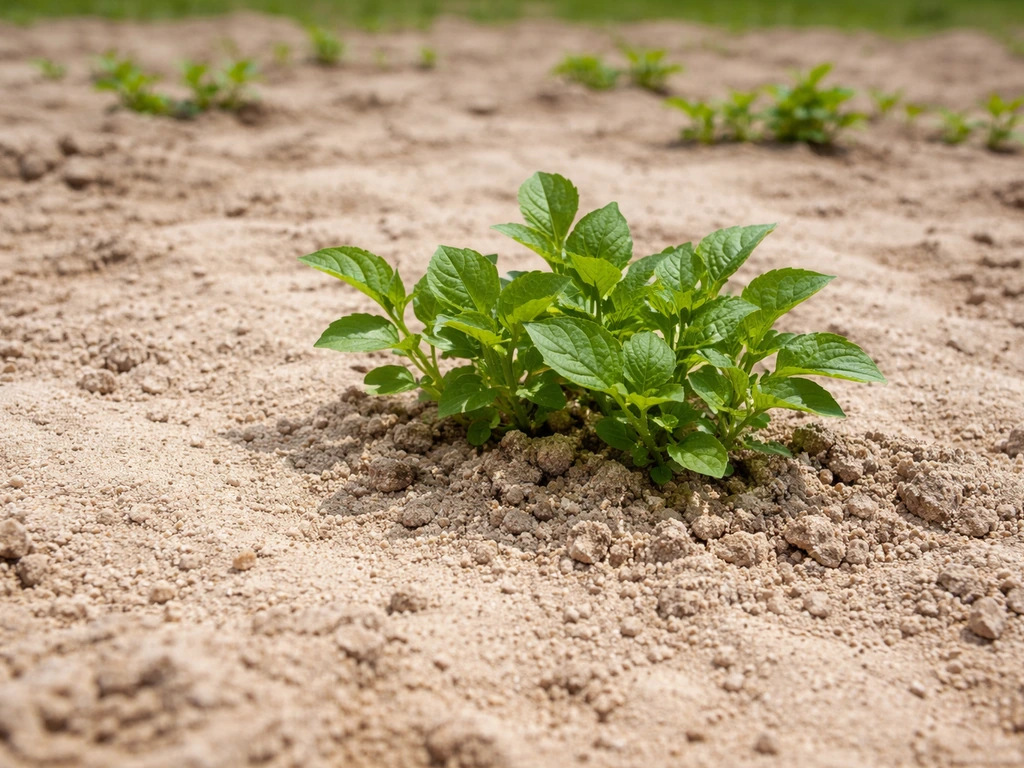
How to recognize nitrogen deficiency in soil
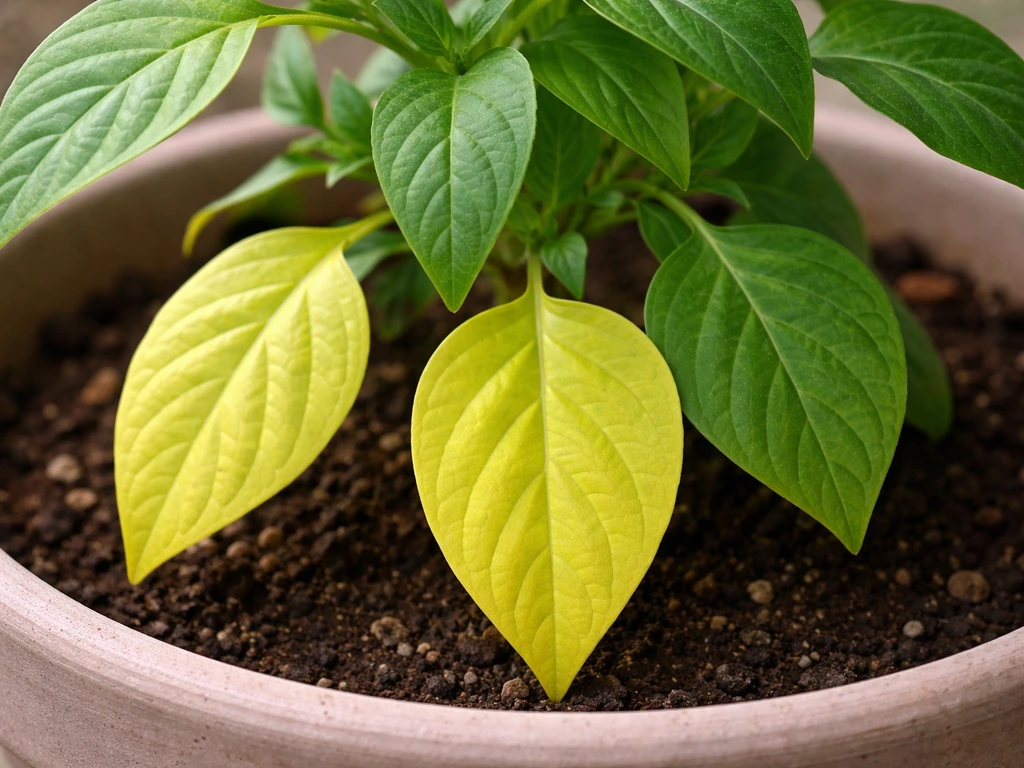
The classic sign of nitrogen deficiency is a uniform, pale yellow-green color starting on the oldest, lowest leaves first. Because nitrogen is mobile inside a plant, the plant pulls it from older tissue and redirects it toward new growth, so the youngest leaves often look fine while the base of the plant fades. In corn, you'll see a distinctive V-shaped yellowing running from the leaf tip backward, sometimes with scorched brown edges on older leaves. In shrubs and perennials the pattern is similar: older leaves yellow and drop early, and overall growth is noticeably stunted.
The tricky part is that several other deficiencies look similar, so don't jump to conclusions. Iron chlorosis shows up as yellowing too, but it starts on the youngest, newest leaves first, not the oldest ones, and it's usually tied to high soil pH (above 7. If you suspect high pH soil is also a factor, look for plants for high-pH soils as a related option when choosing species. 0) making iron insoluble and unavailable. Phosphorus deficiency also hits older leaves but tends to produce purpling of veins or leaf tips rather than straight yellowing. If you're seeing older-leaf yellowing across multiple plants with no purple tones and your soil isn't particularly alkaline, low nitrogen is a reasonable working diagnosis. A basic soil test that measures pH and organic matter will help you rule out the other suspects, and it's worth doing before you plant anything or amend anything.
One more thing to check: compaction, waterlogging, and shallow root zones can all mimic nitrogen deficiency because roots that can't explore soil can't take up whatever nitrogen exists. If your site drains poorly or the soil is hard-packed, fix those physical problems first. A plant sitting in compacted, wet ground will look nitrogen-starved even if nitrogen is present.
Plants that tolerate or prefer low-nitrogen soils
The plants most at home in low-nitrogen soil are generally the ones that evolved in nutrient-poor natural systems: open prairies, sandy coastal plains, rocky hillsides, dry woodland edges, and alpine or subalpine meadows. If you also have acidic, peat-friendly conditions, you can narrow the list further by looking at what plants grow in ericaceous soil. These habitats share one thing: the soil gives the plant almost nothing for free, so the plants that persist there are lean, efficient, and often outcompeted the moment you add fertility.
Native grasses and prairie plants
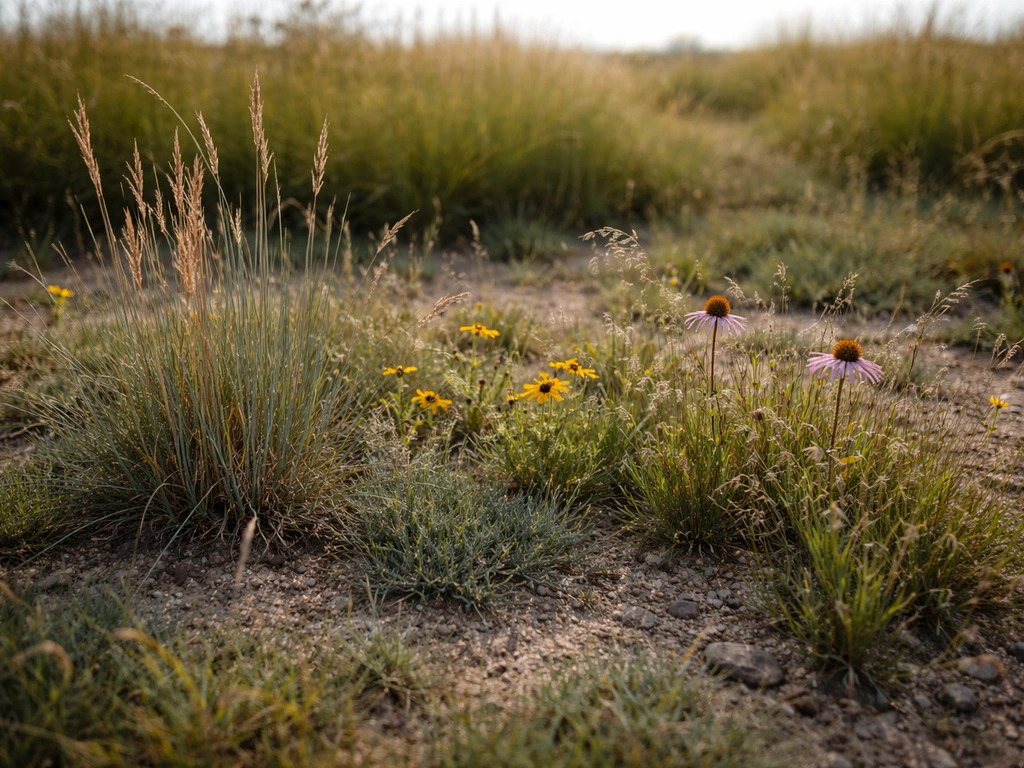
Native warm-season grasses are among the most reliable options for low-nitrogen sites. Little bluestem (Schizachyrium scoparium), sideoats grama (Bouteloua curtipendula), buffalo grass (Bouteloua dactyloides), and prairie dropseed (Sporobolus heterolepis) all evolved in nitrogen-poor grassland soils across the Great Plains and Midwest. Add fertilizer to these and you get rank, lodging growth with increased weed competition. In their native range they're planted in fall or early spring without any soil amendment, and they establish slowly over one to two seasons before looking their best. Cool-season species like blue grama (Bouteloua gracilis) and sideoats grama also work well in the semi-arid West in USDA zones 3 through 9.
Wildflowers and meadow perennials
Native wildflowers that belong in meadow or prairie mixes include black-eyed Susan (Rudbeckia hirta), purple coneflower (Echinacea purpurea), wild bergamot (Monarda fistulosa), lance-leaved coreopsis (Coreopsis lanceolata), and butterfly weed (Asclepias tuberosa). All of these are documented to require little to no fertilizer once established, and extension guidance consistently notes that wildflower meadows need less water and essentially no fertilizer compared with conventional landscaping. In rich, high-nitrogen soil, many of these plants get tall and floppy and are quickly crowded out by weedy opportunists.
Rock garden and dry-climate plants
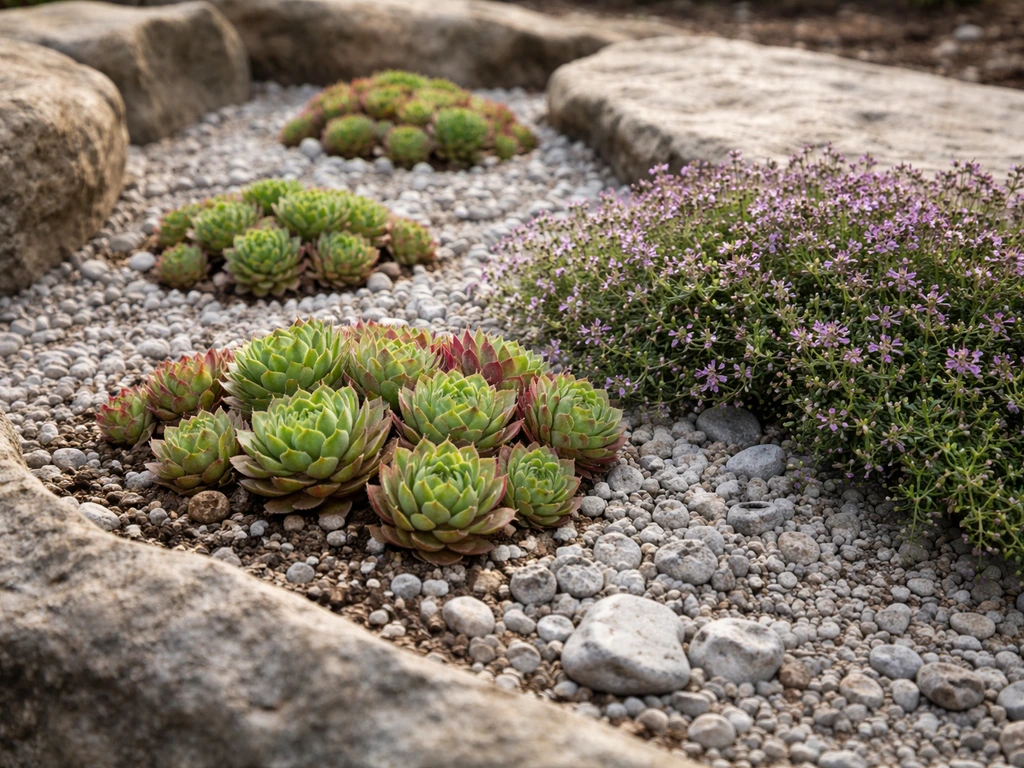
Rock gardens are specifically designed to thrive in poor, droughty soils with minimal inputs. Plants well-suited to these systems include creeping thyme (Thymus serpyllum), hens-and-chicks (Sempervivum spp.), stonecrop (Sedum spp.), rockrose (Cistus spp.), and many alpine dianthus species. Rockrose in particular tolerates poor soil, heat, cold winds, and coastal spray, making it a useful choice in Mediterranean-climate zones (California, coastal Pacific Northwest) and similar dry-summer climates. Sandy soils in these systems tend to be naturally low in fertility, and the plants that succeed there have adapted accordingly.
Trees and shrubs for low-fertility sites
Several woody plants handle low-nitrogen conditions well. Bearberry (Arctostaphylos uva-ursi) and various native willows colonize poor soils in northern zones. Native oaks, especially bur oak (Quercus macrocarpa) in the Midwest and interior West, grow naturally in nutrient-poor, droughty savanna soils. In the East, pitch pine (Pinus rigida) is adapted to low-fertility sandy plains from New Jersey to the Carolinas. Adding nitrogen fertilizer to established trees that are not showing confirmed deficiency can actually cause harm, particularly in stressed or root-damaged specimens, so restraint is the right default with woody plants.
Plants used in natural 'poor soil' systems
Low-fertility planting systems exist in several natural and designed contexts, and the plants that define them are your best guide to what actually works in nitrogen-deficient ground.
Wildflower meadows are the most widely applicable model. Once established over a season or two, they require almost no fertilizer, water, or energy input. The key is using species native to nutrient-poor habitats rather than the showy annuals often sold as 'wildflower mixes,' which are typically bred for richer conditions. Native meadow mixes matched to your region are the reliable option.
Rock gardens are a designed poor-soil system. The combination of gritty substrate, excellent drainage, and low organic matter keeps nitrogen naturally low, and the plants selected for these gardens depend on those conditions. Moving a rock garden plant to a rich border bed usually kills it within a season or two through root rot or simple competition from more vigorous neighbors.
Sandy coastal and inland plain ecosystems support a distinct group of low-nitrogen specialists. In the eastern U.S., this includes species like bearberry, native blueberries (Vaccinium angustifolium), poverty grass (Danthonia spicata), and various native asters. These plants are found on sandy soils that drain quickly and have low fertility and low organic matter. Similar systems in the West include chamise (Adenostoma fasciculatum) chaparral communities and desert scrub, where shallow, rocky soils provide almost no available nitrogen.
Legumes and nitrogen-fixing plants for low-nitrogen conditions
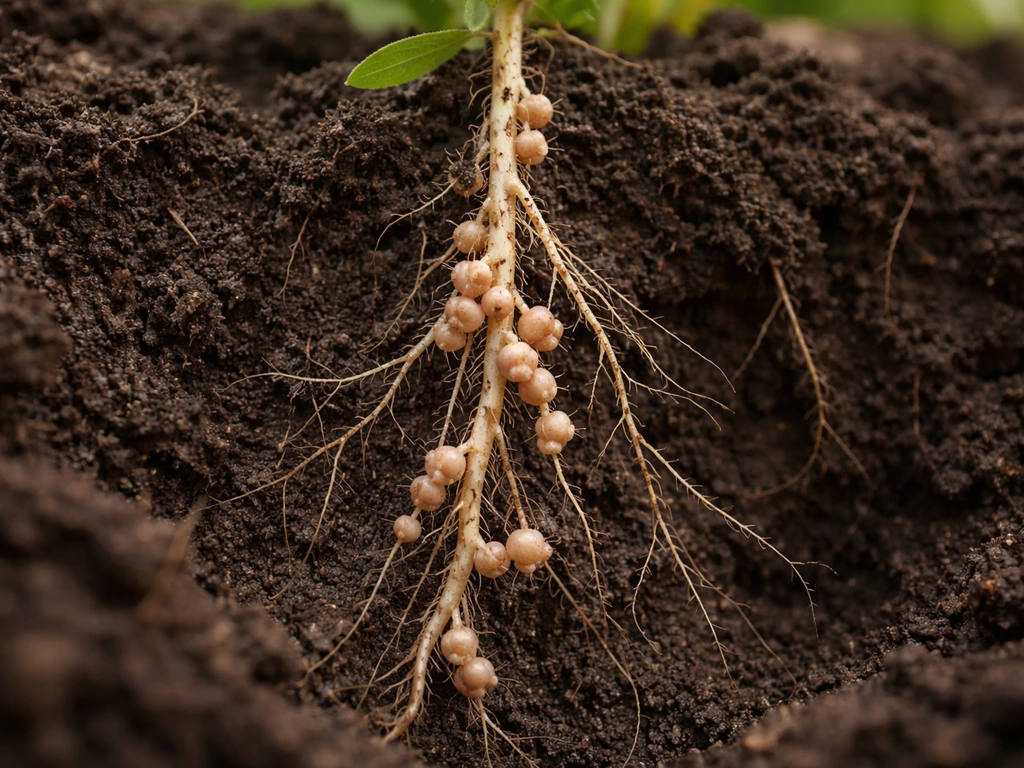
Legumes are the biological workaround for nitrogen-deficient soil. They form symbiotic partnerships with rhizobium bacteria in root nodules, pulling atmospheric nitrogen into the plant and eventually into the soil as the nodules decompose. This means a well-inoculated legume can grow in nitrogen-poor soil and actually improve it over time, which is why legumes are the cornerstone of low-input and restorative planting systems.
The critical word is 'inoculated.' Each legume species works with a specific strain of rhizobium, and if that strain isn't present in your soil, the plant will not fix nitrogen effectively. When seeding legumes in a location where they haven't grown before, you need to coat the seed with the appropriate rhizobium inoculant at planting time. Once nodules establish and the season ends, the bacteria return to the soil through nodule senescence, so future plantings in the same spot may not need re-inoculation.
Nitrogen fixation also has constraints. It works poorly in waterlogged or compacted soils, in very cold conditions, and when soil pH drops below about 6.0 (because low pH also restricts molybdenum availability, and molybdenum is directly needed for the nitrogen-fixing enzyme). Alfalfa, for example, requires pH above 6.3 for adequate fixation. If your soil is acidic, liming before planting legumes is not optional.
| Plant | Type | Best Climate/Zone | Notes |
|---|---|---|---|
| Alfalfa (Medicago sativa) | Perennial legume | Zones 4–8, temperate | Needs pH above 6.3, specific rhizobium; excellent N fixer |
| Birdsfoot trefoil (Lotus corniculatus) | Perennial legume | Zones 3–8, cool temperate | Inoculate with Rhizobium lupini; good for poor, low-pH-tolerant soils |
| Clover (Trifolium spp.) | Annual/perennial legume | Zones 3–9 depending on species | White and red clover widely used; easy to establish as cover crop or ground layer |
| Hairy vetch (Vicia villosa) | Annual legume | Zones 3–9, winter annual | Excellent cool-season cover crop; fixes high N, winter hardy |
| Partridge pea (Chamaecrista fasciculata) | Native annual legume | Zones 4–9, eastern U.S. | Native wildflower and N-fixer; great for disturbed low-fertility sites |
| Black locust (Robinia pseudoacacia) | Legume tree | Zones 4–8 | Fast N-fixer but invasive in some regions; check local status before planting |
| Leadplant (Amorpha canescens) | Native shrub legume | Zones 2–6, Great Plains | Native prairie N-fixer; extremely drought and poor-soil tolerant |
| Lupine (Lupinus spp.) | Perennial/annual legume | Zones 4–8 depending on species | Native lupines excellent for acidic, poor soils; ornamental value too |
One important note: legumes stop fixing nitrogen when soil nitrogen is already high. If you've recently added fertilizer to a site, your legumes will essentially freeload on the existing nitrogen and skip the fixation process. This makes legumes most effective when planted in genuinely low-N conditions, which is exactly the scenario you're dealing with.
Practical planting guidance: site prep, spacing, and amendments
Before you plant a single thing, run a soil test. A basic test for pH and organic matter tells you a lot: whether you need lime (critical if you're planting legumes), how much organic matter the soil holds (relevant to water retention and microbial activity), and whether other nutrients like phosphorus and potassium are limiting. A UMN Extension soil-testing guide explains that soil tests for lawns and gardens help estimate texture, pH, percent organic matter, and phosphorus and potassium levels so fertilizer decisions can be based on how to interpret the results pH and organic matter. The one thing a soil test won't reliably tell you is nitrogen, because soil nitrogen fluctuates so much seasonally that test values are hard to interpret. That's why nitrogen management is one of the few areas where extension soil scientists explicitly say you shouldn't base your decisions on soil test results alone. Use your plant symptom observations and your site history instead.
Site preparation
- Remove existing vegetation thoroughly. In prairie and meadow plantings, this is the single most important step. Existing grasses and weeds will outcompete your new plants, especially during establishment when young plants are most vulnerable.
- Test and adjust pH before seeding or planting. If you're establishing legumes or native meadow plants, most prefer pH in the 6.0–7.0 range. Liming to adjust pH takes time, so if your test shows you need to add lime, apply it 6 to 12 months before you plant.
- Add minimal organic matter if the soil is extremely sandy or compacted, but don't overdo it. A light application of compost improves soil structure and water retention without dramatically spiking nitrogen. Apply it in early spring before planting or in fall near dormancy.
Establishment and spacing
For meadow and prairie plantings, use a nurse grass during the first season. A light seeding of a fast-germinating, non-aggressive grass like annual ryegrass provides enough ground cover to reduce weed competition without crowding out your native species. Mow the planting to 6 to 12 inches during the first growing season to keep weeds down without cutting the new prairie plants. Most native grasses and wildflowers develop their root systems in year one and don't put on much visible top growth, so don't panic if things look sparse.
For rock garden plants and low-fertility perennials, space them at the distances recommended for their mature size, but don't be tempted to crowd them and then fertilize to compensate. If you are working with only about 3 inches of soil depth, prioritize compact, shallow-root-tolerant plants and set realistic expectations for slow establishment. These plants stay smaller in poor soil, and that's appropriate. Crowding plus fertility is the fastest way to get disease, lodging, and a tangled mess.
Mulch with materials that decompose slowly in poor-soil systems: gravel or coarse grit for rock garden plants, a thin layer of straw or leaves for meadow edges. Avoid thick wood chip mulch over the root zones of plants that prefer lean conditions, as it can temporarily tie up what little nitrogen exists in the soil as it decomposes.
When to add fertilizer anyway, and how to avoid overcorrecting
There are situations where adding nitrogen makes sense even in these systems. Vegetable beds that have been used for several seasons without compost or organic matter can become genuinely depleted. New transplants of vegetables and annuals that show confirmed deficiency symptoms (older-leaf yellowing, stunted growth) in their first weeks need a nitrogen boost to get started. Young trees or shrubs showing persistent yellowing after you've ruled out pH issues (especially if the soil is very sandy and the site has been disturbed) may also benefit.
The safest approach is to start with organic matter rather than synthetic fertilizer. Compost has a low, slow-release nutrient content that's hard to over-apply. It improves soil structure at the same time, which often matters as much as the nitrogen itself. Organic fertilizers generally have lower nutrient concentrations than synthetic options, so application rates are more forgiving.
If you do use a synthetic nitrogen source, apply it in small amounts and watch the plant response before applying more. For confirmed N deficiency in trees and shrubs, be especially cautious: applying nitrogen to stressed or root-damaged woody plants can cause harm rather than recovery. Confirm the stress is actually nitrogen-related before you fertilize. A foliar spray of dilute liquid fertilizer can sometimes correct deficiencies faster than soil application and at lower total input, which is useful when you need a quick diagnostic test as much as a fix.
The single most common mistake I see is gardeners fertilizing their way through a problem that isn't actually a nitrogen problem. High pH locking out iron, compaction blocking root access to nutrients, waterlogging starving roots of oxygen: all of these look like nitrogen deficiency and none of them respond to nitrogen fertilizer. If your plants don't improve within two to three weeks of a carefully applied nitrogen dose, stop and reassess pH, drainage, and soil structure before adding more.
Matching plant choices to your climate and planting window
Low-nitrogen plant selection isn't one-size-fits-all, and the right species depends heavily on where you are and when you're planting. Getting the climate match right matters as much as getting the soil type right.
| Climate/Region | Season to Plant | Recommended Low-N Plants | Notes |
|---|---|---|---|
| Cool temperate (Zones 3–5, Upper Midwest, New England) | Spring or fall | Little bluestem, prairie dropseed, wild bergamot, leadplant, clover, lupine | Cool-season wildflowers can be fall-sown for spring germination; legumes need inoculation |
| Warm temperate (Zones 6–7, Mid-Atlantic, Midwest, PNW) | Spring or fall | Black-eyed Susan, coneflower, sideoats grama, butterfly weed, hairy vetch, partridge pea | Fall planting for cool-season species; spring after last frost for warm-season |
| Hot summer / humid (Zones 7–9, Southeast) | Spring or early fall | Buffalo grass, native blueberries (sandy soils), partridge pea, native asters, clover | Avoid planting warm-season grasses from seed in fall; use plugs or sod |
| Mediterranean / dry summer (Zones 8–10, California, Southwest) | Fall to early spring (avoid dry summer) | Rockrose (Cistus), native bunch grasses, native lupines, chamise, blue grama | Summer dormancy is normal for many species; fall planting leverages winter rain |
| Semi-arid and high plains (Zones 4–7, Great Plains, Rocky Mountain West) | Spring or late summer | Blue grama, sideoats grama, buffalo grass, alfalfa, leadplant, birdsfoot trefoil | Late-summer plantings can establish before winter if timed 6–8 weeks before first frost |
For grasses specifically, the warm-season vs. cool-season distinction matters enormously for timing. Warm-season species like buffalo grass and blue grama establish best when soil is warm, typically late spring in the central and western U.S. Cool-season species like many fescues and ryegrasses establish better in the cooler temperatures of early spring or early fall. Planting warm-season grasses in cold soil leads to poor germination and weed infiltration, and planting cool-season grasses in midsummer heat is similarly problematic.
One pattern worth noting across all these climate zones: the plants that handle low nitrogen best also tend to handle other soil stresses well, including low moisture, low phosphorus, and compacted or shallow substrates. Some land plants can even grow underwater, but they require very specific conditions and are not the same as typical moisture-tolerant garden species land plants that can grow underwater. Many of the same stress-tolerant species also work well as plants that can grow in shallow soil. If you're working on a site with genuinely challenging soil, you're likely dealing with multiple limiting factors, not just nitrogen. The overlap with topics like plants for shallow soils, plants for alkaline conditions, and plants for high-pH soils is real: many of the same species appear across all of those lists because stress-tolerant plants are rarely stressed by just one thing. If you're specifically dealing with alkaline soil, look for plants for alkaline conditions so they can handle the higher pH alongside low fertility.
Once you've got your plants in the ground, give them two full growing seasons before drawing conclusions. Most native prairie plants, rock garden perennials, and meadow species establish slowly. A plant that looks unimpressive in year one is often fully established and thriving by year three, entirely without inputs. That slow start is not failure. It's these plants doing exactly what they do.
FAQ
How can I tell if the yellowing I’m seeing is true nitrogen deficiency and not something temporary?
Nitrogen deficiency symptoms can be seasonal, so check older-leaf yellowing across multiple weeks, not a single moment. If the yellowing improves after a cool, rainy stretch (or after you correct drainage), the issue may be temporary root stress rather than persistently low nitrogen.
Can poor drainage or compaction make plants look nitrogen deficient even when nitrogen is present?
Yes. If you have shallow, compacted, or waterlogged soil, roots cannot reach the available nitrogen or oxygen, and plants will look N-starved. In that case, top-dressing or fertilizing often fails until you fix aeration and drainage (for example, loosening and improving soil structure before fertilizing).
What if the newest leaves are the ones turning yellow first?
Skip the fertilizer assumption if the yellowing starts on the newest leaves first. That pattern more often points to iron-related issues tied to pH, especially if your soil is near or above neutral. Use a pH reading to decide whether to select ericaceous plants or address alkalinity.
Will legumes fix nitrogen in very acidic soil?
If your soil pH is below about 6.0, legume nitrogen fixation can stall even if the plant is healthy. In acidic soil, plan on liming before planting legumes, then re-evaluate, because the bacteria and the nitrogen-fixing enzyme both depend on conditions that acid soils may not support.
What should I do if my planted legumes don’t form nodules?
Legumes can fail to establish in “low N” beds if you did not use the correct rhizobium inoculant for that legume species. If the plant grows with no nodules, you may need to inoculate again at planting time rather than adding nitrogen.
Can I plant legumes in a bed that was recently fertilized or heavily manured?
If the bed recently received manure, compost, or synthetic fertilizer, legumes may not fix much nitrogen because the soil already has plenty. The practical workaround is to avoid nitrogen inputs before planting legumes and to focus instead on using native low-input species until the bed truly cycles back to low availability.
Should I trust a soil test nitrogen number to diagnose low nitrogen?
Often, yes. A basic soil test that includes pH and organic matter is still useful because it helps you rule out iron/pH problems and assess whether moisture-holding organic matter is the real limiter. But do not rely on soil test “nitrogen” numbers to diagnose problems, since nitrogen changes rapidly through the season.
What’s the right way to respond if fertilizing doesn’t help within a couple of weeks?
If plants do not show improvement after a carefully small nitrogen dose, stop adding fertilizer. The likely cause is another limiter such as high pH locking nutrients, poor aeration, or incorrect plant selection for the site stress. Re-check drainage and pH, and confirm the symptom pattern (older leaves vs newest leaves).
Can mulch or compost accidentally make nitrogen deficiency worse?
In beds intended for low-nitrogen natives, thick compost or wood chips can temporarily worsen the situation by changing nitrogen availability during decomposition. Use slow, low-impact amendments sparingly, and for rock or lean plantings prefer gravel, coarse grit, or thin straw/leaf mulch rather than deep wood-chip layers.
How much does planting time (warm-season vs cool-season) affect whether a site seems nitrogen deficient?
Planting the “wrong season” can mimic nitrogen stress because establishment is weak. Warm-season grasses need warm soil for rooting and germination, while cool-season species do better in cooler windows, so match the species to your planting time before diagnosing fertility.
When should I decide that the site is truly too nitrogen-poor for the plants I chose?
For many native prairie, meadow, and rock-garden species, yield or coverage may stay low in the first year even when nitrogen is fine. Plan to evaluate performance over two full growing seasons, and only consider intervention after roots have had time to establish.
Is it ever appropriate to add nitrogen in a nitrogen-poor landscape?
Yes, but keep it targeted. Fast-growing vegetable transplants and short-lived annuals can be different from prairie perennials. For quick starts, use a small, controlled nitrogen boost only where deficiency symptoms appear and where plants are meant to be higher-input, not across the entire native planting.
What’s a safe strategy for using nitrogen as a temporary troubleshooting step?
Use nitrogen mainly as a diagnostic tool, not a permanent plan. Apply small amounts, observe leaf color and growth response, and then switch to long-term management like improving drainage, correcting pH if needed, and choosing low-input natives once the limiting factor is identified.