The soil type you have determines more about what will grow than almost anything else, including how much you water or fertilize. Sandy soils drain fast and suit drought-tolerant plants like lavender, rosemary, and black-eyed Susan. Clay soils hold moisture and compact easily, but they support plants like Joe-Pye weed, red maple, and irises that naturally grow in low-lying, slow-draining ground. Loamy soils are the middle ground where nearly everything thrives.
List Plants That Grow on Each Type of Soil

Dr. Marcus Weatherby
31 May 2026
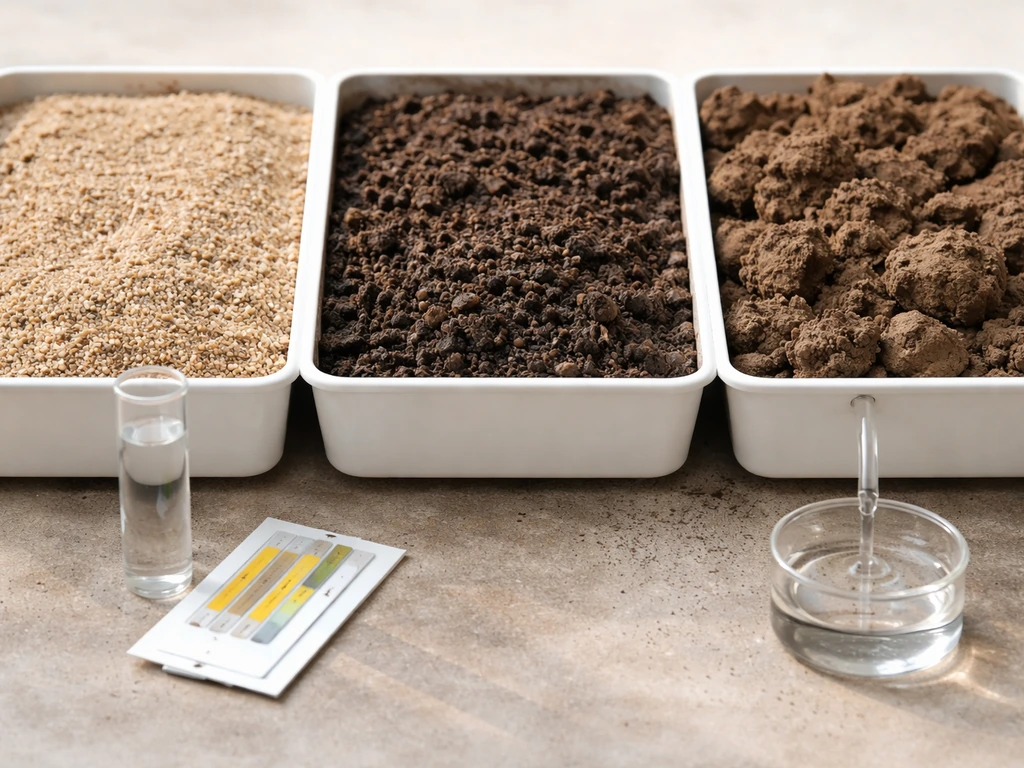
pH and drainage extremes narrow the list even further. Below is a practical breakdown of which plants match which soil conditions, plus blank" rel="noopener noreferrer">how to figure out what you're actually dealing with before you plant anything. Some birdseed mixes can sprout annuals and grasses, but what grows depends heavily on your soil and moisture conditions what plants grow from bird seed.
How to identify your soil type (quick tests)
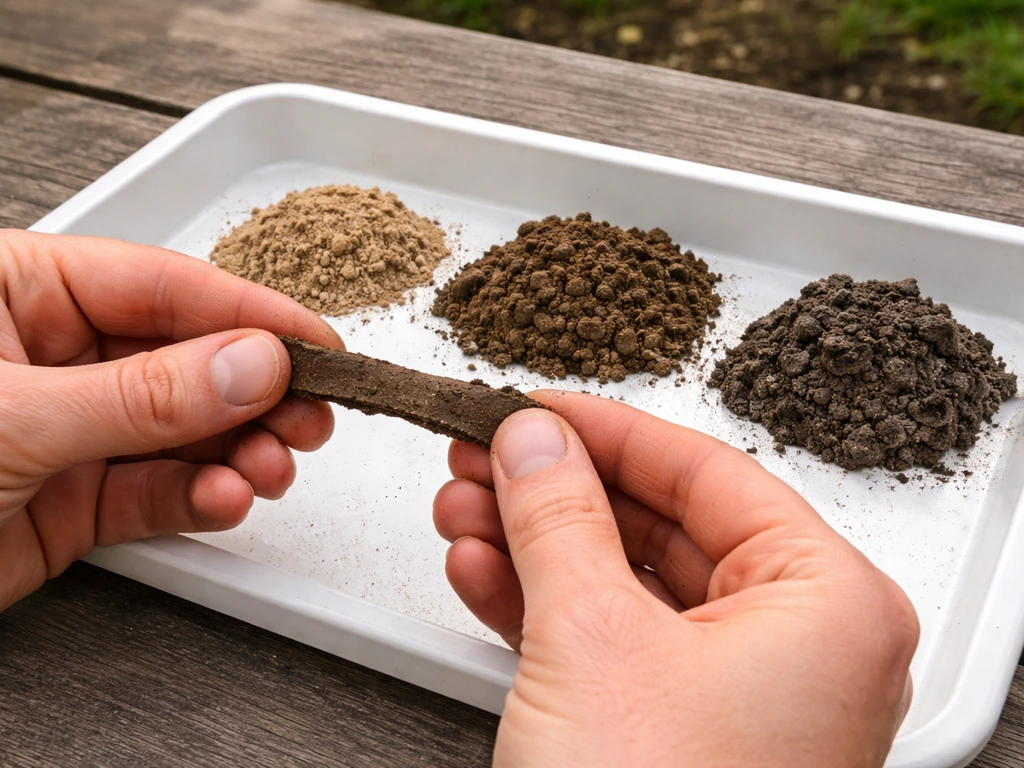
You don't need a lab kit to get a working read on your soil. The ribbon test, developed and documented by university extension programs including Colorado State and Oregon State, takes about two minutes and gives you a solid texture classification. Grab a small handful of moist (not soaking) soil, squeeze it into a ball, then press it between your thumb and forefinger while squeezing upward to [form a ribbon](https://www. epicgardening.
com/soil-type/). The University of Georgia (Soils at UGA) describes the texture-by-feel “ribbon test”: sand will not form a ball or ribbon and feels gritty; clayey soils are sticky and form ribbons; and sandy clay loam can form a moderate ribbon of about 1, 2 inches.
The length and feel of that ribbon tells you a lot.
| What happens | What it means |
|---|---|
| Soil won't form a ball at all; feels very gritty | Sandy soil |
| Forms a ball but crumbles when you try to ribbon; feels slightly gritty or smooth | Sandy loam or loam |
| Forms a ribbon 1–2 inches long before breaking; moderately gritty or smooth | Sandy clay loam or silt loam |
| Forms a ribbon longer than 2 inches; feels sticky and smooth | Clay or clay loam |
For pH, a cheap test kit from a garden center works fine. Alternatively, the vinegar-and-baking-soda test gives you a rough read: pour a little white vinegar on dry soil and if it fizzes, you're likely above pH 7 (alkaline). Take a separate sample, moisten it, add baking soda, and if it fizzes, you're probably below pH 6 (acidic). No reaction to either means you're close to neutral.
Check drainage by digging a hole about 12 inches deep, filling it with water, and watching how fast it drains. If it clears in under an hour, drainage is fast (more common in sandy soils). If water is still sitting after several hours, you have slow drainage, which points toward clay or compaction. This matters as much as texture when choosing plants.
Plant options for sandy, loamy, and clay soils
Sandy soil: fast-draining and low in nutrients
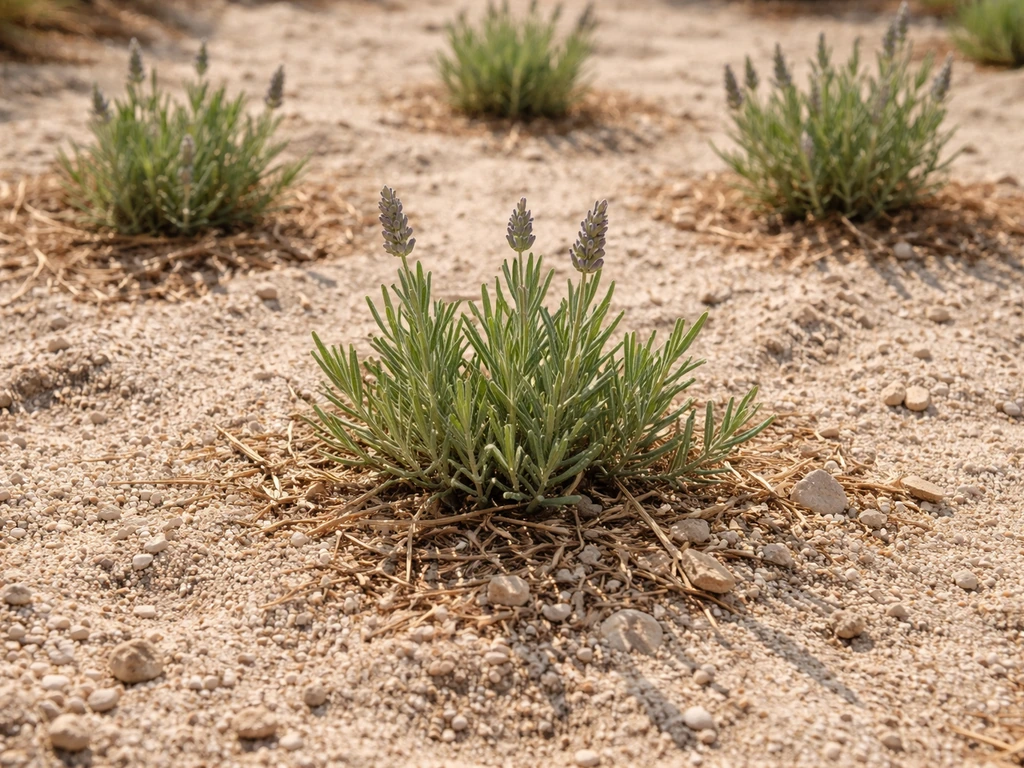
Sandy soils drain quickly, don't hold nutrients well, and warm up fast in spring. Plants that naturally grow in coastal dunes, dry prairies, and Mediterranean scrublands are adapted to exactly these conditions. They tend to have deep root systems or waxy leaves that reduce water loss. Some shrub options can also be chosen to succeed across a wide range of soils, including shrubby plants that will grow anywhere shrubs that will grow anywhere.
- Lavender (Lavandula spp.) — native to the rocky Mediterranean hillsides, thrives in lean, fast-draining ground
- Rosemary (Salvia rosmarinus) — another Mediterranean native that struggles in heavy, wet soil
- Black-eyed Susan (Rudbeckia hirta) — common in dry prairies and open meadows across North America
- Lupine (Lupinus spp.) — fixes nitrogen and grows naturally in sandy coastal and mountain soils
- Bearberry (Arctostaphylos uva-ursi) — a ground-hugging plant of sandy pine barrens and northern boreal edges
- Beach grass (Ammophila breviligulata) — the classic sand stabilizer of Atlantic and Great Lakes dunes
- Yarrow (Achillea millefolium) — a tough, dry-prairie and disturbed-ground plant across multiple continents
- Creeping juniper (Juniperus horizontalis) — spreads across sandy, rocky slopes and cliff edges in the wild
- Prickly pear cactus (Opuntia spp.) — grows in sandy desert and dry grassland soils across the Americas
Loamy soil: the balanced middle ground
Loam is roughly equal parts sand, silt, and clay, which gives it good drainage, reasonable moisture retention, and decent nutrient-holding capacity. It's what most plants prefer, and it's also what most rich agricultural and forest soils look like. The list of what grows in loam is essentially "most things," but here are species that particularly show their best in well-structured loamy ground.
- Tomatoes (Solanum lycopersicum) — native to South American foothills; perform best in fertile, well-drained loam
- Oak trees (Quercus spp.) — many species evolved in mixed hardwood forests where loamy, well-drained soils dominate
- Coneflower (Echinacea purpurea) — a tallgrass prairie species that does best in balanced, moderate soils
- Sunflower (Helianthus annuus) — native to open plains; adapts broadly but peaks in fertile loam
- Bluebell (Hyacinthoides non-scripta) — a classic woodland floor plant of moist, humus-rich loam
- Wild strawberry (Fragaria virginiana) — common in loamy meadows and forest edges across temperate North America
- Goldenrod (Solidago spp.) — highly adaptable but most vigorous in well-drained loamy meadows
- Sugar maple (Acer saccharum) — the signature tree of northeastern mixed-hardwood forests with deep, loamy soils
Clay soil: slow-draining and nutrient-rich
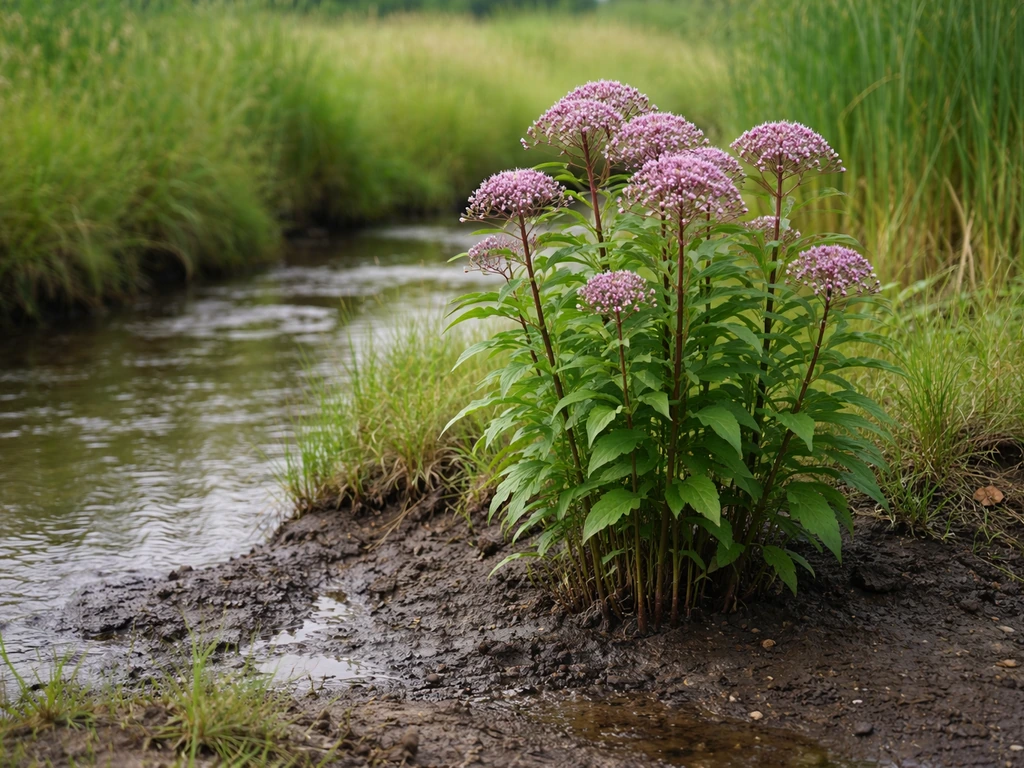
Clay soils hold water, compact under foot traffic, and can be difficult to work in when wet. But they're actually quite fertile because clay particles hold onto nutrients. The plants naturally suited to clay grow in floodplains, wet meadows, lakeshores, and low-lying prairies where standing water is part of the deal for at least part of the year.
- Joe-Pye weed (Eutrochium purpureum) — grows along stream banks and wet meadows throughout eastern North America
- Red maple (Acer rubrum) — one of the most common trees in wet, low-lying areas across North America
- Siberian iris (Iris sibirica) — naturally found in moist meadows and streamside habitats across temperate Europe and Asia
- Swamp white oak (Quercus bicolor) — tolerates periods of flooding and heavy clay bottomland soils
- New England aster (Symphyotrichum novae-angliae) — a wet meadow and streamside native that handles clay well
- Daylily (Hemerocallis spp.) — adapted to heavy soils and often found naturalized in disturbed, clay-heavy ground
- Cardinal flower (Lobelia cardinalis) — grows along stream edges and in consistently moist, clay-rich soils
- Willow (Salix spp.) — thrives in waterlogged and clay-heavy floodplain soils across the northern hemisphere
- Switchgrass (Panicum virgatum) — a prairie and wetland-edge grass tolerant of both clay and occasional flooding
Plants for different soil pH levels
pH affects which nutrients are chemically available in soil, so even a nutrient-rich soil can starve a plant if the pH is wrong. Most plants prefer the 6.0 to 7.0 range, but plenty of species evolved in soils well outside that window.
Acidic soils (pH below 6.0)
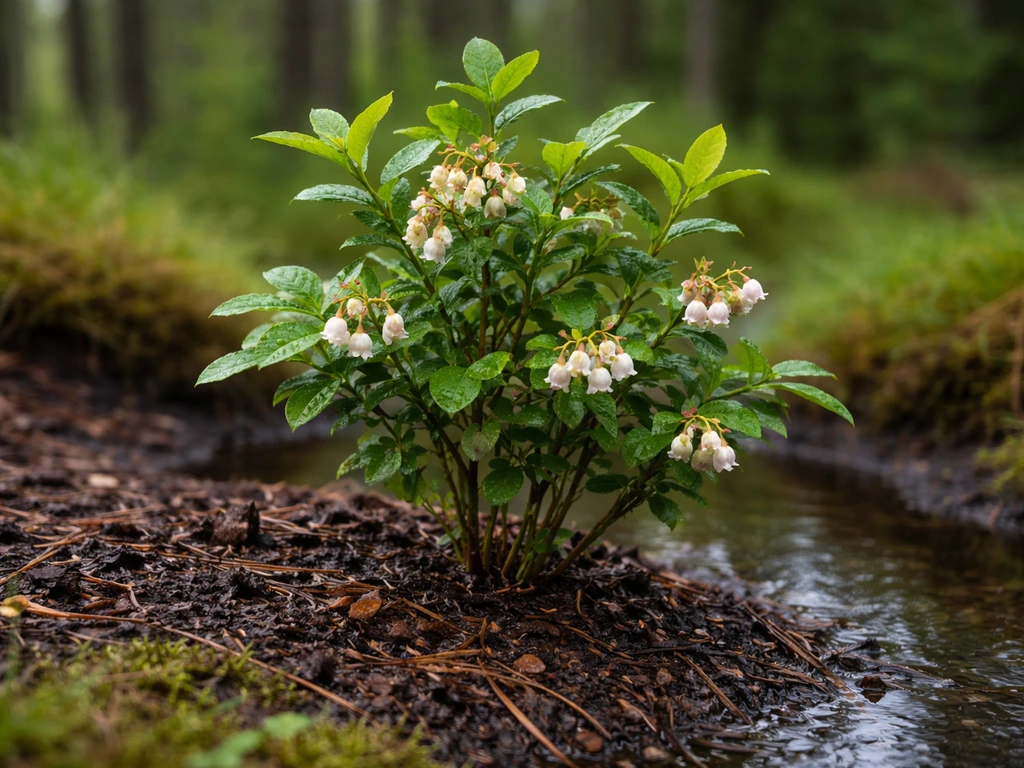
Acidic soils are common under conifer forests, in bogs, and in regions with high rainfall that leaches calcium and magnesium from the topsoil. These plants naturally occur in those environments and actually need the acidity to access iron and other micronutrients.
- Blueberry (Vaccinium corymbosum) — needs pH 4.5–5.5; native to acidic bogs and pine barrens
- Rhododendron and azalea (Rhododendron spp.) — forest understory shrubs of acidic, well-drained mountain slopes
- Mountain laurel (Kalmia latifolia) — grows in rocky, acidic woodland soils of the Appalachians and beyond
- Pitcher plant (Sarracenia spp.) — bog native; requires very acidic, nutrient-poor conditions
- Scotch heather (Calluna vulgaris) — moorland and heathland plant adapted to pH 4.0–5.5
- White pine (Pinus strobus) — a northeastern forest tree that both tolerates and acidifies the soil under it
- Wild bluebell (Mertensia virginica) — moist, acidic woodland floors in eastern North America
- Ferns (many species, especially Dryopteris and Osmunda) — common in acidic forest floor and bog margins
Neutral soils (pH 6.0–7.0)
Most vegetable crops, common wildflowers, and temperate forest trees fall in this category. If your test comes back neutral, you have the widest possible plant palette to work with. Nearly everything listed under loamy soils above applies here too.
- Most vegetable crops (tomatoes, beans, squash, lettuce, carrots)
- Coneflower, goldenrod, black-eyed Susan, and most native meadow wildflowers
- Most deciduous hardwood trees: oaks, maples, ash, hickory
- Sunflowers, cosmos, and most annual garden flowers
- Kentucky bluegrass and most common lawn grasses
Alkaline soils (pH above 7.0)
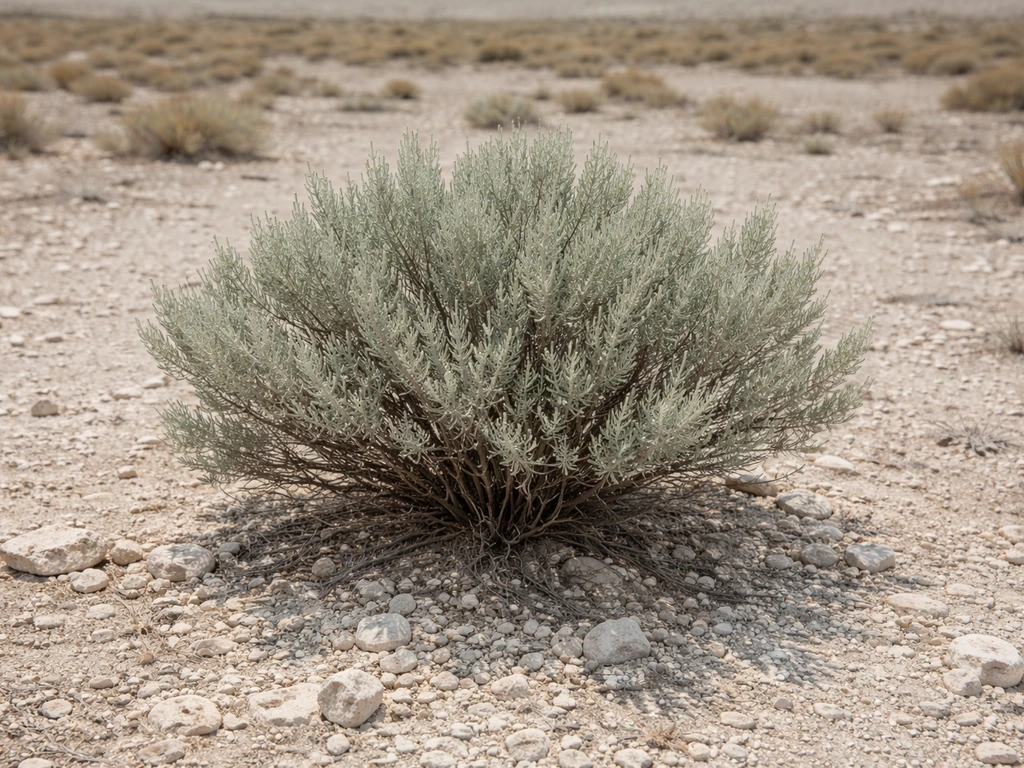
Alkaline soils are common in arid and semi-arid regions, areas with limestone bedrock, and irrigated land where mineral salts accumulate. Plants from the American Southwest, the Mediterranean basin, the Great Plains, and chalk grasslands in Europe are naturally suited to these conditions.
- Sagebrush (Artemisia tridentata) — the dominant shrub of the alkaline Great Basin desert
- Lilac (Syringa vulgaris) — prefers slightly alkaline soil; native to rocky Balkan hillsides
- Clematis (Clematis spp.) — many species grow naturally over limestone outcrops and chalk grasslands
- Buffalo grass (Bouteloua dactyloides) — a native Great Plains grass adapted to alkaline, dry prairie soils
- Juniper (Juniperus spp.) — widespread on rocky, alkaline slopes across the arid West and Mediterranean
- Penstemon (Penstemon spp.) — a large genus of dry-prairie and rocky slope plants tolerant of high pH
- Forsythia (Forsythia spp.) — adapts to alkaline conditions and is tolerant of a wide soil pH range
- Asparagus (Asparagus officinalis) — actually prefers slightly alkaline soils; native to coastal, saline-influenced ground
Plants for tough drainage conditions: wet, dry, and compacted soils
Waterlogged and wet soils
Wet soils suffocate plant roots by pushing out oxygen. Plants that handle this are either adapted to seasonal flooding or have specialized root structures that function in low-oxygen environments. These come from floodplains, marshes, pond edges, and wet prairies.
- Bald cypress (Taxodium distichum) — grows in swamps and riverbanks across the southeastern U.S.; develops 'knees' to get oxygen
- Cattail (Typha spp.) — colonizes marshes and wet ditches across the northern hemisphere
- Blue flag iris (Iris versicolor) — a wetland native of shallow ponds and wet meadows in eastern North America
- Swamp milkweed (Asclepias incarnata) — grows in wet meadows and stream margins; handles standing water
- Red osier dogwood (Cornus sericea) — a streamside and wet woodland shrub found across northern North America
- Louisiana iris hybrids — naturally adapted to the swampy conditions of the Gulf Coast
- Taro (Colocasia esculenta) — a tropical wetland plant grown in flooded paddies across Asia
- Marsh marigold (Caltha palustris) — early-spring bloom along streams and in wet woodland edges
Dry and droughted soils
Beyond sandy soils, some soils are just chronically dry due to slope exposure, shallow depth, or climate. Plants from desert margins, rocky ridges, and dry grasslands are built for this.
- Agave (Agave spp.) — stores water in fleshy leaves; native to dry Mexican highlands and Chihuahuan desert margins
- Sedum/stonecrop (Sedum spp.) — colonizes thin, rocky soil on cliff faces and dry slopes globally
- Broom (Cytisus scoparius) — a dry-slope pioneer native to European heathland
- Prairie dropseed (Sporobolus heterolepis) — a fine-textured grass of dry to medium prairies in central North America
- Mesquite (Prosopis spp.) — deep-rooted desert tree of the Sonoran and Chihuahuan deserts
- Rock rose (Cistus spp.) — a Mediterranean shrub of rocky, dry, nutrient-poor hillsides
- Apache plume (Fallugia paradoxa) — grows in gravelly dry washes and slopes of the American Southwest
Compacted soils
Compacted soils, common along paths, in lawns, near construction, and in urban settings, restrict root penetration and drainage. Plants that colonize disturbed, trampled, and compacted ground in the wild are your best bet.
- Plantain (Plantago major) — a classic colonizer of trampled ground, paths, and disturbed urban soils worldwide
- Clover (Trifolium spp.) — fixes nitrogen and tolerates compaction better than most lawn grasses
- Creeping bentgrass (Agrostis stolonifera) — a low-growing grass that tolerates moderate compaction on moist soils
- Rugosa rose (Rosa rugosa) — handles coastal sandy and compacted soils; native to Northeast Asian shorelines
- Honey locust (Gleditsia triacanthos) — used in urban plantings because it tolerates compacted, poor urban soils
- Hackberry (Celtis occidentalis) — one of the most urban-tough trees; handles compaction, drought, and poor drainage
- Dandelion (Taraxacum officinale) — its taproot mechanically breaks through compacted layers, which is why it's everywhere
Matching plants to soil nutrient levels and organic matter
Soil fertility is about more than NPK on a fertilizer bag. It's really about how much organic matter (decomposed plant and animal material) is binding the soil together, feeding microbes, and releasing nutrients slowly over time. Plants evolved in wildly different fertility conditions, and some literally can't handle rich soil.
Plants for low-fertility, lean soils
These plants evolved where nutrients are naturally scarce, dunes, rocky outcrops, heathlands, bog margins, and disturbance zones. Put them in rich garden beds and they often become floppy, weak, or disease-prone. They genuinely prefer to be lean.
- Wild lupine (Lupinus perennis) — fixes its own nitrogen; grows in poor, sandy soils across eastern North America
- Heather (Calluna and Erica spp.) — thrives on nutrient-poor acidic heathland soils
- Wild thyme (Thymus serpyllum) — a rocky, thin-soil native of European limestone grasslands
- Birdsfoot trefoil (Lotus corniculatus) — a nitrogen-fixer that colonizes poor, dry grassland soils
- Common mullein (Verbascum thapsus) — a pioneer of disturbed, poor-soil sites on roadsides and clearings
- Native bunch grasses (Bouteloua, Schizachyrium, Andropogon) — dry prairie plants adapted to low-fertility soils
- Carnivorous plants (Sarracenia, Drosera, Pinguicula) — supplement nutrients by trapping insects in nutrient-poor bogs
Plants for rich, organic-matter-heavy soils
Rich soils loaded with organic matter are found in mature floodplains, old-growth forest floors, and well-composted garden beds. These plants grow fast, produce heavily, and actually need the nutrient supply to perform well.
- Pumpkin and squash (Cucurbita spp.) — heavy feeders; native to rich, alluvial tropical soils in Mesoamerica
- Elderberry (Sambucus canadensis) — grows vigorously in moist, fertile stream-edge and woodland-edge soils
- Ostrich fern (Matteuccia struthiopteris) — a floodplain fern that needs deep, moist, humus-rich soil
- Wild ginger (Asarum canadense) — a slow-spreading forest floor plant of rich, deep woodland humus
- Corn (Zea mays) — native to fertile tropical bottomlands; one of the highest nitrogen-demand crops
- Trillium (Trillium spp.) — a slow-growing woodland wildflower of deep, leaf-litter-rich forest soils
- Black cohosh (Actaea racemosa) — grows in the humus-rich soils of eastern deciduous forest understories
Matching plants to your local climate and season
Soil type is only half the equation. A plant perfectly suited to clay soil won't survive in your climate if it's not adapted to your winters, summers, or rainfall patterns. The same species can behave very differently across climate zones. A switchgrass plant growing in a wet Illinois prairie and a switchgrass plant growing on a Virginia coastal dune are both doing well on their respective soils, but they're also responding to different rainfall timing, temperature swings, and growing-season length.
Before finalizing your plant list, cross-reference soil suitability against these local conditions. Think about where these plants actually grow in the wild, not just what a plant tag says. A lavender plant can survive in clay-amended soil, but it originates from the well-drained, warm, dry Mediterranean. If you're in the Pacific Northwest with 50 inches of rain a year and cool summers, even sandy soil won't save it. Meanwhile, a fern from the Pacific Northwest will fail in a Texas sandy soil no matter how well-drained it is, because the heat and low humidity are the limiting factor, not the soil.
Season matters too. Some plants are flexible about soil texture but very precise about when they need moisture. Prairie wildflowers often need spring moisture in their sandy soils and can handle summer drought. Bog plants need consistent wet conditions through the growing season.
Match the plant's natural seasonal water pattern to your soil's drainage behavior across the year, not just at planting time. If you want plants that are extremely flexible across both soil types and climate ranges, there's a whole category worth exploring separately, plants with unusually broad habitat tolerances that grow across multiple soil types and conditions. If you want plants that can grow in any climate, look for species with unusually broad habitat tolerances and flexible growing requirements plants with unusually broad habitat tolerances.
If you are looking for plants that can grow in any condition, focus on species with unusually broad habitat tolerances and you will have more flexibility across soil types and climate plants with unusually broad habitat tolerances. If you want plants that can handle changing conditions, look for species with unusually broad habitat tolerances that grow across multiple soil types plants with unusually broad habitat tolerances.
If you’re hunting for seeds that will grow anywhere, focus on broad habitat-tolerance plants and then verify your site’s soil drainage, pH, and moisture timing. Plants that can grow in any climate are uncommon, but broad habitat tolerances are a good place to start when you want flexibility. Ground cover that will grow anywhere is usually chosen for broad habitat tolerances and reliable establishment across different soil and moisture conditions.
If you want plants that will grow anywhere, focus on species with unusually broad habitat tolerances and match them to your local conditions plants with unusually broad habitat tolerances.
How to improve your soil so more plants can grow
If you want to expand what you can grow rather than just work with what you have, soil improvement is practical and achievable. The basic goal is always the same: move toward something closer to loam, adjust pH if needed, and improve drainage or water retention depending on which direction your soil leans.
Improving sandy soil
- Add compost generously — at least 3 to 4 inches worked into the top 8 to 12 inches. Organic matter is the single best amendment for sandy soil because it adds nutrient-holding capacity and slows water movement.
- Use cover crops like clover or winter rye between planting seasons to add organic matter and reduce nutrient leaching.
- Mulch heavily (3 to 4 inches) around plants to reduce evaporation and moderate soil temperature.
- Avoid over-tilling, which destroys the structure you're building.
Improving clay soil
- Add compost — the same answer, but here the goal is to improve drainage and break up compaction rather than add water retention.
- Avoid working clay soil when wet. Working wet clay destroys structure and makes compaction worse.
- Consider raised beds if your clay is severe. This gives you control over the growing medium for the most demanding plants.
- Plant deep-rooted perennials like prairie species and shrubs that will naturally aerate the soil over time as their roots penetrate and eventually decompose.
- Adding coarse sand can help in very heavy clays, but you need large amounts (more than 50% by volume) to make a real difference — small amounts of sand in clay can actually make things worse by creating a concrete-like mix.
Adjusting soil pH
- To lower pH (make more acidic): add elemental sulfur (slow-acting, long-lasting) or use acidifying fertilizers. Peat moss also lowers pH slightly as it decomposes. For established beds, top-dressing with pine bark or pine needle mulch gradually acidifies the soil.
- To raise pH (make more alkaline): add ground limestone (calcitic or dolomitic). Dolomitic limestone also adds magnesium. Apply in fall for spring benefits, since limestone takes time to react.
- Get a proper soil test from a local extension service before adding amendments — over-correcting pH is a real problem and harder to fix than starting with an accurate number.
Fixing drainage and compaction
- For chronically wet areas, consider a French drain (a gravel-filled trench with a perforated pipe that redirects water away from the planting area) or simply plant moisture-tolerant species and work with the wet condition rather than against it.
- For compacted soils, core aeration (removing small plugs of soil) helps immediately in lawn areas. For garden beds, deep-forking with a broadfork loosens the profile without inverting soil layers.
- Adding biochar (a form of charred organic matter) improves drainage in heavy soils while also retaining moisture in sandy ones — it works both ways by creating stable pore structures.
Once your soil is improved, you'll find the list of what can grow expands considerably. If you want seeds that will grow anywhere, focus on species known for broad habitat tolerances and easy establishment. Many of the plants described in this guide as needing specific conditions will tolerate a broader range once drainage, pH, and organic matter are brought closer to balance. The end goal doesn't have to be perfectly loamy garden soil everywhere, sometimes the most practical move is to identify the best-adapted plants for the soil you have and make targeted improvements only where you need them most.
FAQ
If I add compost or fertilizer, can I make plants meant for loam work in sandy or clay soil?
Yes, but only up to a point. If you amend sandy soil with compost, you can improve moisture and nutrient holding, which helps most “loam” plants. If the limitation is extreme dryness (shallow soil, south-facing slope, windy exposure), you still need drought-tolerant choices even after improving fertility.
How long will soil amendments take before I can reliably plant the “right” species for that soil type?
Plan for a correction timeline. pH adjustments often take weeks to months to fully stabilize, and texture changes (like turning sand into true loam) take longer because you are not just feeding plants, you are reshaping pore space. For best results, add amendments gradually over seasons rather than expecting instant change after one application.
My drainage test looked different on two different days, is that normal and how should I interpret it?
Drainage tests should be done more than once if conditions vary. A single hole dug on a rainy week can look “slow,” even if your soil drains fine in summer. Repeat after typical dry weather, and also note whether water infiltrates from the sides or only leaves from the bottom.
What are common mistakes with the ribbon test that lead to the wrong soil texture category?
It can be misleading if the soil is overly dry or very wet when you do the ribbon test. Use moist soil that you can form into a ball, and avoid sampling from spots with lots of roots or recent disturbances. If the ribbon test is inconsistent, mix samples from several spots and test again.
If my pH test says “neutral,” but plants still look unhealthy, what else should I check?
For most plants, pH effects show up as nutrient availability problems, not just growth slowdown. Even if soil has nutrients, plants may yellow or stall if pH blocks iron or phosphorus uptake. If your pH is near neutral but plants look chlorotic, double-check soil drainage and compaction before assuming pH is wrong.
Can two parts of the same yard have different soil conditions even if the soil type seems the same?
Yes, microclimates matter. A “clay soil” yard can still have local pockets of sandier fill, roof runoff channels, or compacted strips where drainage differs. Map your site by doing quick tests in multiple areas, then match plants to the wettest and driest zones separately.
When choosing wet-soil plants, how do I know the difference between seasonal wetness and permanently saturated soil?
Edge cases are common for plants listed for wet soils. Temporary pooling can be tolerated, but persistent saturation can kill many species. To choose correctly, observe how long water remains after storms, and avoid relying only on texture or an initial “wet” feeling.
If I match plants to soil texture and pH, why might they still fail on my site?
Native plants and “habitat match” plants can outperform general garden lists in poor or disturbed ground, even when the soil looks correct on paper. Look for species known to handle low oxygen (wet), low nutrients (heathlands, dunes), or repeated disturbance (paths, construction edges) because those are frequent hidden constraints.
For compacted soils near lawns and paths, what should I do differently compared with normal clay or loam gardening?
In compacted areas, nutrient and pH are often less limiting than root access and oxygen. Before planting, consider decompaction steps like targeted aeration or replacing soil where it is most traffic-worn, then choose plants that tolerate hard-to-penetrate ground during establishment.
What if my soil is naturally rich, and I keep adding compost, how do I avoid harming plants that want lean conditions?
Yes, but the best strategy is targeted improvement, not blanket over-correction. If you have high fertility, avoid adding more compost to “richen” the bed, instead use plants adapted to lean conditions or apply organic matter only in limited zones. Overfeeding often causes floppy growth and higher disease pressure in plants built for sparse soils.
How should I interpret pH results if I’ve recently composted, fertilized, or added lime?
Be careful with “acid” vs “alkaline” testing on amended gardens. Fresh compost and fertilizers can temporarily shift readings, and lime additions can raise pH but take time to distribute. Sample a consistent depth, let tests dry and repeat, then align plant choices with the underlying soil not just recent changes.
Can a plant be right for my soil type but still fail because of seasonal moisture timing?
Yes. Even if two soils match your plant list, timing can change outcomes. Sandy soils often need spring moisture for germination or early growth, while some prairie species tolerate summer drought but not dry winters. Check the plant’s natural seasonal water rhythm against your local rainfall pattern.
If I use plants with broad habitat tolerances, will they perform as well everywhere, or only survive?
For many “broadly tolerant” plants, the goal is workable establishment, not identical performance. They may grow in a wider range, but the best vigor often occurs closer to loam or the plant’s preferred pH and moisture cycle. Use broad-tolerance species as a starting point, then refine by adjusting where growth is weakest.