
Yes, plants absolutely can sprout from bird seed, and if you've ever had a bird feeder, you've probably already seen it happen beneath the feeder without realizing what was growing. The more useful question is which plants you're actually going to get, because a typical wild bird seed mix contains several different species with very different germination behaviors, climate preferences, and eventual sizes. Some will become genuinely useful plants. Others are weeds.
What Plants Grow From Bird Seed and How to Get Them

Dr. Marcus Weatherby
22 Apr 2026
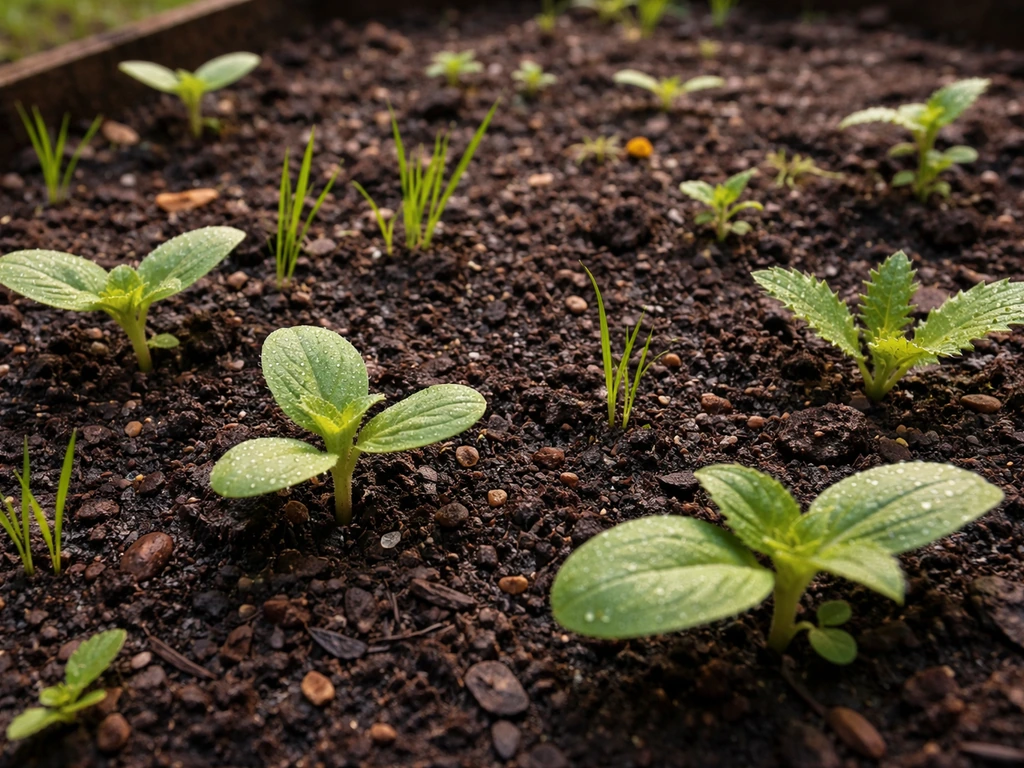
And a fair portion of many cheap mixes simply won't grow at all. Here's how to figure out what you're working with and what to do about it. If you want a more predictable result than random bird-seed volunteers, consider starting with seeds that will grow anywhere as a related option.
Do bird seeds actually sprout into living plants?
Most commercially sold wild bird seed is not sterilized, which means the seeds are biologically capable of germinating if you give them the right conditions. The seeds that go into bird mixes are almost always harvested from real agricultural crops or wild plants, so they carry the same genetic potential to sprout as any other seed. What varies is viability: how much of that potential has survived the journey from harvest through processing, packaging, shipping, and sitting on a store shelf or in someone's garage.
Viability drops over time and depends heavily on how the seed was stored. blank" rel="noopener noreferrer">Warmth, humidity, and light all accelerate the degradation of the embryo inside the seed. Colorado State University Extension notes that seed storage conditions are essentially the opposite of what germination needs: blank" rel="noopener noreferrer">warmth and moisture cause germination, so those same conditions in storage destroy viability before you ever plant anything. A bag of bird seed that's been sitting in a hot shed for two summers may show very poor germination even if every seed looks perfectly intact. That said, fresh bird seed from a reputable source bought in the current season is quite likely to sprout if planted correctly.
What's inside wild bird seed: common seed types and likely plants
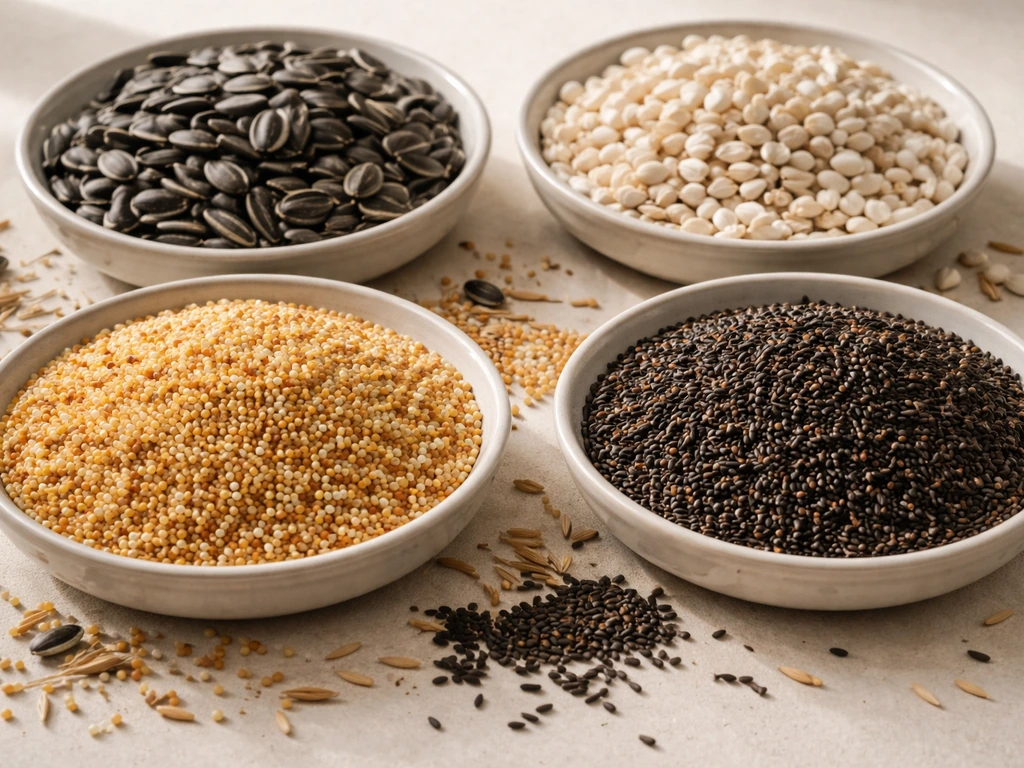
Wild bird seed mixes typically contain a predictable cast of characters. The exact proportions vary by brand and price point, but the following seeds show up in nearly every mix and are the ones most likely to produce actual plants in your yard.
Sunflower seeds
Black-oil sunflower is the dominant ingredient in most mixes and the seed most likely to germinate reliably. It produces a standard sunflower (Helianthus annuus), usually growing 4 to 6 feet tall, occasionally taller depending on soil fertility and moisture. The plants are annuals, native to North America, and extremely adaptable. Birds crack many of these open, but whole seeds that fall to the ground intact will often sprout. Purdue Extension recommends planting sunflower seed at about 1 to 2 inches deep for good emergence, which explains why seeds simply sitting on the soil surface sometimes fail while those scratched in or covered by mulch or loose soil do much better.
Millet species
White proso millet is another staple in bird mixes and one of the species most likely to germinate under garden conditions. It's a warm-season grass that grows 1 to 4 feet tall and produces seed heads that look like a loose, arching plume. Red millet and other millet varieties also appear in mixes. These grasses are annuals that complete their lifecycle in a single growing season and can self-seed prolifically if you let them. In some regions they effectively behave like weeds once established.
Nyjer (thistle) seed
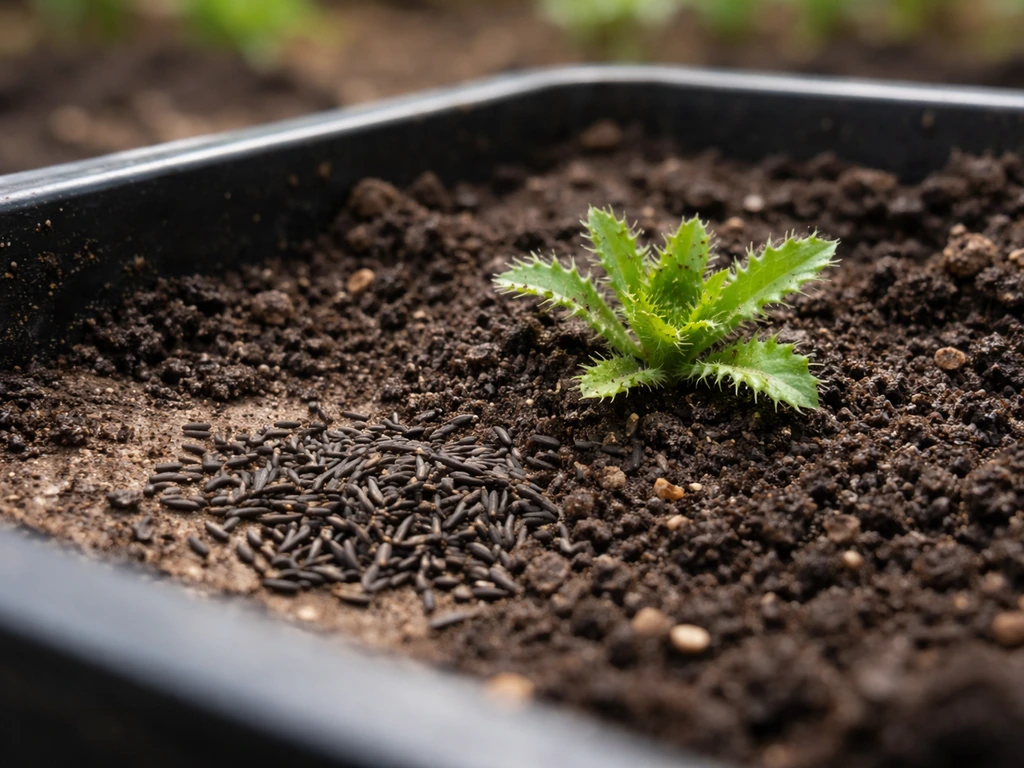
Nyjer, sold as thistle seed, is almost always heat-treated before sale to comply with federal regulations preventing the spread of dodder (a parasitic plant that sometimes contaminates nyjer shipments). That heat treatment sterilizes the seed, which is why you will not grow any plants from nyjer. Consider it inert from a germination standpoint.
Safflower
Safflower (Carthamus tinctorius) is a thistle-like annual that produces white or orange flowers. It's a legitimate agricultural crop and a viable seed in most mixes. It will sprout and grow into a bushy plant 1 to 3 feet tall. It handles dry conditions better than most, making it a reasonable garden plant in semi-arid climates.
Sorghum and milo
Milo (grain sorghum) shows up in cheaper mixes as a filler. It's a warm-season grass crop that grows 3 to 8 feet tall in agricultural settings. Birds don't love it, but it's viable and will germinate readily in warm soil. In garden contexts it's more of a tall, coarse annual than anything ornamental.
Other common additions
- Flax seed: small, oval, brown seeds from Linum usitatissimum; sprouts readily and grows into a slender annual with blue flowers
- Canary grass (Phalaris canariensis): a grass species that germinates easily and can become a weedy volunteer in moist soils
- Hemp seed (if sterilized): legally required to be sterilized in the US, so these will not germinate
- Buckwheat: fast-growing broadleaf annual, sometimes included in mixes; sprouts quickly and can be used as a short-season cover crop
- Oats and wheat fragments: often included as fillers; may sprout into grass seedlings that die back in summer heat
Why some bird seed won't grow (processing, age, viability)
There are several reasons a bag of bird seed might produce little to nothing when you try to grow it. Understanding these upfront will save you frustration.
Processing is the first factor. Some seeds are specifically treated to prevent germination, either because of regulatory requirements (nyjer, hemp) or as a deliberate choice by manufacturers selling "no-mess" or "no-grow" mixes. These mixes are marketed to people who don't want weeds under their feeders, and the seeds inside them are roasted, sterilized, or cracked. They are nutritionally intact for birds but biologically dead for germination. If the bag says "no-mess," "sterilized," or "no germination guaranteed," don't bother trying to plant it.
Age is the second factor. Seed viability declines steadily over time, and the rate of decline accelerates when seeds are stored improperly. Oregon State University's seed laboratory research confirms that storage environment is the primary driver of viability loss in grass seeds, which make up the bulk of most bird mixes. If your seed bag has been sitting in a warm garage or shed through one or more summers, expect germination rates to be significantly lower than what the seed could achieve fresh. A mix that was 80% viable when purchased might be 20% viable after two years of poor storage.
Species-specific dormancy is a third factor that surprises people. Some seeds germinate readily; others have built-in dormancy requirements, such as a cold period (stratification) or specific light conditions, before they'll sprout. Iowa State University Extension research on germination requirements for annuals and vegetables shows that some seeds need light to trigger germination, while others require darkness, and still others require temperature cycling. In a mixed bag of bird seed, some species will pop right up while others sit in the soil waiting for conditions they may never get.
How to test bird seed viability before planting
Before you invest time in preparing soil and planting a large batch of bird seed, run a quick viability test. This takes about a week but gives you real data to work with.
- Count out exactly 10 seeds of a single type (test each seed type separately for meaningful results).
- Place the seeds on a damp paper towel, fold it over them, and seal it in a plastic bag or airtight container.
- Keep the bag at room temperature in a warm spot, around 65 to 70°F, and check daily.
- After 7 to 10 days, count how many seeds have sprouted with a visible root or shoot.
- That number is your germination percentage out of 10. If 7 sprouted, you have roughly 70% viability. If only 2 sprouted, expect poor results in the garden.
University of Wisconsin Extension recommends exactly this approach for calculating germination percentage: germinate a known number of seeds, count how many sprout, and use that ratio to plan your sowing rate. If viability is below 50%, either sow more densely to compensate, or consider sourcing fresher seed. If viability is below 20%, the seed isn't worth planting outdoors.
How to plant bird seed to encourage germination (soil, moisture, light, timing)
Assuming your seed tests viable, getting it to sprout successfully outdoors comes down to matching the growing conditions to what those seeds actually need. Since most bird seed mixes are dominated by warm-season grasses and annuals, the general rules apply broadly, with a few species-specific notes.
Soil preparation
Loosen the top 2 to 3 inches of soil and remove large clods or debris. Bird seeds are generally small, and they need good contact with moist soil to absorb water and trigger germination. You don't need rich compost-amended beds for most of these plants; millet, sunflower, and sorghum all tolerate average or even poor soils. What they don't tolerate is compacted, waterlogged ground where oxygen can't reach the seeds. Good drainage matters more than soil fertility for getting seeds to sprout.
Planting depth and light
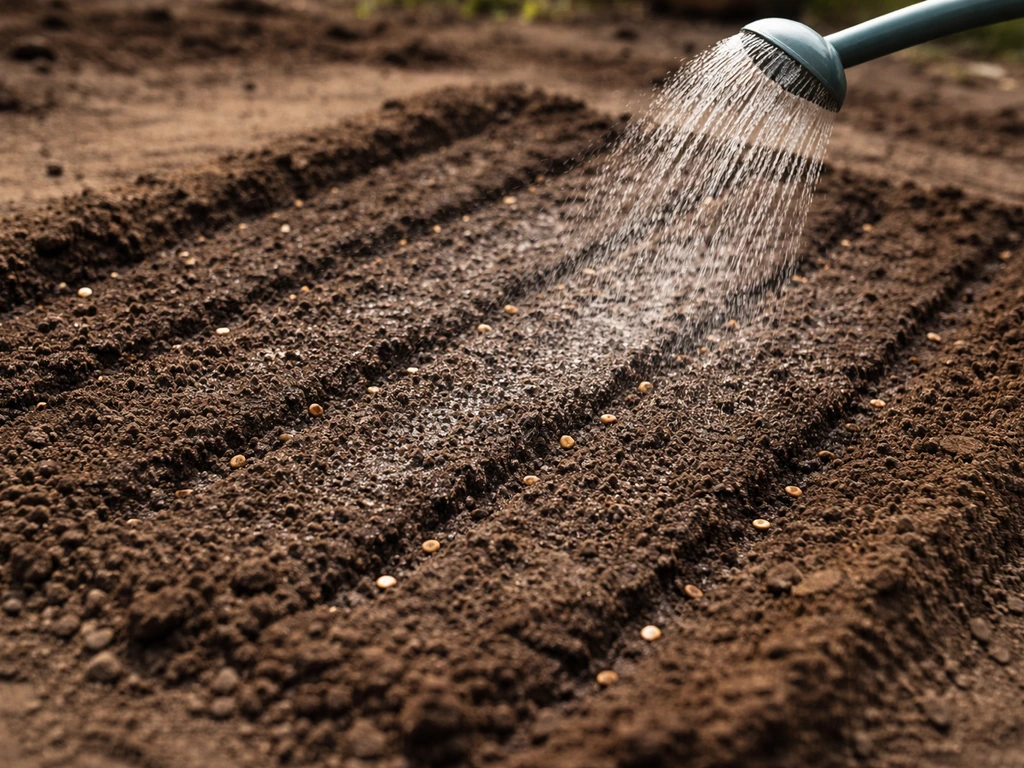
A useful rule of thumb for small seeds is to plant them at a depth roughly equal to two to three times their diameter. For sunflower seeds specifically, Purdue Extension recommends 1 to 2 inches deep. For tiny seeds like millet, press them into the soil surface or cover them with just a thin layer (no more than 1/4 inch) of fine soil. Iowa State Extension research notes that some species require light for germination and fail if buried too deeply, which is exactly what happens when you just dump a handful of mixed bird seed onto hard ground and then pile an inch of mulch on top.
Moisture
Keep the seeded area consistently moist until germination occurs. Letting the surface dry out during germination is the single most common reason seeds fail after they've already started to sprout. A seed that has taken up water and begun activating its embryo will die quickly if it desiccates before establishing a root. For small areas, a gentle daily watering works. For larger patches, consider laying a thin layer of straw or burlap over the seeded area to retain moisture between watering.
Timing and temperature
Timing is probably the most important variable for germination success with bird-seed mixes, because nearly all the dominant species in these mixes are warm-season plants. University of Missouri Extension specifies that most millets need soil temperatures of at least 70°F to germinate well, which generally means late May to early June in temperate US climates. Proso millet is somewhat more forgiving and can sprout at soil temperatures around 55 to 65°F.
University of Minnesota Extension advises waiting until soil reaches 65°F before planting these species outdoors. Sunflower similarly performs best with warm soil and will stall or rot if planted too early in cold, wet spring ground. As a practical guide: if you're past your last frost date and the soil feels warm when you press your hand into it, you're probably in the right window.
What grows where: climate and season guidance for likely volunteers
Where you live shapes which bird-seed plants will grow easily and which will struggle. If you want plants that will grow anywhere, prioritize species with broad climate tolerance and plan to start them in containers or sheltered conditions first. The volunteer species you're most likely to see vary considerably by region and season, which matters a lot if you're trying to encourage useful plants rather than just watching random seedlings appear and die.
| Climate/Region | Most Likely Volunteers | Best Planting Window | Notes |
|---|---|---|---|
| Humid temperate (eastern US, Pacific NW) | Sunflower, proso millet, canary grass, buckwheat | Late April to early June | High moisture supports germination; watch for millet becoming weedy |
| Semi-arid / Great Plains | Sunflower, sorghum/milo, safflower, proso millet | Late May to mid-June when soil warms | Drought tolerance of sunflower and safflower is an asset here |
| Hot arid (Desert Southwest) | Sunflower, sorghum (with irrigation) | March to April or September to October | Summer heat is too extreme; plant in spring or fall windows |
| Subtropical / Gulf Coast | Millet, sorghum, sunflower | February to April; August to October | Two planting windows available; humidity raises mold risk for stored seed |
| Cool temperate (upper Midwest, mountain West) | Proso millet, sunflower, oats | Late May to early June only | Short season; prioritize fast-maturing varieties; milo rarely completes season |
| Mediterranean (California coast) | Sunflower, safflower, flax | March to May | Dry summers mean irrigation needed; cool wet winters suit flax well |
The broader pattern here mirrors what you see with many adaptable annual plants: the warm-season grasses (millet, sorghum) track soil temperature closely and simply won't perform in cool or short growing seasons, while sunflower and safflower have wider climate tolerance and are the most reliable performers across regions. Some plants that can grow in any soil are also more forgiving of changes in moisture and fertility. If you're in a climate with unpredictable seasons or you want the most reliable results from a mixed batch of bird seed, plant it in containers first.
Containers let you control soil temperature more easily, and you can move them if conditions shift. This is the same principle that applies to many of the seeds that will grow anywhere under the right conditions: environment control matters more than the seed itself. Plants that can grow in any condition are usually chosen for their hardiness, so you get more reliable results even when weather or soil quality varies.
Many gardeners prefer a ground cover that will grow anywhere because it helps suppress weeds and fills bare spots with less ongoing effort. Many plants can be selected to thrive across a wide range of conditions, so your best bet is to match species to your local temperature and rainfall patterns plants that can grow in any climate.
You can also look for plants that can grow in any soil conditions by choosing hardy species matched to your local setup. If you want options that also handle wide temperature swings, aim for species known for being adaptable across climates plants that can grow in any soil conditions.
Identify and manage what sprouts (weed vs. useful plant)
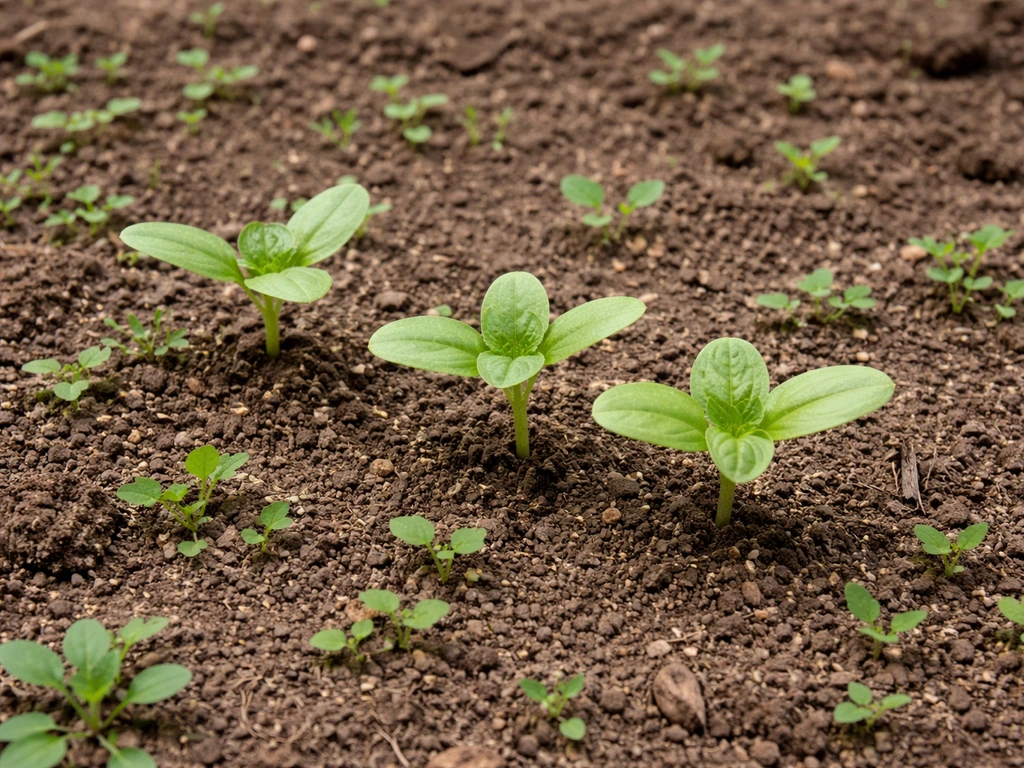
Once seedlings emerge from bird-seed plantings, you'll face a genuinely mixed bag, sometimes literally. Identifying what's coming up matters because some volunteers are useful or attractive, and others will take over if you let them. If you want an adjacent option that behaves more consistently than bird-seed volunteers, look into shrubs that will grow anywhere for a steadier, landscape-style approach.
Recognizing what you've got
Sunflower seedlings are easy: they emerge with two large, oval seed leaves (cotyledons) and quickly develop the rough, hairy true leaves characteristic of the Helianthus genus. Millet seedlings look like a typical grass, narrow and upright, and are harder to distinguish from common lawn grasses or annual weed grasses when young. Buckwheat is distinctive with heart-shaped seed leaves and pinkish stems. Sorghum seedlings are broad-leafed grass seedlings, larger than millet at the same age. Flax comes up as a slender, grass-like seedling that reveals its non-grass nature when it develops alternate, narrow true leaves with a slight blue-green color.
Deciding what to keep and what to pull
The most useful volunteers from bird seed mixes are generally sunflower, safflower, and buckwheat. They're well-behaved annuals that complete their lifecycle, die back, and don't aggressively reseed in most temperate gardens. Millet is the main one to watch. Proso millet in particular can self-seed prolifically and, depending on your region, may behave as a persistent weed once established. Canary grass (Phalaris canariensis) is similarly aggressive in moist soils and should be pulled before it sets seed if you don't want it spreading.
UC IPM guidance on weed management makes the key point directly: removing plants when they're small, before they set seed, rapidly reduces annual weed pressure because you break the reseeding cycle. If you see millet or canary grass volunteers where you didn't intend them, pull them as seedlings. Do not let them flower and set seed. One millet plant left to mature can drop hundreds of seeds that will come up the following season. The same logic applies to any bird-seed volunteer you don't want: early removal when the plant is still small is far easier and more effective than trying to manage mature plants.
Preventing unwanted spread from outdoor plantings
If you're deliberately planting bird seed in a garden bed and aren't sure exactly what's in the mix, take a few precautions. Plant in a contained area or raised bed rather than directly in open ground adjacent to natural areas. Inspect seedlings regularly and identify anything unfamiliar before it matures.
Check your regional invasive species lists, because what's a harmless annual in one region can be a genuine invasive in another, and bird-seed mixes aren't formulated with regional ecology in mind. This is the same caution that applies to any seed mix of uncertain origin: the seeds themselves may be perfectly legal to sell nationwide, but their behavior in your specific environment depends on your local climate, soil, and native plant community.
The good news is that most bird-seed volunteers are standard agricultural annuals with no particular invasive history in temperate North America. With basic management, they're no more problematic than any other opportunistic annual garden plant. The key is staying on top of them early in the season, which is really the universal rule for managing any plants that can grow vigorously once they get established.
FAQ
Can I plant bird seed later in the season and still get plants?
Yes, but it is not reliable and it can make volunteers harder to manage. Most mixes contain many species with different germination needs, so “planting later” can still lead to uneven or non-overlapping germination. If you want seedlings to pop up together, sow in a window when your soil is warm enough for the warm-season grasses in the mix, then keep moisture consistent until emergence.
Why does my bird seed sprout poorly or not at all even though the soil is moist?
Covering depth matters because several of the small seeds in mixes need light or only minimal burial. A thick mulch layer is a common failure point, especially for millet and other tiny-seeded species. Aim for loose surface coverage (about 1/4 inch or less) for very small seeds, and only bury larger seeds like sunflower at the recommended depth range.
What should I do if I want better results than random volunteers?
The easiest way to improve odds is to separate the workflow into two steps, run a quick germination test, then plant only the amount you need based on the viability rate. If you skip the test and the bag is low-viability, you may sow too thin and end up with sparse plants you assume will “fill in later.”
Will bird seed volunteers come up in my lawn if birds drop seed there?
You can, but expect volunteers to appear in patches where seeds land. If you spread bird seed over lawn or paths, you will likely get a mix of grass-like seedlings that can be difficult to identify. A contained area (raised bed, planter, or a defined patch with edging) makes identification and removal of unwanted species much simpler.
Does every type of bird seed sprout, including nyjer and no-mess mixes?
Nyjer (thistle seed) is the clearest example, it is heat-treated specifically to prevent dodder spread, so it will not grow. Other “no-mess,” “sterilized,” or “no germination guaranteed” mixes may also be biologically dead even if the seeds look normal. Check the bag label and avoid planting anything marketed as non-growing or sterilized.
How do I stop bird seed volunteers from spreading?
If you have a lot of birds dropping seed under a feeder, you can reduce spread by pulling volunteers when they are small and before any seed heads form. Annual weeds in mixes often reseed from mature plants, so preventing seed set is far more effective than trying to remove mature plants later.
Why do seedlings die after they emerge or never seem to establish?
Mixes can contain warm-season annuals, so seedlings may look “dead” when nights cool or when you mistimed planting. If you planted too early, seeds may rot in cold wet soil instead of germinating. A practical check is soil temperature by touch, if it feels cool and stays wet, you likely missed the germination window for the warm-season species.
Can I eat plants that grow from bird seed?
Bird-seed volunteers can be edible, but identification is the critical risk point. Some seedlings may resemble edible greens or grains, while others are not safe to eat, and you also have contamination concerns (bird droppings, pesticides from nearby lawn or feed area). The safest approach is to treat volunteers as ornamental or managed weeds unless you can positively identify them.
Will plants from bird seed come back every year?
Yes, especially in regions where birds drop seed repeatedly. Sunflower, safflower, and some other annuals usually complete their lifecycle and do not become persistent, but millet can self-seed prolifically in some climates. Watch for grass-like volunteers and pull before seed set if you do not want next-year sprouting.
How can I choose a bird seed bag that is more likely to produce good garden plants?
If you are trying to boost the odds of getting “useful” plants, start with whole seeds and a fresher bag rather than a mystery mix sitting in storage. Whole black-oil sunflower tends to germinate more reliably than many cracked or processed components. Also, consider planting in containers so you can control soil temperature and moisture during the warm-season germination window.